

Why jute needs different handling than sisal
Jute is softer, more absorbent and less durable than sisal, so it is more prone to crushing under heavy traffic and to staining or weakening if it gets damp during or after fitting. Reserve jute for staircases with lighter footfall, guest stairs, secondary flights, or homes without pets and young children using the stairs daily.
| Fibre | Abrasion resistance | Moisture sensitivity | Best use |
|---|---|---|---|
| Jute | Lower | High | Low-traffic, secondary stairs |
| Sisal | High | Moderate | Main staircases, high traffic |
| Wool | High | Low-moderate | Any traffic level |
Padding choice for jute
Most manufacturers recommend no pad or, at most, a very thin firm felt under 1/4 in (6mm), since jute's soft structure already compresses readily and a spongy pad underneath accelerates flattening at the nosing rather than protecting it.
Know your numbers in 30 seconds
Enter your step count, tread depth and riser height — the stair runner calculator gives you the exact length to order, in metres and feet, with waste included.
Open the stair runner calculatorStaple gauge and spacing for jute
| Spec | Recommendation |
|---|---|
| Gauge | 20-22 gauge, lighter side of the sisal range |
| Leg length, bare tread | 3/8 in (9.5mm) |
| Spacing | Every 2-2.5 in (5-6cm) along back corner and riser base |
Moisture precautions during fitting
- Do not fit jute in a room with wet flooring work still underway nearby.
- Keep jute off damp subfloors or concrete stairs without a proper moisture barrier.
- Store the roll indoors at room temperature for at least 24 hours before cutting.
- Avoid steam cleaning near jute after installation; spot-clean with minimal moisture only.
Cutting and edge finishing
Jute frays quickly once cut, even more readily than sisal, so seal every raw edge immediately with a latex sealant or order the runner pre-bound. A serged or whipped edge binding in a contrasting or matching yarn also adds durability at the point most likely to unravel first.
Do not use jute on the main staircase in a busy household
Jute's soft fibre wears visibly within 2-4 years under daily heavy traffic. It is better suited to a landing, a guest staircase, or a home office stair used occasionally.
Cost and lifespan comparison
| Fibre | Typical cost per yard/metre (US) | Typical cost (UK) | Expected lifespan, main stairs |
|---|---|---|---|
| Jute | $20-40 per yard | £16-32 per metre | 2-5 years |
| Sisal | $28-55 per yard | £22-45 per metre | 7-15 years |
| Wool | $45-90 per yard | £38-75 per metre | 10-20 years |
Step-by-step fitting order
- Confirm the staircase is low-traffic and suitable for jute's durability level.
- Acclimatise the roll indoors for 24 hours minimum.
- Mark the centre line carefully; jute's open weave shows any drift.
- Fit with minimal padding and 20-22 gauge staples, sealing all cut edges.
Run the flight dimensions through a stair runner calculator before ordering, and add roughly 10% waste for jute to allow for its fraying edges and the extra care needed cutting an open natural weave.
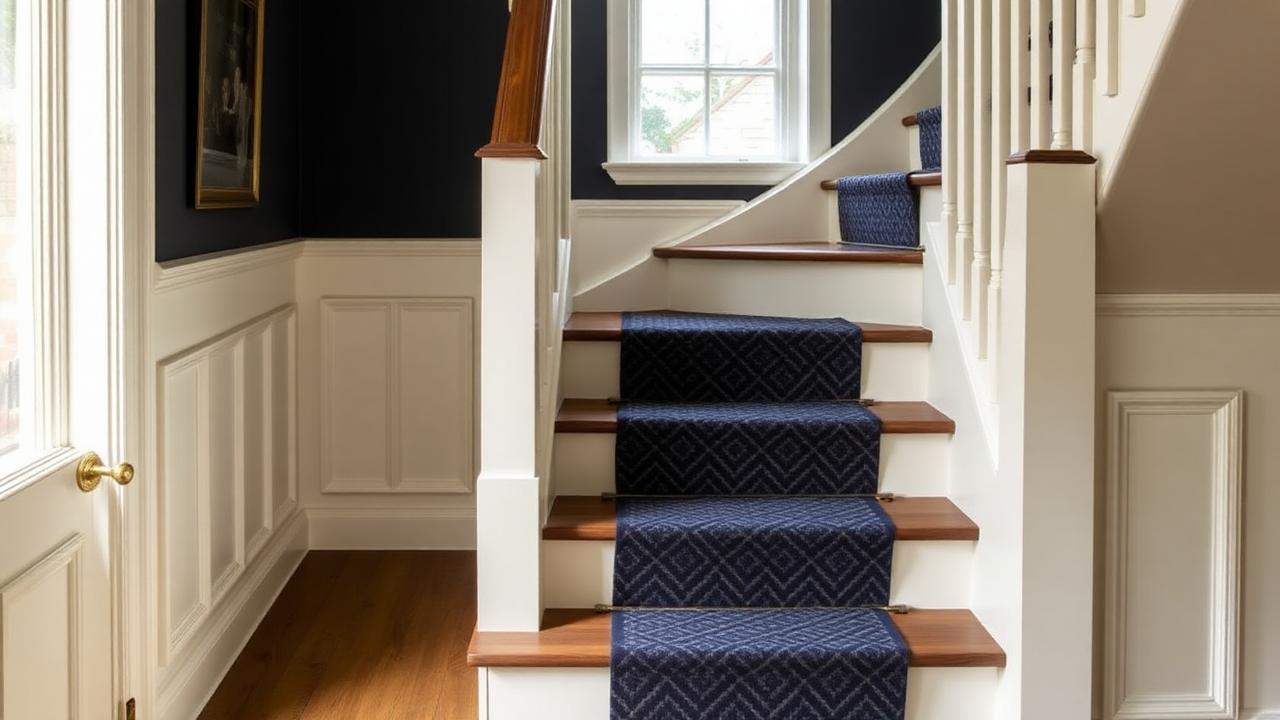
Best rooms and staircases for jute
Jute suits a guest bedroom stair, a home office annex staircase, or a secondary flight to a rarely used attic room far better than a family's main staircase. Its soft handle and warm natural tone also make it a popular choice purely for look in low-footfall settings where durability is a lesser concern than appearance and cost.
| Setting | Jute suitability | Reason |
|---|---|---|
| Main family staircase, daily heavy use | Poor | Wears within 2-5 years under heavy traffic |
| Guest room or annex stairs | Good | Low footfall suits jute's softer fibre |
| Vacation home, seasonal use | Good | Limited annual wear extends effective lifespan |
| Stairs near an entryway with wet shoes | Poor | Moisture sensitivity makes this a risky location |
Blended jute options for extra durability
Some manufacturers offer a jute-wool or jute-sisal blend runner that keeps jute's soft handle and lower cost while adding some of the durability of a tougher fibre woven through it. These blends are worth considering if you like jute's look but the staircase sees more than occasional use.
Ask about backing treatment before buying jute for stairs
Some jute runners come with a light latex or rubber backing treatment that adds a small amount of grip and moisture resistance. This is worth asking about specifically, since not all jute weaves are treated the same way by different manufacturers.
Why jute suits low-traffic stairs best
Jute fibre is softer and less abrasion-resistant than sisal, wool or nylon, which makes it a poor choice for a busy main staircase used by a whole family daily, but a good fit for a guest staircase, a formal front stair used occasionally, or a lower flight to a rarely used room. Match the fibre to actual expected footfall rather than only to its look, since jute wears through at the nosing far faster than wool under heavy daily traffic.
| Traffic level | Jute suitability | Better alternative if unsuitable |
|---|---|---|
| Low, occasional use | Excellent | |
| Moderate, family stairs | Fair, expect wear within 3-5 years | |
| Heavy, main daily staircase | Poor |
Fitting sequence specific to jute
- Acclimatise the roll indoors for 24-48 hours, away from any damp wall or window.
- Cut with a sharp fresh blade and seal every raw edge immediately with a latex sealant.
- Fit with little or no pad, using 18-20 gauge staples spaced slightly closer than for wool.
- Avoid pulling jute as taut as wool at each riser; slight, even tension prevents the fibre tearing under stress.
Moisture is the biggest risk to jute
Jute loses strength dramatically when it gets and stays wet, far more than sisal or wool, so it should never be steam cleaned and should be kept away from entryways where wet shoes or umbrellas are common. If a jute runner does get wet, dry it as quickly as possible with fans and good ventilation rather than letting it air dry slowly, since prolonged dampness can rot the fibre from within.
Jute is a look-first, not a durability-first, choice
Choose jute for its soft natural colour and texture on a low-footfall stair, and pair it with a more hardwearing fibre like wool or sisal anywhere the household actually walks daily.
Comparing jute to synthetic look-alike alternatives
Several manufacturers now produce polypropylene or nylon weaves styled to mimic jute's texture and warm tone while offering far better moisture resistance and abrasion resistance, typically at a similar or only slightly higher price point. These synthetic jute look-alikes are worth comparing directly if you like the aesthetic but are unsure the actual staircase sees light enough traffic for true jute to last.
| Option | Look | Durability vs true jute | Typical cost premium |
|---|---|---|---|
| True jute | Authentic natural texture and sheen | Baseline | None |
| Synthetic jute-look weave | Close visual match, slightly more uniform | 2-4x longer lifespan on stairs | 10-25% higher |
| Jute-wool blend | Softer sheen, natural fibre feel retained | 1.5-2x longer lifespan | 15-30% higher |
Whatever you decide, get the numbers first: the stair runner calculator doubles as a stair runner length calculator, adding nosing wrap, landings, winders, pattern repeat and waste so you order the right length the first time.
Still deciding on material, width or pattern? Our hub on stair runners compares weaves, widths, backings and fitting styles side by side, then hands the numbers straight to the calculator.
Frequently asked questions
Is jute a good choice for a main staircase?
Generally no. Jute wears faster than sisal or wool under heavy daily traffic, typically lasting only 2-5 years on a busy main flight versus 7-20 years for sisal or wool.
Does jute need padding underneath?
Most manufacturers recommend none, or at most a very thin firm pad under 1/4 in (6mm), since jute already compresses easily on its own.
What staples suit jute best?
A 20-22 gauge staple with a 3/8 in (9.5mm) leg on bare timber, spaced every 2-2.5 in (5-6cm), slightly lighter than sisal's typical spec.
How do I stop jute from fraying at cut edges?
Seal raw edges immediately with a latex edge sealant, or order the runner pre-bound with a serged or whipped edge before it arrives on site.
Can jute get wet during or after installation?
It should not. Jute is highly moisture-sensitive and can stain, weaken or develop mildew if it gets damp, so avoid fitting it near wet flooring work or steam-cleaning it afterward.
How much extra jute should I order?
Around 10% waste on top of your calculated length, slightly more than wool, to cover its fraying edges and the care needed cutting an open natural weave.
What is the best use case for a jute stair runner?
A guest bedroom stair, home office annex, or vacation home flight with limited seasonal use, where jute's soft handle and lower cost matter more than long-term heavy-traffic durability.
Are there more durable versions of jute available?
Yes, jute-wool or jute-sisal blend runners keep the soft look and lower cost of jute while adding some of the wear resistance of a tougher fibre woven through the construction.
Know your numbers in 30 seconds
Enter your step count, tread depth and riser height — the stair runner calculator gives you the exact length to order, in metres and feet, with waste included.
Plan my stair runnerReady for real prices?
Get quotes from vetted stair runner suppliers and fitters near you. Free, no account, no obligation.
Every guide is written from hands-on measuring and fitting experience, checked against the calculator’s own maths, and re-reviewed whenever prices or methods change. Read our editorial standards.