

Runner rug versus broadloom: the key difference
A runner rug is manufactured and sold in fixed lengths, typically 6, 9, 12 or 15 ft (1.8, 2.7, 3.7 or 4.6m), with finished bound edges on all four sides, unlike broadloom which is cut to your exact stair length from a wide roll and bound afterward. This means fitting a rug is about finding the closest length match and securing it, not cutting to size.
| Feature | Broadloom runner | Runner rug |
|---|---|---|
| Length | Cut to exact stair measurement | Fixed manufactured lengths |
| Edges | Bound after cutting | Factory-bound on delivery |
| Fixing method | Staples, tackless strip | Rods, tape, or both |
| Removability | Difficult, semi-permanent | Easy, renter-friendly |
Choosing the closest length
Measure your flight exactly as you would for broadloom, then round up to the nearest available rug length; a small overhang at the bottom step can be trimmed and re-bound by a rug workroom, or simply tucked under, but a rug that is too short cannot be extended.
Know your numbers in 30 seconds
Enter your step count, tread depth and riser height — the stair runner calculator gives you the exact length to order, in metres and feet, with waste included.
Open the stair runner calculatorSecuring a runner rug on stairs
- Lay the rug centred on the flight and check it sits straight before fixing anything.
- Fit stair rods across the base of each riser through pre-sewn rod pockets if the rug has them, or simply resting the rod against the fold.
- Add double-sided carpet tape or non-slip rug tape strips under the tread sections between rods for extra grip.
- Anchor the top and bottom ends with a low-profile edge grip or a final rod.
Rug pad choice underneath
A thin non-slip rug pad, cut to fit each tread, both cushions the rug and stops it sliding underfoot; look for a grip-both-sides pad around 1/8-3/16 in (3-4.5mm) thick designed for hard or carpeted stair surfaces rather than a generic living-room rug pad.
| Pad type | Grip surface | Typical price per tread |
|---|---|---|
| Felt-rubber combination, grip both sides | Hard floors and carpet | $2-5 (£1.60-4) |
| Waffle rubber, single grip side | Hard floors only | $1.50-3.50 (£1.20-2.80) |
When a runner rug beats broadloom
- Rental properties where staples or adhesive fixing are not allowed by the lease.
- Short-term or seasonal installations meant to come down easily.
- Buyers who want to see and touch an exact finished piece before committing, rather than ordering fabric by the yard.
- Staircases with an unusual or unpredictable width where a fixed rug can be centred rather than custom-ordered.
Runner rugs rarely wrap winders or turns well
Because a runner rug is a single fixed-length piece, it does not adapt to a turn or pie steps the way a custom-cut broadloom runner can. Rugs work best on straight flights only.
Cost comparison
| Option | Typical cost, 13-step flight (US) | Typical cost (UK) |
|---|---|---|
| Runner rug, mid-grade, plus rods | $180-450 | £145-360 |
| Broadloom, cut and stapled by a fitter | $350-900 | £280-720 |
Measuring tips before you buy
Run your flight through a stair runner length calculator first to know exactly how much length you need, then compare that figure against the nearest standard rug length so you know whether to size up or accept a small trim at the bottom.
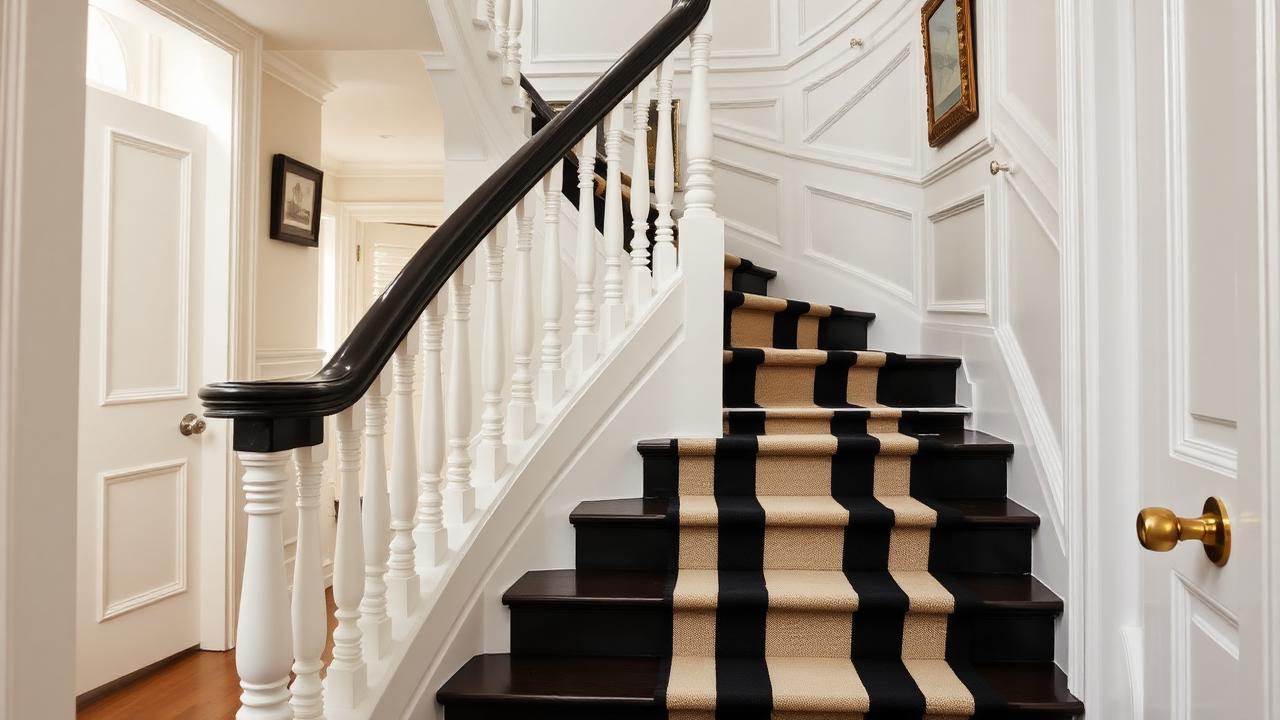
Choosing a width for a runner rug
Runner rugs commonly come in widths of 26, 30 and 36 in (66, 76 and 91.5cm), narrower on average than the widest broadloom options, so measure your stair width and desired side margins carefully before ordering. A centred rug with 4-6 in (10-15cm) of exposed tread on each side is the classic proportion most homes use.
| Stair width | Suggested rug width | Exposed margin each side |
|---|---|---|
| 36 in (91.5cm) | 26 in (66cm) | 5 in (12.5cm) |
| 40 in (101.5cm) | 30 in (76cm) | 5 in (12.5cm) |
| 44 in (112cm) | 36 in (91.5cm) | 4 in (10cm) |
Storing and reusing a runner rug
One advantage of a runner rug over fitted broadloom is that it can be rolled up, stored, and later reused on a different staircase or even repurposed as a hallway rug if you move house. Roll it pile-side out around a firm tube rather than folding it, since folds can create permanent creases in the backing.
Check the rug lies flat before final fixing
New rugs can arrive from tight rolling with a slight residual curl at each end. Let it lie flat, weighted if necessary, for a day before fixing with rods or tape so the ends do not fight against the fixings once installed.
Stair runner rug versus fitted runner: fixing differences
A stair runner rug, sold as pre-bound individual lengths or a hallway-style runner rug rather than fitted-and-cut carpet, is typically held down with non-slip rug pads on each tread plus stair rods or clips at the back of each step, rather than staples through the backing. Because the rug is not fixed permanently into the timber, it can be lifted, rotated or replaced far more easily than a fitted runner.
| Fixing method | Permanence | Ease of replacement |
|---|---|---|
| Non-slip rug pad only | Low | Very easy |
| Stair rods at each riser | Medium | Easy, rods lift out |
| Adhesive rug tape | Medium-high | Moderate, may leave residue |
Choosing the right length of rug runner
Runner rugs are usually sold in fixed lengths rather than cut to order, so measure your total flight length first and choose the closest length that allows a small overlap or a neat cut at the bottom, keeping any offcut for future patch use. Rotating a rug runner end-for-end every year or two evens out wear, something not possible with a permanently fitted runner.
Rotate a rug runner periodically
Because a stair runner rug is not permanently fixed, swap its orientation occasionally so the same treads are not always taking the heaviest footfall in exactly the same spot.
Runner rugs and hard flooring transitions
If the staircase transitions to a hard-floor landing or hallway at top or bottom, a runner rug's bound end sits proud of the floor slightly more than a stapled and tucked broadloom edge would, so add a low-profile transition strip or a slim binding bar at that point to prevent a trip edge and to stop the rug's corner curling upward over time.
Whatever you decide, get the numbers first: the stair runner calculator doubles as a stair runner length calculator, adding nosing wrap, landings, winders, pattern repeat and waste so you order the right length the first time.
Still deciding on material, width or pattern? Our hub on stair runners compares weaves, widths, backings and fitting styles side by side, then hands the numbers straight to the calculator.
Frequently asked questions
What is the difference between a stair runner and a runner rug?
A stair runner is typically broadloom carpet cut to your exact stair length and bound afterward, while a runner rug is a pre-made piece sold in fixed lengths with factory-bound edges already finished.
How do you secure a runner rug on stairs without stapling?
With stair rods across each riser fold, double-sided rug or carpet tape under the treads, and a low-profile edge grip or final rod at the top and bottom.
Can a runner rug be trimmed if it is too long?
Yes, a rug workroom can trim and re-bind the end, though this adds cost. It is usually better to round up to the nearest available length than try to shorten later.
Do runner rugs work on staircases with a turn or winders?
Not well. Fixed-length rugs are best suited to straight flights; turns and pie steps generally need custom-cut broadloom instead.
Is a runner rug cheaper than a broadloom runner?
Often yes, particularly for renters, since it avoids fitter labour for cutting and stapling; expect roughly $180-450 (£145-360) for a 13-step flight versus $350-900 (£280-720) for a fitted broadloom install.
What rug pad works best under a runner rug on stairs?
A grip-both-sides felt-rubber pad around 1/8-3/16 in (3-4.5mm) thick, cut per tread, designed specifically for stair surfaces rather than a flat-floor rug pad.
What widths do runner rugs typically come in?
Commonly 26, 30 and 36 in (66, 76 and 91.5cm), narrower on average than the widest broadloom options, so measure your stair width and desired side margins before ordering.
Can a runner rug be reused if I move house?
Yes, that is one of its advantages over fitted broadloom. Roll it pile-side out around a firm tube for storage rather than folding it, since folds can crease the backing permanently.
Know your numbers in 30 seconds
Enter your step count, tread depth and riser height — the stair runner calculator gives you the exact length to order, in metres and feet, with waste included.
Compare runner costsReady for real prices?
Get quotes from vetted stair runner suppliers and fitters near you. Free, no account, no obligation.
Every guide is written from hands-on measuring and fitting experience, checked against the calculator’s own maths, and re-reviewed whenever prices or methods change. Read our editorial standards.