

How no-screw brackets work
Adhesive stair rod brackets use a high-strength double-sided foam pad or an epoxy-style adhesive disc bonded to the tread or riser junction. Tension versions use a sprung clip that grips onto the edge of the tread. Both avoid drilling, which matters on hardwood, tile, or when you are renting and cannot make permanent fixings.
| Method | Holds on | Weight limit per bracket | Removable cleanly |
|---|---|---|---|
| Foam adhesive pad | Wood, painted wood, sealed tile | Light rod only, ~0.5–1 lb | Usually, if surface sealed |
| Adhesive disc/epoxy | Wood, stone, tile | Moderate, ~1–2 lb | No, often leaves residue |
| Sprung tension clip | Square-edged treads | Light, decorative only | Yes, fully |
| Screw-fixed bracket | Any solid tread | Any rod weight | No, leaves screw holes |
Where they genuinely fail
- Unsealed or painted wood that flakes: the adhesive pulls paint off rather than releasing cleanly.
- Rounded or bullnose nosings: tension clips need a defined edge to grip.
- Heavy solid brass rods: adhesive pads are rated for light decorative rods, not dense metal.
- Textured or carpeted surfaces: adhesive will not bond reliably at all.
- Humid or variable-temperature stairwells: adhesive bond weakens over time.
Know your numbers in 30 seconds
Enter your step count, tread depth and riser height — the stair runner calculator gives you the exact length to order, in metres and feet, with waste included.
Open the stair runner calculatorThe runner still needs proper fixing
Screwless rods only avoid holes for the decorative hardware. The runner itself still needs to be secured underneath with staples, tackless strip, double-sided tape or adhesive; no-screw rods are not a substitute for fixing the carpet down.
Best use cases
No-screw rods suit rental properties, protected historic staircases, and anyone who wants a reversible decorative touch without commitment. For a permanent family staircase carrying daily traffic, screw-fixed brass brackets remain more reliable long term because adhesive bonds degrade with repeated flex and temperature change.
- Clean and dry the tread surface thoroughly before applying any adhesive pad.
- Choose lightweight rods (aluminium or slim brass-plated) rather than solid brass.
- Press and hold each pad for the manufacturer's stated cure time before hanging the rod.
- Recheck adhesion after the first week and reseat any loose brackets.
How screwless brackets behave over five years
Adhesive bond strength degrades gradually with repeated temperature and humidity cycling in a stairwell, so a screwless bracket that holds firmly in year one can loosen by year three even without any obvious trigger event; sprung tension clips are more mechanically stable over time since they rely on physical grip rather than a chemical bond that ages.
| Fixing type | Year 1 | Year 3 | Year 5 |
|---|---|---|---|
| Foam adhesive pad | Firm hold | May start to loosen | Frequently needs re-adhering |
| Adhesive disc/epoxy | Very firm | Generally stable | Some may loosen on wood movement |
| Sprung tension clip | Firm mechanical grip | Stable | Stable, occasional clip fatigue |
Common specification mistakes
The most common mistake is specifying an adhesive screwless bracket for a heavy solid brass rod, since adhesive pads are rated for light decorative loads only; the second most common mistake is applying adhesive to an unsealed or freshly painted surface, which fails almost immediately as the adhesive bonds to the paint layer rather than the wood underneath.
- Using adhesive brackets with heavy solid brass rods rather than lightweight aluminium or brass-plated rods.
- Applying adhesive to freshly painted wood before the paint has fully cured, typically requiring 2-4 weeks.
- Expecting tension clips to work on a rounded bullnose nosing, which lacks the defined edge they need to grip.
- Not checking the manufacturer's stated weight limit before committing to a screwless system for a full flight.
Renter-friendly setup checklist
Renters choosing screwless rods should prioritise reversibility over holding power, since the goal is usually a full deposit return rather than a permanent fixture. Photograph the bare staircase before fitting anything, so you have a clear before state to compare against at move-out.
- Choose adhesive pads explicitly marked as removable without residue on painted or sealed wood.
- Keep the original packaging in case pads need replacing under a manufacturer guarantee.
- Test one bracket in an inconspicuous spot first, such as the bottom step, before committing to the whole flight.
- Budget for reapplying pads every 12-18 months rather than expecting a one-time fit to last the tenancy.
Cost of a full screwless set versus screw-fixed
| Setup | 13-step set cost (US) | 13-step set cost (UK) |
|---|---|---|
| Screwless adhesive brackets, lightweight rods | $140-$320 | £110-£250 |
| Screw-fixed brackets, solid brass rods | $500-$1,100 | £380-£850 |
Trade tip: check adhesive cure time
Most adhesive pads need 24 hours undisturbed to reach full bond strength, yet many buyers hang the rod immediately after pressing the pad on. Wait the full cure time stated by the manufacturer before adding any load, and the bond will hold significantly longer.
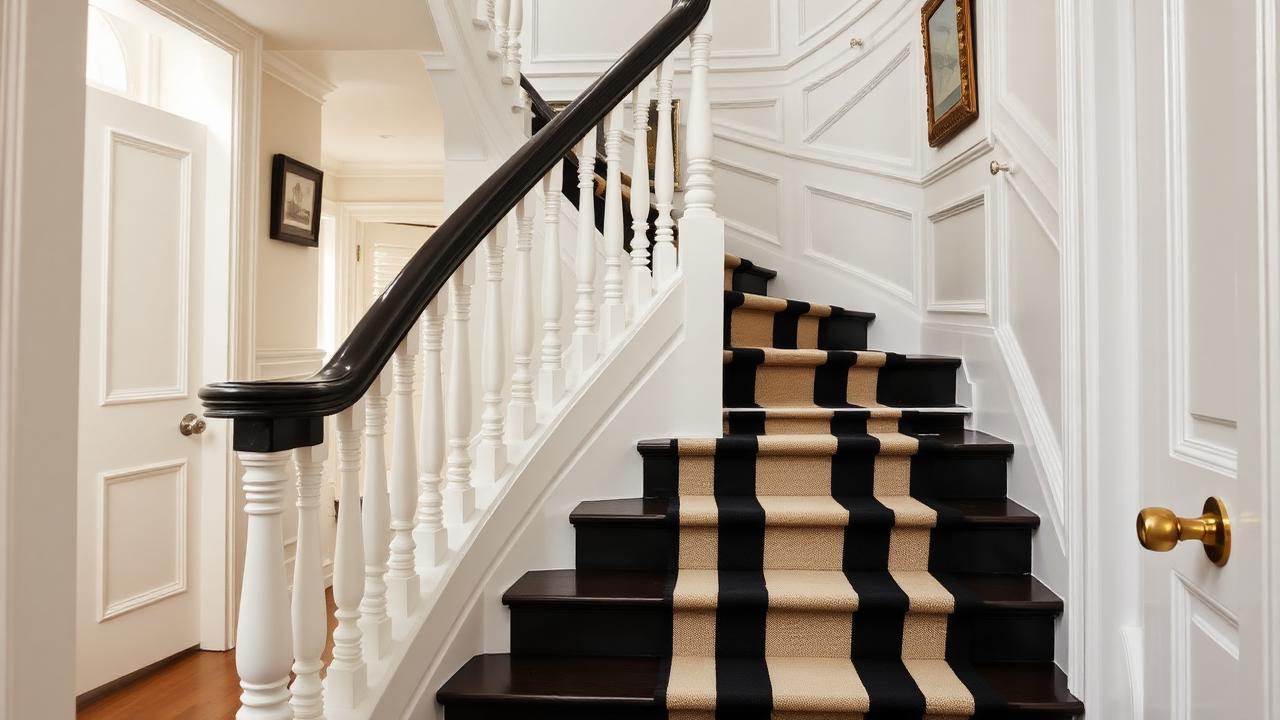
Combining screwless rods with a properly fixed runner
A screwless rod system pairs perfectly well with a fully stapled or gripper-fixed runner underneath; the two are entirely independent. Some renters assume that avoiding screws for the rods also means avoiding a proper runner fixing, but tackless strip and staples fixed into the tread do far more visible damage on removal than a well-chosen adhesive rod bracket, so weigh up which element of the installation actually needs to stay reversible.
Alternatives if screwless brackets are not viable
- Skip rods entirely and rely on a neat stapled or bound runner edge for a clean, minimal look.
- Use temporary decorative clips that sit over the nosing rather than fixing to the tread at all.
- Ask a landlord for permission to use small screws, which leave holes far less visible than most people assume once filled.
- Choose a runner style, such as a bordered or bound edge, that looks finished without needing rods at all.
Testing a screwless bracket before committing the whole flight
Always fit and load-test a single screwless bracket on the least visible step, such as the very top or bottom, for at least a week before applying the same method to the rest of the staircase. Foot traffic, door draughts and heating cycles all affect how an adhesive bond behaves in practice far more than a quick shop-floor demonstration can show, and catching a failure on one step is far less disruptive than discovering it across thirteen.
Combining tension clips with lightweight decorative rods
Sprung tension clips work best when paired with a genuinely lightweight rod, such as slim aluminium or hollow brass-plated tube, rather than any rod marketed as solid metal. Manufacturers rate clip grip strength for a specific weight range, and exceeding it even slightly causes the clip to slowly bend open over weeks of foot traffic vibration, eventually dropping the rod. Check the stated maximum rod weight before ordering, not just the tread compatibility.
Whatever you decide, get the numbers first: the stair runner calculator doubles as a stair runner length calculator, adding nosing wrap, landings, winders, pattern repeat and waste so you order the right length the first time.
Still deciding on material, width or pattern? Our hub on stair runners compares weaves, widths, backings and fitting styles side by side, then hands the numbers straight to the calculator.
Frequently asked questions
Do screwless stair rods actually stay in place?
On clean, sealed, flat surfaces with lightweight rods, yes, for several years. On rounded nosings, painted wood or with heavy solid brass rods, adhesive brackets are more likely to fail.
Can I use no-screw rods on a rented staircase?
Yes, this is their best use case. Adhesive or tension brackets avoid drilling and can usually be removed without permanent damage, provided the surface is sealed rather than raw painted wood.
Will no-screw rods hold the runner down?
No. They only mount the decorative rod. The runner underneath still needs proper fixing with staples, tackless strip or adhesive tape to stay secure and safe.
What is the weight limit for adhesive stair rod brackets?
Most foam-pad brackets are rated for light rods only, around half a pound to a pound. Solid brass rods are generally too heavy and should use screw-fixed brackets instead.
How long do adhesive stair rod brackets last before failing?
On a clean, sealed, flat surface with a lightweight rod, adhesive brackets commonly last three to five years before needing re-adhering. Humid stairwells, heavy rods or unsealed painted wood can shorten this to under a year.
Know your numbers in 30 seconds
Enter your step count, tread depth and riser height — the stair runner calculator gives you the exact length to order, in metres and feet, with waste included.
Work out how many rods I needReady for real prices?
Get quotes from vetted stair runner suppliers and fitters near you. Free, no account, no obligation.
Every guide is written from hands-on measuring and fitting experience, checked against the calculator’s own maths, and re-reviewed whenever prices or methods change. Read our editorial standards.