
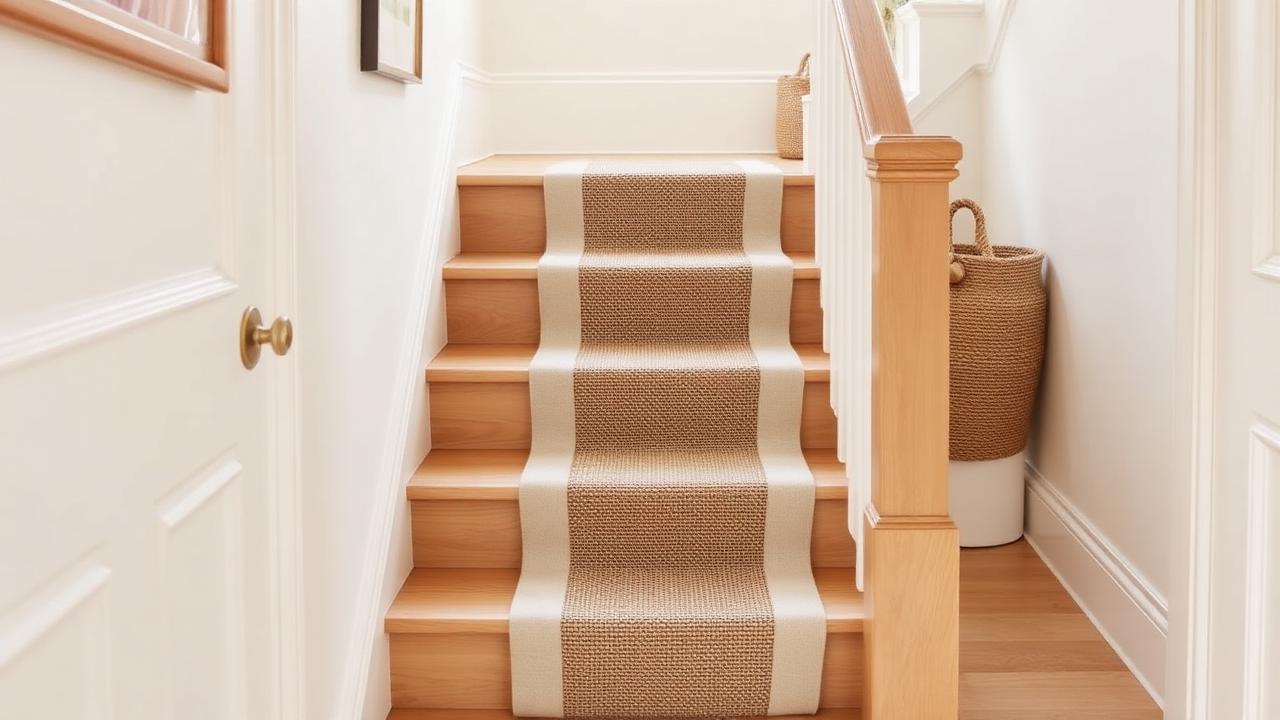
What counts as low pile?
Pile height refers to the length of the visible carpet fibres above the backing. Low pile generally means anything under about 0.5 in (1.3 cm), with many stair-specific products sitting closer to 0.25-0.3 in (6-8 mm). This is deliberately shorter than typical living-room carpet, because stairs need a firmer, denser surface that resists crushing at the nosing and provides secure footing on a sloped surface.
Why low pile suits stairs
On a flat floor, a taller pile feels luxurious underfoot. On a staircase, that same tall pile compresses unevenly at the leading edge of each tread, since that's where the most pressure and friction occurs with every step. Over time, a plush pile on stairs shows a visible worn stripe on each tread while the rest of the pile stays fuller, creating an uneven, patchy look. A low, dense pile wears far more evenly across its surface and keeps a tidier appearance for years longer.
Low pile runners are also considered safer, particularly for households with young children, older adults, or anyone using the stairs while carrying items. A shorter, denser pile provides a more predictable, stable surface for your foot to land on, reducing the risk of a toe catching in longer fibres.
How much do I need for 13 steps?
Pile height does not change the length calculation, only the runner's thickness. For a 13-step flight: 10 in tread + 7.5 in riser + 0.75 in nosing wrap = 18.25 in per step, times 13 is 237.25 in, plus 24 in finishing is 261.25 in (21.77 ft). With a 10% waste margin, order about 24 ft. Metric: 25 + 19 + 1.9 cm = 45.9 cm per step, times 13 is 596.7 cm, plus 60 cm is 656.7 cm, plus 10% is approximately 7.3 m.
| Pile height | Best use | Wear pattern |
|---|---|---|
| Under 0.25 in / 6 mm | High traffic, stairs, safety-focused homes | Very even |
| 0.25-0.5 in / 6-13 mm | Standard stair use | Even with proper underlay |
| Over 0.5 in / 13 mm | Low-traffic or decorative use only | Uneven, wears faster on nosing |
Know your numbers in 30 seconds
Enter your step count, tread depth and riser height — the stair runner calculator gives you the exact length to order, in metres and feet, with waste included.
Open the stair runner calculatorBalancing comfort and practicality
The main trade-off with low pile is a slightly firmer feel underfoot compared to a plush carpet. Most homeowners find that a good stair-specific underlay compensates for this, adding cushioning without adding pile height. If comfort is a top priority, look for a low pile runner described as a dense or tight loop weave, which often feels more substantial underfoot than a flat, thin weave despite the short pile height.
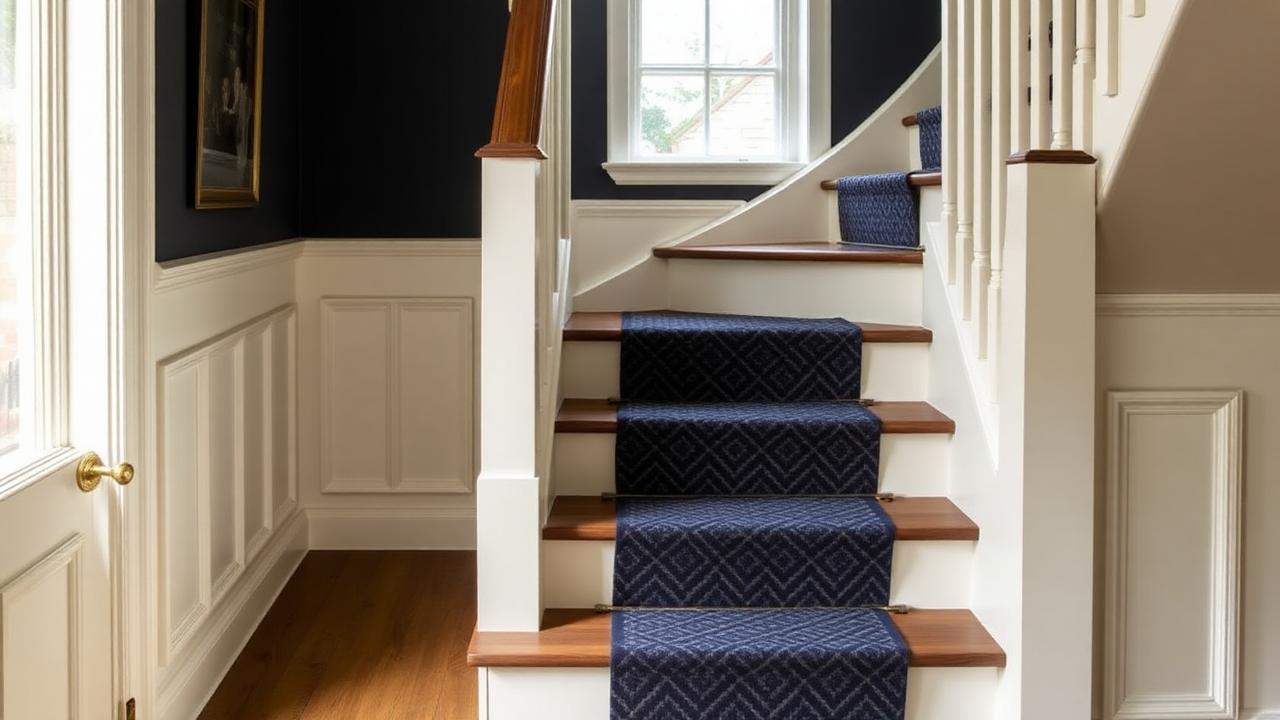
Loop pile vs cut pile at low heights
Low pile loop weaves (like many wool berbers) tend to be extremely durable and resistant to crushing, while low pile cut weaves offer a slightly softer touch. Both are good stair choices; the decision often comes down to preferred texture.
- Choose a pile height under 0.5 in (1.3 cm) for the most even wear on stairs.
- Pair low pile runners with a dense underlay to offset firmness.
- Loop weaves at low pile heights resist crushing especially well.
- Low pile is generally considered safer for children and older adults.
- Length calculations are unaffected by pile height; only thickness changes.
Sizing stays the same, only stack height changes
It is worth repeating that switching to a low pile runner never changes your ordered length; it only changes the combined stack height once the underlay is factored in. For the same 13-step flight at roughly 24 ft (7.3 m) of runner, a low pile product paired with a standard stair-grade underlay typically produces a stack height of about 0.5-0.75 in (13-19 mm) at the nosing, well within the range most fitters consider stable and safe for a crisp wrap around the tread edge.
| Stack component | Typical height (in) | Typical height (mm) |
|---|---|---|
| Low pile runner | 0.25-0.3 | 6-8 |
| Stair-grade underlay | 0.25 | 6 |
| Combined stack at nosing | 0.5-0.55 | 13-14 |
Checking pile height before you order
Because pile height is not always prominently listed on a product page, it is worth asking a supplier directly for the exact figure in inches or millimetres if it is not stated, rather than relying on descriptive terms like plush or textured, which vary between manufacturers. If you are ordering a sample, measure the pile height yourself with a ruler once it arrives, since this small check can save you from an expensive mismatch on stairs that see heavy daily use.
- Ask suppliers for an exact pile height figure if it isn't listed.
- Measure sample pile height yourself with a ruler before ordering the full roll.
- Combine low pile with a stair-grade underlay for a stable, safe nosing stack.
- Remember that length calculations are unaffected by pile height changes.
- Favour loop weaves for maximum crush resistance at low pile heights.
Final thoughts
Choosing a low pile stair runner is one of the simplest ways to improve both safety and longevity on a staircase without sacrificing style. Combine it with a quality underlay and accurate measurements and you have the foundation for a runner that looks good and performs well for years to come.
Whatever you decide, get the numbers first: the stair runner calculator doubles as a stair runner length calculator, adding nosing wrap, landings, winders, pattern repeat and waste so you order the right length the first time.
Still deciding on material, width or pattern? Our hub on stair runners compares weaves, widths, backings and fitting styles side by side, then hands the numbers straight to the calculator.
Frequently asked questions
What pile height is considered low for stairs?
Generally under 0.5 in (1.3 cm), with many stair-specific products around 0.25-0.3 in (6-8 mm).
Is low pile safer than plush pile?
Yes, a shorter, denser pile provides a more stable, predictable surface underfoot, reducing trip risk.
Does low pile wear better than plush pile on stairs?
Yes, low pile wears much more evenly across the tread since it resists crushing at the nosing better than a taller pile.
How much runner do I need for 13 steps?
Around 23-24 ft (7-7.3 m), the same as for any pile height, since length depends on stair dimensions, not pile.
Does low pile feel uncomfortable underfoot?
A good underlay largely compensates for the firmer feel, adding cushioning without increasing pile height.
Is loop pile or cut pile better at low heights?
Loop pile resists crushing extremely well, while cut pile offers a slightly softer touch; both work well on stairs.
Can I use a low pile runner with patterns?
Yes, many low pile stair runners come in patterned weaves that still show the design clearly despite the short pile.
Is low pile a good choice for households with pets?
Yes, low pile resists matting and is easier to clean of pet hair than a longer, plusher pile.
Know your numbers in 30 seconds
Enter your step count, tread depth and riser height — the stair runner calculator gives you the exact length to order, in metres and feet, with waste included.
Get your length with the stair runner calculatorReady for real prices?
Get quotes from vetted stair runner suppliers and fitters near you. Free, no account, no obligation.
Every guide is written from hands-on measuring and fitting experience, checked against the calculator’s own maths, and re-reviewed whenever prices or methods change. Read our editorial standards.