

The Power of Simplicity in Stair Design
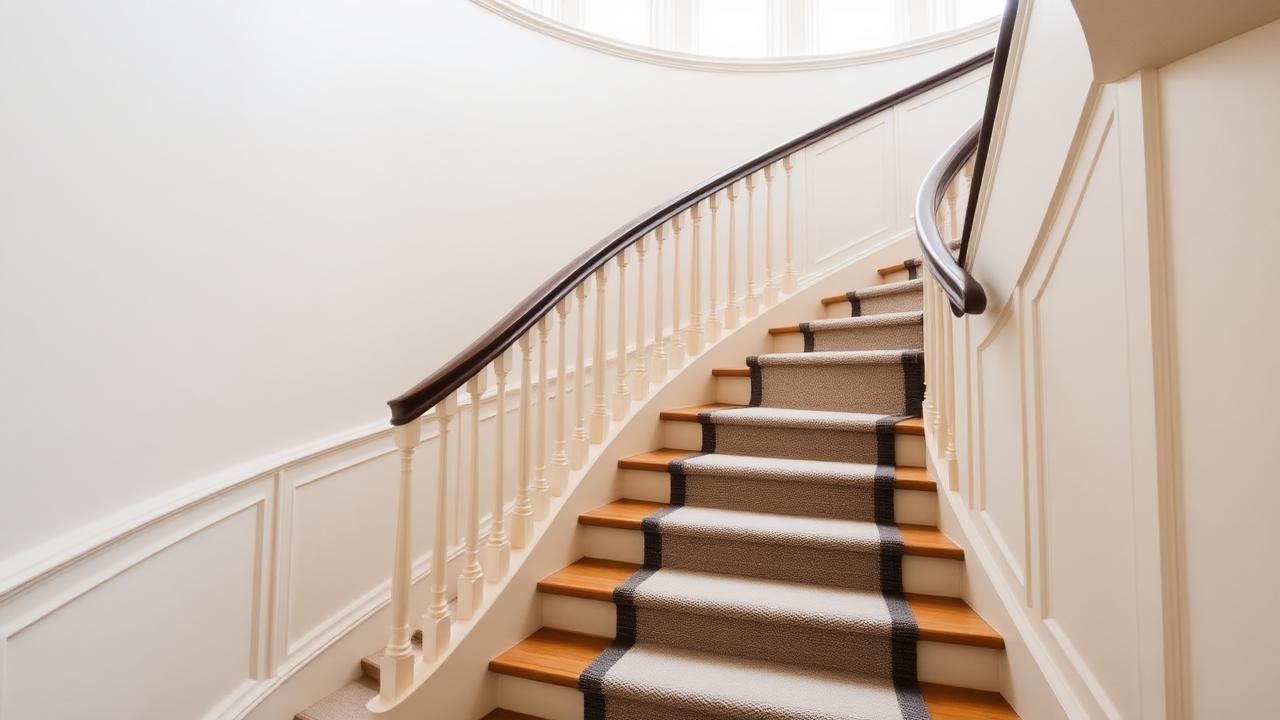
In interior design, 'plain' does not mean 'boring'. A plain stair runner allows the texture of the carpet and the beauty of the surrounding woodwork to take center stage. This style is ideal for modern, minimalist, or Scandi-inspired homes where the goal is to create a serene, uncluttered environment. Without a pattern to distract the eye, the focus shifts to the 'lustre' of the wool, the depth of the pile, and the precision of the installation. A plain runner can also act as a 'neutralizer' in a home with busy wallpapers or complex floor tiles in the hallway.
When choosing a plain runner, the 'reveal'—the amount of wooden stair visible on either side—is critical. A wider reveal can make a narrow staircase feel more open, while a narrower reveal provides more warmth and sound insulation. Safety standards like the UK's Part K and the US IRC are easier to meet with plain runners, as there are no pattern lines to highlight any minor variations in step height or width that might exist in older homes. The consistency of a plain color also makes the staircase feel like a single, cohesive architectural unit.
The Psychology of Minimalism in Vertical Spaces
Staircases are transitional spaces. They move you from the 'public' areas of the home to the 'private' ones. A plain runner facilitates this transition by providing a calm, steady visual experience. In a busy household, the lack of visual 'noise' on the stairs can contribute to a sense of order. Furthermore, light-colored plain runners (like creams or soft greys) can brighten a dark stairwell by reflecting more light, whereas dark plain runners (like charcoal or navy) can add a sense of weight and 'grounding' to a light-filled space.
Texture and Pile Types for Plain Runners
Since there is no pattern, the choice of 'weave' or 'pile' becomes the primary design decision. Different textures reflect light differently and provide varying levels of comfort. You must also consider the durability of each type, as plain carpets can sometimes show wear more readily than patterned ones.
- Velvet / Cut Pile: Smooth, luxurious, and incredibly soft. It looks stunning in a high-end minimalist home but can show 'shading' (watermarking) where the pile is pushed in different directions.
- Twist Pile: The most practical choice. The 'heathered' look, created by twisting different colored yarns together, helps hide bits of fluff or dirt while providing a durable surface.
- Loop Pile / Berber: Provides a rugged, architectural look; very durable but not recommended for homes with cats, as their claws can snag the loops.
- Flatweave: Thin and sleek, perfect for a very modern, sharp look. It often uses a 'ribbed' texture to add visual interest without needing a pattern.
Wool is the preferred fiber for plain runners because its natural scales help hide soil, whereas synthetic fibers can sometimes look 'flat' or 'plastic' when they aren't broken up by a pattern. However, modern 'solution-dyed' nylons or triexta fibers offer incredible stain resistance and can be a good choice for high-traffic families who want a plain, light-colored look.
Installation and the 'Stair Runner Length Calculator' Advantage
The biggest advantage of a plain runner is the lack of a pattern repeat. This makes the installation much simpler and significantly reduces the amount of waste. You don't have to worry about aligning medallions or stripes on each step. However, this also means that any flaws in the installation—like a crooked edge or an uneven staple—will be more obvious because there is no pattern to hide them.
Using a stair runner length calculator is still essential to get the total yardage or meterage right. For plain runners, you generally only need to add 5-10% for waste, compared to the 15-20% required for patterned carpets. This makes plain runners the most budget-friendly option for high-quality materials. When installing, ensure the 'grain' or 'pile direction' of the carpet is consistent. Always install the pile so it runs 'down' the stairs; this ensures it looks uniform and lasts longer under the friction of foot traffic.
Budgeting for Plain Runners
| Material Quality | UK £ (per linear m) | US $ (per linear ft) |
|---|---|---|
| Budget Polypropylene | £15 - £30 | $5 - $10 |
| Mid-Range Wool Twist | £40 - £60 | $14 - $22 |
| Luxury Wool Velvet | £70 - £140 | $28 - $50 |
| Silk / Bamboo Blend | £160+ | $65+ |
Installation Tip
Because plain runners show 'shading' more easily, always ensure the pile is 'brushed' in the same direction during installation. Use a carpet bolter to tuck the carpet tightly into the crotch of the stair without crushing the pile, maintaining a clean, sharp line.
Measuring and Ordering a Plain Runner
Measuring for a plain runner is straightforward but requires care to ensure the edges are perfectly straight. If your stairs are painted, consider using a runner with a 'bound' or 'whipped' edge in a contrasting color to add a subtle design element without the complexity of a full pattern. This can provide a nice 'frame' for a plain carpet.
- Measure the width of the stairs and decide on the runner width (usually 60-70% of the total stair width).
- Calculate the 'Total Linear Run' (Tread + Riser + Nosing wrap) x number of steps.
- Add for any landings—calculate the width and length and add 3 inches (7.5cm) for trimming.
- Add a 5-10% 'cutting allowance' for standard stairs, or 15% for stairs with many turns.
- Specify the 'pile direction' when ordering from the roll to ensure multiple pieces match.
Care and Maintenance of Plain Surfaces
Plain runners are the most honest of all carpets—they show exactly how they are being treated. To keep them looking fresh, vacuum at least three times a week. If you have a 'cut pile' plain runner, you might notice 'tracking' where you walk; this is normal and can be minimized by occasionally vacuuming in the opposite direction. For light-colored plain wool, keep a specialist wool-safe spot cleaner on hand. Because there is no pattern to hide a stain, speed is of the essence when a spill occurs. Blot, don't rub!
Know your numbers in 30 seconds
Enter your step count, tread depth and riser height — the stair runner calculator gives you the exact length to order, in metres and feet, with waste included.
Open the stair runner calculatorWhatever you decide, get the numbers first: the stair runner calculator doubles as a stair runner length calculator, adding nosing wrap, landings, winders, pattern repeat and waste so you order the right length the first time.
Still deciding on material, width or pattern? Our hub on stair runners compares weaves, widths, backings and fitting styles side by side, then hands the numbers straight to the calculator.
Frequently asked questions
What is the best pile for a plain stair runner?
A 'twist' pile is generally considered the best all-around choice for a plain stair runner. It is highly durable, resists matting, and is excellent at hiding foot traffic marks. For a more luxurious look, a 'velvet' pile is beautiful but requires more maintenance to keep it looking pristine.
Can I use plain carpet on a winder staircase?
Yes, and it is actually much easier than using patterned carpet. Because there is no pattern to align, the fitter can 'fan' the carpet around the turn more easily. You will still need to cut and seam the carpet on the landing, but the joins are much less visible in a plain material.
Do plain runners show dirt more than patterned ones?
Generally, yes. A pattern (like a heathered twist or a small geometric) is better at camouflaging small bits of debris. However, if you choose a 'heathered' plain carpet—where the yarn is a blend of slightly different shades—it will be much more forgiving than a solid, single-color carpet.
Are plain stair runners cheaper?
Usually, yes. Because there is no 'pattern match' to worry about, you need to buy less material. Additionally, the manufacturing process for plain carpets is less complex than for intricate Wilton or Axminster weaves, leading to a lower price per square yard or meter.
What color should I choose for a plain runner?
Neutral tones like grey, beige, and taupe are the most popular because they don't date and they make the space feel larger. However, a bold plain color—like a deep navy or a forest green—can make a powerful design statement without the 'busyness' of a pattern.
How do I maintain a plain wool runner?
Vacuum at least twice a week with a suction-only vacuum to remove grit that can abrade the fibers. For wool, avoid beater bars which can fuzz the surface. Spot clean spills immediately with a clean, white cloth and a wool-safe cleaning agent.
Should I choose a light or dark plain runner?
Light colors make a space feel bigger and brighter but show every speck of dirt. Dark colors are cozy and hide stains well but can show 'lint' and pet hair very clearly. Mid-tones like 'mushroom' or 'warm grey' are often the most practical compromise for busy homes.
Can I get a plain runner with a border?
Yes, this is a popular 'hybrid' style. You can have a plain central carpet with a contrasting border sewn onto the edges. This gives you the minimalist look of a plain runner with the architectural definition of a bordered one.
Know your numbers in 30 seconds
Enter your step count, tread depth and riser height — the stair runner calculator gives you the exact length to order, in metres and feet, with waste included.
Stair Runner Length CalculatorReady for real prices?
Get quotes from vetted stair runner suppliers and fitters near you. Free, no account, no obligation.
Every guide is written from hands-on measuring and fitting experience, checked against the calculator’s own maths, and re-reviewed whenever prices or methods change. Read our editorial standards.