

Material protection ranking
| Material | Claw resistance | Stain/accident resistance | Overall pet suitability |
|---|---|---|---|
| Solution-dyed nylon | Excellent | Excellent | Best overall |
| Polypropylene | Good | Very good | Good budget option |
| Tight wool loop | Good | Fair, absorbs odour | Good but needs faster cleanup |
| Sisal / jute | Poor, snags and stains permanently | Very poor | Avoid with pets |
Know your numbers in 30 seconds
Enter your step count, tread depth and riser height — the stair runner calculator gives you the exact length to order, in metres and feet, with waste included.
Open the stair runner calculatorEveryday protection habits
- Wipe or blot accidents immediately, before liquid reaches the backing.
- Keep claws trimmed to reduce snag risk on loop pile.
- Vacuum with suction only on stair runners, avoiding beater bar heads that can pull loops.
- Use a doormat system to reduce grit tracked onto the stairs, which cuts fibres over time.
Products that help
- Fabric-safe stain protector spray reapplied every 6-12 months.
- A washable runner or removable stair treads for very high pet traffic homes.
- Enzyme-based pet stain cleaner rather than standard carpet shampoo for accidents.
- A firm underlay pad, which resists claw penetration better than a very soft one.
Test any cleaner on an offcut first
Keep a leftover offcut of your runner specifically for testing stain treatments and cleaners before applying anything to the visible flight.
Safety and building-code notes
Stairs are one of the most common places for a fall in the home, so anything touching protecting a stair runner from pets should be checked against basic safety practice as well as good looks. Codes vary by jurisdiction but the underlying principles are consistent everywhere carpet meets a staircase.
- Keep nosing build-up modest; a lip much over 3/8 in (10 mm) between the runner and a bare edge becomes a trip hazard.
- Use a slip-resistant backing or pad, particularly on the top and bottom steps where speed is highest.
- Secure every edge fully; a loose corner or lifted seam is the single most common cause of a stair fall on carpeted stairs.
- In rented or multi-occupancy buildings, check local fire and flooring regulations before installing natural fibre runners.
Tools and materials, with typical prices
Before starting anything connected to protecting a stair runner from pets, it helps to know what the job actually costs in tools and consumables, not just carpet. Most of this list is a one-off purchase that will be reused on future stair or rug projects, so it is worth buying reasonable quality rather than the cheapest option.
- Tape measure and chalk line: $15-30 (£12-24), for marking and checking dimensions.
- Utility knife and spare blades: $10-20 (£8-16), for clean cuts through backing.
- Staple gun or tackless strip and knee kicker: $40-150 (£30-120) depending on method.
- Underlay/pad, per step: $3-6 (£2.50-5), skip only where the fibre specifies no pad.
- Seam tape or adhesive for joins: $8-15 (£6-12) per roll or tube.
Getting the best result long-term
A stair runner that is measured, ordered and fitted correctly on day one keeps paying off for years: it wears evenly, stays flat at the nosing, and does not need premature replacement. When working through protecting a stair runner from pets, treat the first measurement and the final fitting check as equally important, since a good spec undone by a rushed fit still ends in an early failure.
- Keep a written record of every measurement, the supplier, and the exact spec ordered, in case you need to reorder a matching piece later.
- Ask your fitter to leave any offcut, it is useful for patching a worn tread years down the line.
- Photograph the staircase before and after fitting so you have a reference for insurance or resale.
- Revisit fixings and edges once a year even on a well-fitted runner, since timber stairs move seasonally with humidity.
Extra buying tips worth knowing
A little extra homework before ordering saves both money and disappointment on protecting a stair runner from pets. Suppliers vary widely in how clearly they explain pricing, lead times and what happens if a measurement turns out to be wrong once the crew arrives.
| Question to ask supplier | Why it matters |
|---|---|
| Is remeasuring included before cutting? | Protects you if your DIY measurement was slightly off |
| What happens if the runner is too short on the day? | Some fitters carry matching offcuts, others do not |
| Is old carpet removal and disposal included? | Often a separate line item that is easy to miss |
| What is the aftercare/warranty policy? | Covers seam failure or edge fraying within the first year |
A quick pre-order checklist
Before you place an order relating to protecting a stair runner from pets, run through a short checklist to catch the errors that cause the most reorders and delays. A few extra minutes here is far cheaper than a wrong cut of carpet or a mismatched batch.
- Re-measure the narrowest tread and the total flight length a second time on a different day.
- Confirm the dye lot or batch number matches across all rolls if more than one is needed.
- Check the supplier's stated waste allowance is included, not assumed.
- Agree a fitting date only once the material has actually arrived and been inspected.
- Keep the invoice and batch details safe in case a repair or extension is needed later.
Fibre choice matters more than any add-on treatment
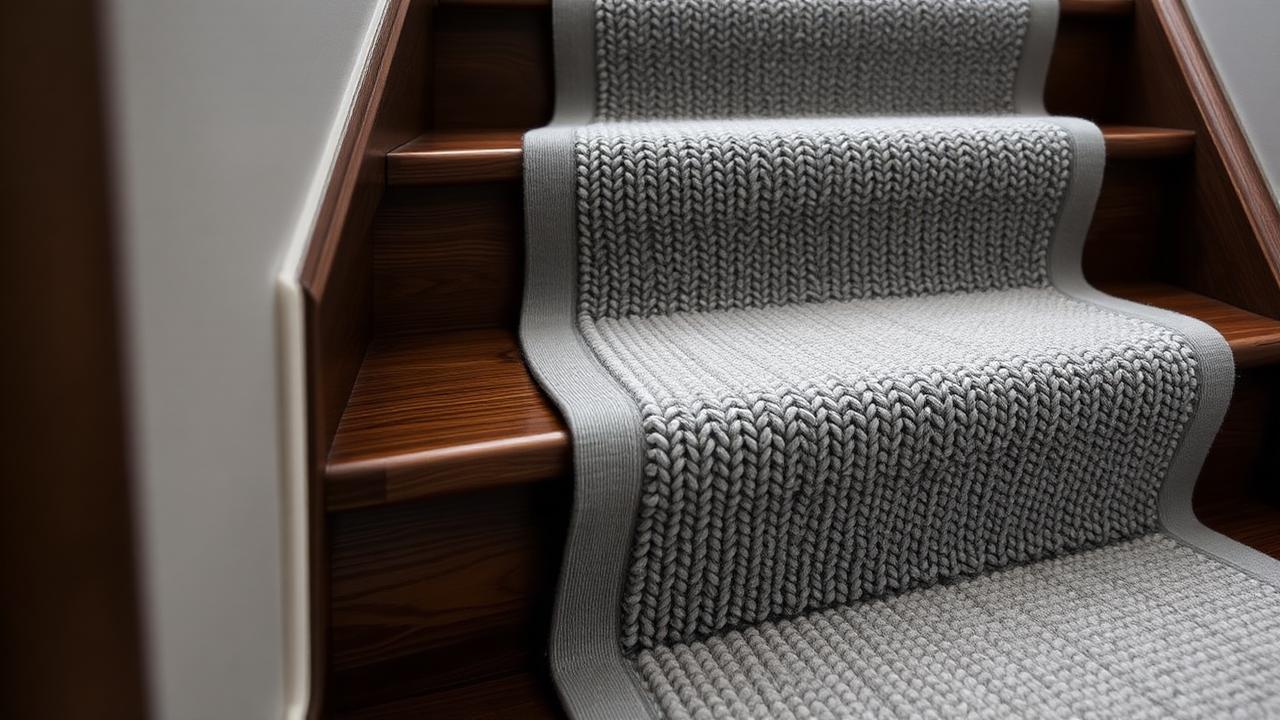
Before reaching for sprays or covers, the single biggest factor in pet resilience is fibre choice. Solution-dyed nylon and polypropylene resist claw snagging and clean up accidents far better than wool or sisal, which can permanently stain or unravel if urine is not caught within minutes. If you are ordering a new runner specifically for a pet household, a tightly woven low-loop pile in a mid-tone colour hides both shedding and minor soiling far better than a high pile or very light shade.
Claw damage and nail maintenance
Dog nails that are not regularly trimmed are one of the most common causes of premature stair runner wear, snagging loop-pile fibres and pulling threads loose at the tread edge, particularly where dogs push off to climb. Keeping nails trimmed every 3-4 weeks and adding a runner-wide clear plastic or rubber protector strip on the most-used 3-4 steps (roughly $20-40, £16-32, per strip) meaningfully extends the life of the section that takes the most abuse.
Whatever you decide, get the numbers first: the stair runner calculator doubles as a stair runner length calculator, adding nosing wrap, landings, winders, pattern repeat and waste so you order the right length the first time.
Still deciding on material, width or pattern? Our hub on stair runners compares weaves, widths, backings and fitting styles side by side, then hands the numbers straight to the calculator.
Frequently asked questions
How often should a stair runner be professionally reviewed?
Once a year is sensible even if nothing looks wrong, since fixings loosen and timber treads move slightly with the seasons, and catching a lifted edge early prevents a trip hazard.
Should I keep the offcut after fitting?
Yes, ask your fitter to leave any offcut from the same dye lot. It is the only reliable way to patch a worn or damaged section later with an exact colour and pattern match.
How do I stop my dog from damaging the stair runner?
Choose a tight loop or cut pile synthetic fibre, keep claws trimmed, and vacuum with suction only. Long loop pile and natural fibres like sisal are the most vulnerable to claw damage.
What is the best stair runner for pet accidents?
Solution-dyed nylon or polypropylene, both of which resist staining and can be cleaned with enzyme-based cleaners without the colour lifting.
Does underlay protect a stair runner from pets?
Indirectly, yes. A firm underlay resists claw penetration and impact better than a very soft pad, and helps the surface carpet keep its shape longer under pet traffic.
Can a wool stair runner survive with dogs and cats?
Yes, if it has a tight, dense loop rather than a long loose loop, though wool absorbs odour more than synthetics and needs faster accident cleanup.
What is the biggest mistake people make with this?
Rushing the measuring or prep stage. Most poor outcomes with protecting a stair runner from pets trace back to a single measurement taken at the wrong point, or a substrate check skipped to save a few minutes, both far cheaper to fix before the runner is cut than after.
Know your numbers in 30 seconds
Enter your step count, tread depth and riser height — the stair runner calculator gives you the exact length to order, in metres and feet, with waste included.
Choose a pet-friendly runner size and materialReady for real prices?
Get quotes from vetted stair runner suppliers and fitters near you. Free, no account, no obligation.
Every guide is written from hands-on measuring and fitting experience, checked against the calculator’s own maths, and re-reviewed whenever prices or methods change. Read our editorial standards.