
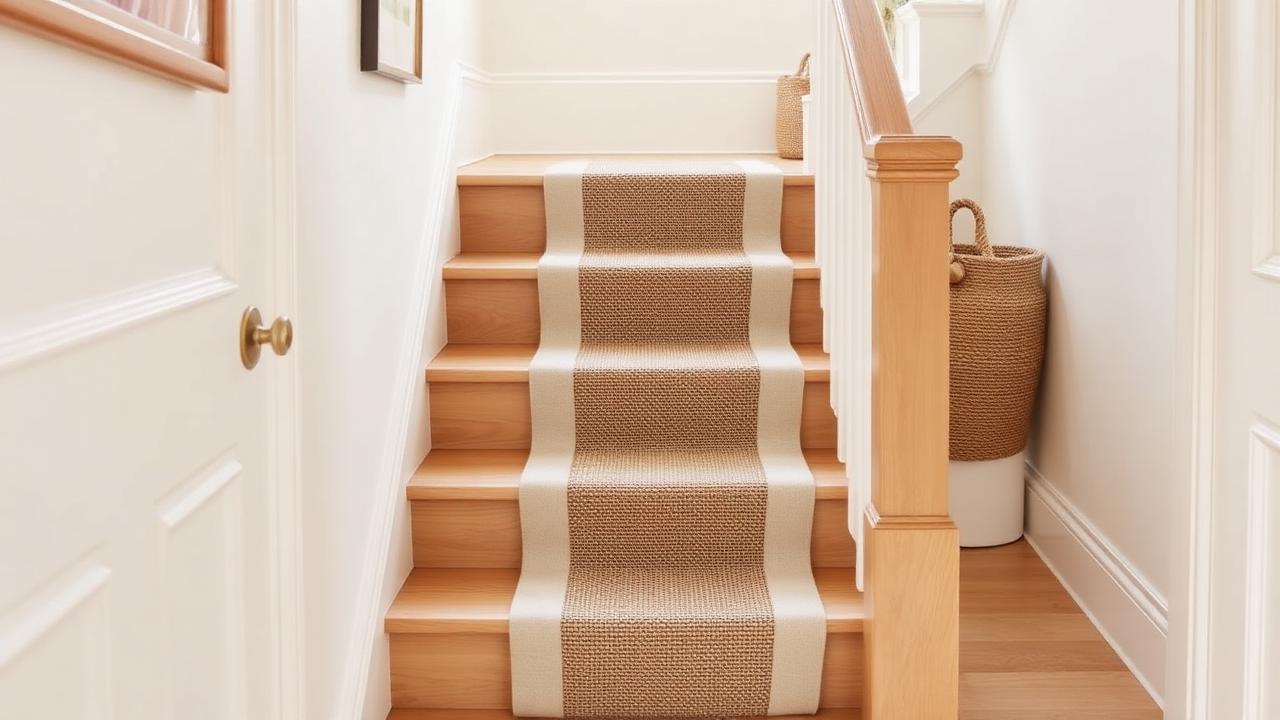
What matters with pets
| Property | Why it matters | Best choice |
|---|---|---|
| Grip | Traction for claws and paws | Low, dense loop or flatweave |
| Snag resistance | Claws pull long loops | Cut pile or very tight loop |
| Cleanability | Accidents and muddy paws | Solution-dyed nylon or polypropylene |
| Odour resistance | Fibre absorbs smell | Synthetic over wool |
| Colour tolerance | Hides hair | Mid-tone flecked or patterned |
Avoid long loop pile with cats
Long loops are an invitation. A claw catches one loop and pulls a run the length of the flight. Tight loop or cut pile is far safer.
Know your numbers in 30 seconds
Enter your step count, tread depth and riser height — the stair runner calculator gives you the exact length to order, in metres and feet, with waste included.
Open the stair runner calculatorBest and worst fibres
- Best: solution-dyed nylon — durable, bleach-cleanable, excellent grip.
- Good: polypropylene — cheap, stain resistant, flattens sooner.
- Good: tight wool loop — beautiful and grippy, but absorbs odour.
- Avoid: sisal and jute — they stain permanently and cannot be wet-cleaned.
- Avoid: silk or viscose blends — no wear resistance at all.
Helping an older dog
- Choose the widest runner the staircase allows so the dog is never on bare timber.
- Use a firm, thin underlay — soft, thick pads feel unstable underfoot.
- Make sure the nosing is wrapped so there is no slick edge.
- Keep the pile short so claws grip rather than sink.
Cost of pet-proofing a staircase
Solution-dyed nylon typically costs 15 to 30% more than polypropylene at $35 to $65 per running yard versus $20 to $40, but the difference is usually recovered in avoided replacement. A polypropylene runner damaged by claws or accidents in a busy pet household can need replacing within 3 to 5 years, while a well-specified nylon runner will often go a decade or more under the same conditions.
Runner width for multi-pet households
Where more than one dog uses the stairs, or a large breed shares the flight with a nervous cat, going a size wider than the standard recommendation gives more room for two animals to pass without one stepping onto bare, polished tread. On a 36in staircase, choosing a 30in runner over a 27in gives noticeably more usable width for simultaneous traffic.
| Household | Suggested approach |
|---|---|
| Single small dog | Standard width, focus on grip and low pile |
| Large dog or multiple dogs | One size wider than standard, low dense loop |
| Dog and cat together | Wider runner, avoid long loop pile entirely |
Know your numbers in 30 seconds
Enter your step count, tread depth and riser height — the stair runner calculator gives you the exact length to order, in metres and feet, with waste included.
Open the stair runner calculatorTraining aids and transition zones
- Add a textured mat at the top and bottom landing so pets get a grip cue before the stairs change surface.
- If a puppy or older dog is nervous of stairs, a consistent runner colour that contrasts with the landing floor helps them judge the edge.
- Keep the same pile height and fixing the whole flight — pets notice and hesitate at texture changes mid-staircase.
When a runner is not enough
For very old or arthritic dogs, or breeds prone to hip issues, a runner reduces slipping but does not solve mobility problems on its own. Pair it with a ramp or gate if the dog is struggling, and keep the flight well lit so joint-compromised pets can see the tread edges clearly.
Fixing method matters with pets
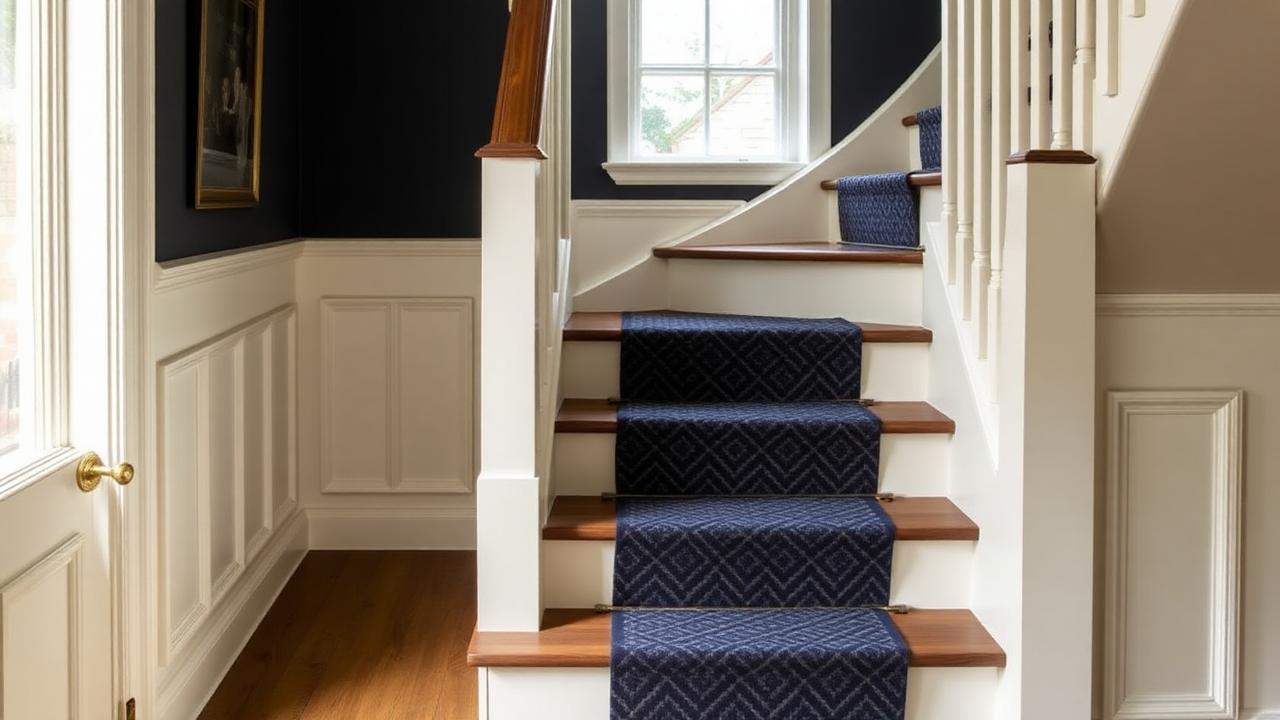
However the runner is fixed, it needs to withstand repeated impact from paws jumping several steps at once, which is a different loading pattern to a person's steady footfall. A tackless-strip-and-staple fit, properly tensioned, generally holds up better under pet traffic than an adhesive-tape-only fit, because tape can start to lift at the edges under the sideways scuffing motion of a dog descending quickly. If you are using stair rods for the look, make sure the runner is also independently fixed underneath — rods alone do not stop a runner shifting under a bounding dog.
| Fixing method | Pet suitability | Notes |
|---|---|---|
| Tackless strip + staples | Best | Holds tension under repeated impact |
| Rods over a fixed runner | Good | Rods are decorative, not the primary fixing |
| Double-sided tape only | Poor | Lifts at edges under scuffing paws |
| Adhesive-free rug style | Poor on stairs | Prone to sliding, only suitable with a full non-slip pad |
Claws, grout and pile: a closer look at snagging
Long, uncut dog nails are the single biggest cause of premature runner damage in pet households, more so than the fibre choice itself. A loop pile runner with nails that are not regularly trimmed will develop pulled loops within months regardless of how tightly it is woven. If trimming nails consistently is not realistic for your dog, lean even harder toward a cut pile or dense flatweave construction, since there is simply no loop for an errant claw to catch on those constructions.
- Trim or file nails every 2 to 3 weeks to reduce snag risk regardless of fibre choice.
- Cut pile and flatweave constructions have no loop structure, so claws cannot pull a run in the fabric.
- If you already have a loop pile runner, a single pulled loop can usually be snipped flush rather than pulled further — never yank a loose loop.
- Keep nails away from stair edges specifically; that is where the highest-force contact happens as a dog turns onto the next flight.
Cleaning routine for a household with pets
- Vacuum at least twice a week with a suction-only or pet-hair-specific head; beater bars are harder on a nosing that already takes claw impact.
- Wipe muddy paw marks while still damp rather than letting them dry into the pile.
- Keep an enzyme cleaner on hand for accidents — treating within minutes prevents the odour compounds from setting into the backing.
- Have the runner professionally deep-cleaned once or twice a year in a busy multi-pet household, more often than the once-every-18-months typical for a pet-free home.
Colour and pattern choices that hide pet mess
A flat, pale, single-tone runner shows every hair, muddy print and drool mark immediately, which becomes tiring to maintain even if the material itself is durable. A mid-tone flecked, tweed or subtly patterned runner hides day-to-day mess far better between cleans without needing to go as dark as charcoal or black, which can show pale fur just as readily as a light colour shows dark fur. Match the fleck tones loosely to your pet's coat colour if you want the lowest-maintenance option — a warm oatmeal fleck disguises golden retriever or labrador hair noticeably better than a cool grey tweed does.
Match fleck tone to fur colour where you can
It sounds trivial, but a runner with flecks close to your dog's coat colour will visibly need vacuuming far less often than one in a contrasting tone, purely because loose hair blends rather than stands out.
Cost of pet-related repairs versus prevention
Re-securing a lifted edge or re-tensioning a shifted runner typically costs $60 to $120 as a call-out repair, considerably less than the $400 to $1,200 a full replacement can run on a mid-length staircase. Investing slightly more upfront in the right fibre and fixing method for a pet household routinely pays for itself by avoiding these repeat repair visits, let alone an early full replacement.
Whatever you decide, get the numbers first: the stair runner calculator doubles as a stair runner length calculator, adding nosing wrap, landings, winders, pattern repeat and waste so you order the right length the first time.
Still deciding on material, width or pattern? Our hub on stair runners compares weaves, widths, backings and fitting styles side by side, then hands the numbers straight to the calculator.
Frequently asked questions
What is the best stair runner material for dogs?
Solution-dyed nylon in a low, dense loop or cut pile. It grips well, resists staining and can be cleaned aggressively.
Will a stair runner stop my dog slipping?
Substantially, yes — provided it is wide enough that the dog is not stepping on bare timber, and the nosings are wrapped.
Is sisal a good stair runner with pets?
No. Sisal stains permanently from accidents and cannot be wet-cleaned, and its coarse texture is hard on paws.
Does the fixing method matter for a pet stair runner?
Yes. A tackless-strip-and-staple fit holds up far better under the impact of a dog jumping down stairs than double-sided tape alone, which can lift at the edges under repeated scuffing.
How often should nails be trimmed to protect a stair runner?
Every 2 to 3 weeks in most dogs. Long nails are the leading cause of pulled loops and premature wear in loop pile runners, more so than the fibre choice itself.
What colour stair runner hides pet hair best?
A mid-tone flecked or tweed runner, ideally with fleck tones close to your pet's own coat colour, hides loose hair and everyday mess far better than a flat pale or very dark solid colour.
Know your numbers in 30 seconds
Enter your step count, tread depth and riser height — the stair runner calculator gives you the exact length to order, in metres and feet, with waste included.
Size a runner for my stairsReady for real prices?
Get quotes from vetted stair runner suppliers and fitters near you. Free, no account, no obligation.
Every guide is written from hands-on measuring and fitting experience, checked against the calculator’s own maths, and re-reviewed whenever prices or methods change. Read our editorial standards.