

What each process actually does
Serging (also called overlocking) runs the cut edge of the carpet through a machine that wraps and stitches yarn tightly around it in a continuous zigzag or overcast stitch, sealing the backing and pile ends together. It sits flush with the carpet, adds almost no thickness, and is typically done in a colour matched closely to the carpet itself, though contrast serging thread exists.
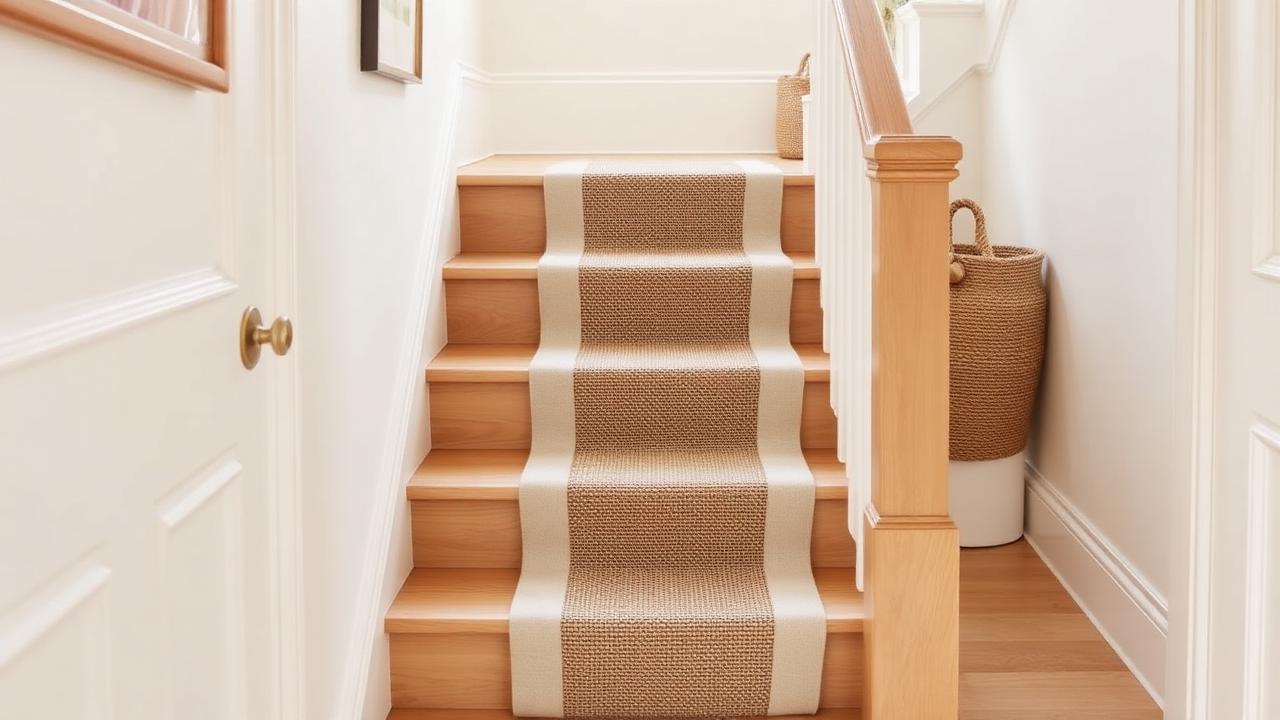
Binding wraps a separate woven tape — cotton, linen, wool, or occasionally leather — fully around the cut edge and stitches it in place, usually by hand or on a heavy-duty carpet binding machine. The tape is a genuinely separate material chosen deliberately for colour and texture, most commonly used as a contrast border rather than an exact colour match, and it sits very slightly proud of the carpet edge.
Head-to-head comparison
| Factor | Serging | Binding |
|---|---|---|
| Appearance | Flush, discreet, close colour match | Slightly raised, often a deliberate contrast |
| Durability at high-wear points | Good; can fray if machine tension was poor | Very good; tape absorbs abrasion before the carpet edge does |
| Cost | £2-5 / linear ft ($6-16/m) | £4-9 / linear ft ($13-30/m) |
| Best on | Wool and synthetic broadloom, subtle finishes | Wool, sisal, and any runner wanting a defined border look |
| Repair | Re-serging a damaged section is straightforward | Re-binding a section is possible but more involved |
| Turnaround | Fast — often done same-day at a carpet workroom | Slower — hand-finishing takes longer |
Binding is doing a border's job even when it isn't the border
Because binding tape sits proud and is usually a contrast colour, it automatically reads as a border line even on a plain carpet with no separate border design. If you want a bordered look without commissioning a full border weave, contrast binding tape is often the simplest way to get it — see the border proportions guide for how wide that line should be.
Which fibres suit which finish
- Wool broadloom: both work well; binding is the more traditional and common choice for a premium finish.
- Synthetic (nylon/polypropylene) broadloom: serging is common and cost-effective, and holds up fine given synthetic fibre's inherent edge stability.
- Sisal, jute, coir and other natural fibres: almost always bound, not serged — the coarse, loosely woven structure of natural fibre frays badly without a wrapped tape edge, covered in depth in the sisal border guide.
- Deep cut pile: binding handles the extra pile height at the fold more predictably than serging, which can leave loose fibres visible at a very deep pile edge.
Durability in practice
On a stair runner specifically, the edge takes real abuse — feet catching the side on a narrow flight, vacuum cleaner heads, shoes scuffing sideways on turns. Binding tape, being a discrete replaceable layer, tends to show wear as a slightly frayed tape edge that can be re-stitched or re-bound without touching the carpet itself. Serged edges that fray require re-serging, which is quick, but a badly frayed serge can occasionally need trimming a few millimetres of pile width off first, very slightly narrowing the runner.
Cost across a flight
| Flight length | Serging, approx. | Binding, approx. |
|---|---|---|
| 12 steps / ~9m of edge (both sides) | £20-45 / $27-60 | £40-90 / $53-120 |
| 16 steps / ~12m of edge | £26-60 / $35-80 | £54-120 / $70-160 |
These figures are for the finishing process alone, added on top of the carpet cost, and are usually charged by whoever cuts and finishes the broadloom into a runner — either the retailer's workroom or your fitter.
Know your numbers in 30 seconds
Enter your step count, tread depth and riser height — the stair runner calculator gives you the exact length to order, in metres and feet, with waste included.
Open the stair runner calculatorWhich should you choose?
Choose serging for a subtle, cost-conscious finish on wool or synthetic carpet where you want the edge to disappear rather than stand out. Choose binding for natural fibre runners (where it's close to mandatory), for a deliberate contrast-border look, for a premium wool installation, or anywhere the edge takes heavy side-on wear such as a narrow staircase or a well-used turn.
Machine serging vs hand-finished serging
Not all serging is equal quality. Factory or workroom machine serging, done on a dedicated carpet overlock machine, produces a tight, even stitch with consistent tension along the whole length, and is what most carpet retailers offer as standard when cutting broadloom into a runner. Hand-guided serging on older or smaller machines can produce visibly uneven stitch density, particularly at the start and end of each run or where the operator has to stop and restart, which is worth checking on a sample before committing a full flight's worth of carpet to a lower-volume workroom that may not have invested in newer equipment.
How edge finish choice interacts with pile height
A very short, dense pile under about 0.25in (6mm) serges cleanly with almost no visible difference from binding, since there is little pile bulk at the fold for either method to manage. As pile height increases past about 0.5in (13mm), the gap between the two methods widens: serging on a deep pile can leave loose fibre tips visible along the stitched edge, while binding fully encloses the same depth of pile inside the tape, giving a noticeably cleaner result. If you've chosen a deep, plush pile carpet for the stair runner carpet on your main flight, budget for binding rather than serging from the outset rather than discovering the compromise after a serged sample arrives.
Regional availability and lead times
Binding tends to be more widely available as a same-day or next-day service at larger carpet retailers with an in-house workroom, since it's a common request across many carpet applications beyond stairs, while a specific stair-width serging service can occasionally have a longer lead time at smaller regional suppliers who send work out to a third-party finisher. If timing matters for your project, ask about serging turnaround specifically rather than assuming it's automatically the faster of the two options, since local availability varies more for serging than the general durability comparison above might suggest.
Getting the finish quote right the first time
Edge finishing is priced by the linear foot of edge, which for a stair runner means both sides of the full flight length, so a longer staircase costs proportionally more to finish regardless of which method you choose. Work out your total flight length with a stair runner calculator before requesting quotes, and ask suppliers to quote serging and binding as separate line items on the same job so you can compare the real cost difference for your specific project rather than relying on the general per-foot ranges above, which vary somewhat by region and carpet type.
Whatever you decide, get the numbers first: the stair runner calculator doubles as a stair runner length calculator, adding nosing wrap, landings, winders, pattern repeat and waste so you order the right length the first time.
Frequently asked questions
What's the difference between serging and binding a carpet runner?
Serging overlocks yarn directly around the cut edge with a sewing machine, flush with the carpet. Binding wraps a separate woven tape around the edge and stitches it down, usually as a deliberate contrast border.
Which is more durable, serging or binding?
Binding generally holds up better at high-wear edge points because the tape absorbs abrasion before the carpet backing does, and can be re-stitched. Serging is durable too but can fray with poor machine tension.
Which is cheaper, serging or binding?
Serging, typically £2-5 per linear foot ($6-16/m) versus £4-9 per linear foot ($13-30/m) for binding, because it's a faster machine process without a separate tape material.
Can sisal or jute runners be serged instead of bound?
Not recommended. Natural fibre's coarse, loosely woven structure frays badly without a wrapped tape edge, so sisal, jute and coir runners are almost always bound rather than serged.
Does binding always mean a contrast colour?
No, but it's the most common choice — binding tape is a separate material so it's easy to pick a deliberate contrast, while serging is more often matched closely to the carpet colour.
Can a frayed serged edge be repaired?
Yes, re-serging a damaged section is usually straightforward and quick, though a badly frayed edge occasionally needs a few millimetres of pile trimmed first.
Is binding the same as adding a border to a runner?
Not officially, but because binding tape sits slightly proud and is often a contrast colour, it visually reads as a border even without a separate border design woven into the carpet.
Which finish should I choose for a wool stair runner?
Both work well on wool. Binding is the more traditional premium choice and handles deep pile more predictably; serging is a cost-effective option that suits a subtle, close-matched finish.
Know your numbers in 30 seconds
Enter your step count, tread depth and riser height — the stair runner calculator gives you the exact length to order, in metres and feet, with waste included.
Price serging vs bindingReady for real prices?
Get quotes from vetted stair runner suppliers and fitters near you. Free, no account, no obligation.
Every guide is written from hands-on measuring and fitting experience, checked against the calculator’s own maths, and re-reviewed whenever prices or methods change. Read our editorial standards.