

How a wool stair runner is constructed
Two constructions dominate the market. Woven runners — Axminster and Wilton — interlace the pile and backing yarns on a loom in one process, which locks the pile in place and lets the pattern run through the full depth of the carpet, so wear doesn't reveal a different colour underneath. Tufted runners punch pile yarn into a pre-made primary backing and glue a secondary backing behind it; they are cheaper to produce and dominate the plain and lightly textured end of the market. Both can be 100% wool or an 80/20 wool-nylon blend, and both can be finished as a runner with a bound edge rather than sold as broadloom and cut down.
Reading a wool runner specification
| Spec | What it tells you | Look for on stairs |
|---|---|---|
| Pile weight (oz/yd2 or g/m2) | Density of fibre — more resists crushing | 700g/m2+ for stairs, more than for flat floors |
| Wool content | 100% wool vs wool-blend | 80/20 wool-nylon adds abrasion resistance for a small colour-clarity trade-off |
| Pile height | Low, medium or deep pile | Low-to-medium (under 8mm) folds cleaner over a nosing |
| Construction | Woven vs tufted | Woven wears more evenly and shows less flattening |
| Backing | Jute, latex or synthetic action backing | Action-backed tufted runners resist stretching on stairs better than jute-backed |
Stairs are harder on carpet than any other room
The nosing edge of every step takes concentrated point load from the ball of the foot on the way down. A pile weight and construction rated for a living room floor will show wear at the nosings within two or three years on a staircase; buy to a stair-rated specification, not a general one.
Wool vs wool-blend vs synthetic on stairs
| Fibre | Feel and appearance | Wear on stairs | Approx. price / linear m |
|---|---|---|---|
| 100% wool | Deep, natural, dyes richly | Very good; some pile crush over years | £65-140 / $85-190 |
| 80/20 wool-nylon | Almost identical to 100% wool | Excellent; the nylon resists crush | £55-115 / $75-155 |
| Nylon / synthetic | Slightly flatter sheen, very consistent colour | Excellent, resists staining better | £25-70 / $35-95 |
| Wool-look polypropylene | Budget approximation of wool | Fair; flattens faster under heavy traffic | £18-45 / $25-60 |
An 80/20 wool-nylon blend is usually the sensible middle ground for a family staircase: it keeps almost all the visual and tactile qualities of wool while the nylon content resists the pile crushing that pure wool eventually shows on a heavily used flight. Pure 100% wool remains the choice where the staircase gets lighter use, or where the deep, slightly irregular dye-take of wool is specifically wanted for a pattern or a strong solid colour.
Edge finishing on a wool runner
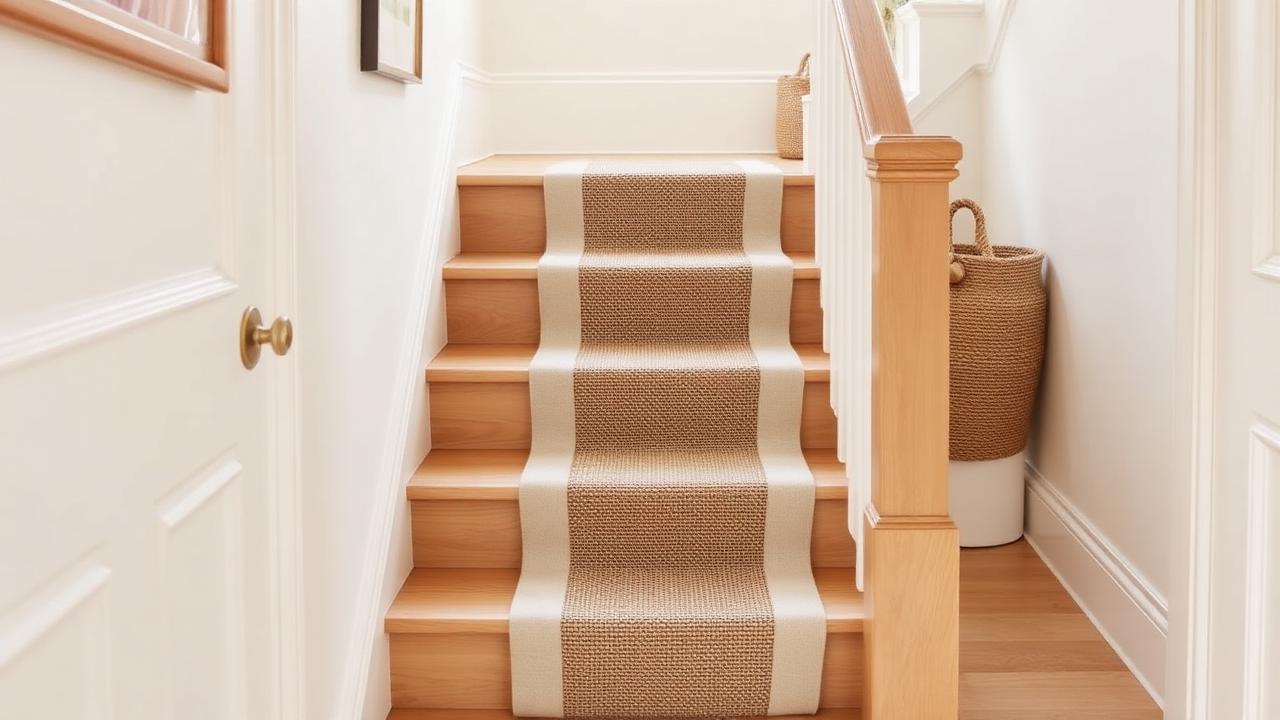
A woven or tufted broadloom cut to width needs its raw edges finished before it can be laid as a runner, and this is where a meaningful share of the total cost sits. Options range from machine-serged overlocking to hand-sewn cotton or wool binding tape, and the choice affects both appearance and durability — covered in full in the serging vs binding comparison. Some ranges are sold pre-finished as runner-width goods with a woven selvedge, which removes this cost and risk entirely and is worth asking about before assuming a cut-and-bind price.
Underlay and fitting for wool
Wool's extra weight and density reward a good underlay: an 8-10mm PU foam or combination felt-rubber pad at 100-150 kg/m3 gives the pile something to compress into rather than crushing straight onto the tread. Skipping underlay on a wool runner is a false economy — it roughly halves the visible life of the pile at the nosings, which is the first place wear shows.
- Order 5-8% extra length for pattern matching and waste, more for a bold repeat.
- Ask for the dye lot number and confirm all rolls match before fitting.
- Woven runners tolerate the waterfall method better than tufted; ask your fitter which method suits your carpet.
- Wool naturally resists soiling for longer between cleans than most synthetics, but still needs professional cleaning every 12-18 months on a used staircase.
What a wool runner costs installed
| Flight length | Carpet (wool-blend, mid) | Underlay + fixings | Fitting | Total, approx. |
|---|---|---|---|---|
| 12 steps / ~4.5m | £290-520 / $390-700 | £60-100 / $80-135 | £150-280 / $200-380 | £500-900 / $670-1,215 |
| 16 steps / ~6m | £390-690 / $520-930 | £80-130 / $105-175 | £200-360 / $270-485 | £670-1,180 / $895-1,590 |
Know your numbers in 30 seconds
Enter your step count, tread depth and riser height — the stair runner calculator gives you the exact length to order, in metres and feet, with waste included.
Open the stair runner calculatorIs wool worth the extra cost?
On a heavily used main staircase, yes for most households: wool or wool-blend outperforms synthetic on appearance retention and resale appeal, and the price gap over a 12-18 step flight is often smaller in absolute terms than it looks per metre. On a secondary or rarely used staircase, a good synthetic or wool-look polypropylene closes most of the visible gap for a fraction of the price, which is where the cheap stair carpet runner guide is the more useful read.
Whatever you decide, get the numbers first: the stair runner calculator doubles as a stair runner length calculator, adding nosing wrap, landings, winders, pattern repeat and waste so you order the right length the first time.
Still deciding on material, width or pattern? Our hub on stair runners compares weaves, widths, backings and fitting styles side by side, then hands the numbers straight to the calculator.
Frequently asked questions
Is a wool stair runner worth the cost?
On a main, heavily used staircase, yes for most households — wool and wool-blend resist crushing at the nosings far longer than synthetic. On a secondary staircase a good synthetic often closes most of the gap for much less money.
What wool content should I look for?
100% wool for the richest colour and feel, or an 80/20 wool-nylon blend for near-identical looks with better resistance to pile crush. Both are common and both are legitimate choices for stairs.
Is woven or tufted wool better for stairs?
Woven (Axminster or Wilton) wears more evenly because the pattern runs through the full pile depth, and generally suits stairs slightly better. Tufted is less expensive and performs well when specified with a stair-rated pile weight and good underlay.
How much does a wool stair runner cost per metre?
Roughly £45-140 or $60-190 per linear metre for the carpet alone, before underlay, gripper and fitting, depending on construction, wool content and pattern.
Does a wool runner need special underlay?
An 8-10mm PU or combination felt-rubber underlay at 100-150 kg/m3 is recommended. It roughly doubles the visible life of the pile at the nosings compared with fitting wool directly onto the tread.
How often does a wool stair runner need cleaning?
Vacuum weekly and have it professionally cleaned every 12-18 months on a used staircase. Wool resists visible soiling longer than most synthetics but still accumulates grit that abrades the fibre from within.
Does wool shed?
New wool carpet sheds loose fibre for the first few weeks after fitting, which is normal manufacturing residue, not a fault. It settles with regular vacuuming and stops well within the first two months.
What's the difference between wool and a wool-look synthetic?
Wool-look polypropylene approximates the appearance of wool at a much lower price but flattens and dulls faster under heavy foot traffic. It suits light-use stairs or a tighter budget rather than a busy main flight.
Know your numbers in 30 seconds
Enter your step count, tread depth and riser height — the stair runner calculator gives you the exact length to order, in metres and feet, with waste included.
Price my wool runnerReady for real prices?
Get quotes from vetted stair runner suppliers and fitters near you. Free, no account, no obligation.
Every guide is written from hands-on measuring and fitting experience, checked against the calculator’s own maths, and re-reviewed whenever prices or methods change. Read our editorial standards.