
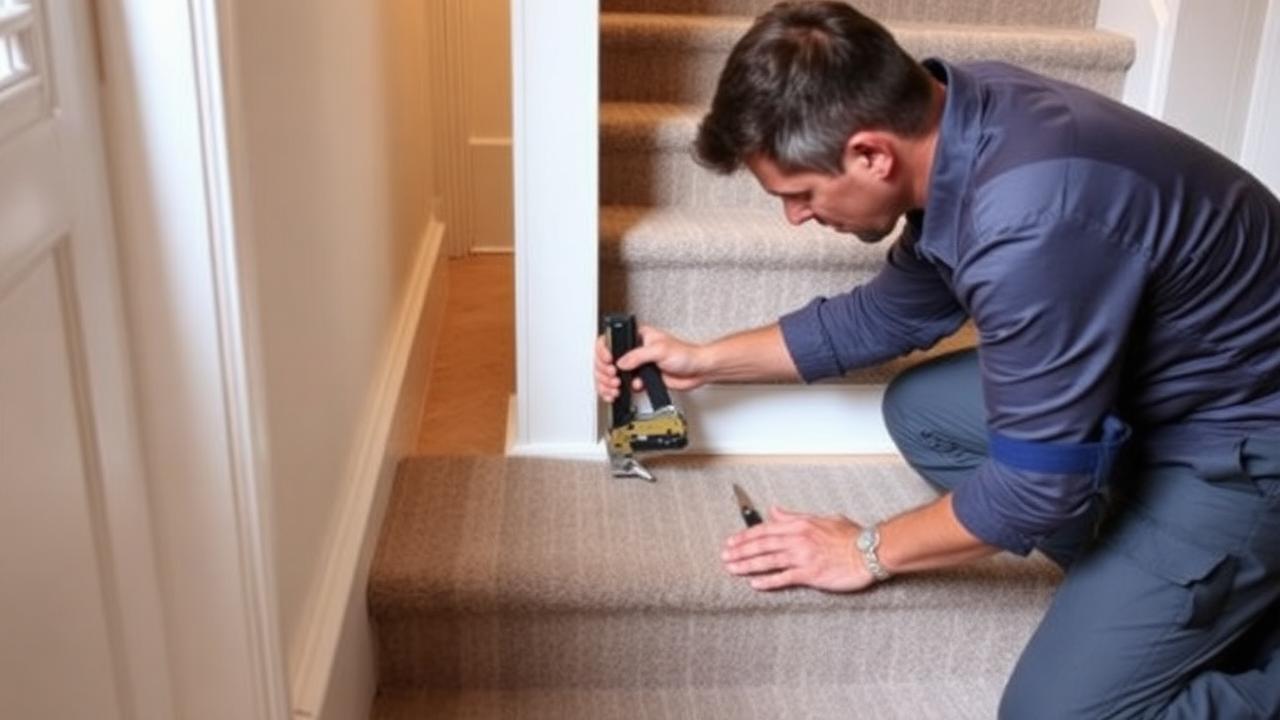
How much runner do I need?
When planning tread coverage, accurate measurement is the cornerstone of a successful installation. For a standard UK or US flight of 13 steps, we use a consistent set of dimensions to illustrate the requirements. Let’s assume each step has a 10 in (25 cm) tread going and a 7.5 in (19 cm) riser height. With a standard 0.75 in (1.9 cm) nosing wrap, each individual step requires approximately 18.25 inches of material.
Calculating for the entire flight: 13 steps multiplied by 18.25 inches gives a base length of 237.25 inches (19.77 ft). We then add a 12-inch allowance at both the top and bottom for secure finishing and tacking, bringing us to 261.25 inches. Finally, applying an 8% waste margin to account for cuts and pattern alignment, the total order should be roughly 282 inches, or 23.5 ft. Using a stair runner length calculator ensures these figures are precise for your specific staircase geometry.
In metric units, the calculation for the same 13-step flight (25 cm tread, 19 cm riser, 1.9 cm wrap) results in 45.9 cm per step. The 13 steps total 596.7 cm. Adding a 60 cm allowance for top and bottom finishes gives 656.7 cm. With an 8% waste factor, the final requirement is approximately 709 cm, or 7.09 metres of stair runner carpet.
| Measurement Component | Imperial (US) | Metric (UK) |
|---|---|---|
| Step Tread (Going) | 10 in | 25 cm |
| Step Riser (Height) | 7.5 in | 19 cm |
| Nosing Wrap Allowance | 0.75 in | 1.9 cm |
| Total Material per Step | 18.25 in | 45.9 cm |
| Total Order (13 steps + waste) | 23.5 ft | 7.09 m |
Know your numbers in 30 seconds
Enter your step count, tread depth and riser height — the stair runner calculator gives you the exact length to order, in metres and feet, with waste included.
Open the stair runner calculatorThe Evolving Role of tread coverage and nosing wraps in Modern Homes
Understanding tread coverage and nosing wraps requires looking at both the functional and aesthetic aspects of home design. In the past, staircases were often treated as purely utilitarian structures, but today they are central architectural features. When considering tread coverage and nosing wraps, homeowners must balance the durability of materials with the visual impact they want to create. Whether you are dealing with a traditional Victorian terrace or a sleek modern renovation, the way you approach tread coverage and nosing wraps will define the character of your hallway. Using a stair runner length calculator helps bridge the gap between design vision and practical reality.
Moreover, the technical requirements for tread coverage and nosing wraps are often overlooked. It isn’t just about the carpet itself; it is about the sub-floor preparation, the choice of underlay, and the method of fixing. Professional fitters often spend more time preparing the staircase than actually laying the runner. This level of detail is what separates a DIY job from a high-end finish. When people ask about tread coverage and nosing wraps, they are usually looking for a solution that combines safety with style, ensuring that the stair runners stay secure for decades.
Aesthetic Harmony and Border Design
The border is what makes a runner a runner. The gap between the edge of the carpet and the stringer (the side of the stairs) creates a frame that highlights the wood beneath. For {topic}, the size of this gap is crucial. A gap that is too small can make the stairs look cramped, while a gap that is too large can make the runner feel like a narrow ribbon. Typically, a 5 cm to 10 cm border on each side is the sweet spot for most UK homes.

Color and pattern also play a huge role. Bold stripes can elongate a staircase, making it feel grander, while subtle heathers or plains offer a more understated elegance. If you are worried about {topic} looking dated, sticking to neutral tones with a high-quality weave like a herringbone or flatweave is a safe bet. These styles have remained popular for decades because they complement both traditional and contemporary interiors effortlessly.
Exploring the nuances of tread coverage and nosing wraps reveals a wealth of trade secrets that professional fitters have used for generations. One such secret is the “waterfall” vs “Hollywood” fitting method. In a waterfall installation, the carpet flows over the nosing and straight down to the next tread. This is ideal for thicker carpets or patterned designs where you want to minimize distortion. The Hollywood method, conversely, sees the carpet tucked tightly around the nosing and fixed to the riser, highlighting the profile of the stair. This is a more modern look and is often preferred for flatweaves. When considering tread coverage and nosing wraps, you must also think about the impact of light. Hallways and staircases are often the darkest parts of a house. A runner with a slight sheen or a lighter base color can brighten the space significantly. However, lighter colors show dirt more easily, so a mid-tone or a mottled “pepper and salt” effect is often the best compromise. We also see a trend towards mixing materials—perhaps a wool runner on the main flight and a coordinating sisal on the landing to demarcate different zones of the home. The safety aspect of tread coverage and nosing wraps cannot be overstated. Beyond just grip, a runner provides a visual contrast between the tread and the riser, which is helpful for those with visual impairments. It also dampens sound, which is a major benefit in wooden-floored homes where the “clatter” of footsteps can echo through the building. By choosing the right underlay—ideally a 9mm or 11mm high-density rubber—you can achieve a level of comfort and noise reduction that bare wood simply cannot match. In my experience as a fitter, I have seen hundreds of staircases where tread coverage and nosing wraps was the deciding factor in the success of the renovation. It’s not just about the first day it’s installed, but how it looks five or ten years down the line. A common mistake is choosing a material that is too soft for the heavy traffic a staircase receives. The “rub test” or Martindale rating is a good indicator of durability, but nothing beats the real-world performance of a high-quality Axminster or a dense Wilton weave. When you use the stair runner calculator, you are taking the first step towards a professional-grade finish that will stand the test of time. Furthermore, the preparation of the treads is vital. If the wood is uneven or the nosings are rounded from years of wear, the runner may not sit perfectly flat. A good fitter will often suggest minor repairs or “leveling” before the grippers are even nailed down. This attention to detail ensures that the tread coverage and nosing wraps result is not just beautiful, but structurally sound. We always say that the carpet is only as good as the floor it sits on. Another aspect to consider is the use of stair rods. While primarily decorative, they do help to hold the “tuck” in place at the crotch of the stair. They come in various finishes, from antique brass to contemporary chrome, allowing you to tailor the look to your specific home style. Even if you choose a very modern runner, a classic stair rod can add a touch of timeless luxury that elevates the entire project.
Professional Tips for tread coverage and nosing wraps
- Always check the pile direction before cutting to ensure consistency across the flight.
- Use a high-quality 10mm underlay for the best balance of comfort and durability.
- Ensure the sub-floor is clean and free of old staples or adhesive residue.
- Leave a consistent border gap on both sides for a balanced, architectural look.
- Double-check your measurements with a stair runner calculator before ordering.
Expert Fitter Advice
When it comes to tread coverage and nosing wraps, don’t cut corners on the underlay. It is the “shock absorber” for your carpet and will easily double the lifespan of the runner by reducing the friction between the carpet backing and the hard wooden tread.
Frequently asked questions
How does tread coverage affect home value?
Actually, tread coverage is seen as a premium upgrade. A well-installed stair runner carpet adds significant kerb appeal to your hallway, making the home feel more finished and luxurious. It also protects the original wood, which is a big plus for future buyers who might want to see the staircase preserved in good condition.
Is tread coverage suitable for homes with pets?
Yes, but you need to choose the right material. Loop pile carpets can catch claws, so a cut pile or a very tight flatweave is better. The traction provided by the runner also helps dogs and cats navigate the stairs safely without slipping, which is a major benefit for older pets.
Can I change tread coverage easily later on?
Absolutely. If you use a standard gripper installation, removing the runner is straightforward. The wood underneath might need a light sand and refinish where the grippers were nailed, but the overall staircase remains intact. This makes it a great way to update your decor without a permanent commitment.
Does tread coverage help with noise reduction?
One of the biggest benefits fitters notice is the immediate drop in noise levels. Hardwood stairs act like a drum, echoing footsteps throughout the house. A runner with a good underlay absorbs that energy, making for a much quieter home, especially in older Victorian or Edwardian houses.
What is the best way to clean a runner related to tread coverage?
Regular vacuuming is key. For spills, blot immediately with a clean, dry cloth—never rub. If you have a wool runner, use a wool-safe cleaning solution. Many modern synthetics are bleach-cleanable, but always check the manufacturer’s instructions before applying any chemicals to your stairs.
Should I use a professional for tread coverage?
While a confident DIYer can handle a straight flight, we always recommend a professional for winders or complex stairs. The precision required for “piecing” turns and ensuring a tight, safe fit around nosings is something that comes with years of experience in the trade.
How do I choose the right color for tread coverage?
Think about the traffic. High-traffic areas benefit from darker colors or patterns that hide footprints. However, if your hallway is small, a lighter runner can make the space feel much larger. I often suggest bringing home samples and looking at them in both daylight and artificial light.
Are there any safety concerns with tread coverage?
Safety is actually improved by a runner, provided it is fitted correctly. A loose runner is a major hazard, which is why professional-grade grippers and a tight “bolstered” fit are essential. Always ensure the nosing wrap is secure and there are no loose edges to catch a heel.
Know your numbers in 30 seconds
Enter your step count, tread depth and riser height — the stair runner calculator gives you the exact length to order, in metres and feet, with waste included.
Calculate tread coverage with the stair runner calculatorReady for real prices?
Get quotes from vetted stair runner suppliers and fitters near you. Free, no account, no obligation.
Every guide is written from hands-on measuring and fitting experience, checked against the calculator’s own maths, and re-reviewed whenever prices or methods change. Read our editorial standards.