

Decorative bars versus hold-down bars
Decorative stair bars are designed to be seen, usually with a rounded or faceted profile and finished ends, often in brass, black or pewter, and they double as a visible design detail on the flight. Hold-down bars are designed to be functional first, often flatter and sometimes fully concealed under the runner's fold, used where the priority is keeping the runner secure without adding a visible line of hardware. Some households use hold-down bars for a fully seamless look and rely on the runner's own pattern or border for visual interest, while others specifically want the metal line of a decorative bar as part of the staircase's character.
Material choice affects both look and durability. Solid brass bars tarnish gracefully and are the traditional choice in period homes; stainless steel and chrome suit more contemporary interiors and resist tarnishing well; resin and composite bars are the most affordable but can show wear faster in a high-traffic household. Whichever material you pick, buy enough bars in one batch to cover the whole flight, since finish can vary subtly between production runs.
Sizing a bar to your runner
Bar length needs to clear your finished runner width plus enough margin for the mounting brackets to seat securely into the stringer or skirting either side, typically 1-2 in (2.5-5 cm) per side. For a common 27 in (68 cm) wide runner, a 30-32 in (76-81 cm) bar usually fits; for a narrower 22 in (56 cm) runner, a 25-27 in (63-68 cm) bar is more typical. Always round up to the next available size rather than down, since an undersized bar won't seat its brackets correctly and can pull loose over time.
Order a spare bar or two
Bars occasionally get damaged during fitting or need replacing years later if a bracket fails - ordering one or two spares from the same batch avoids a mismatched finish on a future repair.
How much runner do I need?
Bar fixings need the same crease-wrap allowance as rods when you're calculating runner length. For a 13-step flight with an 11 in (28 cm) tread going and 7 in (18 cm) riser rise, each step uses roughly the going plus the rise plus about 1 in (2.5 cm) of wrap, close to 19 in (48 cm) per step, giving about 20.6 ft (6.3 m) across the flight. Add 18-24 in (45-60 cm) for top and bottom finishing allowances and you land near 22.3 ft (6.8 m) before waste, or roughly 6.8 m in metric. A 5-10% waste allowance on top brings a sensible order to about 7.1-7.5 m. This is the exact kind of calculation a stair runner calculator handles automatically once you input your own tread and riser numbers, and a stair runner length calculator will also convert between US and UK units so you can compare bar and runner quotes from suppliers pricing in either system.
| Bar type | Visibility | Typical material options |
|---|---|---|
| Decorative round bar | Fully visible | Brass, chrome, black steel |
| Flat decorative bar | Visible, low profile | Brass, pewter, stainless steel |
| Hold-down bar | Hidden or minimal | Steel, resin, composite |
Fitting sequence for stair bars
- Secure the runner underneath first using tackless strip, adhesive or pad as appropriate to your stair.
- Dry-lay and centre the runner, checking it sits square to each nosing.
- Position the first bar at the top step and check it sits level before tightening brackets.
- Work down the flight one step at a time, checking alignment against the step above periodically.
- Check the final bar at the bottom step and adjust runner tension if the fold looks uneven.
Cost of stair bars
In the US, decorative bars typically run $15-45 each, and hold-down bars $8-25 each, both as typical ranges depending on material and finish. In the UK, decorative bars run roughly £12-35 each, and hold-down bars £6-20 each. For a 13-step flight, decorative bars typically add $195-585 (US) or £155-455 (UK) to a project before installation labour, while hold-down bars add considerably less if a visible finish isn't the priority.
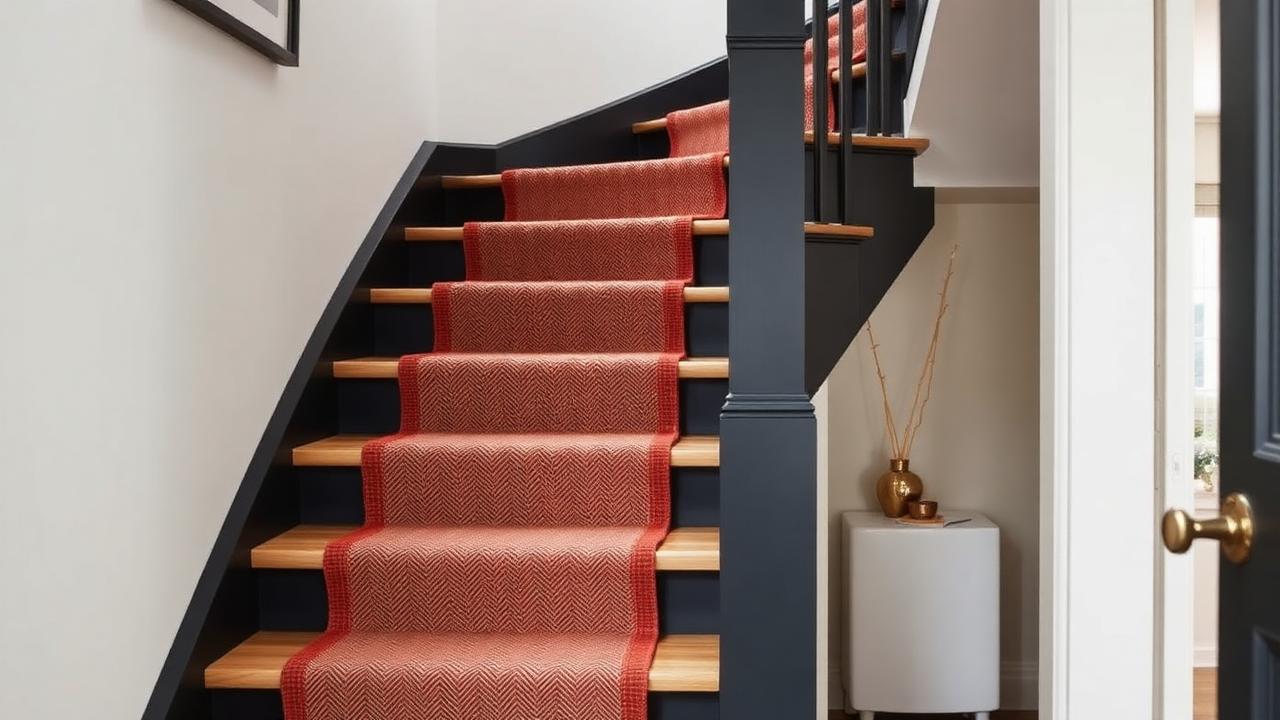
Maintaining stair bars over time
Dust bars regularly with a soft cloth to avoid grime building up in any decorative grooves, and check bracket tightness annually since foot traffic gradually works fixings loose. Brass and chrome bars respond well to a manufacturer-recommended metal polish if they dull, while resin and composite bars generally just need a wipe-down rather than polishing. Replace any bracket that has visibly worked loose rather than just retightening it repeatedly, since a stripped fixing point rarely holds long-term.
Choosing between bars and rugs held with adhesive only
Some households skip bars entirely and rely on tackless strip or adhesive alone to hold a runner in place, which can work perfectly well on a well-fitted, well-padded runner. Bars add a visible reassurance and a secondary hold that many people prefer on stairs specifically, since a lifted runner edge on a staircase is more of a safety concern than the same issue on a flat floor. If your household includes young children, older adults, or pets that use the stairs frequently, the extra security bars provide is often worth the additional cost and fitting time.
Whatever you decide, get the numbers first: the stair runner calculator doubles as a stair runner length calculator, adding nosing wrap, landings, winders, pattern repeat and waste so you order the right length the first time.
Still deciding on material, width or pattern? Our hub on stair runners compares weaves, widths, backings and fitting styles side by side, then hands the numbers straight to the calculator.
Frequently asked questions
What's the difference between a decorative bar and a hold-down bar?
A decorative bar is designed to be seen, usually with a rounded or faceted finish in brass, chrome or black steel. A hold-down bar is designed to be functional and is often flatter or hidden under the runner's fold, prioritising grip over appearance.
How many bars do I need for a 13-step staircase?
One bar per step for a straight flight, so 13 bars total. Winders or a half landing within the flight may need a different bar style or an adjusted count, so check with your supplier before ordering.
How do I size a bar to my runner width?
Measure your finished runner width and add roughly 2-4 in (5-10 cm) total margin for the mounting brackets, then round up to the nearest available bar length. An undersized bar won't seat its brackets securely.
Do stair bars work with any carpet runner?
Most runners can take a bar, though very deep-pile runners can bury a bar's visible profile almost completely. If you want a decorative bar to actually show, choose a runner with a pile height under about 0.5 in (1.3 cm).
How much does it cost to fit bars on a full flight of stairs?
In the US, decorative bars typically add $195-585 for a 13-step flight before labour; hold-down bars cost less. In the UK, figure on roughly £155-455 for decorative bars across 13 steps. These are typical ranges and vary by finish.
How much extra runner length do bars need?
Bars need a small crease-wrap allowance at each step, typically about 1 in (2.5 cm), compared with a runner fixed flat without bars. Factor this into your total length calculation alongside tread going and riser rise.
Can hold-down bars be added without changing the runner's look?
Yes, that's their main appeal - hold-down bars sit hidden or nearly hidden under the runner's fold, adding security without introducing a visible line of hardware down the stairs.
How often should I check stair bar fixings?
Check bracket tightness roughly once a year, or more often in a high-traffic household, since repeated foot impact gradually works screws and clips loose over time. Re-seat or replace any bracket that has worked visibly loose.
Know your numbers in 30 seconds
Enter your step count, tread depth and riser height — the stair runner calculator gives you the exact length to order, in metres and feet, with waste included.
Work out runner length before fitting barsReady for real prices?
Get quotes from vetted stair runner suppliers and fitters near you. Free, no account, no obligation.
Every guide is written from hands-on measuring and fitting experience, checked against the calculator’s own maths, and re-reviewed whenever prices or methods change. Read our editorial standards.