

Why plan the runner and landing together
Treating the stair runner and the landing carpet as one continuous design decision, rather than two separate purchases, is the difference between a professional finish and a patchwork look. Even if you're using a runner on the stairs and full-width carpet on the landing, they should share the same colour family, fibre type, and ideally come from the same manufacturer's range so the transition at the top of the flight looks intentional rather than accidental.
The most common mistake is ordering the stair runner first, living with it for a while, and then trying to match a landing carpet to it months later. Dye lots shift, ranges get discontinued, and what looked like an easy match on a swatch card can turn out subtly different once it's down. If your budget allows, order both at the same time from the same batch.
Design options for the transition
There are three common approaches: a full-width fitted carpet across the landing with the runner continuing down the stairs and stopping at the top step (the cleanest, most classic look); a matching runner that continues across the landing at the same width, with exposed floor either side; or a border-to-border fitted carpet on the landing in a complementary but not identical shade, often used when the landing floor itself is a feature (such as reclaimed wood) that you want to partially show off.
| Approach | Best for | Visual effect |
|---|---|---|
| Full-width landing carpet | Most homes | Clean, classic, seamless |
| Runner continues across landing | Narrow landings | Consistent width throughout |
| Complementary but distinct | Feature landing floors | Contrast with intentional continuity |
How much material do I need?
For the stairs: a 13-step flight with 10 in tread + 7.5 in riser + 0.75 in nosing wrap gives 18.25 in per step, or 237.25 in across 13 steps. Add 24 in finishing for 261.25 in (21.77 ft), plus 8-10% waste for roughly 23.5-24 ft. In metric: 45.9 cm per step, 596.7 cm across 13 steps, plus 60 cm finishing is 656.7 cm, plus waste is about 7.1-7.3 m. For a typical 6 x 4 ft (1.8 x 1.2 m) landing, that's 24 sq ft (2.2 sq m) of carpet before waste; add 10% for cutting and pattern matching, bringing it to roughly 26.4 sq ft (2.4 sq m).
| Area | US | UK |
|---|---|---|
| Stair runner (13 steps) | 23.5-24 ft | 7.1-7.3 m |
| Landing (6x4 ft / 1.8x1.2 m) | 26.4 sq ft | 2.4 sq m |
Know your numbers in 30 seconds
Enter your step count, tread depth and riser height — the stair runner calculator gives you the exact length to order, in metres and feet, with waste included.
Open the stair runner calculatorOrder from the same dye lot
If you want a truly seamless transition, order your stair runner and landing carpet at the same time, specifying that both must come from a single dye lot.
Fibre and pile direction
Use the same fibre type for both areas where possible — mixing wool stairs with a synthetic landing (or vice versa) can create a visible sheen or texture mismatch even if the colours are close. Pile direction matters too: carpet reflects light differently depending on which way the pile lies, so if the landing carpet is laid with the pile running the opposite direction to the stair runner, the colour can appear to shift slightly at the transition point even from the same batch.
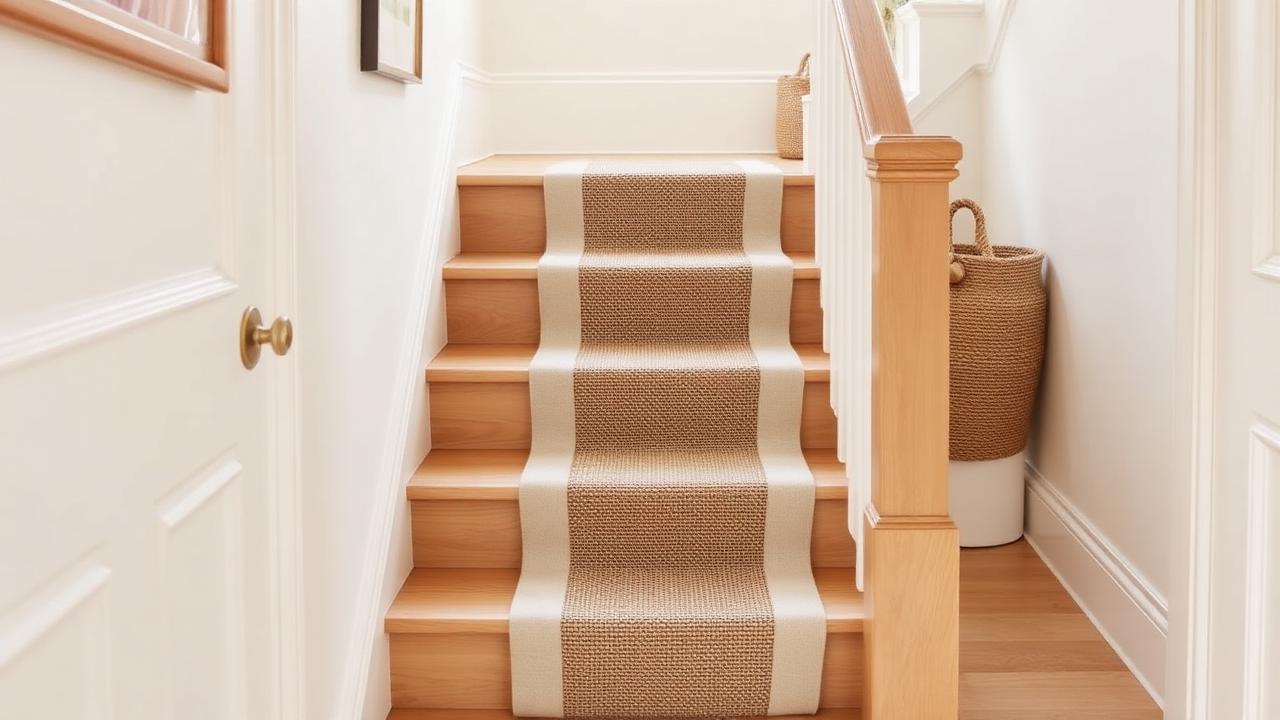
- Order stairs and landing from the same dye lot where possible.
- Match fibre type across both areas.
- Keep pile direction consistent through the transition.
- Decide on the transition style before ordering either piece.
A well-planned stair runner and landing carpet combination reads as one continuous, intentional design rather than two separate purchases bolted together, and it's one of the details that separates a good stair job from a great one.
Fitting sequence across both areas
Most fitters install the landing carpet first, working outward from the top step, then fit the stair runner down the flight so the two meet cleanly at the transition point without a visible seam or gap. On a combined job covering a 13-step flight plus a 6 x 4 ft (1.8 x 1.2 m) landing, budget a full day for a two-person crew, including underlay for both areas and final trimming at the newel post and skirting.
The transition detail itself
At the top step, the landing carpet is usually tucked and gripper-fixed right at the nosing edge, with the runner butting up directly beneath it. A binding bar or double gripper strip at this exact point keeps both edges secure and prevents the kind of gap or lifting that shows up first at a transition under heavy use.
Cost bands for a combined job
Because landing carpet is sold by area rather than length, and runner by length, get separate line-item quotes for each, plus a combined fitting labour quote, since installers often charge less per unit when both areas are done in the same visit.
| Item | Budget | Mid-range | Premium |
|---|---|---|---|
| Runner fibre | Nylon | Wool-blend | 100% wool |
| Landing carpet | Nylon loop | Wool-blend twist | 100% wool |
| Combined fitting (13 steps + landing) | Half day | Full day | Full day plus rod fitting |
- Get a single combined quote to check for a same-visit fitting discount.
- Specify the transition detail (binding bar, double gripper) in writing before work starts.
- Confirm both areas are cut from the same dye lot at time of order.
- Ask the fitter to photograph the transition before and after for your records.
Maintaining the transition point
The transition between runner and landing carpet takes disproportionate wear because it's where foot traffic changes direction and pace. Check it every few months for lifting or fraying, vacuum it as thoroughly as the rest of the flight, and address any loosening quickly, since a lifting edge at this point is both a trip hazard and the fastest place for wear to spread.
Whatever you decide, get the numbers first: the stair runner calculator doubles as a stair runner length calculator, adding nosing wrap, landings, winders, pattern repeat and waste so you order the right length the first time.
Still deciding on material, width or pattern? Our hub on stair runners compares weaves, widths, backings and fitting styles side by side, then hands the numbers straight to the calculator.
Frequently asked questions
Should I order the runner and landing carpet together?
Yes, ordering both at the same time from the same dye lot gives the most seamless colour match.
Do the runner and landing carpet need to be the same fibre?
It's strongly recommended, since mixed fibres can create a visible sheen or texture mismatch at the transition.
How much landing carpet do I need for a 6x4 ft landing?
About 24 sq ft (2.2 sq m) before waste, or roughly 26.4 sq ft (2.4 sq m) with a 10% cutting allowance.
What is the cleanest transition style?
A full-width fitted landing carpet with the runner stopping at the top step is the most classic, seamless look.
Does pile direction matter between the two areas?
Yes, keeping the pile running the same direction avoids a visible colour shift at the transition.
Can I use a different but complementary carpet on the landing?
Yes, this works well if the landing floor itself is a feature you want to partially show off.
How much runner do I need for a 13-step flight?
Around 23.5-24 ft (7.1-7.3 m), including nosing wrap, finishing, and waste.
What happens if I order the landing carpet later?
You risk a dye lot mismatch, since manufacturers change batches and sometimes discontinue ranges over time.
Know your numbers in 30 seconds
Enter your step count, tread depth and riser height — the stair runner calculator gives you the exact length to order, in metres and feet, with waste included.
Plan both areas with the stair runner calculatorReady for real prices?
Get quotes from vetted stair runner suppliers and fitters near you. Free, no account, no obligation.
Every guide is written from hands-on measuring and fitting experience, checked against the calculator’s own maths, and re-reviewed whenever prices or methods change. Read our editorial standards.