
Where the seam should sit
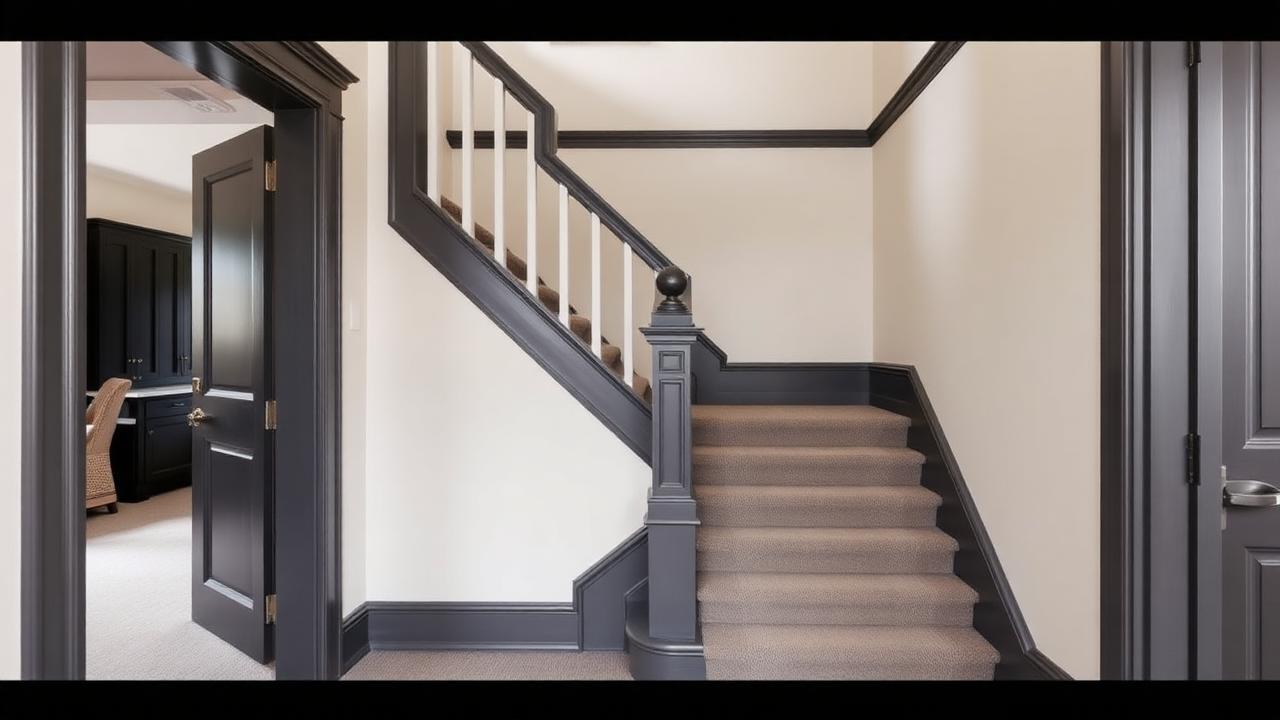
The best seam location is the top riser, right where the vertical face meets the landing floor. Foot traffic lands flat on the landing at that point rather than on an angled tread, so a seam there takes less abrasive stress than one placed mid-tread. It also falls in a natural shadow line, which hides the join from anyone looking up the stairs.
Same carpet, no seam at all
If the landing is being carpeted in the same broadloom as the runner's border, or the runner itself is wide enough to be used as landing carpet, some fitters run the material continuously over the top step and a short distance across the landing, then finish it there with gripper and a threshold. This avoids a visible seam entirely but uses noticeably more material and only works when the landing area is small.
Different materials, use a transition bar
- Carpet-to-carpet: a double gripper or seaming tape strip, tucked under both edges.
- Runner-to-hardwood landing: a flush wood-to-carpet transition bar screwed to the subfloor.
- Runner-to-tile: a metal Z-bar or carpet edge trim, sealed against moisture.
- Thick runner-to-thin landing carpet: a reducer strip to avoid a trip lip.
How much extra length to allow
| Transition type | Extra length allowance | Difficulty | DIY-able |
|---|---|---|---|
| Seam at top riser | 0.1–0.2 m (4–8 in) | Easy | Yes |
| Continuous over top step onto landing | 0.4–0.6 m (16–24 in) | Moderate | Yes, with care |
| Runner to tile/hardwood with bar | 0.1 m (4 in) plus bar cost | Easy | Yes |
| Matching full landing carpet | Landing area + 0.15 m waste | Moderate | Fitter recommended |
Measure the landing separately
Never guess a landing quantity from the stair calculation. Measure its length and width on their own and add standard carpet waste, typically 5 to 10 percent.
Know your numbers in 30 seconds
Enter your step count, tread depth and riser height — the stair runner calculator gives you the exact length to order, in metres and feet, with waste included.
Open the stair runner calculatorColour and pile matching
A seam is far less noticeable when the two carpets share a similar tone and pile height. If the landing is a different colour by design, a contrasting binding on the runner or a defined metal trim reads as intentional rather than as a mismatch.
Worked example with real numbers
To see how transitioning from a stair runner to landing carpet plays out on an actual staircase, take a common 13-step flight with a 10 in (25 cm) tread depth and a 7.5 in (19 cm) riser height. That gives 17.5 in (44 cm) per step, or 227.5 in (5.78 m) of raw length before any waste allowance is added, a figure worth keeping in mind whenever this topic is discussed in isolation from the rest of the job.

| Measurement | Imperial | Metric |
|---|---|---|
| Tread depth | 10 in | 25 cm |
| Riser height | 7.5 in | 19 cm |
| Per step total | 17.5 in | 44 cm |
| 13 steps, raw length | 227.5 in | 5.78 m |
| With 8% waste allowance | 245.7 in | 6.24 m |
When to call a professional instead
Plenty of homeowners handle transitioning from a stair runner to landing carpet themselves on a straightforward straight flight, but certain conditions tip the balance firmly towards hiring a fitter. Getting a second opinion before committing materials often costs nothing and can save an expensive mistake on a job that cannot easily be undone.
- The staircase has a turn, winders, a curve or a split level rather than one straight run.
- The existing substrate is damaged, damp, or its condition is genuinely unclear.
- The runner is an expensive natural fibre or bespoke pattern where a cutting mistake is costly.
- You have no experience with a staple gun, knee kicker or carpet seaming on stairs.
- The staircase is the main one in the home and downtime or an unfinished look is not acceptable.
Handling a half-turn landing between flights
Many houses split the stairs with a half landing partway up rather than putting the landing only at the top. In that case the same seam logic applies twice: once where the lower flight meets the half landing, and again where the upper flight meets the top landing. Measure the half landing on its own as a flat rectangle, exactly as you would the top landing, rather than assuming it matches either flight's width. If the half landing is small, a single piece of runner-width carpet can sometimes span it without a seam, wrapping down onto the first riser of the upper flight and finishing at the last riser of the lower flight.
Carpet grippers and gripper rod at the transition
Whichever transition method is chosen, the gripper rod (tackless strip) needs to run continuously across the join so both pieces of carpet are held under equal tension. A common mistake is to fix gripper only up to the top riser and leave the landing side loose, which produces a visible hump or gap exactly where it is most noticeable. Fit gripper rod roughly 3/8 in (10 mm) back from the wall or transition bar on the landing side, matching the setback used on the stair treads themselves, and use double gripper at the seam itself if pile heights differ.
| Fixing detail | Recommended spec |
|---|---|
| Gripper setback from wall/bar | 3/8 in (10 mm) |
| Gripper pin size | Matched to carpet backing thickness |
| Underlay overlap at seam | Butt-joined, not overlapped |
| Seam tape width | 2 in (5 cm) minimum |
Living with the finished transition
Once fitted, a well-made transition from stair runner to landing carpet should be invisible to a casual glance and should not create a noticeable change in underfoot feel. Check it again after a few weeks of normal use, since new carpet and pad can settle slightly and any looseness at the seam usually shows up in that period rather than immediately. A quick re-tension with a knee kicker at that stage is far easier than revisiting the job months later once the carpet has bedded in around a flaw.
Whatever you decide, get the numbers first: the stair runner calculator doubles as a stair runner length calculator, adding nosing wrap, landings, winders, pattern repeat and waste so you order the right length the first time.
Still deciding on material, width or pattern? Our hub on stair runners compares weaves, widths, backings and fitting styles side by side, then hands the numbers straight to the calculator.
Frequently asked questions
Where should a stair runner meet landing carpet?
At the top riser, where the vertical face meets the landing floor. This hides the seam in a shadow line and puts it where traffic lands flat rather than on an angled tread.
Can a stair runner run straight onto the landing without a seam?
Yes, if the landing is small and using the same carpet is acceptable. The runner or matching broadloom is carried over the top step and finished with gripper a short distance onto the landing.
Do I need a transition strip between a runner and landing carpet?
Only if the materials, thicknesses or pile heights differ noticeably, or if one is carpet and the other is hard flooring. Matched carpets can be seamed directly with tape.
How much extra runner do I need for a landing transition?
Typically 4 to 8 inches (0.1 to 0.2 m) if you are simply seaming at the top riser, or considerably more if you plan to run the runner onto the landing itself.
What is the biggest mistake people make with this?
Rushing the measuring or prep stage. Most poor outcomes with transitioning from a stair runner to landing carpet trace back to a single measurement taken at the wrong point, or a substrate check skipped to save a few minutes, both far cheaper to fix before the runner is cut than after.
Does a half landing need the same seam treatment as a top landing?
Yes. Treat every landing, whether it splits the flight halfway up or sits at the very top, as its own flat area measured separately, with the seam placed at the riser-to-floor junction on each side.
What happens if gripper rod is missed at the transition?
The carpet on the landing side will sit loose against the stair section, creating a visible hump or gap. Gripper must run continuously across the join, set back about 3/8 in (10 mm) from the wall or transition bar.
Know your numbers in 30 seconds
Enter your step count, tread depth and riser height — the stair runner calculator gives you the exact length to order, in metres and feet, with waste included.
Measure my stairs and landingReady for real prices?
Get quotes from vetted stair runner suppliers and fitters near you. Free, no account, no obligation.
Every guide is written from hands-on measuring and fitting experience, checked against the calculator’s own maths, and re-reviewed whenever prices or methods change. Read our editorial standards.