
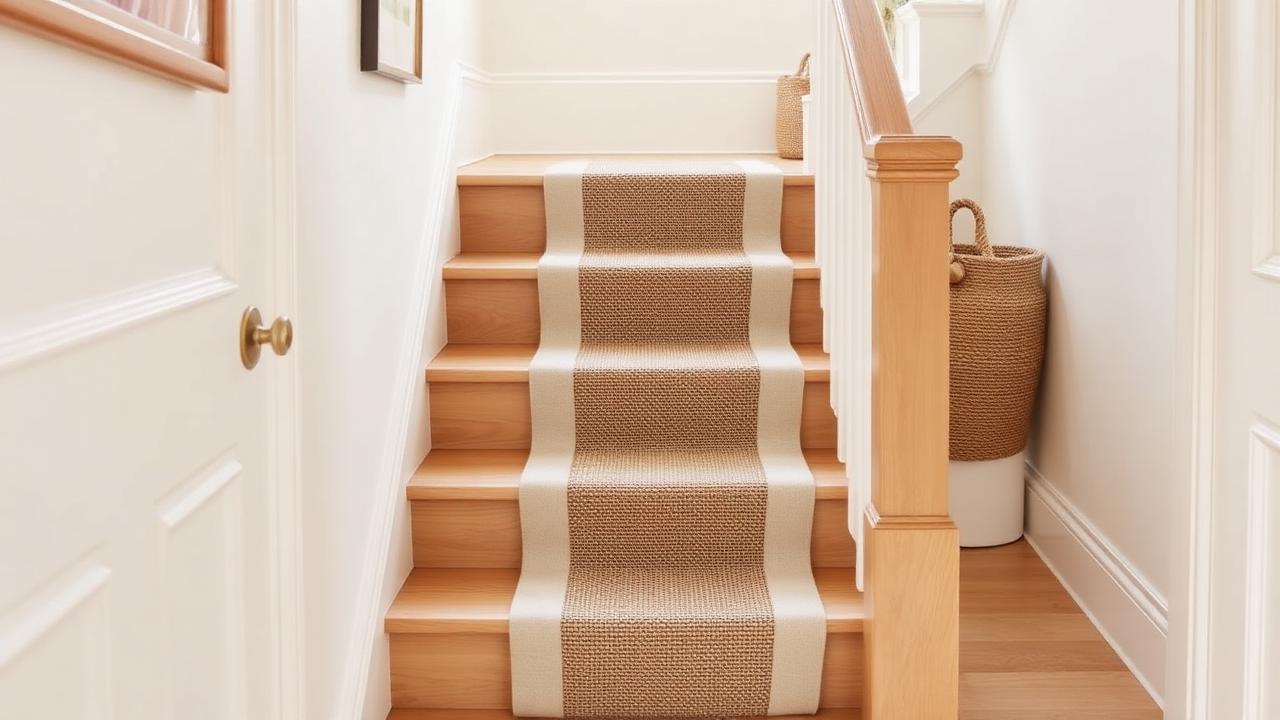
Why buying stair carpet locally is worth the trip
Photos of carpet online rarely convey how a fibre actually behaves on a stair nosing. A pile that looks plush in a product photo might be too stiff to wrap a tight nosing radius cleanly, or a flatweave that photographs as textured might actually be quite thin underfoot. Visiting a local carpet retailer or flooring showroom lets you bend a sample over your fingers to mimic a nosing fold, check pile density by pressing it, and see the true colour under a light similar to your own hallway rather than a studio photo. For stairs specifically, this matters more than for a bedroom carpet, because a stair runner takes concentrated foot traffic on a narrower strip and any weakness in backing or pile shows up faster.
Local retailers also typically carry remnants and roll-end pieces that can be a genuine bargain for a short flight, since a 13-step straight run needs far less material than a full room. Ask specifically whether a retailer keeps a remnant bin or roll-end rack, since these are rarely advertised online but can cut material cost significantly if the piece is long enough for your stairs.
Where to look
- Independent carpet and flooring retailers with a showroom you can visit in person.
- Larger home improvement or flooring chain stores, which often carry a wider range of budget and mid-range options.
- Specialist rug and runner shops, which sometimes stock pre-bound runners cut to standard widths ready to order to length.
- Remnant or clearance sections at any of the above, worth asking about directly since they're rarely displayed prominently.
Bring your measurements
Take your tread count, going and rise (or a stair runner calculator printout) with you to any showroom visit, so staff can help you compare options against your actual stairs rather than guessing.
What to check on the roll before buying
Check the backing type first - a jute or latex-backed carpet designed for wall-to-wall fitting can be too stiff to wrap a nosing cleanly and is better suited to flat flooring, whereas carpet specifically labelled for stair or runner use is usually finished with a more flexible backing. Check pile height next; anything much over 0.5 in (1.3 cm) can look bulky wrapped around a nosing and may wear unevenly at the fold line faster than a lower, denser pile. Finally, check whether the roll width matches a standard runner width (commonly 27 in, 30 in, 32 in or 36 in in the US, or 60-70 cm and 80 cm in the UK) or whether it will need cutting down, since cutting a wider carpet down to a runner width usually needs the cut edges bound or serged afterward to stop fraying.
Typical local pricing
As a general guide, carpet-only pricing (before installation) typically runs $15-25 per square yard for synthetic and polypropylene options, $20-35 per square yard for wool-blends, and $30-45 per square yard or more for pure wool. UK pricing runs roughly £15-25 per linear metre for synthetic runners, £25-40 for wool-blend, and £35-60 or more for pure wool, though widths and units vary by retailer so always confirm you're comparing like for like. Installation is a separate cost on top, typically $30-80 per running foot in the US or £40-90 per linear metre in the UK as covered in more detail in guides on stair runner installation cost.

| Fibre | Typical carpet-only cost (US) | Typical carpet-only cost (UK) |
|---|---|---|
| Synthetic / polypropylene | $15-25 per sq yd | £15-25 per linear m |
| Wool-blend | $20-35 per sq yd | £25-40 per linear m |
| Pure wool | $30-45+ per sq yd | £35-60+ per linear m |
How much runner do I need?
Work this out before you shop so you're not guessing at the till. For a 14-step straight flight with a 9.5 in (24 cm) tread going and 7.25 in (18.4 cm) riser rise, each step uses roughly 16.75 in (42.5 cm) of runner, giving about 234.5 in (5.96 m) across 14 steps. Add a combined top-and-bottom finishing allowance of about 20 in (50.8 cm), for a subtotal near 254.5 in, or about 21.2 ft (6.47 m). Add a 5-10% waste margin for cutting, and you should buy roughly 22.3-23.3 ft (6.8-7.1 m). Running these numbers through a stair runner calculator before you visit a showroom means you can ask for that exact length cut from a roll on the spot, and a stair runner length calculator also helps you compare cost per running foot fairly across different roll widths.
Know your numbers in 30 seconds
Enter your step count, tread depth and riser height — the stair runner calculator gives you the exact length to order, in metres and feet, with waste included.
Open the stair runner calculatorQuestions to ask in-store
- Is this backing suitable for stairs specifically, or is it intended for flat flooring?
- Do you offer cutting to length in-store, or will I need to arrange that separately?
- If the width needs cutting down, is edge binding or serging included or a separate charge?
- Do you have remnant or roll-end pieces long enough for my flight, and at what price?
- Can you recommend a local installer, or do you offer installation as part of the purchase?
After you buy
Once you've bought your carpet, store it rolled rather than folded until installation to avoid a crease line that can show through the pile later. If installation is happening more than a couple of weeks after purchase, keep the roll somewhere dry, since damp storage conditions can affect natural fibre backing before it's even been fitted.
Still deciding on material, width or pattern? Our hub on stair runners compares weaves, widths, backings and fitting styles side by side, then hands the numbers straight to the calculator.
Frequently asked questions
Why buy stair runner carpet in person instead of online?
Seeing and handling the sample lets you check pile height, backing flexibility and true colour before committing, which matters for stairs because the carpet needs to wrap a nosing cleanly. Photos online often misrepresent how stiff or plush a carpet actually feels underfoot.
How much does stair runner carpet cost before installation?
As a general range, expect $15-25 per square yard for synthetic options, $20-35 for wool-blends, and $30-45 or more per square yard for pure wool in the US, with roughly comparable ranges per linear metre in the UK. Installation is a separate cost on top of the carpet price.
What backing type is right for a stair runner?
Look for carpet specifically labelled or recommended for stair or runner use, since it's typically finished with a more flexible backing that wraps a nosing cleanly. Carpet backed for flat, wall-to-wall installation can be too stiff and may crack or lift at the fold over time.
Can I buy a remnant piece for a short staircase?
Often yes, and it can be a genuine cost saving since a typical flight needs far less material than a full room. Ask retailers directly about remnant or roll-end stock, as it's rarely advertised or displayed prominently in showrooms.
What pile height works best on stairs?
A pile height under about 0.5 in (1.3 cm) generally wraps a stair nosing more cleanly and wears more evenly at the fold than a taller, plusher pile. Very high pile can look bulky over a nosing and may flatten unevenly faster at that fold point.
Does carpet width matter when buying for a stair runner?
Yes. Standard runner widths in the US are commonly 27, 30, 32 or 36 in, and in the UK 60-80 cm; if your chosen carpet is wider than you need, it will need cutting down and the cut edges bound or serged afterward to prevent fraying.
How much stair runner carpet should I buy for a typical flight?
For a 13-14 step straight flight with standard tread dimensions, expect to need roughly 20-24 ft (6-7.3 m) of runner once a 5-10% waste allowance is included, though this varies with your specific tread going and riser rise. A stair runner calculator gives an exact figure for your own stairs.
Should I buy carpet and installation from the same place?
It can simplify warranty coverage since the carpet and labour are then bundled under one provider, but it isn't required. Buying carpet separately and hiring an independent installer works fine too, as long as you confirm the installer's labour warranty still applies to carpet they didn't supply.
Know your numbers in 30 seconds
Enter your step count, tread depth and riser height — the stair runner calculator gives you the exact length to order, in metres and feet, with waste included.
Calculate how much stair runner carpet to buyReady for real prices?
Get quotes from vetted stair runner suppliers and fitters near you. Free, no account, no obligation.
Every guide is written from hands-on measuring and fitting experience, checked against the calculator’s own maths, and re-reviewed whenever prices or methods change. Read our editorial standards.