
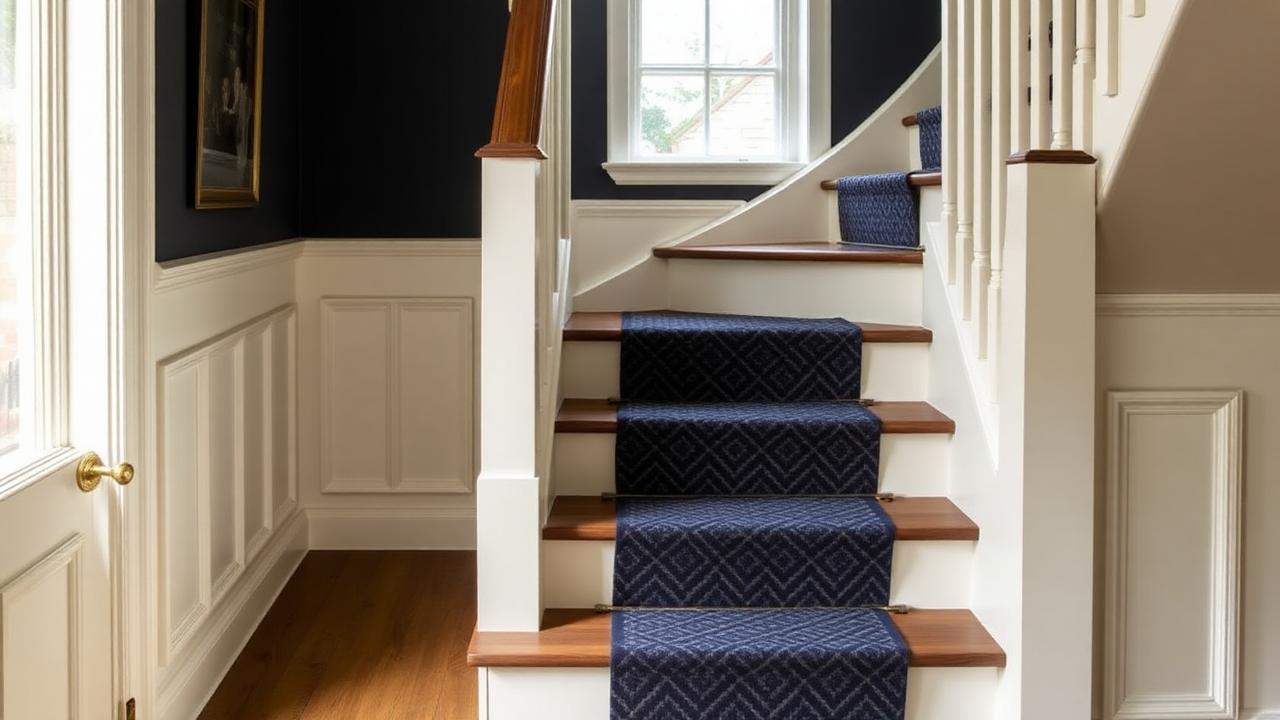
The function and types of edge tape
Edge tape serves two main purposes. First, it seals the 'cut' sides of the carpet. Most stair runners are cut from a larger roll of broadloom carpet or a dedicated runner roll that hasn't been finished. Without tape, the lateral forces of walking would cause the weft and warp of the carpet backing to separate. Second, edge tape allows for a 'bespoke' look. By choosing a tape that contrasts with the carpet - say, a black tape on a sisal runner - you create a strong linear element that guides the eye up the stairs.
There are three main materials used for stair runner edge tape: Cotton, Linen, and Polyester. Cotton is the most popular due to its matte finish and huge range of colours. Linen offers a more 'organic', slightly coarser texture that suits coastal or rustic homes. Polyester (and other synthetics) are the workhorses of the industry; they are incredibly resistant to fading and stains, making them the best choice for stairs that get a lot of direct sunlight or heavy, muddy traffic from a front door.
Tape Width Matters
Most edge tapes are 120mm wide before application. Once folded over the edge, they show about 50mm (2 inches) on the top. If you want a more subtle border, ask your workshop if they can 'slim' the tape to 25mm.
Installation and trade tips
From a fitter's perspective, edge tape makes a runner much easier to handle. The tape provides a 'lip' that can be used to pull the carpet tight over the nosing. However, it also means that the runner is slightly less flexible than a raw or whipped edge. When I'm fitting a runner with edge tape on a winder (a curved step), I have to be careful not to 'over-stretch' the tape, which can lead to unsightly ripples on the inside of the curve. A good tip is to use a steamer to gently soften the tape fibres before pulling them around a complex corner.
Another important aspect is the 'stitch line'. The tape is sewn onto the carpet using a heavy-duty machine. If the stitching isn't straight, the whole runner will look crooked on the stairs, no matter how well it is fitted. This is why I always recommend buying a runner where the binding has been done in a professional workshop rather than on-site. The precision of an industrial 'walking foot' machine cannot be matched by hand-sewing or portable binders.
How much runner do I need?
Measuring for a taped runner is straightforward but requires including a waste margin for pattern matching. For a UK flight of 13 steps (25 cm tread, 19 cm riser), the calculation is: 13 x (25 + 19) = 572 cm. Add 5 cm for each nosing wrap (65 cm) and 15 cm for the floor and landing terminations. Subtotal: 652 cm. With a 10% waste factor, you should order 7.17 metres. A stair runner length calculator is the best way to ensure you don't end up short by a few inches.
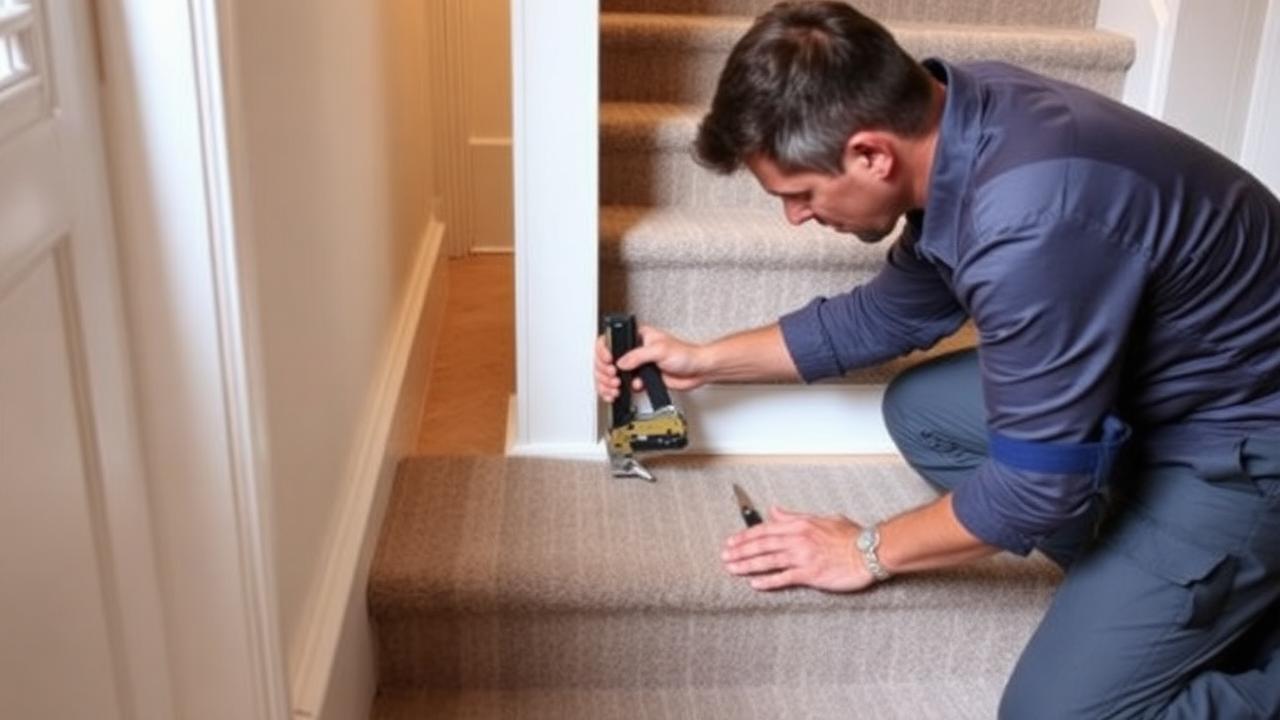
In the US, using 10 inch treads and 7.5 inch risers for 13 steps: (10 + 7.5) x 13 = 227.5 inches. Add 13 inches for the nosing wraps and 12 inches for the top/bottom extensions. Total: 252.5 inches. With a 10% waste margin, the final length is 278 inches, or roughly 23.2 feet. Remember that the tape itself doesn't add much to the length, but it does add about 5-8mm to the total width of the runner, so make sure your stair rods are wide enough to accommodate the finished product.
| Tape Material | Best For | Stain Resistance | Flexibility | Look |
|---|---|---|---|---|
| Cotton Herringbone | Traditional homes | Moderate | High | Classic, matte |
| Polyester Twill | High-traffic areas | Very High | High | Clean, modern |
| Linen | Rustic / Coastal style | Low | Moderate | Textured, organic |
| Faux Leather | Luxury interiors | High | Low | Sleek, premium |
Know your numbers in 30 seconds
Enter your step count, tread depth and riser height — the stair runner calculator gives you the exact length to order, in metres and feet, with waste included.
Open the stair runner calculatorMaintenance and repair
Maintaining edge tape is largely about keeping it free of dust. Because the tape is slightly raised above the surface of the carpet, it can act as a little 'shelf' that catches dust and pet hair. Regular vacuuming with a soft brush attachment will prevent this from becoming an issue. If a thread comes loose in the tape, don't pull it! Snip it off with sharp scissors. If the tape becomes severely stained, it's often better to have the entire runner re-bound rather than trying to patch in a new section of tape, which will always show a seam.
For homeowners with pets, I generally recommend a synthetic or a very tight-weave cotton tape. Loose weaves or linen tapes can be easily snagged by cat claws. If you're choosing a very light-coloured tape, consider applying a fabric protector spray before installation. This will give you a fighting chance if a coffee cup or a glass of wine is spilled on the stairs.
Whatever you decide, get the numbers first: the stair runner calculator doubles as a stair runner length calculator, adding nosing wrap, landings, winders, pattern repeat and waste so you order the right length the first time.
Frequently asked questions
Can I use any fabric as edge tape?
Not really. Edge tape needs to be a specific weight and weave to withstand the tension of the sewing machine and the friction of being stepped on. Dedicated carpet binding tapes are usually made of reinforced cotton or polyester.
Does edge tape make the runner thicker?
Yes, it adds about 2-4mm of thickness to the edge. This is rarely an issue for walking, but it's something to keep in mind if you have very tight clearance under a door at the top of the stairs.
Is it possible to bind a runner without tape?
Yes, you can use a 'whipped' or 'serged' edge, which uses yarn instead of fabric tape. However, tape is generally considered more durable for heavy-traffic staircases.
What is the most popular colour for edge tape?
Black and charcoal are very popular for creating a 'framed' look on neutral runners. Tonal matches (e.g., beige tape on a beige runner) are best for making a staircase feel wider.
How long does edge tape last?
In a typical home, you can expect a good quality cotton or synthetic tape to last 10 to 15 years before it starts to look worn or frayed at the nosings.
Can I change the edge tape later?
Yes, a specialist workshop can remove the old tape and stitch on a new one. This is a great way to update the look of your stairs without buying a new runner.
Does edge tape prevent the runner from slipping?
No. The tape is purely for the edge finish. You still need proper underlay and fixings (staples or grippers) to ensure the runner stays safely in place on the stairs.
Is edge tape waterproof?
Standard cotton and linen tapes are not. Polyester tapes are more resistant to moisture, but for a truly waterproof solution, you would need a specialized outdoor synthetic binding.
Know your numbers in 30 seconds
Enter your step count, tread depth and riser height — the stair runner calculator gives you the exact length to order, in metres and feet, with waste included.
Calculate runner length for your edge tape projectReady for real prices?
Get quotes from vetted stair runner suppliers and fitters near you. Free, no account, no obligation.
Every guide is written from hands-on measuring and fitting experience, checked against the calculator’s own maths, and re-reviewed whenever prices or methods change. Read our editorial standards.