

The options
| Finish | Look | Typical cost per m per side |
|---|---|---|
| Machine cotton binding | Neat, low profile, standard | $2–$5 |
| Hand wool whipping | Soft, traditional, thicker | $5–$12 |
| Linen or jute tape | Textural, natural, casual | $4–$9 |
| Leather or faux leather | Sharp, contemporary, premium | $10–$25 |
| Self-edge / woven selvedge | Invisible, part of the weave | Included |
Choosing the colour
- Tonal binding disappears and makes the runner look wider.
- Contrast binding draws a line up the staircase and emphasises the reveal.
- Match the binding to a colour already in the hallway, not to the runner alone.
- On patterned runners, pick a quiet tone from the pattern rather than the dominant one.
Know your numbers in 30 seconds
Enter your step count, tread depth and riser height — the stair runner calculator gives you the exact length to order, in metres and feet, with waste included.
Open the stair runner calculatorBinding is added to the width, not taken from it
A 27in runner with binding is typically still 27in finished, but confirm with the supplier — some quote the pre-bound width, which changes your reveal by an inch.
Where the edge fails
Edge failure usually starts where feet brush the binding at the outer nosing corners. Wool whipping is the most repairable finish; leather is the most durable; cheap machine binding is the most likely to fray at a corner within a few years.
Binding width and how it changes the reveal
Binding tape typically adds a very thin visible edge, usually 0.25 to 0.5 inches, but it is applied over the cut fibre edge rather than being a separate strip added onto the width, so a runner ordered at 27 inches with binding should still finish at 27 inches. Some suppliers, however, quote the pre-bound carpet width rather than the finished bound width, which can shrink your actual reveal by up to half an inch on each side. Always ask explicitly whether the quoted width is before or after binding when ordering a custom-width runner.
DIY binding versus professional finishing
Binding a runner is a specialist trade step done on an industrial straight-stitch or serge binding machine, and it is not realistically a DIY task even for an otherwise confident home fitter — the equipment and technique needed to bind an edge cleanly and durably are simply not accessible at a domestic level. Almost all runners are bound by the supplier or a specialist workroom before delivery, with the exception of hand-whipped wool edges, which some skilled upholsterers and restorers can add after the fact as a bespoke finishing touch.
Order binding with the runner, not after
Sending a cut length of unbound carpet out to a separate binding workroom after the fact adds cost, time and a second point where colour or width can go slightly wrong. Have binding done as part of the original order wherever possible.
Binding on stair runners with a pattern
On patterned runners, the binding tape colour interacts with more of the design than on a plain runner, since it borders every colour in the pattern rather than a single background tone. A common approach is to bind in the darkest tone present in the pattern, which tends to ground the design and hide soiling better than a pale binding tone would. On stripes running the length of the stair, matching the binding to the outermost stripe colour, rather than a tone from the middle of the repeat, usually looks most deliberate.
Repairing a frayed or damaged edge
- Identify whether the damage is limited to the binding tape or has reached the backing and fibre underneath.
- For binding-only damage, a workroom can often re-bind just the affected length rather than the whole runner.
- For wool whipping, a skilled restorer can re-whip a damaged section using matching yarn, which is one of the more repairable edge finishes for this reason.
- If backing is exposed, treat it as urgent — the fibre either side will continue to unravel with every footstep until it is fixed.
Regional naming and style differences
UK suppliers most commonly default to wool whipping or a linen binding tape on period-style runners, reflecting the strong tradition of stair rods and visible period detailing in British homes. US suppliers lean more heavily toward machine-bound cotton or serged edges as the default, with leather and contrast bindings treated as a premium upgrade rather than a standard option. If you are ordering from an overseas supplier, ask to see photos of their standard binding rather than assuming it matches what you are used to locally.
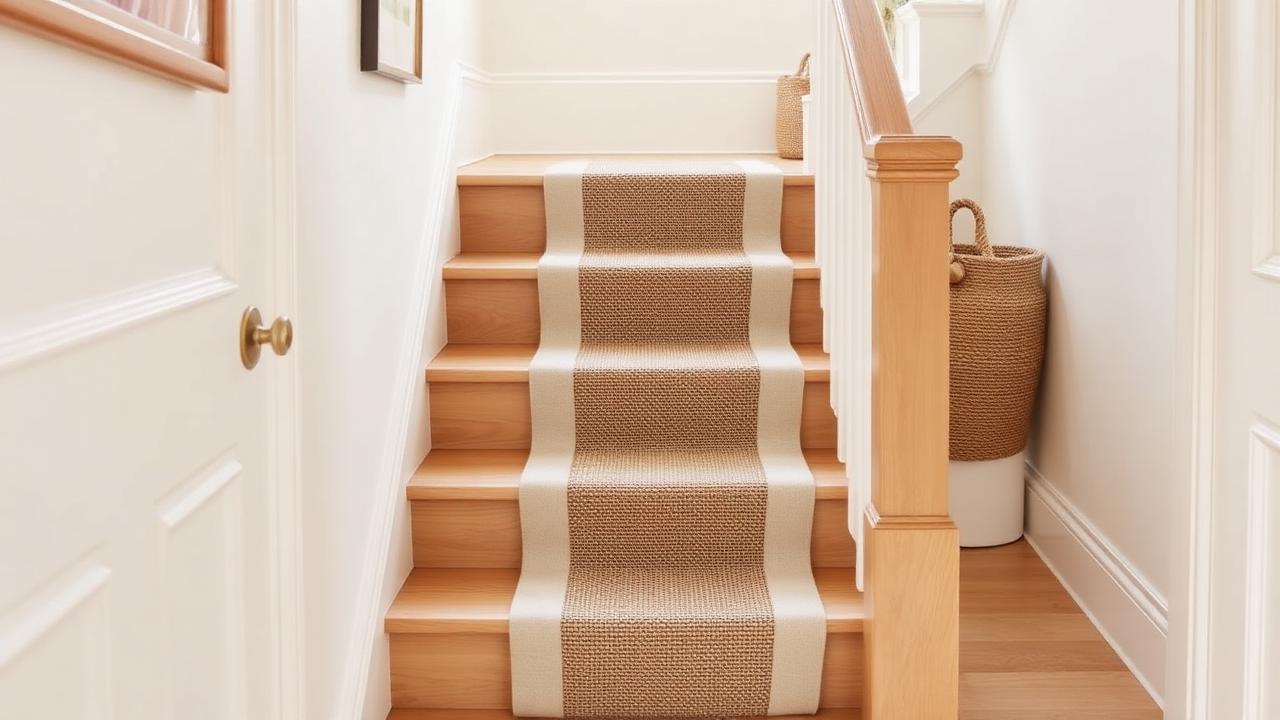
Binding cost as a share of the total project
| Binding type | Cost on a 13-step flight (both edges) | Share of a typical mid-range project |
|---|---|---|
| Machine cotton binding | $50–$130 | 3–8% |
| Hand wool whipping | $130–$310 | 8–18% |
| Leather edging | $260–$650 | 15–35% |
Matching binding across a runner and a connected landing carpet
Where a runner continues onto a fully carpeted landing or hallway, the binding only appears on the runner section since the landing carpet itself typically runs wall to wall with no exposed edge. Getting the two to look continuous relies on matching the base colour and pile type between the runner and the landing carpet, since the binding itself will only be visible on the stair flight, framing the reveal on either side.
Binding maintenance over the runner's lifetime
Binding sees more direct wear per square inch than almost any other part of the runner, since it is exactly where feet brush against the boundary between carpet and bare tread on every pass. Vacuum along the edge with a soft brush attachment rather than a beater bar, which can catch and pull at stitching over time, and check the corners at the nosing every few months, since that is where the first loose thread typically appears before it spreads along the length of the edge.
Choosing binding for a runner with stair rods
If the staircase will use stair rods, the binding sits directly beneath where each rod crosses the runner, so it is worth choosing a binding tone that also looks good against the rod's finish, not just the carpet colour. A dark bronze or black rod against a pale binding creates a crisp line at every step, while a brass rod often reads best against a warm-toned binding rather than a cool grey or navy, which can make the two elements look mismatched rather than deliberately paired.
Ordering samples of the bound edge, not just the carpet
Most suppliers will send a fabric swatch on request, but not all automatically include a sample of the actual binding tape or whipping yarn alongside it. Ask specifically for a bound sample edge before placing a full order on an expensive runner, since the finished binding colour can look noticeably different in person than it does in an online swatch photo, particularly with natural fibre tapes that vary between dye lots.
Whatever you decide, get the numbers first: the stair runner calculator doubles as a stair runner length calculator, adding nosing wrap, landings, winders, pattern repeat and waste so you order the right length the first time.
Still deciding on material, width or pattern? Our hub on stair runners compares weaves, widths, backings and fitting styles side by side, then hands the numbers straight to the calculator.
Frequently asked questions
Does a stair runner need bound edges?
Unless it is woven with a finished selvedge, yes. A raw cut edge will fray within months of daily use.
What is whipping on a stair runner?
A hand-stitched wool yarn edge wrapped around the runner's border. It is thicker and softer-looking than machine binding and is traditional on wool runners.
Should binding match or contrast the runner?
Tonal binding makes the runner read wider and calmer; contrast binding emphasises the line of the staircase. Both work — pick according to how much you want the stairs to stand out.
Does binding change the finished width of a stair runner?
It shouldn't — binding wraps the cut fibre edge rather than adding extra width — but always confirm whether a quoted width is pre- or post-binding, since some suppliers quote the unbound carpet width.
Can I bind a stair runner myself?
Not realistically. Binding needs a specialist industrial machine and technique, so it is almost always done by the supplier or a workroom before delivery, except for hand-whipped wool edges which a skilled restorer can add separately.
Can a frayed stair runner edge be repaired without replacing the whole runner?
Often yes. A workroom can re-bind just the damaged length, and wool whipping in particular can be re-worked with matching yarn on just the affected section.
Know your numbers in 30 seconds
Enter your step count, tread depth and riser height — the stair runner calculator gives you the exact length to order, in metres and feet, with waste included.
Check my runner widthReady for real prices?
Get quotes from vetted stair runner suppliers and fitters near you. Free, no account, no obligation.
Every guide is written from hands-on measuring and fitting experience, checked against the calculator’s own maths, and re-reviewed whenever prices or methods change. Read our editorial standards.