
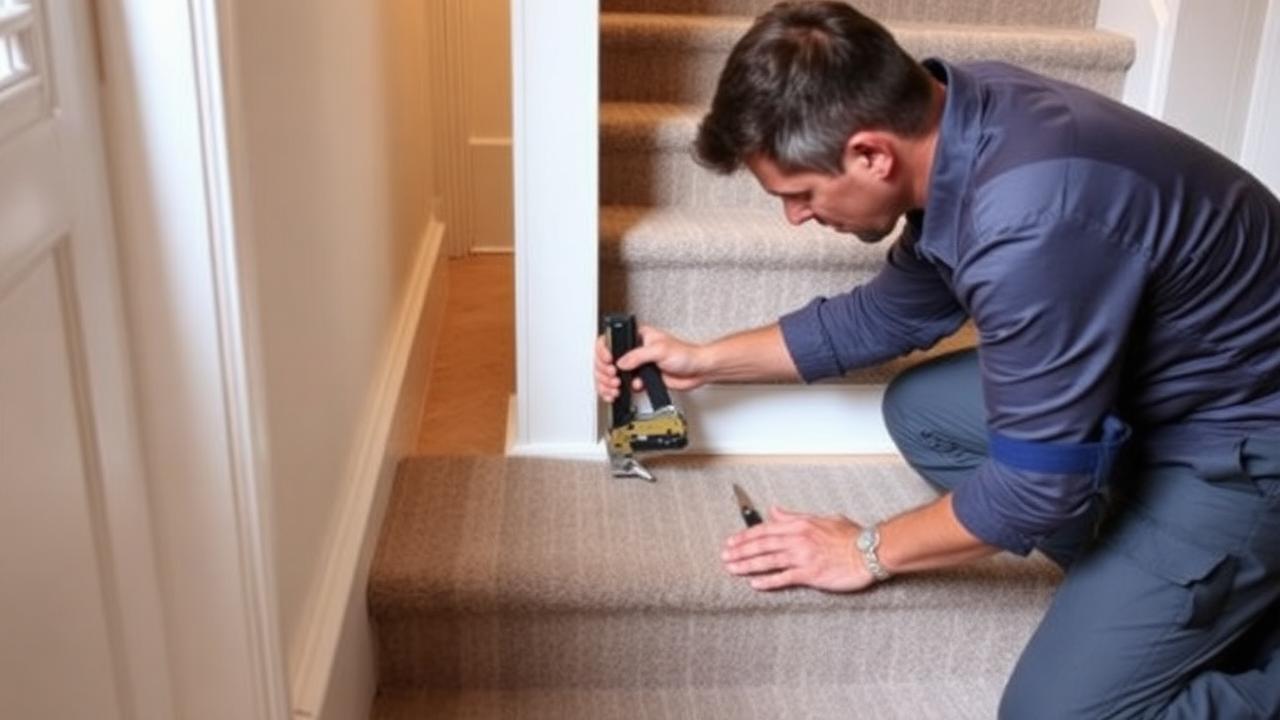
Why concrete rules out the usual fixing methods
Most stair runner fixing advice assumes a timber substrate, because most residential staircases in the US and UK are built from timber. Concrete stairs - common in basements, exterior entries, some new-build interiors with a poured concrete flight, and commercial or semi-commercial settings - throw that assumption out. You physically cannot drive a staple into concrete, and a standard timber gripper strip relies on angled pins biting into softwood, which concrete simply won't accept. That leaves two real options: adhesive, or a mechanical fixing designed specifically for masonry.
Before either method, the concrete itself needs to be in the right condition. It should be fully cured (new poured concrete takes weeks to properly cure, not days), clean of dust, laitance and any old adhesive residue, and ideally primed with a concrete primer or sealant compatible with your chosen adhesive. Skipping prep is the single biggest reason runners on concrete fail early - adhesive bonds beautifully to a properly primed, dust-free surface and barely at all to a dusty, untreated one.
Fixing method one: adhesive direct to concrete
A strong, flexible carpet adhesive rated for concrete substrates, applied with a notched trowel in the pattern the manufacturer specifies, is the most common method on concrete stairs. Because concrete floors don't flex the way timber treads do, the adhesive itself takes on all the holding work rather than sharing it with any mechanical grip, so use a full-spread adhesive rather than perimeter-only tape or spots of adhesive, particularly at the front edge of each tread where foot traffic and shear force concentrate hardest.
Give the adhesive its full manufacturer-stated cure time before allowing traffic on the stairs - this is often 24-48 hours, sometimes longer in cold or damp conditions, and rushing this step on a concrete stair is one of the most common reasons for a runner lifting at the nosing within the first few months.
Fixing method two: mechanical anchors with a metal gripper track
For a heavier-traffic or commercial-adjacent concrete staircase, a metal (rather than wooden) gripper track fixed with masonry screws or concrete pins gives a more mechanically secure hold than adhesive alone, and it's the method I'd lean towards on any concrete flight that's going to see genuinely heavy daily footfall, like a basement stair used constantly by a family or a shared building entrance. The track is drilled and plugged into the concrete at intervals along the internal tread-riser angle, and the runner is then stretched over it using the standard power-stretcher carpet-fitting technique, exactly as you would over a timber gripper.
Combine methods on high-traffic concrete stairs
On a busy concrete flight, a mechanical gripper track at the tread-riser angle plus adhesive under the main body of the tread gives the most durable result - the gripper takes the stretch and shear load, the adhesive stops the middle of each tread lifting or drumming underfoot.
What doesn't work on concrete
Standard timber tack strip, ordinary staples, and lightweight double-sided carpet tape on its own are all unreliable on concrete. Tack strip's pins can't grip masonry at all. Staples obviously can't penetrate concrete. And standard carpet tape, while it will technically stick to primed concrete for a while, doesn't have the shear strength to cope with the twisting and pulling forces a stair runner is under every time someone walks down quickly or a pet's claws catch the edge - it tends to lift first at the nosing, then peel back along the whole tread within months on a regularly used stair.
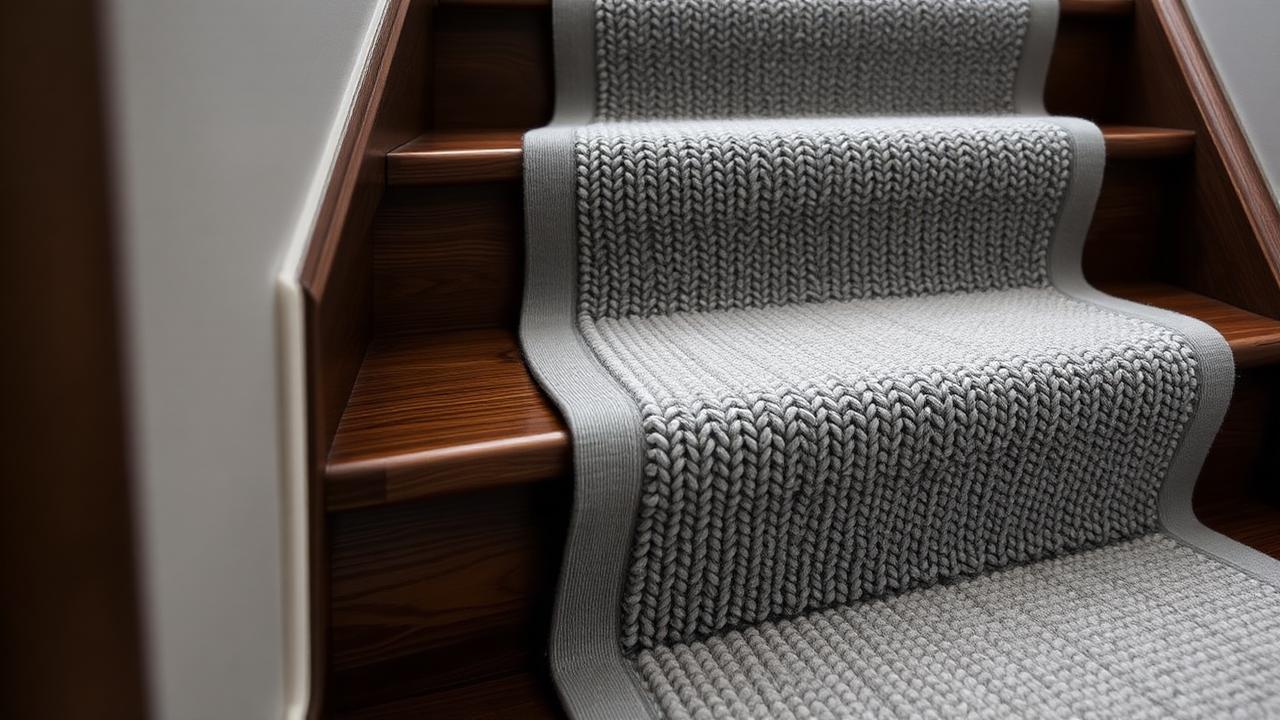
How much runner do I need?
The sizing formula for concrete stairs is identical to timber - concrete doesn't change tread run, riser height or nosing wrap allowance, it only changes fixing method. Take a US example: 13 concrete steps with a 10 in tread run, 7.5 in riser height and a 0.75 in nosing wrap allowance (concrete nosings are often a plainer, less pronounced profile than timber, so measure yours rather than assuming). Per step that's 18.25 in, giving 237.25 in across 13 steps, or 19.77 ft. Add a 24 in finishing allowance for 261.25 in, then a 7% waste margin for roughly 279.5 in, about 23.3 ft, so order 23-24 ft.
In UK metric terms that's 25 cm treads, 19 cm risers and 1.9 cm nosing wrap for 45.9 cm per step, 596.7 cm across 13 steps, plus a 60 cm finishing allowance for 656.7 cm, and with the waste margin roughly 7.03 m total. Use a stair runner length calculator to check your own concrete staircase's exact figures, particularly if your treads have a shallower nosing than the timber default, since that can shave a little off the total length needed per step.
| Measurement | US (in/ft) | UK (cm/m) |
|---|---|---|
| Tread run | 10 in | 25 cm |
| Riser height | 7.5 in | 19 cm |
| Nosing wrap (concrete, plainer profile) | 0.5-0.75 in | 1.3-1.9 cm |
| 13 steps, plus finishing + waste | 23-24 ft | 7.0-7.2 m |
Know your numbers in 30 seconds
Enter your step count, tread depth and riser height — the stair runner calculator gives you the exact length to order, in metres and feet, with waste included.
Open the stair runner calculatorPadding and moisture considerations specific to concrete
- Check for rising damp or moisture in below-grade concrete (basements, exterior stairs) before fitting - trapped moisture under a runner on concrete causes mould faster than on a timber substrate.
- Use a moisture-resistant or synthetic pad rather than a natural fibre pad on any concrete stair with even mild damp risk.
- Allow the concrete to fully dry after any cleaning or priming step before applying adhesive.
- Consider a thinner pad on concrete stairs if headroom or an existing threshold at top and bottom is tight.
When to call a professional for a concrete flight
Concrete fixing methods use tools most DIYers don't already own - a hammer drill, masonry bits, concrete screws or pins, and often a specific adhesive system the manufacturer wants applied within a set open time. If you've never worked with masonry fixings before, a concrete staircase is a reasonable one to hand to a professional installer, particularly if it's a heavy-traffic entrance or basement stair where a failed fixing is a genuine trip hazard rather than just a cosmetic problem.
Whatever you decide, get the numbers first: the stair runner calculator doubles as a stair runner length calculator, adding nosing wrap, landings, winders, pattern repeat and waste so you order the right length the first time.
Still deciding on material, width or pattern? Our hub on stair runners compares weaves, widths, backings and fitting styles side by side, then hands the numbers straight to the calculator.
Frequently asked questions
Can you staple a stair runner to concrete stairs?
No. Staples and standard timber tack strip can't penetrate or grip concrete at all. You need either a strong concrete-rated adhesive or a mechanical gripper track fixed with masonry screws or pins instead.
What adhesive works best for a runner on concrete stairs?
A flexible, full-spread carpet adhesive specifically rated for concrete substrates, applied with a notched trowel after the concrete is cleaned, dust-free and primed. Check the manufacturer's cure time before allowing foot traffic.
Do I need to prime concrete before fitting a runner?
Yes, generally. A concrete primer or sealant improves adhesive bond significantly compared to bare, dusty concrete, and it's a major factor in whether the runner stays down long-term or starts lifting within months.
Is a metal gripper track better than adhesive on concrete?
For heavy-traffic concrete stairs, yes, a mechanically anchored metal gripper track gives a more secure hold than adhesive alone. Many fitters combine both - gripper track at the tread-riser angle plus adhesive under the tread body.
How long does adhesive need to cure on concrete before use?
Typically 24-48 hours per most manufacturer instructions, though cold or damp conditions can extend that. Rushing this step is a common reason runners lift at the nosing within the first few months on concrete.
Does concrete change how much runner I need?
No, the length and width formula is the same as for timber stairs - only the nosing profile might be slightly plainer on concrete, which can shave a small amount off the per-step allowance. Fixing method, not sizing, is what changes.
Is concrete stairs a good DIY fixing job?
It's more demanding than a timber staircase since it needs masonry tools and specific adhesive systems. If you haven't worked with concrete fixings before, particularly on a busy or below-grade flight, hiring a professional is the safer route.
What causes a runner to fail early on concrete stairs?
Poor surface prep (dust, laitance, no primer), rushing adhesive cure time before allowing traffic, and using lightweight tape instead of a full-spread rated adhesive or mechanical gripper track are the three most common causes.
Know your numbers in 30 seconds
Enter your step count, tread depth and riser height — the stair runner calculator gives you the exact length to order, in metres and feet, with waste included.
Calculate the length for your concrete stairs with the stair runner calculatorReady for real prices?
Get quotes from vetted stair runner suppliers and fitters near you. Free, no account, no obligation.
Every guide is written from hands-on measuring and fitting experience, checked against the calculator’s own maths, and re-reviewed whenever prices or methods change. Read our editorial standards.