
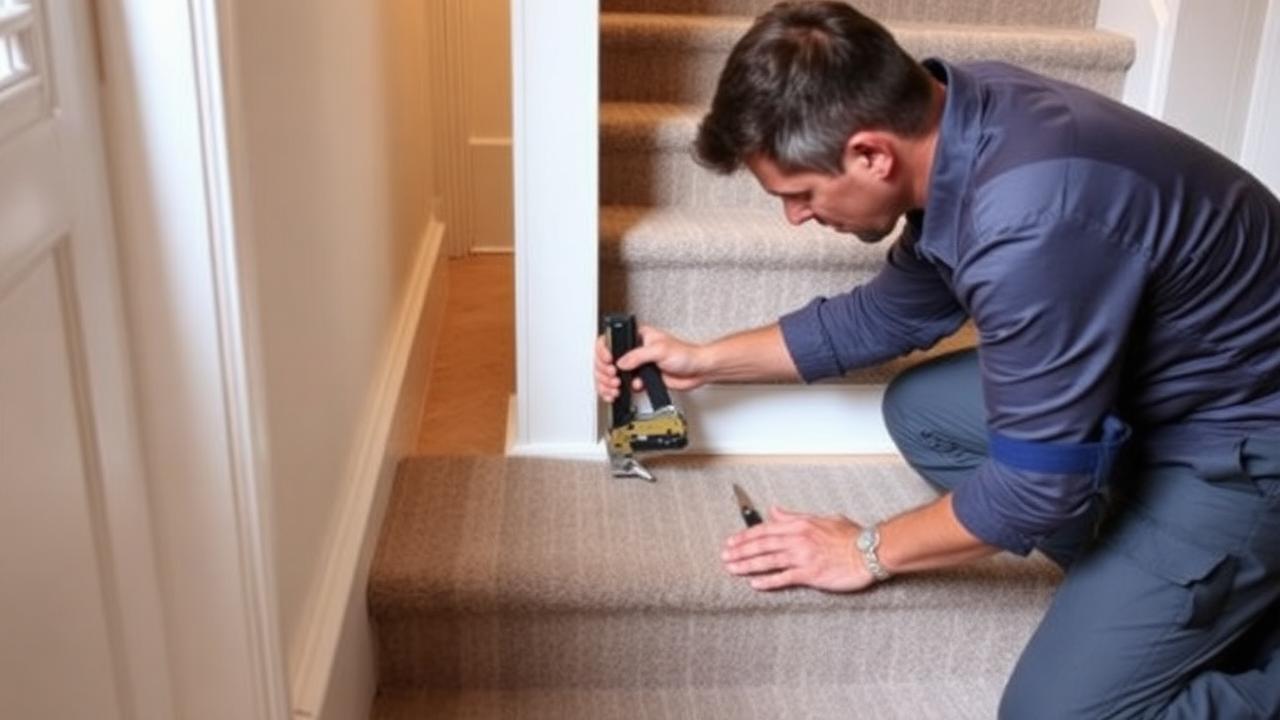
Metal stairs are the least standard substrate on this list
Metal staircases vary more than any other substrate covered here, and that variation changes the fitting approach more than it does for wood, tile or concrete. A spiral staircase with individual pie-shaped steel or aluminium treads is a genuinely different fitting job to a straight industrial loft staircase with full-width steel plate treads, and both are different again from an open-riser metal stair where each tread is a separate unit with open space beneath it rather than a solid riser backing it up. Before deciding on a fixing method, work out which of these three you actually have, because it changes everything downstream.
The one constant across all metal stair types is that staples, nails and standard timber tack strip are non-starters - you cannot drive a staple into structural steel or aluminium, full stop. Every method below relies on either adhesive bonding, mechanical clamping to the tread's existing edges or frame, or in some cases pre-drilled fixing points the stair manufacturer built in specifically for this purpose.
Fixing method one: metal-rated adhesive
For solid metal treads with a full surface (not open mesh or perforated metal), a strong adhesive rated specifically for bonding to metal is the most common approach, similar in principle to the tile and concrete methods but using a different adhesive chemistry suited to metal's different surface properties and thermal expansion behaviour. Metal expands and contracts with temperature more than timber, tile or concrete, so the adhesive needs enough flexibility to cope with that movement without the bond cracking or lifting, particularly on an exterior metal stair exposed to real seasonal temperature swings.
Clean the metal thoroughly first, removing any oil, grease, rust-inhibiting coating or paint overspray, since metal surfaces in a workshop or industrial setting often carry residues that stop adhesive from bonding properly even if the surface looks clean to the eye. A degreasing wipe-down before applying adhesive is a step worth not skipping.
Fixing method two: clip or clamp systems
Purpose-made stair tread clip or clamp systems, which grip the front and side edges of a metal tread mechanically rather than bonding to its flat surface, are common on commercial and industrial metal staircases and are increasingly available for residential spiral and loft stairs too. These typically hold a cut tread cover or a section of continuous runner under a retaining lip along each tread edge, giving a genuinely removable, adjustable fixing that doesn't depend on adhesive bond strength at all - useful if you want to be able to lift and clean underneath periodically, which matters more on metal stairs that see outdoor grit or workshop debris tracked onto them.
Open-mesh or perforated metal treads need a different approach entirely
If your metal treads are open mesh, perforated or grated rather than solid plate, standard adhesive won't bond reliably to the reduced surface contact area. These usually need a bonded rubber backing pad cut to match the perforation pattern, or bolted tread covers, rather than a poured or spread adhesive.
Spiral stairs: individual tread covers, not one continuous runner
Spiral staircases almost always need individually cut, pie-shaped tread covers rather than one continuous runner, because the tapering tread shape and the way each step rotates around the central pole make a single continuous length impractical to fit and unsafe to walk on if it isn't perfectly seated on every angled tread. Each cover is measured and cut to that specific tread's shape, usually including a section that wraps slightly up the inner curve near the pole, and fixed with either adhesive or small mechanical clips at the tread edges. Budget for this as a per-tread project rather than a single running length, and expect a higher total material cost than a straight flight of the same step count because of the extra cutting and shaping involved.
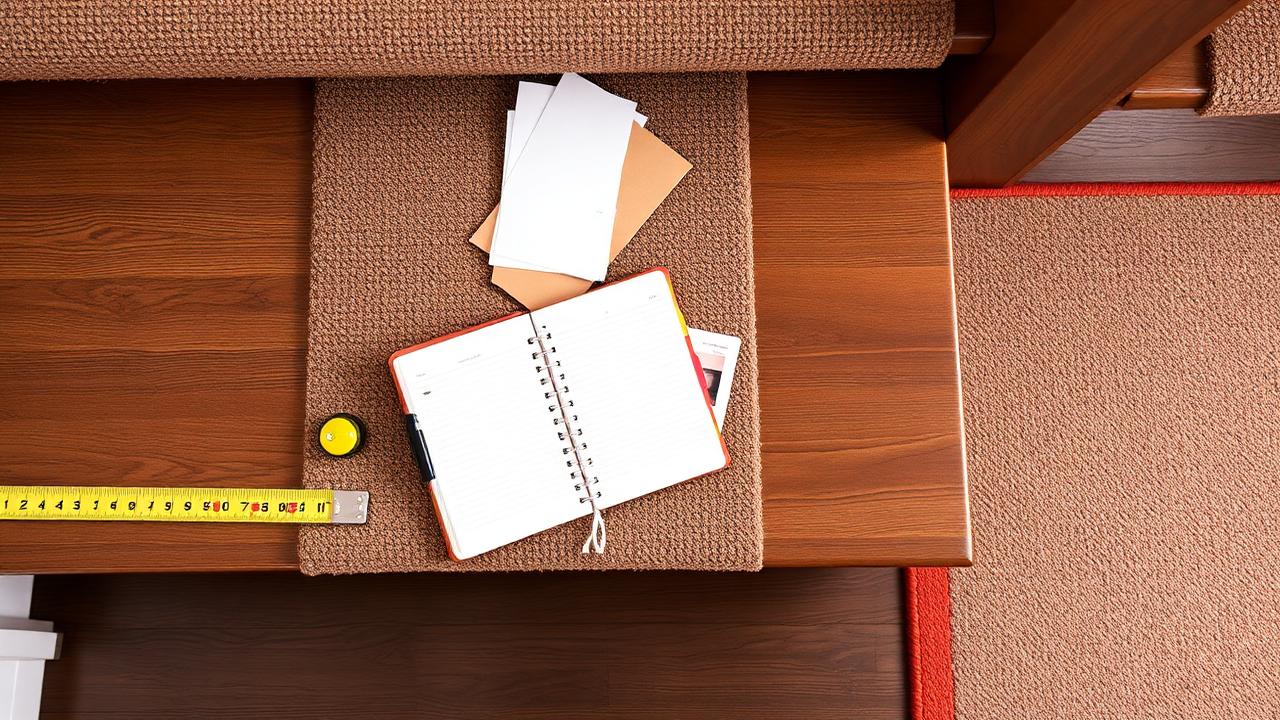
How much runner do I need?
For a straight metal staircase where a continuous runner is genuinely practical, the sizing formula matches any other substrate, with metal nosings usually being a plainer, squared or lightly rounded edge rather than a pronounced timber bullnose. Take a US example: 13 steps, 10 in tread run, 7.5 in riser height, 0.5 in nosing wrap for a modest metal nosing profile. Per step that's 18 in, giving 234 in across 13 steps, or 19.5 ft. Add a 24 in finishing allowance for 258 in, then a 7% waste margin bringing you to roughly 276 in, about 23 ft, so order 23-23.5 ft.
In UK metric terms that's 25 cm treads, 19 cm risers and 1.3 cm nosing wrap for 45.3 cm per step, 588.9 cm across 13 steps, plus a 60 cm finishing allowance for 648.9 cm, and with the 7% waste margin roughly 6.94 m total. If you're covering a spiral staircase instead, skip this continuous-length formula altogether and measure each tread individually - a stair runner calculator is still useful for a straight metal flight, but for spiral stairs you're really doing a per-tread area calculation instead.
| Measurement | US (in/ft) | UK (cm/m) |
|---|---|---|
| Tread run | 10 in | 25 cm |
| Riser height | 7.5 in | 19 cm |
| Nosing wrap (metal, plainer profile) | 0.5 in | 1.3 cm |
| 13 steps, plus finishing + waste | 23-23.5 ft | 6.9-7.1 m |
Know your numbers in 30 seconds
Enter your step count, tread depth and riser height — the stair runner calculator gives you the exact length to order, in metres and feet, with waste included.
Open the stair runner calculatorNoise, grip and why metal stairs benefit most from a runner
Metal stairs are noisier underfoot than almost any other substrate - footsteps ring and echo off bare steel in a way that timber, tile and concrete simply don't - and they're often more slippery too, especially on a spiral stair where the tread narrows sharply near the pole. A well-fitted runner or set of tread covers addresses both problems at once, cutting noise significantly and adding real grip exactly where the tread is narrowest and most dangerous. This is genuinely one of the substrates where fitting stair runners delivers the biggest functional improvement, not just a decorative one, which is worth remembering if cost is putting you off a full project - even partial coverage on the narrowest treads of a spiral stair meaningfully reduces slip risk.
When to bring in a specialist for metal stairs
Metal stairs, particularly spiral and open-riser designs, are close to the top of my list for recommending a specialist rather than DIY, mainly because of the individual-tread measuring and cutting spiral stairs demand, and because getting adhesive or clip selection wrong on metal - where thermal movement and surface prep both matter more than people expect - tends to show up as a failure months later rather than immediately. A fitter experienced with metal and spiral staircases will template each tread accurately and choose a fixing system suited to your specific metal type and tread design.
Whatever you decide, get the numbers first: the stair runner calculator doubles as a stair runner length calculator, adding nosing wrap, landings, winders, pattern repeat and waste so you order the right length the first time.
Frequently asked questions
Can you staple a stair runner to metal treads?
No. Staples can't penetrate steel or aluminium at all. Metal stair treads need adhesive rated for metal, mechanical clip or clamp systems, or bolted tread covers instead.
Do spiral staircases need a different kind of runner?
Yes, almost always. Spiral stairs need individually cut, pie-shaped tread covers rather than one continuous runner, because the tapering, rotating tread shape doesn't suit a single continuous length safely.
What adhesive works on metal stair treads?
Use an adhesive specifically rated for bonding to metal, with enough flexibility to handle thermal expansion and contraction, especially on exterior metal stairs. Clean and degrease the metal thoroughly before applying it.
Can I fit a runner on open-mesh or perforated metal stairs?
Standard adhesive doesn't bond reliably to open-mesh or perforated metal due to reduced contact area. These usually need a bonded rubber backing pad shaped to the perforation pattern, or bolted tread covers instead.
Why are metal stairs noisier and more slippery than other substrates?
Bare metal doesn't absorb sound the way timber, tile or carpet padding does, so footsteps ring more, and metal surfaces, especially on tight spiral treads, often have less inherent grip than a textured or carpeted surface.
How much runner do I need for a straight metal staircase?
For a 13-step straight metal flight with 10 in (25 cm) treads and 7.5 in (19 cm) risers, budget roughly 23-23.5 ft (6.9-7.1 m), using a smaller nosing wrap allowance since metal nosings are typically plainer than timber.
Are clip systems better than adhesive on metal stairs?
Clip and clamp systems avoid relying on adhesive bond strength entirely and allow easier removal for cleaning, which suits metal stairs exposed to grit or workshop debris, though they need a tread edge design that can actually accept a clip.
Should I hire a specialist for a metal or spiral stair runner project?
Generally yes, particularly for spiral or open-riser stairs, since individual tread templating and metal-specific adhesive or clip selection are easy to get wrong in ways that only show up as failures months later.
Know your numbers in 30 seconds
Enter your step count, tread depth and riser height — the stair runner calculator gives you the exact length to order, in metres and feet, with waste included.
Work out your metal staircase length with the stair runner calculatorReady for real prices?
Get quotes from vetted stair runner suppliers and fitters near you. Free, no account, no obligation.
Every guide is written from hands-on measuring and fitting experience, checked against the calculator’s own maths, and re-reviewed whenever prices or methods change. Read our editorial standards.