

The number one rule with tile: nothing that punctures it
Tiled stairs are unforgiving of any fixing method that involves puncturing or drilling the tile face itself. A single staple, nail or screw driven through a ceramic or porcelain tile will crack it, and once a stair tile is cracked it's usually a full retile of that step, not a quick patch, since matching a discontinued or aged tile is often impossible. This rules out every timber-style fixing method outright and pushes tiled stairs into the same adhesive-or-mechanical-clip category as concrete, but with an extra wrinkle - tile is smoother and glazed, which means adhesive bond strength and slip resistance both need more thought than on a rougher concrete surface.
I fitted a runner on a tiled Spanish-style staircase a couple of years back where the previous owner had drilled straight through two tiles trying to fit a gripper the timber way - both had to be sourced from a reclamation yard because the original tile line was long discontinued. It's the clearest example I've seen of why tile substrate needs its own approach rather than borrowing a timber method.
Fixing method one: adhesive rated for hard, glazed surfaces
A carpet adhesive specifically formulated for hard, non-porous surfaces like glazed tile bonds far better than a general-purpose adhesive, which can struggle to grip a smooth, sealed tile face at all. Clean the tile thoroughly first, removing any sealant, wax or cleaning product residue, since these are exactly the kind of films that stop adhesive bonding properly, and test the adhesive on an inconspicuous tile or offcut first to confirm it grips your specific glaze rather than assuming any tile-rated product works on every tile finish.
Apply adhesive across the full tread, not just the edges, because a glazed tile surface gives you no mechanical grip at all to fall back on if the bond is thin or patchy - unlike timber, where even a partially failed adhesive bond still has some staple or gripper backup, tile relies on the adhesive doing effectively all of the holding work.
Fixing method two: stair nosing clips and edge trim systems
An alternative that avoids relying entirely on adhesive is a metal or heavy-duty plastic stair nosing clip system, which clamps onto the front edge of the tiled tread mechanically rather than bonding to the flat tile face, then holds the runner's edge under a retaining bar or clip strip. These systems are more common in commercial fit-outs than domestic ones, but they're worth asking a specialist fitter about if you're nervous about relying purely on adhesive, particularly on an exterior or entrance tiled stair exposed to temperature swings that can affect adhesive bond over time.
Check tile type before choosing adhesive
Natural stone tiles (marble, slate, travertine) can react with some solvent-based adhesives and stain permanently. If your tiled stairs are natural stone rather than ceramic or porcelain, confirm the adhesive is stone-safe before applying it anywhere on the tread.
Slip risk is higher on tile than almost any other substrate
Tile is already a smoother, harder surface than timber or carpet underlay, and a runner that isn't fully and evenly bonded across a tiled tread can itself become a slip hazard, sliding slightly underfoot rather than staying rigidly fixed the way a stapled runner would on wood. This makes full-spread adhesive (rather than perimeter-only or spot adhesive) genuinely a safety consideration on tile, not just a durability one, and it's worth choosing a runner backing designed for hard-surface installation, since some runner backings are made specifically to pair with hard-floor adhesive systems and grip more securely than a standard woven jute backing would.
How much runner do I need?
Sizing for tiled stairs uses the same formula as any substrate, with one adjustment worth checking - tiled tread nosings are sometimes cut with a slight bullnose edge tile, similar to a rounded timber nosing, so measure your own nosing wrap rather than assuming a flat, square edge. Take a US example: 13 steps, 10 in tread run, 7.5 in riser height, 0.75 in nosing wrap for a bullnosed tile edge. Per step that's 18.25 in, 237.25 in across 13 steps, or 19.77 ft. Add a 24 in finishing allowance for 261.25 in, then a 7% waste margin bringing you to roughly 279.5 in, about 23.3 ft, so order 23-24 ft.
In UK metric terms that's 25 cm treads, 19 cm risers and 1.9 cm nosing wrap for 45.9 cm per step, 596.7 cm across 13 steps, plus a 60 cm finishing allowance for 656.7 cm, and with the waste margin roughly 7.03 m. If your tiled treads have a flatter, square-edged nosing rather than a bullnose, reduce the nosing wrap allowance to around 0.25-0.5 in (0.6-1.3 cm) and run the figures again - a stair runner length calculator makes checking this adjustment quick rather than reworking the whole sum by hand.
| Tile nosing profile | Nosing wrap (US) | Nosing wrap (UK) |
|---|---|---|
| Square-edged tile nosing | 0.25-0.5 in | 0.6-1.3 cm |
| Bullnosed tile nosing | 0.75-1 in | 1.9-2.5 cm |
Know your numbers in 30 seconds
Enter your step count, tread depth and riser height — the stair runner calculator gives you the exact length to order, in metres and feet, with waste included.
Open the stair runner calculatorChoosing a runner style for tiled stairs
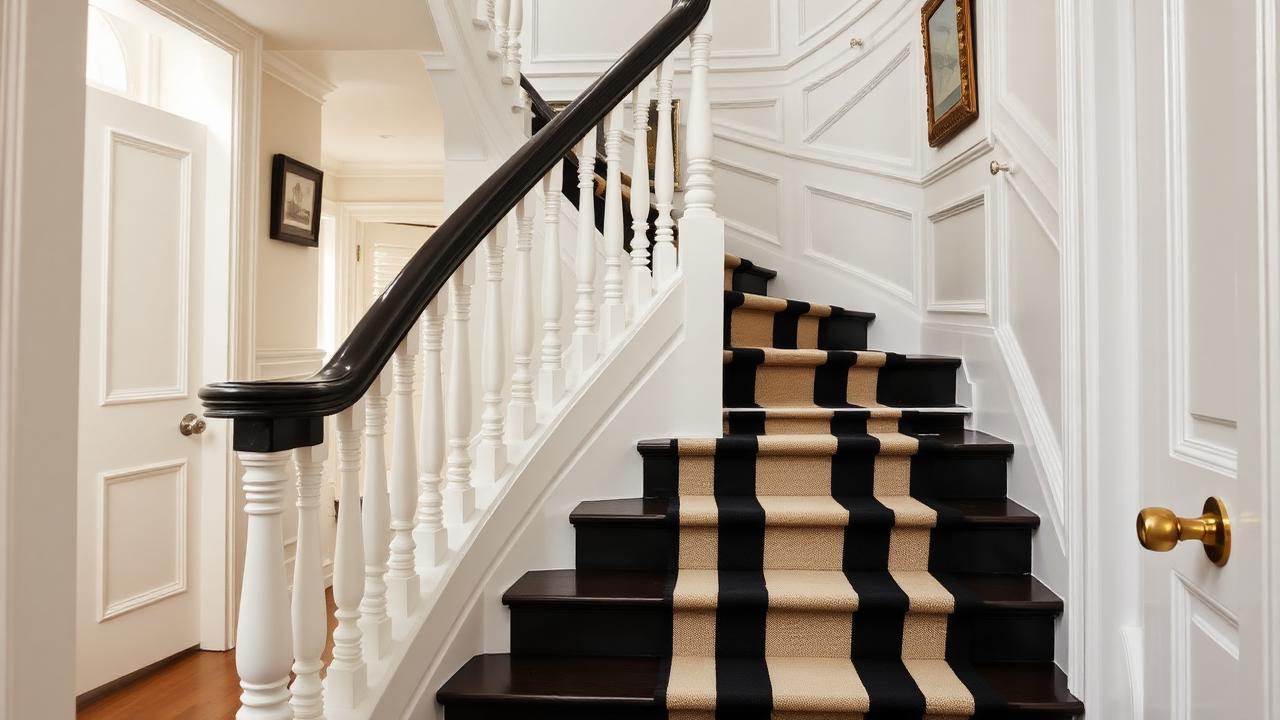
Tiled staircases are common in Mediterranean, Spanish colonial and some mid-century homes, and stair runners on tile tend to look best either echoing that decorative tradition with a bold pattern or border, or contrasting deliberately with a plain, textured natural-fibre-look runner that softens the hard, cool feel of tile underfoot. Whichever direction you choose, a stair runner calculator handles the length and width sizing consistently, and the fixing method decision above is really the part of a tiled-stair project that needs the most upfront thought, since it's far harder to change your mind about fixing method after adhesive is already bonded to a glazed tile face.
When to bring in a specialist
Tiled stairs, especially natural stone ones, are one of the substrates I'd most readily recommend a specialist fitter for, simply because the cost of a mistake (a cracked or stained tile) is high and hard to reverse. A fitter who works regularly with hard-surface stair installations will know which adhesive systems suit your specific tile, how to test bond strength before committing the whole flight, and how to manage the slip-risk considerations properly across the full run of steps.
Still deciding on material, width or pattern? Our hub on stair runners compares weaves, widths, backings and fitting styles side by side, then hands the numbers straight to the calculator.
Frequently asked questions
Can you staple a stair runner onto tiled stairs?
No. Staples, nails and screws will crack tile. Tiled stairs need a tile-rated adhesive or a mechanical nosing clip system that grips the tread edge rather than puncturing the tile face.
What adhesive is safe for tiled stairs?
Use a carpet adhesive specifically formulated for hard, non-porous, glazed surfaces, and confirm it's stone-safe if your tiles are natural stone rather than ceramic or porcelain, since some solvent-based products can stain natural stone.
Is a stair runner on tile more of a slip risk?
It can be if not fully bonded, because tile itself is already smooth and hard. Use full-spread adhesive rather than perimeter-only fixing and choose a runner backing designed for hard-surface installation for the safest result.
Do tiled stairs need a different nosing wrap allowance?
Check your specific tile nosing profile - a bullnosed tile edge needs a similar 0.75-1 in (1.9-2.5 cm) allowance to timber, while a flat, square-edged tile nosing needs less, around 0.25-0.5 in (0.6-1.3 cm).
Can I remove a runner from tile without damaging it?
Adhesive installations can leave residue that needs a proper tile-safe adhesive remover rather than scraping, which risks scratching the glaze. Clip or nosing-trim systems remove more cleanly since they don't bond directly to the tile face.
What if my tiled stairs are natural stone, not ceramic?
Be extra cautious with adhesive choice. Some solvent-based adhesives can permanently stain marble, slate or travertine, so always confirm a product is explicitly rated as stone-safe before applying it anywhere on natural stone treads.
How much runner do I need for a 13-step tiled staircase?
For a 13-step flight with 10 in (25 cm) treads and 7.5 in (19 cm) risers, budget roughly 23-24 ft (7.0-7.2 m) including nosing wrap, finishing allowance and waste margin, adjusted slightly for your tile's specific nosing profile.
Should I hire a professional for a tiled stair runner installation?
It's a good idea, particularly on natural stone or an entrance/exterior tiled stair, since a cracked or stained tile is expensive and often impossible to match exactly, and a specialist will know which adhesive system suits your tile.
Know your numbers in 30 seconds
Enter your step count, tread depth and riser height — the stair runner calculator gives you the exact length to order, in metres and feet, with waste included.
Get your exact tiled stair length from the stair runner calculatorReady for real prices?
Get quotes from vetted stair runner suppliers and fitters near you. Free, no account, no obligation.
Every guide is written from hands-on measuring and fitting experience, checked against the calculator’s own maths, and re-reviewed whenever prices or methods change. Read our editorial standards.