

Guest-facing stairs versus back-of-house stairs
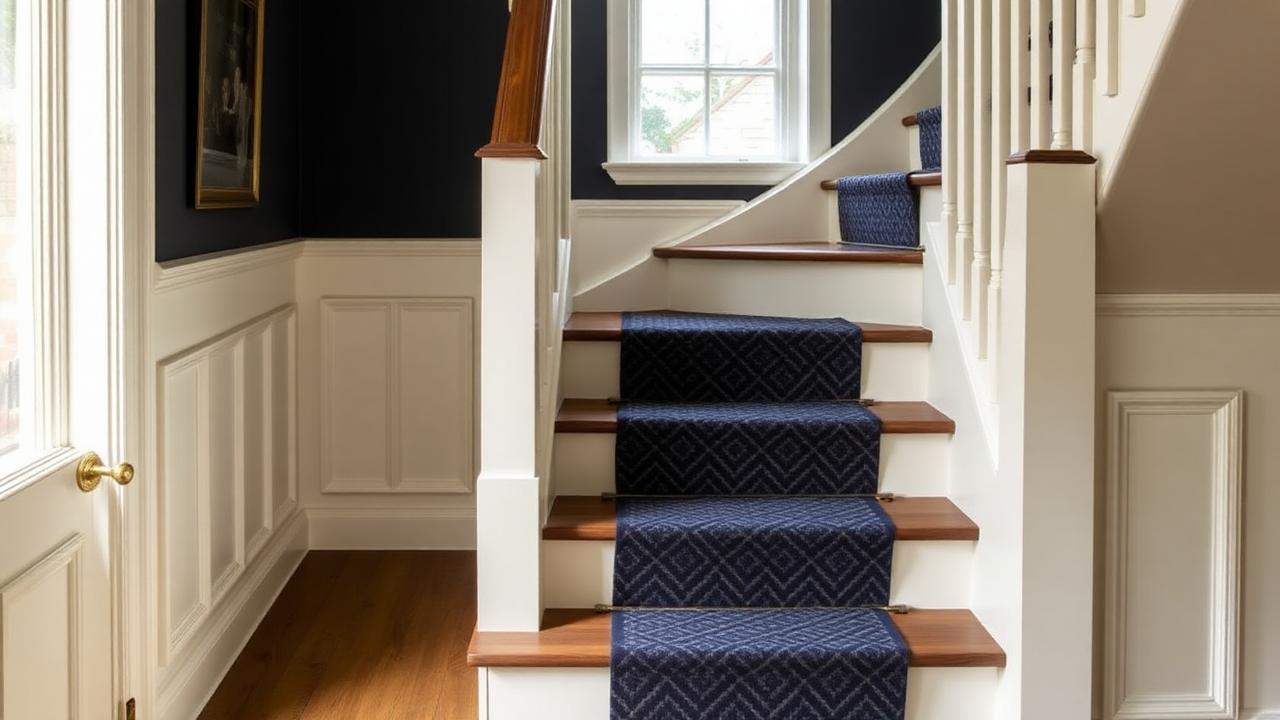
The first decision on any hotel project is which of your stairs guests will actually see and use, and which are purely functional. A grand lobby staircase or a feature stair between a reception and a restaurant level is effectively part of the interior design, and hotels will often specify a wool or wool-blend runner with a bordered pattern, brass stair rods, and a colour that ties into the wider interior scheme, prioritising look and feel alongside durability. A back-of-house service stair or a fire escape stairwell, by contrast, is judged almost entirely on durability, slip resistance and fire rating, and hotels typically fit a plain, dark, heavy commercial loop pile there because guests rarely see it and the priority is compliance and longevity under staff and delivery foot traffic.
Budgets should reflect this split too. It's common for a hotel to spend considerably more per linear metre on a feature staircase runner than on back-of-house stairs, because the guest-facing stair contributes to first impressions and review photography, while the service stair's job is simply to last and to meet fire code without drawing attention to itself.
Working out length on a feature staircase
A straight flight is measured the same way regardless of setting. Take a US 13-step flight, 10 in tread run, 7.5 in riser height, plus a 0.75 in nosing wrap allowance per step, giving 18.25 in per step, 237.25 in (19.77 ft) across the flight. Add 24 in total for top and bottom finishing to reach 21.77 ft, then apply an 8-10% waste margin common on commercial contract jobs, landing at roughly 23.5-24 ft. Many hotel feature stairs have winders or a curve at a half-landing though, and those need measuring individually along the inner and outer edge of each winder tread rather than assumed from a straight-flight formula, since a curved stair can easily need 15-20% more material than the same rise measured as a straight run.
In UK metric terms, the same straight flight is 25 cm tread, 19 cm riser and 1.9 cm nosing wrap, giving 45.9 cm per step and 5.97 m across 13 steps. Add 60 cm finishing allowance for 6.57 m, then apply an 8-10% waste margin to reach roughly 7.1-7.2 m. On any hotel job with a curved or winder section, get a fitter to measure that section on site before ordering fabric, since guessing a curved allowance from a straight-flight number is one of the most common causes of hotel refit projects running short on material mid-fit.
| Item | US (in/ft) | UK (cm/m) |
|---|---|---|
| Per-step total, straight flight | 18.25 in | 45.9 cm |
| 13 steps subtotal | 19.77 ft | 5.97 m |
| Plus finishing allowance | 21.77 ft | 6.57 m |
| With 8-10% waste margin | 23.5-24 ft | 7.1-7.2 m |
| Winder/curved section | measure on site, +15-20% typical | measure on site, +15-20% typical |
Know your numbers in 30 seconds
Enter your step count, tread depth and riser height — the stair runner calculator gives you the exact length to order, in metres and feet, with waste included.
Open the stair runner calculatorPattern, colour and brand consistency
- A bordered runner with a deep, saturated colour, burgundy, forest green, navy, is a common choice for a traditional hotel feature stair because it reads as classic and hides wear well.
- Boutique and modern hotels often use a plainer, tonal loop pile or flatweave to match a minimalist interior scheme rather than a patterned border.
- If the hotel has multiple properties under one brand, agree a signature runner colour and pattern with the brand's design guidelines before ordering for each site individually.
- Back-of-house stairs should use a plain, dark, fibre suited to hiding scuffs from luggage trolleys and cleaning carts.
- Always sample the exact dye lot in the actual lighting of the stairwell before a full order, since hotel lighting rigs vary enormously between properties.
Fire compliance for hotel stairwells
Hotels are almost always subject to stricter fire regulations than a typical office because guests are sleeping on site overnight and may be unfamiliar with escape routes. Every stairwell used as part of a fire escape route, which in most hotels means every stair, needs flooring that meets the fire classification required by local building and fire safety regulations, and this documentation is something fire officers will specifically ask to inspect. Do not assume a decorative runner on a feature staircase is exempt just because it looks residential in style, it still needs to meet the same fire rating as a plainer commercial product if that staircase forms part of an escape route, which in a hotel it almost always does.
Keep fire certificates for every runner on file
Hotels are inspected regularly, and a fire officer may ask for documentation on any stair covering in the building at short notice. Keep the fire test certificate for every runner, feature stair included, filed with your fire safety records, not just with the purchase invoice.
Ordering process for a hotel refit
Hotel refits usually involve multiple staircases across several floors, sometimes with different fibres, colours and widths on each. Measure every flight individually, note which are straight and which include winders or curves, and keep a master table of lengths per flight before contacting suppliers. Working through a stair runner length calculator for each straight section gives you a reliable baseline figure, with curved sections flagged separately for on-site measurement, so your final purchase order reflects real quantities rather than a single averaged estimate across very different staircases.
Timing matters too. Hotels rarely want a full closure for a stair refit, so fitting is often phased flight by flight, or scheduled overnight, with barriers and alternative routes signposted for guests. Discuss phasing with your fitter and supplier early, since a phased fit sometimes needs material delivered in stages rather than as one single reel, which can affect lead times if the mill needs to produce dye lots to match across multiple delivery batches.
Whatever you decide, get the numbers first: the stair runner calculator doubles as a stair runner length calculator, adding nosing wrap, landings, winders, pattern repeat and waste so you order the right length the first time.
Still deciding on material, width or pattern? Our hub on stair runners compares weaves, widths, backings and fitting styles side by side, then hands the numbers straight to the calculator.
Frequently asked questions
Should a hotel use the same stair runner on guest stairs and back-of-house stairs?
No, most hotels specify differently for each. Guest-facing feature stairs prioritise appearance alongside durability, often a wool or wool-blend bordered runner, while back-of-house and fire escape stairs use a plain, heavy-duty commercial loop pile chosen mainly for durability and fire compliance.
Does a decorative hotel stair runner still need a fire rating?
Yes. If the staircase forms part of a fire escape route, which is true of almost every stair in a hotel, the flooring needs to meet the same fire classification as a plainer commercial product regardless of how residential or decorative it looks.
How do I measure a hotel staircase with winders or a curve?
Measure straight sections using standard tread and riser dimensions, but get a fitter to measure any winder or curved section on site along the inner and outer tread edges, since curved sections can need 15-20% more material than the same rise measured as a straight run.
How often do hotels replace stair runners?
Guest-facing feature stairs are often refreshed every 5-8 years as part of wider refurbishment cycles tied to brand standards, while durable back-of-house loop pile can last 10-15 years since it sees lower and more even foot traffic than a busy guest lobby stair.
Can hotel stair runners be fitted without closing the staircase?
Often yes, through phased fitting flight by flight or overnight scheduling with temporary barriers and signposted alternative routes, though this needs planning with your fitter and supplier in advance since material may need to be delivered in stages.
What colour works best for a hotel feature staircase?
Deep, saturated colours like burgundy, forest green or navy with a border pattern suit traditional hotel interiors and hide wear well, while boutique or modern hotels more often choose a plain tonal loop pile or flatweave to match a minimalist scheme.
Do multi-property hotel brands need a consistent stair runner across sites?
Many brands do specify a signature colour and pattern in their design guidelines to keep a consistent look across properties, though the exact fibre and fire specification may still need adjusting per site depending on local building regulations.
How do I get an accurate quote for multiple hotel staircases at once?
Measure every flight individually, flag which are straight and which have winders needing on-site measurement, run the straight sections through a stair runner calculator, and send suppliers one consistent master table of quantities rather than separate estimates per staircase.
Know your numbers in 30 seconds
Enter your step count, tread depth and riser height — the stair runner calculator gives you the exact length to order, in metres and feet, with waste included.
Size your hotel flight with the stair runner calculatorReady for real prices?
Get quotes from vetted stair runner suppliers and fitters near you. Free, no account, no obligation.
Every guide is written from hands-on measuring and fitting experience, checked against the calculator’s own maths, and re-reviewed whenever prices or methods change. Read our editorial standards.