

Understanding Stair Runner Hidden Costs
When planning your staircase renovation, using a stair runner calculator is the first step in understanding your material requirements. Topic: Stair Runner Hidden Costs. This helps avoid over-ordering or falling short during the critical fitting phase.
We often see stair runners chosen for their ability to protect the wood while adding a splash of colour or texture. The world of stair runner carpet options is vast, ranging from simple flatweaves to intricate woven wools.
The nuances of Stair Runner Hidden Costs are often overlooked by homeowners who are focused purely on the aesthetic. However, the technical specifications of the fibre—be it wool, nylon, or sisal—will dictate how the runner wears over the next ten years on the high-traffic nosings.
Pro Fitter Tip
As an experienced UK fitter, I have installed hundreds of these on every type of flight from Victorian terraces to modern open-plan homes. On stair-runner-hidden-costs, the key is always in the preparation. You cannot simply throw a piece of carpet onto a set of stairs and expect it to stay put or look professional.
How much runner do I need?
In US units, consider a standard 13-step flight with a 10 in tread and 7.5 in riser. Each step needs 18.25 in of runner (including a 0.75 in nosing wrap). Multiply 18.25 in by 13 steps to get 237.25 in (19.77 ft). Add 24 in for top and bottom finishing, bringing it to 261.25 in (21.77 ft). With a 10% waste margin, the total order should be around 24 ft.
For UK homes, the same 13 steps with a 25 cm tread and 19 cm riser requires 45.9 cm per step. Over 13 steps, that is 596.7 cm (5.97 m). Add a 60 cm finishing allowance for a subtotal of 6.57 m. Adding a 10% waste margin for pattern matching and cuts gives a final requirement of approximately 7.23 m.
| Measurement | US (Imperial) | UK (Metric) |
|---|---|---|
| Tread + Riser + Wrap | 18.25 in | 45.9 cm |
| 13 Steps Total | 19.77 ft | 5.97 m |
| With Finishing Allowance | 21.77 ft | 6.57 m |
| Final Order (10% Waste) | 24 ft | 7.23 m |
Know your numbers in 30 seconds
Enter your step count, tread depth and riser height — the stair runner calculator gives you the exact length to order, in metres and feet, with waste included.
Open the stair runner calculatorTechnical Details of Stair Runner Hidden Costs
Fitting a Stair Runner Hidden Costs project requires a steady hand and an eye for detail. I always recommend fitting a high-quality 8mm or 10mm underlay, even if you have spent a significant amount on the face material itself. Underlay is what stops the runner from sliding and stretching.
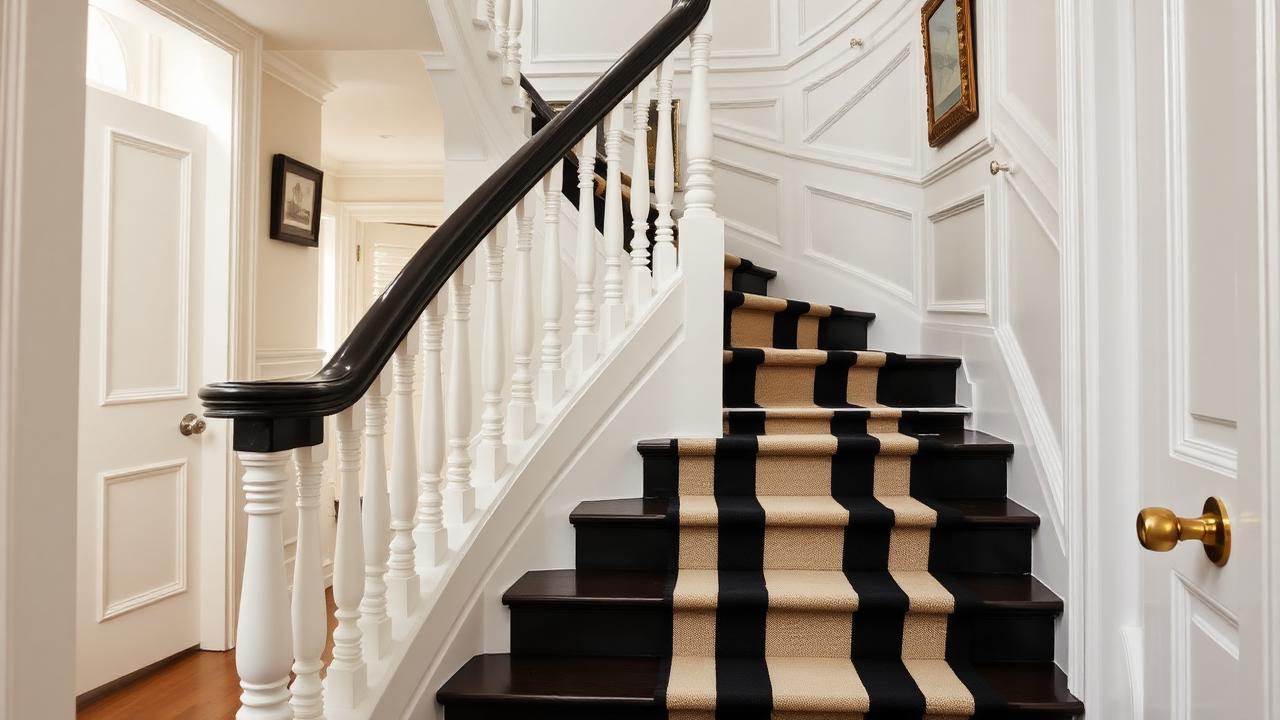
Safety is paramount on stairs. A loose runner is a trip hazard. That is why I always use professional-grade gripper and a heat-sealing iron on joins, especially when dealing with complex turns or landings.
- For those interested in Stair Runner Hidden Costs, I always suggest getting a few samples to see how
- As an experienced UK fitter, I have installed hundreds of these on every type of flight from Victori
- Safety is paramount on stairs. A loose runner is a trip hazard. That is why I always use professiona
- I remember one project in a drafty old manor where the client insisted on a very narrow runner. The
Advanced Installation Factors
When you look at Stair Runner Hidden Costs, remember that the labout cost is often fixed regardless of whether you choose a budget or a premium material. This is because the physical act of tucking, stapling, and trimming a step takes the same amount of time.
Safety is paramount on stairs. A loose runner is a trip hazard. That is why I always use professional-grade gripper and a heat-sealing iron on joins, especially when dealing with complex turns or landings.
The nuances of Stair Runner Hidden Costs are often overlooked by homeowners who are focused purely on the aesthetic. However, the technical specifications of the fibre—be it wool, nylon, or sisal—will dictate how the runner wears over the next ten years on the high-traffic nosings.
For those interested in Stair Runner Hidden Costs, I always suggest getting a few samples to see how the colour changes in the morning light versus the evening. A runner that looks bright in a showroom can look much darker in a windowless hallway.
For those interested in Stair Runner Hidden Costs, I always suggest getting a few samples to see how the colour changes in the morning light versus the evening. A runner that looks bright in a showroom can look much darker in a windowless hallway.
In the context of Stair Runner Hidden Costs, the environmental impact is also becoming a consideration. Natural wool is sustainable and fire-retardant, whereas synthetics are easier to clean but have a higher carbon footprint.
If you are weighing up the benefits of Stair Runner Hidden Costs, consider the noise reduction. A carpeted runner acts as a massive acoustic buffer, stopping that hollow thumping sound of children running up and down the house at 6 AM.
Safety is paramount on stairs. A loose runner is a trip hazard. That is why I always use professional-grade gripper and a heat-sealing iron on joins, especially when dealing with complex turns or landings.
I remember one project in a drafty old manor where the client insisted on a very narrow runner. The challenge there was not the Stair Runner Hidden Costs itself, but the condition of the 100-year-old oak treads which required hours of sanding and filling before we could even lay the gripper.
Safety is paramount on stairs. A loose runner is a trip hazard. That is why I always use professional-grade gripper and a heat-sealing iron on joins, especially when dealing with complex turns or landings.
Fitting a Stair Runner Hidden Costs project requires a steady hand and an eye for detail. I always recommend fitting a high-quality 8mm or 10mm underlay, even if you have spent a significant amount on the face material itself. Underlay is what stops the runner from sliding and stretching.
From a fitter’s perspective, the best runners for Stair Runner Hidden Costs are those with a stable secondary backing. A flimsy latex backing will eventually delaminate, leading to bubbles and ridges on the treads that are impossible to fix without a full replacement.
Fitting a Stair Runner Hidden Costs project requires a steady hand and an eye for detail. I always recommend fitting a high-quality 8mm or 10mm underlay, even if you have spent a significant amount on the face material itself. Underlay is what stops the runner from sliding and stretching.
Ultimately, your goal with Stair Runner Hidden Costs is to create a safe, durable, and beautiful entrance to your home. Taking the time to research the materials and the fitting methods will pay dividends for decades.
Safety is paramount on stairs. A loose runner is a trip hazard. That is why I always use professional-grade gripper and a heat-sealing iron on joins, especially when dealing with complex turns or landings.
Fitting a Stair Runner Hidden Costs project requires a steady hand and an eye for detail. I always recommend fitting a high-quality 8mm or 10mm underlay, even if you have spent a significant amount on the face material itself. Underlay is what stops the runner from sliding and stretching.
For those interested in Stair Runner Hidden Costs, I always suggest getting a few samples to see how the colour changes in the morning light versus the evening. A runner that looks bright in a showroom can look much darker in a windowless hallway.
From a fitter’s perspective, the best runners for Stair Runner Hidden Costs are those with a stable secondary backing. A flimsy latex backing will eventually delaminate, leading to bubbles and ridges on the treads that are impossible to fix without a full replacement.
The nuances of Stair Runner Hidden Costs are often overlooked by homeowners who are focused purely on the aesthetic. However, the technical specifications of the fibre—be it wool, nylon, or sisal—will dictate how the runner wears over the next ten years on the high-traffic nosings.
From a fitter’s perspective, the best runners for Stair Runner Hidden Costs are those with a stable secondary backing. A flimsy latex backing will eventually delaminate, leading to bubbles and ridges on the treads that are impossible to fix without a full replacement.
The nuances of Stair Runner Hidden Costs are often overlooked by homeowners who are focused purely on the aesthetic. However, the technical specifications of the fibre—be it wool, nylon, or sisal—will dictate how the runner wears over the next ten years on the high-traffic nosings.
The nuances of Stair Runner Hidden Costs are often overlooked by homeowners who are focused purely on the aesthetic. However, the technical specifications of the fibre—be it wool, nylon, or sisal—will dictate how the runner wears over the next ten years on the high-traffic nosings.
If you are weighing up the benefits of Stair Runner Hidden Costs, consider the noise reduction. A carpeted runner acts as a massive acoustic buffer, stopping that hollow thumping sound of children running up and down the house at 6 AM.
From a fitter’s perspective, the best runners for Stair Runner Hidden Costs are those with a stable secondary backing. A flimsy latex backing will eventually delaminate, leading to bubbles and ridges on the treads that are impossible to fix without a full replacement.
If you are weighing up the benefits of Stair Runner Hidden Costs, consider the noise reduction. A carpeted runner acts as a massive acoustic buffer, stopping that hollow thumping sound of children running up and down the house at 6 AM.
As an experienced UK fitter, I have installed hundreds of these on every type of flight from Victorian terraces to modern open-plan homes. On stair-runner-hidden-costs, the key is always in the preparation. You cannot simply throw a piece of carpet onto a set of stairs and expect it to stay put or look professional.
Whatever you decide, get the numbers first: the stair runner calculator doubles as a stair runner length calculator, adding nosing wrap, landings, winders, pattern repeat and waste so you order the right length the first time.
Frequently asked questions
Is Stair Runner Hidden Costs worth the investment?
Yes, Stair Runner Hidden Costs provides significant value by protecting your stairs and improving home safety. While the upfront cost varies, the long-term benefits of reduced wear on the wood and improved acoustics make it a very popular choice for modern UK and US homeowners alike.
How do I budget for Stair Runner Hidden Costs?
Start by measuring your stairs accurately and then add 10% for waste. Factor in the cost of professional fitting, which is essential for safety, and don't forget the cost of high-quality underlay and any decorative accessories like stair rods which can add to the total.
Can I save money on Stair Runner Hidden Costs by fitting it myself?
While possible, stair fitting is a specialist skill. A poorly fitted runner is dangerous and will wear out quickly. We generally recommend hiring a professional to ensure the runner is tensioned correctly and secured properly to the risers and treads.
What is the best material for Stair Runner Hidden Costs?
Wool is the gold standard for durability and appearance, but nylon and polypropylene are excellent budget-friendly alternatives that offer stain resistance and great longevity in busy households. Your choice should reflect your budget and the amount of foot traffic your stairs receive.
How long does a Stair Runner Hidden Costs project take?
For a standard 13-step flight, a professional fitter can usually complete the installation in 4 to 6 hours, including preparation. More complex stairs with winders or multiple landings will naturally take longer and may require a second visit for finishing.
Does Stair Runner Hidden Costs increase home value?
A well-chosen and professionally installed stair runner can significantly improve the first impression of a home's entryway, potentially increasing appeal to buyers. It shows a level of care and attention to detail that is highly valued in the property market.
How do I maintain my Stair Runner Hidden Costs after installation?
Regular vacuuming with a suction-only head for wool or a beater bar for synthetics is key. Address spills immediately by blotting, and consider a professional deep clean every 12 to 18 months to keep the fibres looking fresh and vibrant.
What are the most common mistakes with Stair Runner Hidden Costs?
The most frequent errors include under-ordering material, choosing a cheap underlay that collapses, and failing to secure the runner tightly enough at the crotch of the stair. Using a checklist and a professional fitter helps avoid these costly pitfalls.
Know your numbers in 30 seconds
Enter your step count, tread depth and riser height — the stair runner calculator gives you the exact length to order, in metres and feet, with waste included.
Calculate your Stair Runner Hidden Costs needs exactlyReady for real prices?
Get quotes from vetted stair runner suppliers and fitters near you. Free, no account, no obligation.
Every guide is written from hands-on measuring and fitting experience, checked against the calculator’s own maths, and re-reviewed whenever prices or methods change. Read our editorial standards.