

What re-stretching actually is
Re-stretching is the process of releasing a stair runner from its fixings, pulling it back to correct tension across the flight, and re-securing it, usually using the same gripper rods, staples or tackless strips it was originally installed with. It's a different job to a full re-fit: you're not adding new material or changing the layout, you're restoring the tension that's been lost over time as the backing stretches slightly under repeated footfall and, on a hollywood or waterfall installation especially, as the fabric relaxes at each nosing bend.
The most obvious sign you need it is visible movement underfoot, a slight give or bounce as you step, especially near the middle of the flight, or a rippled, wavy look to the surface of the carpet rather than a flat, taut plane. On a hollywood-style installation, where the runner is pulled tight over each nosing and secured only at the top and bottom of the flight, loose tension shows up as the fabric bagging slightly between steps rather than following the tread and riser shape crisply.
Why runners lose tension over time
| Cause | Typical timeframe | Fix |
|---|---|---|
| Backing stretch under repeated footfall | 3-6 years | Full re-stretch across the flight |
| Loose or pulled gripper pins | Any time, often localised | Re-secure section, check adjoining tension |
| Pad compression underneath | 5-10 years | Replace pad, then re-stretch new or existing runner |
| Original under-tensioning at fit | Can appear within months | Full re-stretch, review fitter's method if recurring |
| Humidity and temperature swings | Seasonal, minor | Usually self-corrects; persistent cases need re-stretch |
Humidity is a genuinely underrated cause worth flagging on its own. Wool fibre in particular expands slightly in humid conditions and contracts as the air dries out, and over several seasonal cycles that expansion and contraction can loosen an installation that was originally taut. This is more noticeable in older homes without consistent climate control and less of an issue in modern, well-insulated houses with steady indoor humidity year-round.
DIY re-stretching vs calling a fitter
A straight flight with a standard staple or gripper installation is a realistic DIY re-stretch for someone comfortable with basic tools: lift the loose section, pull it firm working from one end of the flight to the other, and re-secure with new staples in fresh holes rather than the old worn ones. A knee kicker (a specialist carpet tool that stretches carpet using a padded lever pushed with the knee) makes this considerably easier and more even than pulling by hand, and can often be rented from a tool hire shop for a single job.
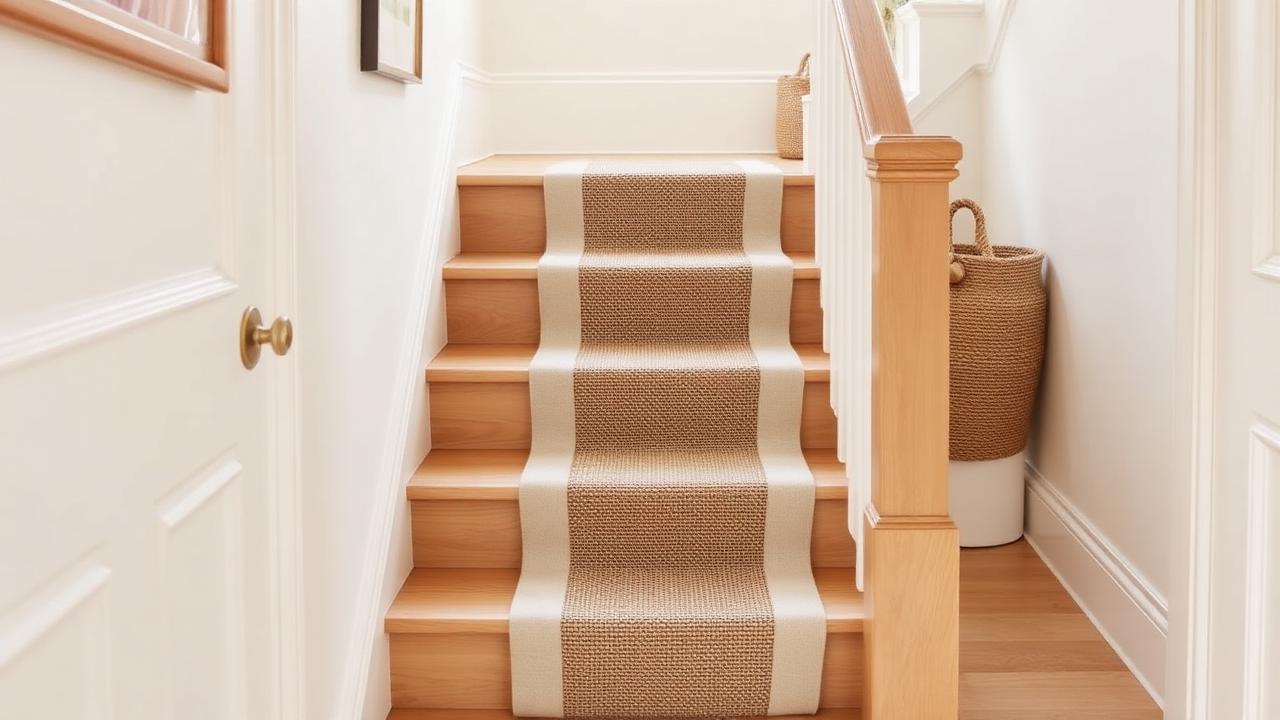
A hollywood or waterfall installation, or any flight with winders, a half-landing, or a curve, is a different matter. These installations rely on consistent tension carried across multiple steps in a single continuous pull, and getting that wrong creates uneven bagging that's often worse than the original problem. For these, and for any installation you didn't fit yourself and aren't confident about the original method, it's worth paying a professional fitter for a re-stretch rather than risking a DIY attempt that makes the carpet harder to fix afterward.
Check the pad before you re-stretch
If the underlay has compressed flat, re-stretching the runner on top of it only masks the real problem temporarily. Lift a corner and check the pad's condition before committing to a re-stretch; a compressed pad often needs replacing at the same time.
How much runner do I need?
Re-stretching doesn't use any additional carpet, it reuses what's already fitted, but if the process reveals damage that means a partial or full replacement is more sensible than continuing to re-stretch worn material, here's the sizing math to have ready. For a 13-step US flight with a 10 in tread run, 7.5 in riser and 0.75 in nosing wrap, each step takes 18.25 in, for 237.25 in (19.77 ft) across the flight. Add a 24 in finishing allowance for 261.25 in (21.77 ft), then a 7% waste margin brings the order total to roughly 23.3 ft.
In UK metric terms, that's 25 cm tread, 19 cm riser, 1.9 cm nosing wrap, giving 45.9 cm per step, 596.7 cm across 13 steps, plus a 60 cm finishing allowance for 656.7 cm, and with a 7% waste margin you'll want roughly 7.03 m. Run your own step count and dimensions through a stair runner calculator for an exact figure rather than relying on this example flight.
| Measurement | US (in/ft) | UK (cm/m) |
|---|---|---|
| Tread run | 10 in | 25 cm |
| Riser height | 7.5 in | 19 cm |
| Nosing wrap per step | 0.75 in | 1.9 cm |
| Per-step total | 18.25 in | 45.9 cm |
| 13 steps subtotal | 19.77 ft | 5.97 m |
| Plus finishing allowance | 21.77 ft | 6.57 m |
| With 7% waste margin | 23.3 ft | 7.03 m |
Know your numbers in 30 seconds
Enter your step count, tread depth and riser height — the stair runner calculator gives you the exact length to order, in metres and feet, with waste included.
Open the stair runner calculatorSteps to re-stretch a straight flight yourself
- Start at the top of the flight and lift the runner carefully off its fixings, working down one step at a time.
- Inspect the pad underneath; replace it if it's compressed flat or showing wear before proceeding.
- Working back from the top, pull the runner firm over each nosing using a knee kicker or firm hand tension, and re-secure with fresh staples or press it onto the gripper pins.
- Check tension consistency by pressing down on each step once secured; there should be no give or bounce.
- Repeat down the full flight, keeping tension consistent step to step rather than fixing each one independently at whatever tension feels right in isolation.
- Vacuum the whole flight once finished to lift the pile and check for any missed ripples.
A re-stretch is genuinely one of the more cost-effective maintenance jobs available for stair runners, since it restores the look and safety of a taut installation without the expense of new carpet. Loose, rippled stair runners aren't just a cosmetic problem either, they're a genuine trip hazard, so if you notice bounce or visible ripples underfoot, treat it as a priority rather than a cosmetic annoyance to get to eventually.
Whatever you decide, get the numbers first: the stair runner calculator doubles as a stair runner length calculator, adding nosing wrap, landings, winders, pattern repeat and waste so you order the right length the first time.
Frequently asked questions
How do I know if my stair runner needs re-stretching?
Look for visible ripples or a wavy surface, and feel for a slight give or bounce underfoot as you climb, especially in the middle of the flight. A hollywood-style runner bagging slightly between nosings rather than sitting crisp is another clear sign.
How often does a stair runner need re-stretching?
Typically every three to eight years depending on foot traffic, fibre type and how well it was originally fitted. High-traffic households and humid climates tend to need it sooner than lower-traffic homes with stable indoor conditions.
Can I re-stretch a stair runner myself?
A straight flight with a standard staple or gripper installation is a realistic DIY job with a rented knee kicker. Hollywood or waterfall installations, curved flights, or runners with winders are better left to a professional fitter.
Does re-stretching damage the carpet?
No, done correctly it doesn't damage the fibre. Fresh staples are placed in new holes rather than the old worn ones, and the pulling tension involved is well within what the backing is designed to handle during normal fitting.
Do I need new underlay when re-stretching a stair runner?
Only if the existing pad has compressed flat or shows visible wear. Re-stretching over a compressed pad masks the sagging problem only temporarily, so check the pad's condition before deciding whether to replace it at the same time.
How much does professional stair runner re-stretching cost?
Costs vary by region, flight length and installation type, with straight flights generally cheaper than curved or hollywood-style ones. It's typically a fraction of the cost of a full replacement, so get a local quote before assuming replacement is the only option.
Is a loose or rippled stair runner actually dangerous?
Yes, a rippled or bouncy runner is a genuine trip hazard, not just a cosmetic issue, since an uneven surface can catch a foot mid-step. Treat visible ripples or noticeable give underfoot as something to fix promptly.
Will re-stretching fix a stair runner that's fraying or worn thin?
No, re-stretching only restores tension; it doesn't repair fibre damage like fraying, thinning pile or moth damage. Those need separate repair or replacement, ideally addressed before or alongside a re-stretch rather than left untouched.
Know your numbers in 30 seconds
Enter your step count, tread depth and riser height — the stair runner calculator gives you the exact length to order, in metres and feet, with waste included.
Planning a full replacement instead? Use the stair runner calculatorReady for real prices?
Get quotes from vetted stair runner suppliers and fitters near you. Free, no account, no obligation.
Every guide is written from hands-on measuring and fitting experience, checked against the calculator’s own maths, and re-reviewed whenever prices or methods change. Read our editorial standards.