
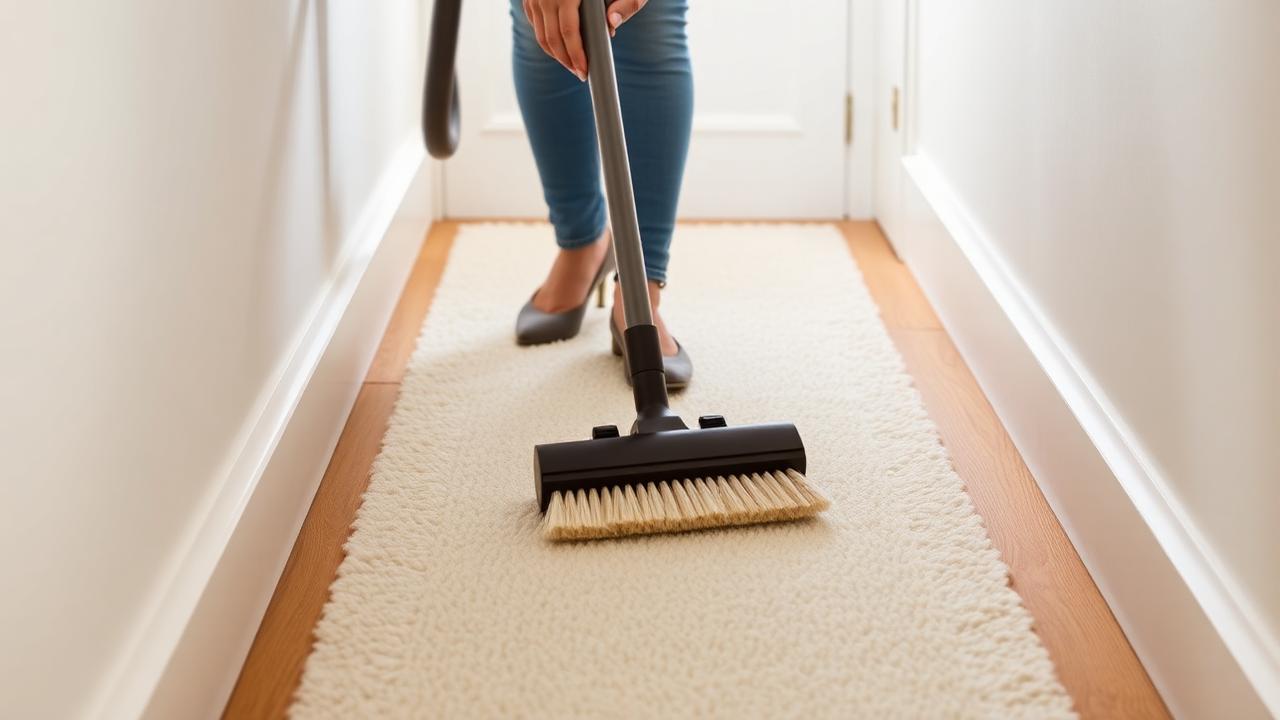
The trip-hazard test comes first
Before I look at how worn a runner's pile looks, I check whether it's still doing its actual job of gripping the stair and lying flat. Any lifting at the edges, any bunching where the runner has crept away from the gripper rods or tackless strip, or any loose section that shifts underfoot when you press it with your hand, means it needs attention now regardless of how the fibre looks. A stair runner that's visually tired but perfectly flat and secure is a cosmetic decision. A stair runner that's shifting underfoot on a flight of stairs is a safety decision, and those two things get treated very differently by anyone who actually fits stairs for a living.
Once safety is ruled out, the replacement decision comes down to whether cleaning and repair can still bring the runner back to a genuinely presentable, comfortable state, or whether the wear has gone past what steam cleaning and a good vacuum can fix. That threshold is different for every household, but there are consistent physical signs that mark the line reliably.
Six signs it's time, not just a clean
- Pile stays flattened at tread centres even a day after steam cleaning and grooming - permanent crush rather than temporary compression.
- You can see the woven backing or a lighter matted layer showing through the fibre when you look closely at the busiest steps.
- Colour has visibly faded compared to a section under a runner clip or rod that's been shielded from foot traffic and light.
- Edges are fraying, curling, or pulling away from the tackless strip along one or both sides of several steps.
- The runner has thinned enough that you can feel the hard tread edge or nosing through the pile when you walk barefoot.
- Repeated odour or staining has soaked into the backing and pad, which cleaning products can mask but not actually remove.
One worn step doesn't always mean a full replacement
If wear is concentrated on two or three steps near the bottom of the flight - the most heavily used section - ask a fitter whether shifting the runner up slightly or patching from a saved offcut is realistic before committing to full replacement.
How much runner do I need?
If you've decided replacement is the right call, measure while the old runner is still down where possible, since it gives you a physical reference for tread run and riser height rather than working blind. Take a US example: a 12-step flight, 10 in tread run, 7 in riser height, 0.75 in nosing wrap, giving 17.75 in per step. Multiplied by 12 steps that's 213 in (17.75 ft), plus a 24 in top-and-bottom finishing allowance for 237 in (19.75 ft), then a 6% waste margin brings the order length to roughly 251 in, or about 21 ft.

In UK measurements, that's 12 steps at 25 cm tread run, 18 cm riser height and 1.9 cm nosing wrap, giving 44.9 cm per step, or 538.8 cm across the flight. Add 60 cm finishing allowance for 598.8 cm, apply a 6% waste margin, and you land at roughly 634 cm, or about 6.34 m to order. If your old runner is still down, it's worth double-checking these figures against the old runner's actual length before you cut anything, because subtle differences in nosing style or finishing method between the original install and a new order can shift the total by a few inches either way.
| Step | US figure | UK figure |
|---|---|---|
| Tread run | 10 in | 25 cm |
| Riser height | 7 in | 18 cm |
| Per-step total | 17.75 in | 44.9 cm |
| 12-step subtotal | 17.75 ft | 5.39 m |
| With finishing + waste | ~21 ft | ~6.34 m |
Know your numbers in 30 seconds
Enter your step count, tread depth and riser height — the stair runner calculator gives you the exact length to order, in metres and feet, with waste included.
Open the stair runner calculatorWhat happens if you leave it too long
Beyond the obvious cosmetic issue, a worn-through stair runner creates a genuine slip and trip risk that homeowners underestimate. A flattened, thin patch at a tread centre has less cushioning and grip than the surrounding pile, so your foot can land slightly differently there than expected, particularly noticeable descending stairs at night or in socks. Frayed edges catch shoe soles and toes. And a runner that's shifted off its gripper strip can bunch up under a descending foot with no warning at all. None of this is meant to be alarmist - most worn runners are simply unattractive for years before they become genuinely dangerous - but the safety threshold is worth knowing rather than guessing at, especially in a household with young children, older residents, or anyone unsteady on stairs.
There's also a cost angle to waiting. A runner left down well past its useful life often needs the pad and gripper strip replaced alongside it, where a runner replaced proactively can sometimes reuse a pad and gripper strip that are still in good condition, since it's the exposed fibre that fails first in almost every case, not the fixings underneath. Fitters will usually tell you honestly whether your existing pad is worth keeping when they come to quote a replacement.
Deciding between repair, patch and full replace
A patch or offcut repair makes sense when wear is localised to two or three steps, you have (or can source) matching material, and the rest of the flight is structurally sound. A full replacement makes more sense when wear is spread across most of the flight, when the pad or backing has also failed, or when you're changing style anyway and it's not worth patching something you're planning to replace within a year or two regardless. If you're on the fence, get a fitter to look at the worst step in person - photos genuinely don't convey pile crush and backing wear as clearly as running a hand across the surface does.
Whichever route you take, treat stair runners as a wear item with a finite life from day one rather than a one-time purchase, and budget accordingly. Buying a slightly better quality runner up front, then measuring it properly with a stair runner calculator so you order enough for a saved offcut, sets you up to patch minor wear years down the line rather than facing a full unplanned replacement the moment the middle of a tread wears through.
Whatever you decide, get the numbers first: the stair runner calculator doubles as a stair runner length calculator, adding nosing wrap, landings, winders, pattern repeat and waste so you order the right length the first time.
Still deciding on material, width or pattern? Our hub on stair runners compares weaves, widths, backings and fitting styles side by side, then hands the numbers straight to the calculator.
Frequently asked questions
How do I tell the difference between dirt and permanent wear on a stair runner?
Dirt lifts with cleaning and the pile springs back afterward; permanent wear leaves the pile flattened even a day or two after a proper steam clean and groom. If it's still flat and dull once fully dry, that's structural wear, not soiling.
Is a slightly worn stair runner actually dangerous or just unsightly?
It becomes dangerous specifically when it's shifting underfoot, bunching, or has frayed edges that can catch a foot - flattened pile alone is more cosmetic. Check by pressing the runner with your hand at the worn spots to see if it moves.
Can I just replace one worn step's section instead of the whole runner?
Sometimes, if you saved an offcut from the original installation and the wear is isolated to a step or two, a fitter can patch that section. If wear is spread across the whole flight or no matching offcut exists, full replacement is more practical.
Does the pad or underlay need replacing along with a worn runner?
Often not - pads typically outlast the runner fabric itself because they don't take direct abrasion. A fitter can check pad condition when quoting a replacement and reuse it if it's still supportive and hasn't compressed flat.
How often should I actually inspect my stair runner for wear?
A quick visual and hand-press check every few months is enough for most households, focusing on the centre of each tread and the edges near the gripper strip, with a closer look if you notice any change in how the stairs feel underfoot.
Will a worn stair runner affect resale value of my home?
It can, mainly through buyer perception rather than structural issue - a tired, flattened runner on the main staircase reads as an overdue maintenance item to viewers, even if the treads themselves are fine underneath.
What's the earliest sign that a runner is heading toward needing replacement?
Visible flattening at tread centres that doesn't fully recover after vacuuming and light grooming is usually the earliest reliable sign, often showing up a year or two before fraying or backing visibility appear.
Should I replace a runner before or after selling a house?
If wear is significant, replacing beforehand generally reads better to buyers than a price reduction for it, but a genuinely worn runner on a secondary staircase matters far less to buyers than one on the main entry stairs.
Know your numbers in 30 seconds
Enter your step count, tread depth and riser height — the stair runner calculator gives you the exact length to order, in metres and feet, with waste included.
Measure the new runner you'll need with the stair runner calculatorReady for real prices?
Get quotes from vetted stair runner suppliers and fitters near you. Free, no account, no obligation.
Every guide is written from hands-on measuring and fitting experience, checked against the calculator’s own maths, and re-reviewed whenever prices or methods change. Read our editorial standards.