
Why shedding happens
When a cut-pile carpet is manufactured, small amounts of loose fibre from the shearing process can remain deep within the pile. When you start walking on the carpet, these loose bits are pulled to the surface. It can look like your runner is falling apart, but it is actually just the carpet settling into its new home.
The solution: patient vacuuming
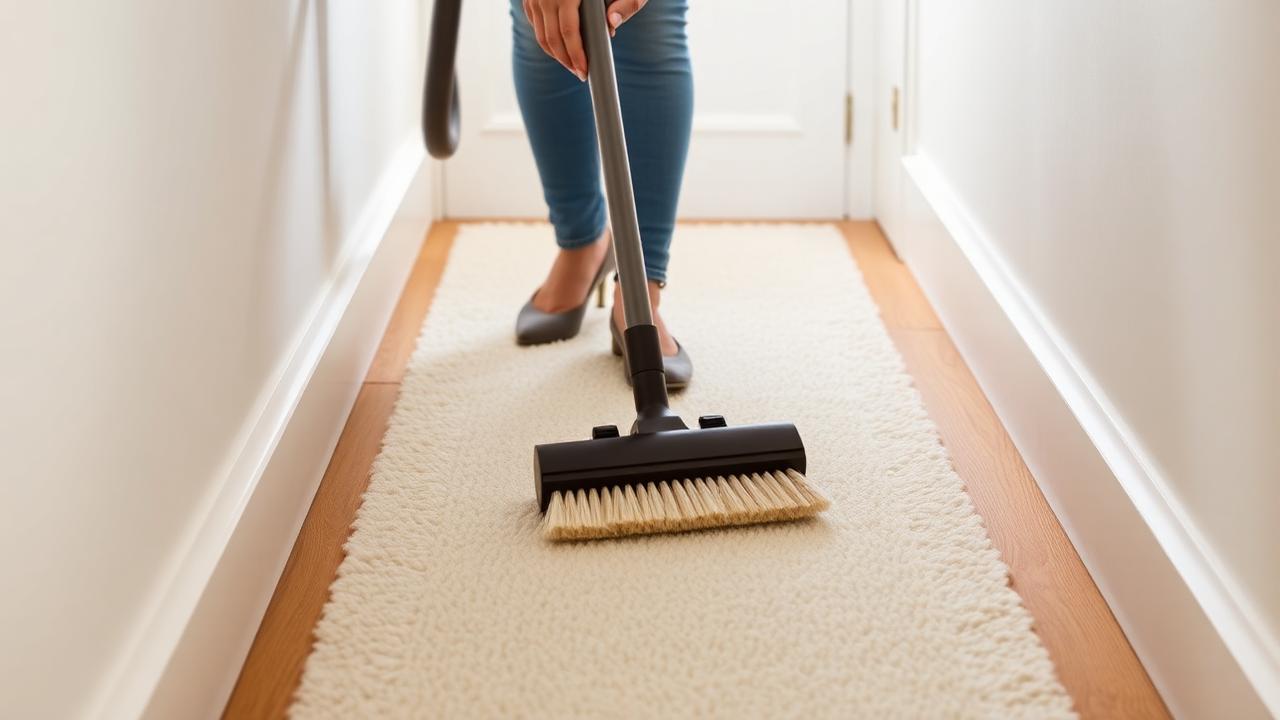
The only fix for shedding is time and vacuuming. Vacuum your runner more frequently during the first few weeks. Avoid an overly aggressive beater bar setting; you just want to gently lift the surface fibres and clear the loose fluff away. Over the first few months, the shedding will naturally decrease and eventually stop entirely.
How much runner do I need?
As you manage your new runner, ensure it was measured correctly. For our 13-step flight (10 in/25 cm treads, 7.5 in/19 cm risers, 0.75 in/1.9 cm nosing wrap), we use 18.25 in (45.9 cm) per step. That is 19.77 ft (5.97 m) total, plus the 24 in (60 cm) finishing allowance, bringing us to 21.77 ft (6.57 m). Including a 10% waste margin, you need approximately 24 ft (7.3 m).

| Feature | Normal Shedding | Abnormal Wear |
|---|---|---|
| Timeline | First few months | Ongoing/Years |
| Volume | Decreases over time | Increases or constant |
| Visuals | Surface fluff | Exposed backing/bald patches |
| Solution | Frequent vacuuming | Professional assessment |
Know your numbers in 30 seconds
Enter your step count, tread depth and riser height — the stair runner calculator gives you the exact length to order, in metres and feet, with waste included.
Open the stair runner calculatorBe gentle
Do not try to pull out the shedding fibres. Let them release naturally through gentle vacuuming. Pulling can damage the yarn twist.
- Vacuum more often in the first weeks.
- Use a suction-only setting if possible.
- Be patient—it will stop.
- Do not mistake surface fluff for bald patches.
When to worry
If shedding does not decrease after a few months, or if you start to see the carpet backing exposed, that is not normal shedding. That is a sign of a quality issue or improper manufacturing. If you reach this stage, it is time to contact the retailer and discuss your warranty.
Whatever you decide, get the numbers first: the stair runner calculator doubles as a stair runner length calculator, adding nosing wrap, landings, winders, pattern repeat and waste so you order the right length the first time.
Still deciding on material, width or pattern? Our hub on stair runners compares weaves, widths, backings and fitting styles side by side, then hands the numbers straight to the calculator.
Frequently asked questions
Is shedding a defect?
No, it is a common characteristic of high-quality cut-pile wool carpets.
How long will it last?
Usually a few weeks to a couple of months, depending on how often you vacuum and how much traffic the stairs receive.
Does all carpet shed?
Mainly cut-pile, wool-based carpets. Loop piles and most synthetic carpets shed very little, if at all.
Will it ruin my vacuum?
It can fill the bag or canister quickly, so check it more often during the initial settling period.
Should I stop walking on the stairs?
Absolutely not. Walking on the carpet is actually part of the process that helps release the loose fibres.
Can I use a carpet rake?
Use a carpet rake very gently. It can help release the loose fibres faster, but do not be too aggressive.
What if the shedding does not stop?
If it persists past 3–6 months, you should contact the retailer, as it may indicate an issue with the carpet's construction.
Does more traffic mean more shedding?
Yes, more traffic will generally accelerate the release of loose fibres, meaning the shedding period might be shorter on a very busy staircase.
Know your numbers in 30 seconds
Enter your step count, tread depth and riser height — the stair runner calculator gives you the exact length to order, in metres and feet, with waste included.
Plan your runner length with the stair runner calculatorReady for real prices?
Get quotes from vetted stair runner suppliers and fitters near you. Free, no account, no obligation.
Every guide is written from hands-on measuring and fitting experience, checked against the calculator’s own maths, and re-reviewed whenever prices or methods change. Read our editorial standards.