
How much runner do I need for this job?
Before you tackle any care task, it helps to know how much material you are actually working with. For a standard 13-step flight with 10 in (25 cm) treads, 7.5 in (19 cm) risers, and a 0.75 in (1.9 cm) nosing wrap, each step consumes 18.25 in (45.9 cm) of runner. Multiplied across 13 steps that is 19.77 ft (5.97 m), and once you add the 24 in (60 cm) finishing allowance at top and bottom you reach 21.77 ft (6.57 m). A 10% waste margin for cutting and pattern matching brings the total order to roughly 24 ft (7.3 m).
These numbers matter for maintenance too: knowing the exact yardage helps you order matching offcuts for repairs, budget for cleaning by the linear foot or metre, and plan any partial replacement without guesswork. The stair runner length calculator handles all of this automatically once you enter your own tread, riser, and step count, so you are never left estimating on a ladder with a tape measure.
| Measurement | US (in/ft) | UK (cm/m) |
|---|---|---|
| Tread depth | 10 in | 25 cm |
| Riser height | 7.5 in | 19 cm |
| Nosing wrap | 0.75 in | 1.9 cm |
| Total per step | 18.25 in | 45.9 cm |
| 13 steps subtotal | 19.77 ft | 5.97 m |
| Plus allowances | 21.77 ft | 6.57 m |
| With 10% waste | 24 ft | 7.22 m |
Know your numbers in 30 seconds
Enter your step count, tread depth and riser height — the stair runner calculator gives you the exact length to order, in metres and feet, with waste included.
Open the stair runner calculatorWhy wool stair runners attract moths
Carpet moths, and more specifically their larvae, feed on keratin, the protein found in natural animal fibres such as wool. Synthetic fibres like nylon and polypropylene are essentially immune, which is one reason budget synthetic runners never suffer this particular problem. Adult moths themselves do not eat carpet; they lay eggs in dark, undisturbed areas, and it is the hatching larvae that chew through the wool pile and backing over the following weeks. Stairs are especially vulnerable because the areas under stair rods, along the tight edges where the runner meets the skirting, and beneath any rugs or landing carpet rarely get disturbed by regular vacuuming, creating an ideal nursery.
Spotting the early signs
Catching an infestation early makes an enormous difference. Look for small, irregular bald patches with a slightly fuzzy or fibrous edge, tiny cream-coloured larvae casings, or fine silken threads woven through the pile near the base of the fibres. You may also spot small brown adult moths, usually only a few millimetres long, fluttering weakly near skirting boards or hiding in dark corners. Unlike general wear, moth damage tends to appear suddenly, in patches that were not there the week before, and it is often concentrated at the edges of the runner rather than the centre of the tread where foot traffic keeps fibres disturbed.
Prevention through routine cleaning
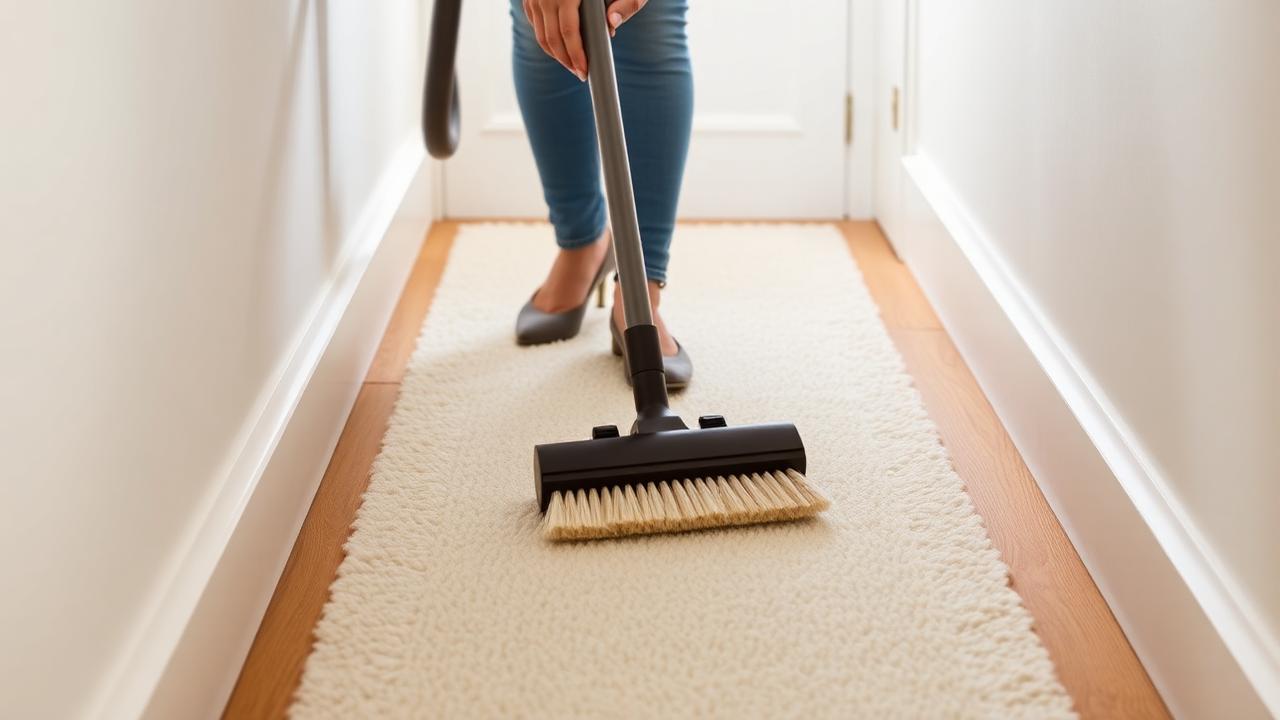
The single most effective deterrent against carpet moths is disturbance. Moth larvae need weeks of undisturbed conditions to develop, so a thorough vacuuming routine that reaches under stair rods and into every edge and corner interrupts their life cycle before it can take hold. Every few months, lift the rods (or fold back a loose-laid runner) and vacuum both the exposed section of carpet and the bare tread beneath it, since eggs and larvae can also live in dust and debris on the timber itself, not just in the pile.

Good ventilation also helps, since moths favour warm, still, humid air. If your staircase is in a particularly enclosed part of the house, running an extractor fan or simply opening nearby windows on dry days reduces the conditions moths prefer. Direct sunlight is a natural deterrent too, though on stairs that receive strong light you will need to balance moth prevention against the separate risk of UV fading.
Treatments and long-term protection
For an extra layer of defence, many wool runners can be treated with a permethrin-based mothproofing treatment either at the mill during manufacture or as an aftercare spray applied by a professional carpet cleaner. Ask your supplier whether your chosen wool runner already carries a mothproofing guarantee, since many quality British wool weaves include this as standard. If yours does not, a professional treatment every one to two years is a worthwhile investment, particularly in older homes or properties near gardens where moths are more prevalent.
Cedar blocks, lavender sachets, and pheromone traps can help monitor and reduce adult moth populations nearby, but they are a supplement to good hygiene, not a replacement for it. Placing a few pheromone traps near the base of the stairs for a month gives you an early warning system: if you catch several moths, it is time to escalate to a full inspection and treatment before larvae cause visible damage.
| Sign | Likely cause | Action |
|---|---|---|
| Small bald patches with fuzzy edges | Active larvae feeding | Isolate, treat, and monitor |
| Silken threads in pile | Larval casings | Vacuum thoroughly, treat |
| Small brown moths near skirting | Adult moths present | Set pheromone traps |
| Dust with tiny debris under rods | Eggs or frass | Deep clean under rods regularly |
Synthetic borders as a barrier
If you have had recurring moth issues, consider a wool-rich runner with a synthetic binding or a lower wool percentage blend for stairs, since a slightly reduced wool content can make the fibres less attractive to larvae while still keeping most of wool’s natural resilience.
Whatever you decide, get the numbers first: the stair runner calculator doubles as a stair runner length calculator, adding nosing wrap, landings, winders, pattern repeat and waste so you order the right length the first time.
Still deciding on material, width or pattern? Our hub on stair runners compares weaves, widths, backings and fitting styles side by side, then hands the numbers straight to the calculator.
Frequently asked questions
Do carpet moths only affect wool?
Yes, essentially. They target natural animal fibres like wool. Pure synthetic runners such as polypropylene or polyester are not a food source for moth larvae.
Can moth damage be repaired?
Small patches can sometimes be re-tufted or patched by a specialist restorer, but extensive damage usually means replacing the affected length of runner.
How often should I vacuum under stair rods?
Every two to three months is a good baseline, more often in homes with a history of moth activity or near gardens.
Are moth traps enough on their own?
Traps are useful for monitoring adult moth numbers but do not kill larvae already in the carpet, so combine them with vacuuming and treatments.
Does a wool-blend runner reduce moth risk?
Yes, blends with a lower wool percentage, such as 80/20 wool-nylon, are somewhat less attractive to larvae than 100% wool, though not immune.
Is professional mothproofing worth the cost?
For a premium wool stair runner, a one-off or periodic professional treatment is inexpensive compared with the cost of replacing damaged carpet.
Can moths spread from stairs to other rooms?
Yes, adult moths fly and can lay eggs in wool rugs, upholstery, or wardrobes elsewhere in the house, so treat an infestation as a whole-home issue.
What time of year are moths most active?
Carpet moths tend to be most active in the warmer months, typically late spring through early autumn, so step up vigilance during that period.
Know your numbers in 30 seconds
Enter your step count, tread depth and riser height — the stair runner calculator gives you the exact length to order, in metres and feet, with waste included.
Plan your runner with the stair runner calculatorReady for real prices?
Get quotes from vetted stair runner suppliers and fitters near you. Free, no account, no obligation.
Every guide is written from hands-on measuring and fitting experience, checked against the calculator’s own maths, and re-reviewed whenever prices or methods change. Read our editorial standards.