

What is stair runner trim?
Trim or binding is a strip of fabric, usually cotton twill, wool, or a synthetic blend, sewn or serged over the raw cut edges of a stair runner. Without it, the edges of a cut piece of carpet would fray over time from foot traffic and vacuuming. Binding also adds a defined visual line along the runner's edge, which many people find gives a more finished, custom look than an unbound edge, even if the carpet itself doesn't technically require it (loomed carpet often has a factory-finished selvedge on the long edges, but the cut ends at top and bottom still need binding).
Common trim materials and colors
Cotton twill tape is the most common and affordable binding material, available in a wide range of colors to match or contrast with the runner. Leather and faux-leather binding gives a more rustic or masculine, lodge-like look and pairs well with natural fibre runners. Wool binding offers a seamless, tonal finish for high-end wool runners where you want the trim to essentially disappear. Serged edges, where the carpet's own yarns are overlocked rather than a separate tape applied, are a lower-cost option often used on more budget-friendly runners.
How much trim do I need?
Binding is applied to both long edges of the runner and typically both cut ends (top and bottom), so plan for roughly two times your total runner length, plus a small amount extra for the end pieces and for turning corners neatly. For a 13-step flight needing 23.5 ft (7.1 m) of runner, budget for about 47-50 ft (14.3-15.2 m) of binding tape, accounting for both edges and a small overage for application waste.
| Item | US (ft) | UK (m) |
|---|---|---|
| Runner length | 23.5 ft | 7.1 m |
| Binding (both edges) | 47 ft | 14.2 m |
| With end pieces and waste | 50 ft | 15.2 m |
Know your numbers in 30 seconds
Enter your step count, tread depth and riser height — the stair runner calculator gives you the exact length to order, in metres and feet, with waste included.
Open the stair runner calculatorContrast trim vs. tonal trim
A contrast trim color, such as navy binding on a cream runner, makes a strong style statement and helps the runner look intentionally custom. A tonal trim in the same color family creates a quieter, more understated finish that lets the carpet's texture speak for itself.
Serged edges versus applied binding
Serging is faster and cheaper but generally less durable than a proper sewn-on binding tape, particularly at high-friction points like stair nosings. If your budget allows, applied binding is worth the extra cost for a runner that will see years of daily foot traffic, since it holds up better to the repeated flexing and abrasion that stairs uniquely put on an edge compared to a flat-floor rug.
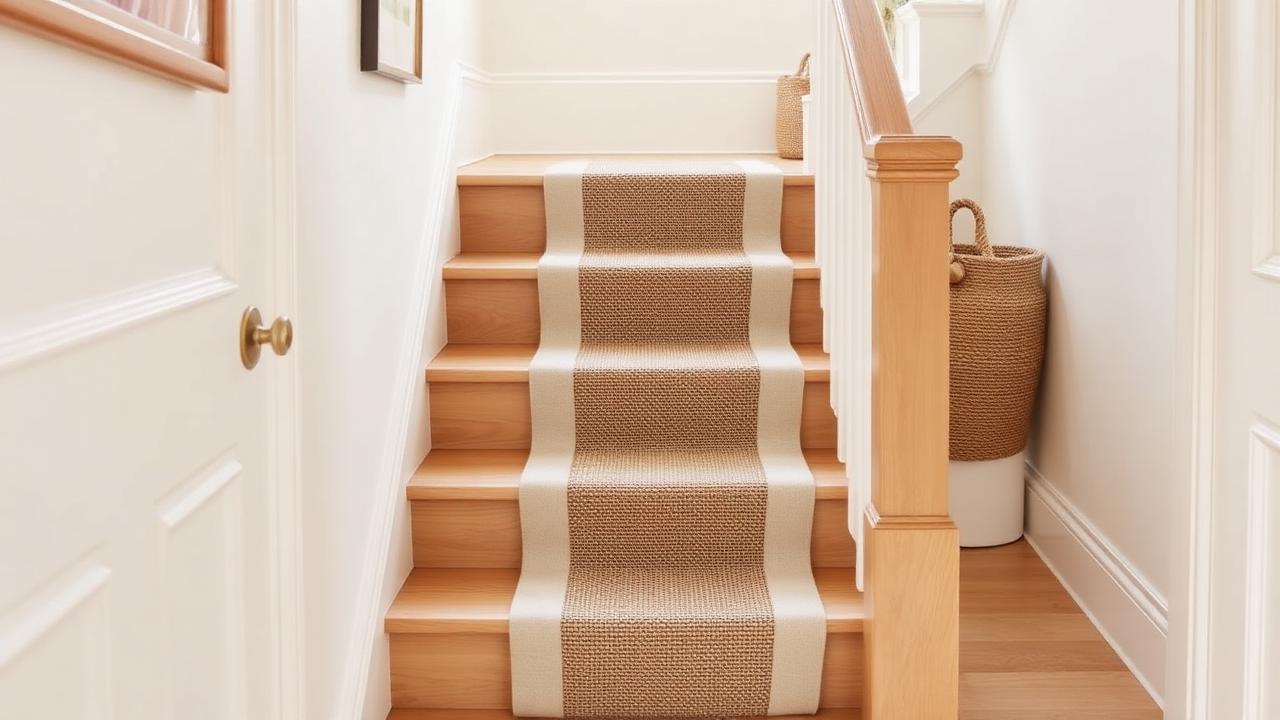
- Binding prevents fraying at cut edges of a stair runner.
- Cotton twill is the most common, affordable trim option.
- Leather binding suits rustic and lodge-style runners.
- Applied binding is more durable than serged edges on stairs.
- Budget roughly double your runner length for edge binding.
Trim and pattern coordination
If your runner has a border woven into the pattern itself, you may not need a separate applied binding at all, though the cut ends will still typically need finishing. Coordinate your trim color with any existing pattern border so the two don't visually compete; usually the simplest approach is to pick up one of the more muted secondary colors already present in the runner's design.
Trim is a small detail with an outsized effect on how finished a stair runner looks. Use the stair runner length calculator for your base runner yardage, then double it as a starting point for your binding tape order, adjusting for the specific binding method your installer recommends.
Binding width and cost bands
Binding tape itself typically comes in widths from 1 to 2 in (2.5-5 cm), folded roughly in half to wrap over the cut edge, so a 1.5 in (3.8 cm) tape gives about 0.75 in (1.9 cm) of visible trim on the finished runner. Wider binding reads as a bolder, more deliberate design line; narrower binding is subtler and lets the carpet pattern dominate. Cost varies by material: cotton twill runs $1.50-3 per linear foot (£2.70-5.40 per meter) fitted, leather or faux-leather binding runs $6-12 per linear foot (£10.80-21.60 per meter), and wool tonal binding for premium runners runs $4-8 per linear foot (£7.20-14.40 per meter).
| Trim material | US cost per linear ft (fitted) | UK cost per linear m (fitted) |
|---|---|---|
| Cotton twill | $1.50-3 | £2.70-5.40 |
| Wool tonal | $4-8 | £7.20-14.40 |
| Leather/faux-leather | $6-12 | £10.80-21.60 |
Maintenance and re-binding
Binding takes the brunt of abrasion at each stair edge, particularly where shoes and vacuum heads repeatedly catch the corner of the runner, so it's normal for trim to show wear before the field of the carpet does. Inspect the edges every six months or so for fraying threads or a binding tape that's started to peel away from the backing; catching this early lets a professional re-stitch just the affected section rather than needing to re-bind the entire runner. Vacuum edges with a hand attachment rather than driving a beater-bar head directly over the binding repeatedly, since the bar can snag and loosen stitching over time.
- Binding tape typically finishes at 0.75-1 in (1.9-2.5 cm) visible width.
- Cotton twill is cheapest; leather is the most expensive per linear foot.
- Inspect binding edges for fraying roughly every six months.
- Re-stitch small sections early rather than waiting for full failure.
- Use a hand vacuum attachment on edges instead of a beater bar.
Whatever you decide, get the numbers first: the stair runner calculator doubles as a stair runner length calculator, adding nosing wrap, landings, winders, pattern repeat and waste so you order the right length the first time.
Still deciding on material, width or pattern? Our hub on stair runners compares weaves, widths, backings and fitting styles side by side, then hands the numbers straight to the calculator.
Frequently asked questions
Do all stair runners need binding?
Cut edges need some form of finishing, either applied binding or serging, to prevent fraying over time.
How much binding tape do I need?
Roughly double your total runner length, to cover both long edges plus the cut ends.
Is serging as durable as applied binding?
No, applied binding generally holds up better to the repeated flexing and abrasion stairs create at the edges.
What is the most popular trim material?
Cotton twill tape, due to its affordability and wide range of available colors.
Should trim match or contrast with the runner?
Either works; contrast trim makes a bolder style statement, while tonal trim gives a quieter, seamless look.
Does leather binding suit all runner styles?
It works particularly well with rustic and natural fibre runners, less so with delicate or formal patterns.
Can I add trim to an existing unbound runner?
Yes, though it typically needs to be done by a professional with a sewing machine or serger suited to carpet.
Does trim affect the runner's overall width?
Slightly; binding typically adds a small amount to the finished width, which is worth accounting for in tight spaces.
Know your numbers in 30 seconds
Enter your step count, tread depth and riser height — the stair runner calculator gives you the exact length to order, in metres and feet, with waste included.
Work out your total with the stair runner calculatorReady for real prices?
Get quotes from vetted stair runner suppliers and fitters near you. Free, no account, no obligation.
Every guide is written from hands-on measuring and fitting experience, checked against the calculator’s own maths, and re-reviewed whenever prices or methods change. Read our editorial standards.