
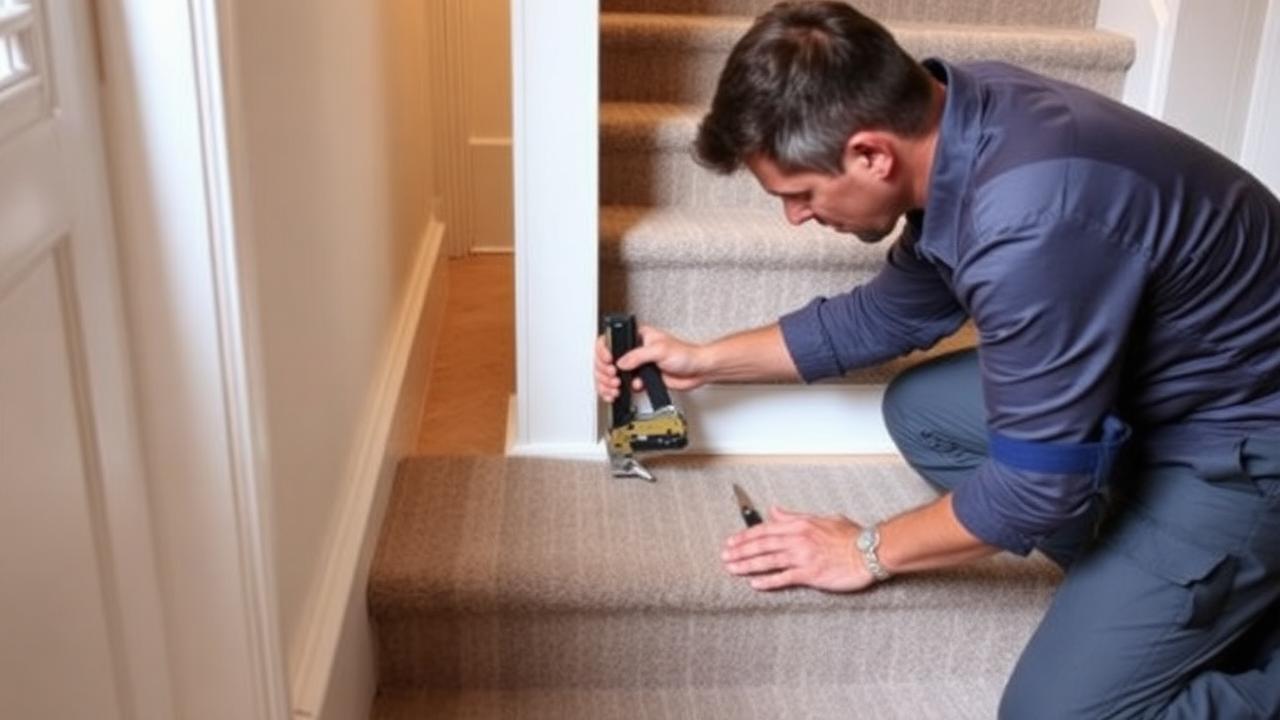
Types of stair runner adhesive
There are three broad categories: double-sided carpet tape, which is a strip of adhesive applied along seams and edges; carpet adhesive or glue-down installation, where the runner is bonded across its full width to the stair surface; and adhesive pads or dots, used mostly for stair mats rather than continuous runners. Double-sided tape is the most common DIY choice because it's fast, repositionable within a short window, and doesn't require specialist tools. Full glue-down is more permanent and is typically used on concrete stairs or where tackless strips aren't practical.
When adhesive makes sense over tackless strip
Tackless strip and pad remains the gold standard for a plush, cushioned, long-lasting fitted runner on wood stairs, offering the best combination of grip and comfort underfoot. Adhesive-based installs are the better choice on concrete or tile stairs where strips can't be nailed in, in rental properties where a fitter wants a less invasive method, or for thinner flatweave runners that don't need the extra cushioning a tackless-and-pad setup provides.
How much runner and adhesive do I need?
The runner length calculation is unaffected by your fixing method: for a 13-step flight, 10 in tread + 7.5 in riser + 0.75 in nosing wrap = 18.25 in per step, times 13 is 237.25 in, plus 24 in finishing allowance, giving 261.25 in, or 21.77 ft, and with an 8% waste margin, around 23.5 ft. For adhesive tape, plan on a strip at the top and bottom of each tread nosing and along both edges where the runner meets exposed stair, roughly doubling the linear footage of tape compared to the runner length itself. Metric: 45.9 cm per step, times 13 is 596.7 cm, plus 60 cm finishing is 656.7 cm, roughly 7.1 m with waste.
| Item | US (in/ft) | UK (cm/m) |
|---|---|---|
| Runner length (13 steps) | 23.5 ft | 7.1 m |
| Tape per nosing (approx) | 27-30 in per step | 70-76 cm per step |
| Total tape estimate | ~30-35 ft | ~9-10.5 m |
Know your numbers in 30 seconds
Enter your step count, tread depth and riser height — the stair runner calculator gives you the exact length to order, in metres and feet, with waste included.
Open the stair runner calculatorTest adhesive on delicate fibres first
Wool, sisal, and jute runners can react differently to adhesive than synthetic runners. Always test a small, hidden area first, and consider a low-tack, carpet-safe tape specifically rated for natural fibres.
Step-by-step adhesive application
Clean and dry the stair surface thoroughly before applying any tape or glue, since dust or residue drastically reduces adhesive grip. Apply tape along the nosing edge, the base of the riser, and along both side edges where the runner meets exposed wood or tile. Press firmly and, for glue-down installs, use a small roller to ensure full contact and eliminate air bubbles that can create soft spots underfoot.

- Double-sided tape suits DIY and repositionable installs.
- Full glue-down suits concrete or tile stairs.
- Tackless strip and pad remains best for wood stairs long-term.
- Always clean the surface thoroughly before applying adhesive.
- Test adhesive on natural fibres in a hidden spot first.
Removing adhesive-fitted runners
One advantage of tape over tackless strip is easier removal, particularly important for renters. However, tape left in place for years can leave residue or even damage some finishes, so periodically checking and refreshing tape every few years, rather than leaving the original application indefinitely, helps keep both the runner and the stair surface in good condition.
Adhesive is a flexible, accessible way to fit a stair runner, particularly for concrete stairs or rental properties. Use the stair runner calculator to confirm your runner length, then budget separately for enough tape or glue to secure every nosing and edge properly.
Choosing the right tape for your surface
Not all double-sided carpet tapes are interchangeable. A tape rated for indoor carpet-to-wood use is different from one rated for carpet-to-concrete, and using the wrong one is a common cause of early lifting, particularly at the nosing where the runner flexes with every footstep. For wood stairs, look for a tape with a cloth or mesh carrier rated for at least 5 lb per square inch of shear strength; for concrete or tile, a heavier acrylic-based tape designed for masonry surfaces holds up better to the different expansion and contact characteristics of those materials. Always prime bare, dusty concrete with a masonry primer before taping, since raw concrete dust will undermine even a good tape's grip within weeks.
| Surface | Recommended tape type | Typical hold rating |
|---|---|---|
| Wood stairs | Cloth/mesh carrier tape | 5+ lb/sq in shear |
| Concrete stairs | Acrylic masonry tape | 8+ lb/sq in shear |
| Tile stairs | High-tack acrylic tape | 6+ lb/sq in shear |
Cost comparison: adhesive versus tackless strip
A tackless strip and pad installation for a 13-step, 24 ft (7.3 m) flight typically runs $300-600 in professional labor alone in the US (roughly £260-520 in the UK), on top of runner and pad cost, because it involves nailing strips to every tread and riser. An adhesive-based install for the same flight is often $150-300 (£130-260) in labor, since there's no strip nailing, though you'll spend $20-40 (£17-34) more on quality tape than you would on standard carpet pad fixings. For a straightforward DIY job on wood stairs, adhesive can bring the total project cost down by 30-40% compared with a professionally fitted tackless installation.
- Match tape type to surface: wood, concrete, or tile each need different formulations.
- Prime bare concrete before taping to remove dust interference.
- Budget $150-300 (£130-260) labor for an adhesive install versus $300-600 (£260-520) for tackless.
- Cloth/mesh carrier tape suits wood; acrylic masonry tape suits concrete.
- DIY adhesive installs can cut total project cost by 30-40%.
Whatever you decide, get the numbers first: the stair runner calculator doubles as a stair runner length calculator, adding nosing wrap, landings, winders, pattern repeat and waste so you order the right length the first time.
Still deciding on material, width or pattern? Our hub on stair runners compares weaves, widths, backings and fitting styles side by side, then hands the numbers straight to the calculator.
Frequently asked questions
Is adhesive as secure as tackless strip?
For most household traffic, yes, but tackless strip and pad generally offers better long-term grip and cushioning on wood stairs.
Can I use adhesive on concrete stairs?
Yes, adhesive or full glue-down is often the preferred method for concrete or tile stairs where strips can't be nailed.
Will adhesive damage my stairs when removed?
It can leave residue or minor damage on some finishes if left for years; check and refresh tape periodically.
Does adhesive work with natural fibre runners?
Test on a hidden area first, as some tapes can react differently with wool, sisal, or jute backing.
How much extra tape should I buy?
Plan for roughly 30-35 ft (9-10.5 m) of tape for a 13-step flight, covering nosings and edges.
Is adhesive suitable for a rental property?
Yes, it's often preferred in rentals since it's less invasive and easier to remove than tackless strip.
Do I still need underlay with an adhesive install?
Yes, a thin pad is still recommended for comfort and to protect the runner, even with a glue-down method.
Can I combine tackless strip and adhesive?
Yes, some installers use tackless strip for the main run and tape at edges or transitions for extra security.
Know your numbers in 30 seconds
Enter your step count, tread depth and riser height — the stair runner calculator gives you the exact length to order, in metres and feet, with waste included.
Get your total length from the stair runner calculatorReady for real prices?
Get quotes from vetted stair runner suppliers and fitters near you. Free, no account, no obligation.
Every guide is written from hands-on measuring and fitting experience, checked against the calculator’s own maths, and re-reviewed whenever prices or methods change. Read our editorial standards.