
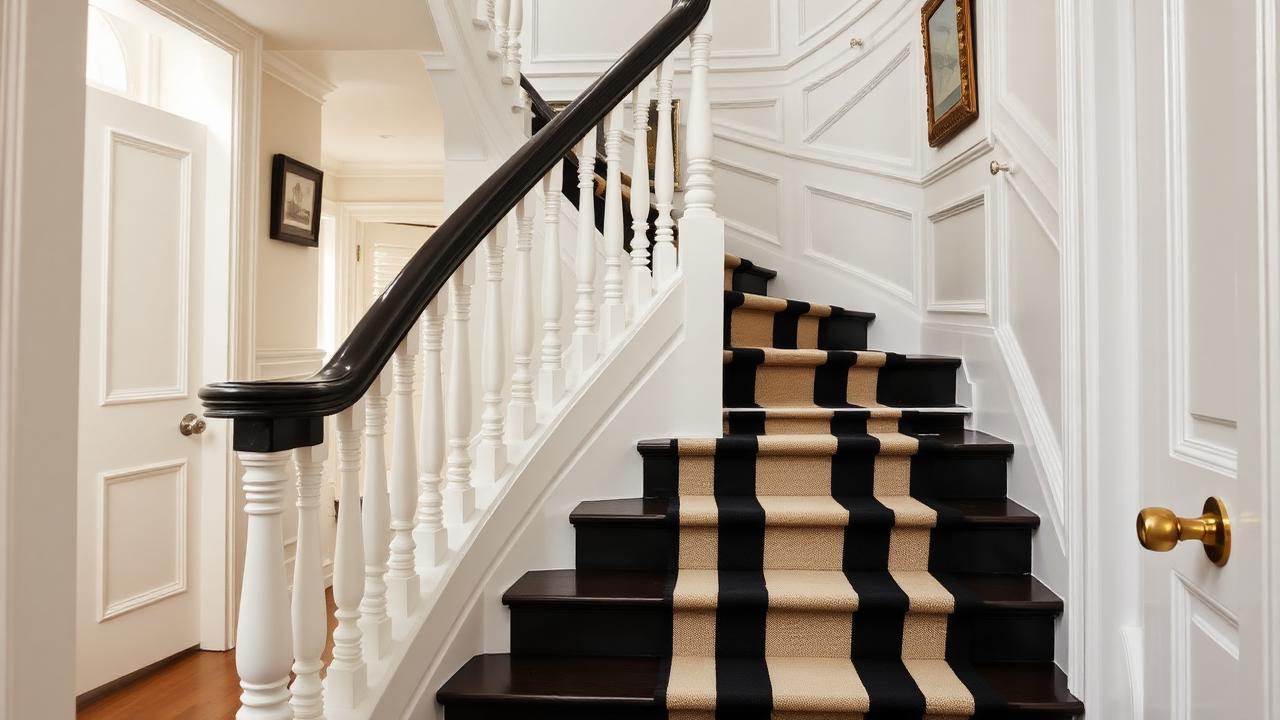
The appeal of bare oak
Oak is one of the most prized timbers for staircases because of its rich colour, strong visible grain, and reputation for durability. Leaving oak stairs completely bare lets that grain take centre stage, and in a well-lit hallway, a freshly oiled or lacquered oak staircase can be a genuine architectural showpiece. It's a particularly popular choice in new-build homes with open-plan hallways and in barn conversions or period properties where exposing original timber feels true to the building's character. There's also a practical upside: bare oak is easy to wipe clean of dust and doesn't harbour allergens the way carpet fibres can, which matters for households with allergy sufferers.
However, bare oak comes with real trade-offs that aren't always obvious in a showroom or a glossy photo. Polished or oiled oak can be genuinely slippery, particularly for anyone in socks or smooth-soled shoes, and every footstep echoes through the house because there's nothing to absorb the sound. Homeowners who go fully bare on their staircase often report having second thoughts within the first year, either because of a slip scare, complaints about noise from family members, or simply the visible wear that starts to show on the nosing of each step within a surprisingly short time.
What a stair runner changes
Fitting a stair runner down the centre of an oak staircase keeps the grain visible along both edges - typically leaving a border of 10-15cm of bare timber on either side - while providing a soft, grippy, sound-absorbing path down the middle where the vast majority of foot traffic actually occurs. This is genuinely the best of both worlds for a lot of households: you keep the architectural statement of the exposed oak while gaining the safety and comfort benefits of carpet exactly where they're needed most. It's also worth noting that the exposed oak border is protected from the deepest scuffing because most people naturally walk down the centre of a staircase anyway.
The colour and pattern of the runner itself becomes an important design decision when set against oak's warm, honey-brown tones. Deep reds, forest greens, and warm neutrals tend to complement oak beautifully, while very cool greys or stark whites can sometimes clash with the timber's warmth. Many fitters recommend bringing an actual sample of your oak finish (or a photo in natural daylight) to the carpet showroom, since oak's exact tone varies considerably depending on the stain or oil used.
Safety comparison
This is the area where the two options differ most dramatically. Bare oak, even with a good quality anti-slip finish or matting treatment applied, remains considerably more slippery than a carpeted surface, particularly in socks, and there is no cushioning at all if a fall does occur, meaning any impact happens directly against a very hard surface. This is a genuine safety consideration in households with young children, elderly residents, or anyone with mobility concerns, and it's the single biggest reason most fitters recommend against leaving a full staircase completely bare in a busy family home.
A stair runner transforms this equation. The carpet pile provides consistent grip in both wet and dry conditions, and the padding underneath cushions any impact significantly compared to bare wood. Even a narrow runner down the centre, leaving the oak exposed at the edges, covers the exact path most people naturally walk, delivering the bulk of the safety benefit without sacrificing the full architectural impact of the timber.
| Factor | Bare Oak Stairs | Stair Runner on Oak |
|---|---|---|
| Slip risk (socks/smooth shoes) | High | Low |
| Noise level | Loud, echoing | Significantly dampened |
| Cushioning in a fall | None | Moderate |
| Visible timber grain | Full width | Border either side |
| Maintenance frequency | Refinish every 3-5 years | Vacuum weekly, deep clean yearly |
| Protection of nosing wear | None | High along the runner path |
Measuring for a centre runner on oak stairs
If you're adding a runner to an existing bare oak staircase, measure the same way you would for any flight: tread depth plus riser height per step, plus a small allowance for the nosing wrap, multiplied by the number of steps, plus extra for top and bottom finishing. The one extra decision on oak stairs is runner width - leaving a generous, even border of exposed timber on both sides is what makes this combination look intentional rather than accidental, so measure the total stair width carefully before choosing your runner width.

| Measurement Component | UK Metric (cm) | US Imperial (in) |
|---|---|---|
| Tread depth | 25 cm | 10 in |
| Riser height | 19 cm | 7.5 in |
| Nosing wrap | 2 cm | 0.75 in |
| Per-step total | 46 cm | 18.25 in |
| 13 steps total | 598 cm | 237.25 in |
| Top/bottom finishing | 60 cm | 24 in |
| Total length required | 6.58 m | 21.77 ft |
| With 10% waste margin | 7.24 m | 23.95 ft |
Know your numbers in 30 seconds
Enter your step count, tread depth and riser height — the stair runner calculator gives you the exact length to order, in metres and feet, with waste included.
Open the stair runner calculatorUpkeep over the years
Bare oak needs regular refinishing to stay looking its best - typically re-oiling every 12-18 months for a natural oiled finish, or a full sand-and-reseal every 5-10 years for a varnished or lacquered finish, especially on the heavily trafficked centre of each tread. Skipping this maintenance leads to a dull, scuffed appearance that can actually look worse than a well-maintained carpet, since bare wood shows every scratch and stain far more visibly than a patterned runner would. This upkeep also involves the staircase being unusable, or at least awkward to navigate, for a day or two at a time while finishes cure.
A stair runner requires much simpler routine care: regular vacuuming, prompt attention to spills, and an occasional professional deep clean every couple of years. It also protects the oak underneath it entirely, so the timber beneath the runner typically looks brand new even after the carpet itself has been replaced once or twice over a couple of decades. For homeowners who want a beautiful oak staircase but don't want to commit to a demanding refinishing schedule, a runner down the centre significantly reduces the long-term maintenance burden.
Fitter's Tip
If you're set on a centre runner over oak, ask your fitter about a Hollywood-style installation, where the carpet wraps neatly around the nosing of each step. This shows off more of the tread's timber edge compared to a waterfall style, striking a nice balance between exposed grain and covered safety zone.
- Bare oak looks stunning but is genuinely more slippery than carpet.
- A centre runner protects the most-used path while keeping the grain visible at the edges.
- Bare oak amplifies noise throughout the house; a runner dampens it.
- Oak needs re-oiling or resealing every few years to stay looking good.
- A runner protects the underlying timber from wear and scuffing.
- Choosing runner colours that complement oak's warm tones matters visually.
- A stair runner length calculator helps plan the exact carpet needed.
- Combining bare oak edges with a centre runner is the most popular compromise.
Which should you choose?
If you have young children, elderly residents, or simply want the quietest, safest staircase possible, fitting a full-width stair runner is the more sensible choice, even on beautiful oak. If you love the architectural statement of exposed timber and are prepared to commit to regular refinishing, either full bare oak or, more commonly, a centre runner leaving generous timber borders will give you the best combination of looks and everyday practicality. Most experienced fitters will steer clients toward the centre-runner compromise, since it delivers the vast majority of both the visual and safety benefits at once.
Whatever you decide, get the numbers first: the stair runner calculator doubles as a stair runner length calculator, adding nosing wrap, landings, winders, pattern repeat and waste so you order the right length the first time.
Still deciding on material, width or pattern? Our hub on stair runners compares weaves, widths, backings and fitting styles side by side, then hands the numbers straight to the calculator.
Frequently asked questions
Is bare oak staircase slippery?
Yes, particularly when finished with a glossy varnish or lacquer, or when walked on in socks or smooth-soled shoes. Even a matte oiled finish offers noticeably less grip than a carpeted runner.
Can I add a stair runner to an existing bare oak staircase?
Absolutely, and it's a very common upgrade. Grippers are fitted along the centre of each tread and riser, leaving an even border of exposed oak on both sides for a classic, tailored look.
How often do bare oak stairs need refinishing?
Oiled finishes typically need reapplying every 12-18 months in high-traffic areas, while a varnished or lacquered finish might last 5-10 years before needing a full sand and reseal.
What runner width looks best on oak stairs?
Most homes use a runner between 60cm and 80cm (roughly 24-32 inches) wide on a standard staircase, leaving a border of 10-15cm of exposed oak on each side for a balanced, intentional look.
Does a stair runner protect the oak underneath?
Yes, significantly. The carpet takes the brunt of daily foot traffic, so the oak beneath the runner typically stays in far better condition than the exposed borders, which will still show some wear over time.
Which colours work best with oak stairs?
Warm reds, deep greens, and rich neutrals tend to complement oak's honey-brown tones nicely, while very cool greys or stark whites can sometimes clash, so it's worth viewing samples against your actual oak finish in daylight.
Is fully bare oak ever the safer choice?
Rarely for a family staircase. Fully bare oak offers no cushioning and reduced grip compared to carpet, so it's generally only recommended in low-traffic or adult-only households prepared to manage the slip risk carefully.
How much carpet do I need for a centre runner on a 13-step oak staircase?
Following the standard formula, you'll need roughly 6.58 metres (21.77 feet) of runner before waste, or about 7.24 metres (23.95 feet) including a 10% cutting margin, regardless of the runner width you choose.
Know your numbers in 30 seconds
Enter your step count, tread depth and riser height — the stair runner calculator gives you the exact length to order, in metres and feet, with waste included.
Plan your runner length with our stair runner calculatorReady for real prices?
Get quotes from vetted stair runner suppliers and fitters near you. Free, no account, no obligation.
Every guide is written from hands-on measuring and fitting experience, checked against the calculator’s own maths, and re-reviewed whenever prices or methods change. Read our editorial standards.