

The stringer length formula
The raw diagonal length of a stair stringer is found with the Pythagorean theorem: diagonal = sqrt(total rise^2 + total run^2). This is the straight-line hypotenuse connecting the bottom of the stringer to the top, before any notching for treads and risers is cut into it. A stair stringer calculator then adds a margin at both ends — typically about 12in — to leave enough uncut stock for the bottom kick plate and the top ledger connection.
Worked example
- Total rise: 105in. Total run: 130in (13 treads x 10in).
- Diagonal = sqrt(105^2 + 130^2) = sqrt(11,025 + 16,900) = sqrt(27,925) = 167.1in.
- Add roughly 12in margin for the top and bottom cuts: 167.1 + 12 = 179.1in of finished stringer length.
- Round up to the next standard lumber length: a 2x12 at 16ft (192in) has enough stock, with about 13in of drop offcut.
| Total rise | Total run | Diagonal (raw) | Stringer length (with margin) |
|---|---|---|---|
| 96in | 120in | 153.7in | 165.7in |
| 105in | 130in | 167.1in | 179.1in |
| 112in | 140in | 179.3in | 191.3in |
| 120in | 150in | 192.1in | 204.1in |
How many stringers, and what stock size
IRC requires stringers spaced no more than 18in apart on centre for most residential loads when using standard 2x12 dimensional lumber cut stringers (engineered or manufacturer-rated stringers may allow different spacing per their span tables). For a 36in-wide stair, that generally means three stringers: two at the outside edges and one down the centre.
| Stair width | Typical stringer count | On-centre spacing |
|---|---|---|
| 36in | 3 | 18in |
| 42in | 3 | 21in |
| 48in | 4 | 16in |
Notch depth eats into effective board strength
A cut (notched) stringer loses a meaningful amount of its structural depth at the notch points, which is why the remaining uncut section behind each notch is required to be at least about 3.5in for a standard 2x12 layout. If your calculated riser and tread size leaves less than that, either upsize the stock or switch to a solid (un-notched) stringer with cleats.
Code checks that affect stringer sizing
| Rule | IRC (US) | UK Part K |
|---|---|---|
| Max riser | 7.75in | 220mm |
| Min tread | 10in | 220mm |
| Max stringer spacing (2x12 dimensional) | 18in on centre (typical) | governed by structural design, not a fixed spacing rule |
| Min remaining stringer depth behind a notch | ~3.5in | per structural design |
Stringer length and carpet length are related, not identical
The stringer's diagonal length (rise/run hypotenuse) is close to, but not the same as, the runner length a stair runner calculator produces, because a runner follows the stepped nosing-to-nosing profile of the treads and risers rather than a single straight diagonal — the stepped path is always somewhat longer than the straight-line hypotenuse for the same rise and run. Use the stringer diagonal for framing lumber, and use the stair runner length calculator's stepped sum for ordering carpet; don't substitute one for the other.
Open (cut) stringers vs closed (housed) stringers
An open or cut stringer is notched along its top edge to follow the profile of each tread and riser, exposing the stringer's zigzag shape along the side of the stair, and is the type the Pythagorean length calculation above is built around. A closed or housed stringer instead has a straight, uncut top and bottom edge, with grooves routed into its inner face to house the treads and risers, hiding the stringer's structural shape entirely behind a skirt board. A housed stringer needs the same diagonal length calculation for its overall board, but its stock size requirement is driven by groove depth rather than the notch-remaining-depth rule used for open stringers.
| Stringer type | Visible profile | Stock sizing driver | Typical use |
|---|---|---|---|
| Open (cut) stringer | Zigzag notches visible from the side | Remaining depth behind each notch (~3.5in min) | Open-sided stairs, contemporary looks |
| Closed (housed) stringer | Straight edge, treads hidden in routed grooves | Groove depth into the board face | Enclosed stairs against a wall, traditional builds |
Stringer length with a landing turn
Where a stair includes a landing turn, calculate the diagonal stringer length for each flight separately using that flight's own rise and run, rather than trying to apply one Pythagorean calculation across the whole multi-flight stair — the landing itself is framed as a flat platform with its own joists and header, not as part of either stringer's diagonal length.
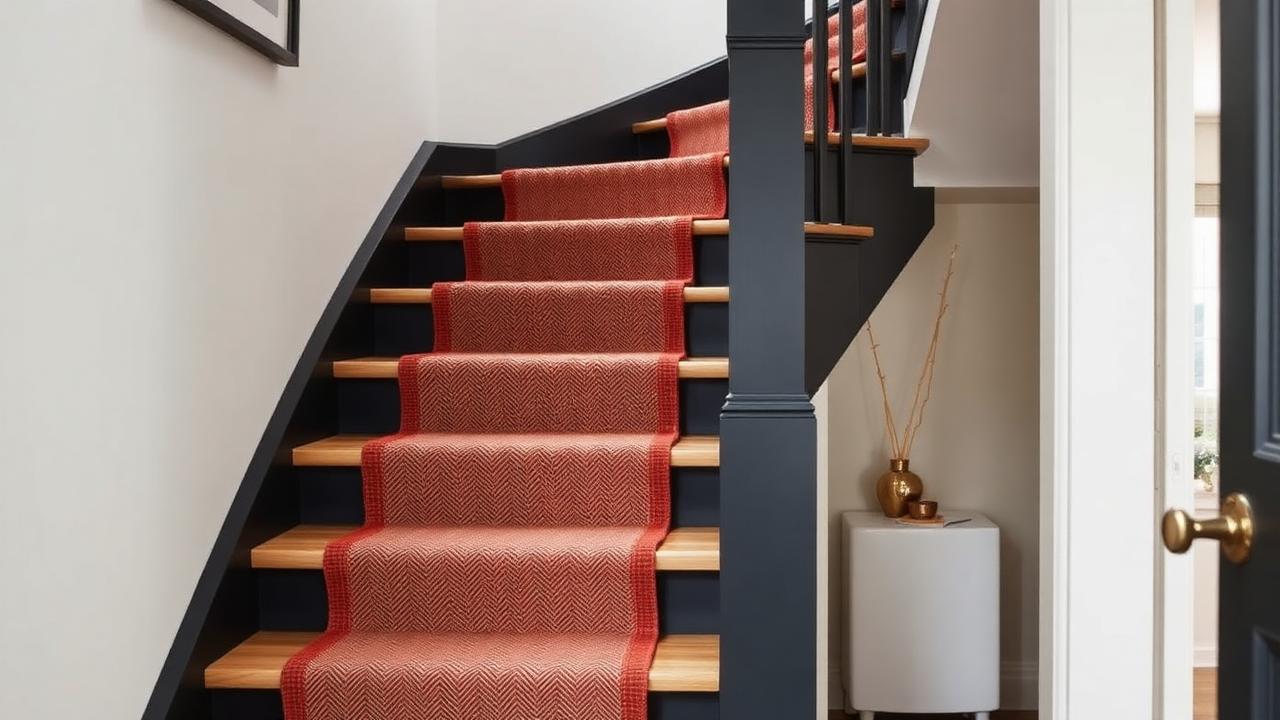
- Split total rise between the flights either side of the landing, per your layout plan.
- Calculate each flight's own total run from its individual tread count and depth.
- Apply the Pythagorean formula to each flight separately to get two distinct stringer lengths.
- Frame the landing platform on its own joists and header, independent of either stringer's length calculation.
Engineered and manufactured stringers vs cut lumber
Alongside site-cut 2x12 stringers, several manufacturers sell engineered stair stringers - pre-notched steel or LVL units rated by a published span table rather than by the generic 18in on-centre rule of thumb used for dimensional lumber. These are especially common on open-riser and floating-tread designs, where the stringer itself is often a visible design feature rather than something hidden behind risers. A stair stringer length calculator still gives you the correct raw diagonal for ordering an engineered stringer, but the manufacturer's own span and loading tables, not the IRC's generic notch-depth rule, govern how many stringers a given design needs.
| Stringer type | Typical material | How spacing is determined |
|---|---|---|
| Cut (open) 2x12 | Dimensional lumber | IRC generic rule, ~18in on centre |
| Housed (closed) stringer | Dimensional lumber or hardwood | Groove depth and general framing practice |
| Engineered steel or LVL stringer | Manufactured, rated component | Manufacturer's published span table |
Common stringer sizing mistakes
The most common error I see is calculating the diagonal correctly but forgetting the margin for the top and bottom cuts, which then leaves a stringer a couple of inches short once the actual kick cut and ledger notch are made - always add the roughly 12in allowance before rounding up to a stock length, not after. The second most common mistake is applying one flight's stringer length to a second, supposedly identical flight without re-measuring, when in fact small differences in total rise between two flights of a U-shaped stair (common where the landing framing was not perfectly level) mean the two stringers are rarely truly identical.
Stringers on stairs with a mid-run winder or bullnose start
A bullnose starting step - the curved, wider first tread often seen at the bottom of a traditional staircase - changes the stringer layout at the bottom of the flight, since the stringer must be notched to follow the curved starting tread rather than a plain rectangular one, which is usually handled with a separate curved bracket rather than extending the straight stringer's notch pattern. Similarly, where a single winder sits partway up an otherwise straight flight, the stringer on the widest (outside) edge of the winder needs its own notch spacing recalculated for that section, since the winder's individual tread run differs from the straight treads either side of it.
From framing to finish: connecting stringer length to your runner order
Once the stringers are cut and the treads and risers are fixed in place, the next practical step is ordering the stair runner carpet that will finish the flight, and it is worth using the exact same rise and run figures for both calculations so the numbers stay consistent from framing through to finishing. Run the confirmed tread and riser dimensions through the stair runner calculator to get an accurate tread-by-tread length, rather than re-deriving them from the stringer's diagonal, since - as covered above - the stepped runner path and the straight stringer diagonal are related but different numbers for the same flight.
Know your numbers in 30 seconds
Enter your step count, tread depth and riser height — the stair runner calculator gives you the exact length to order, in metres and feet, with waste included.
Open the stair runner calculatorStill deciding on material, width or pattern? Our hub on stair runners compares weaves, widths, backings and fitting styles side by side, then hands the numbers straight to the calculator.
Frequently asked questions
How do I calculate stair stringer length?
Take the square root of (total rise squared plus total run squared) — the Pythagorean hypotenuse — then add roughly 12in margin for the top and bottom cuts.
How many stringers does a 36in-wide stair need?
Typically three, spaced no more than about 18in on centre for standard 2x12 dimensional-lumber cut stringers.
What size lumber is used for stair stringers?
2x12 dimensional lumber is the standard choice, sized to leave at least about 3.5in of uncut depth behind each tread/riser notch.
Is stringer length the same as stair runner length?
No — stringer length is the straight diagonal hypotenuse of rise and run, while runner length follows the longer stepped nosing-to-nosing path over every tread and riser.
What length of lumber do I need for a stair with 105in of rise?
For 105in of rise and 130in of run, the diagonal is about 167in; with margin, a 16ft (192in) 2x12 comfortably covers it.
Does stringer spacing change with stair width?
Yes — wider stairs typically need an extra stringer; a 48in-wide stair commonly uses four stringers rather than the three used on a 36in stair.
Know your numbers in 30 seconds
Enter your step count, tread depth and riser height — the stair runner calculator gives you the exact length to order, in metres and feet, with waste included.
Open the stair stringer calculatorReady for real prices?
Get quotes from vetted stair runner suppliers and fitters near you. Free, no account, no obligation.
Every guide is written from hands-on measuring and fitting experience, checked against the calculator’s own maths, and re-reviewed whenever prices or methods change. Read our editorial standards.