

The common stocked widths
Runner width and runner length are sold and measured completely differently, and it trips a lot of first-time buyers up. Length is almost always custom-cut to your exact staircase, but width is typically fixed to whatever the loom weaves at, meaning you're choosing from a set of standard widths rather than specifying an arbitrary figure. The most commonly stocked widths across US and UK suppliers are roughly 22 in (56 cm), 26-27 in (66-68 cm), 30 in (76 cm), 32 in (81 cm) and 36 in (91 cm), with 27 in and 30 in being the two most popular for typical residential staircases.
Some suppliers, particularly those who cut from broadloom carpet with edge binding rather than weaving to a fixed runner width, can offer custom widths in smaller increments, useful if your staircase is unusually narrow or wide, or if you want a very specific proportion of exposed tread either side. This flexibility usually comes at a higher per-foot or per-metre cost than an off-the-shelf woven runner width, so it's worth checking both routes before committing.
Matching width to stair width
The general convention is to leave an even strip of exposed tread on each side of the runner, most commonly 3-4 in (7.5-10 cm) per side, sometimes up to 5 in (12.5 cm) on a wider or grander staircase where more visible wood or painted tread reads as intentional rather than mean. That means your target runner width is your total stair width minus roughly 6-8 in (15-20 cm) combined margin. A 36 in (91 cm) wide staircase, for example, comfortably fits a 27-30 in (68-76 cm) runner. A narrower 32 in (81 cm) stair suits a 24-26 in (61-66 cm) runner to keep the same proportional margin.
| Total stair width | Typical exposed margin per side | Suggested runner width |
|---|---|---|
| 30 in (76 cm) | 3 in (7.5 cm) | 24 in (61 cm) |
| 32 in (81 cm) | 3-3.5 in (7.5-9 cm) | 26 in (66 cm) |
| 36 in (91 cm) | 4-4.5 in (10-11 cm) | 27-30 in (68-76 cm) |
| 40 in (102 cm) | 4-5 in (10-12.5 cm) | 30-32 in (76-81 cm) |
| 48 in (122 cm) | 5-6 in (12.5-15 cm) | 36-38 in (91-97 cm) |
Measure width at three points
Older staircases are rarely perfectly parallel-sided. Measure width at the top, middle and bottom of the flight and use the narrowest reading so your runner never binds against a wall or baluster.
How much runner do I need?
Width and length are calculated independently, but both feed into your total order. Take a 36 in (91 cm) wide, 13-step US staircase with 10 in treads and 7.5 in risers: you'd choose a 27 in wide runner (leaving 4.5 in margin per side) and, using the standard length formula of steps times tread-run-plus-riser-plus-nosing, plus finishing allowance and waste margin, you'd need roughly 23-24 ft of that 27 in wide runner. In UK terms, a 91 cm wide staircase with 25 cm treads and 19 cm risers takes a 68 cm wide runner and roughly 7-7.2 m of length. Note that width doesn't change your length calculation at all - it only affects how much runner, in square footage or square metres, your total order works out to, and therefore its cost.
A stair runner calculator handles the length side of this instantly once you've chosen your width, and most also let you toggle between US and metric units so you can check a supplier's quote against your own numbers without doing the conversion by hand.
Runner-hall or full-width rugs as alternatives
- A runner-hall style leaves generous exposed tread, 4-6 in (10-15 cm) per side, and suits period or painted staircases.
- A near-full-width runner leaves only 1-2 in (2.5-5 cm) per side and suits modern, carpeted-look staircases wanting minimal visible tread.
- Extra-wide runners over 32 in (81 cm) are less common off the shelf and often need a custom or made-to-measure order.
- Very narrow runners under 24 in (61 cm) suit tight cottage staircases but limit pattern and border options.
Why width affects pattern and border choice
Wider runners give more room for a bordered edge design, a wider central medallion, or a more generous striped repeat, while narrower runners suit simpler patterns or plain colours because there isn't enough visual real estate for a busy motif to read clearly. If you already know you want a border, factor its width into your choice - a 2 in (5 cm) border on each side of a 24 in (61 cm) runner leaves only 20 in (51 cm) of central pattern, which changes how a large-scale motif will look once bordered.
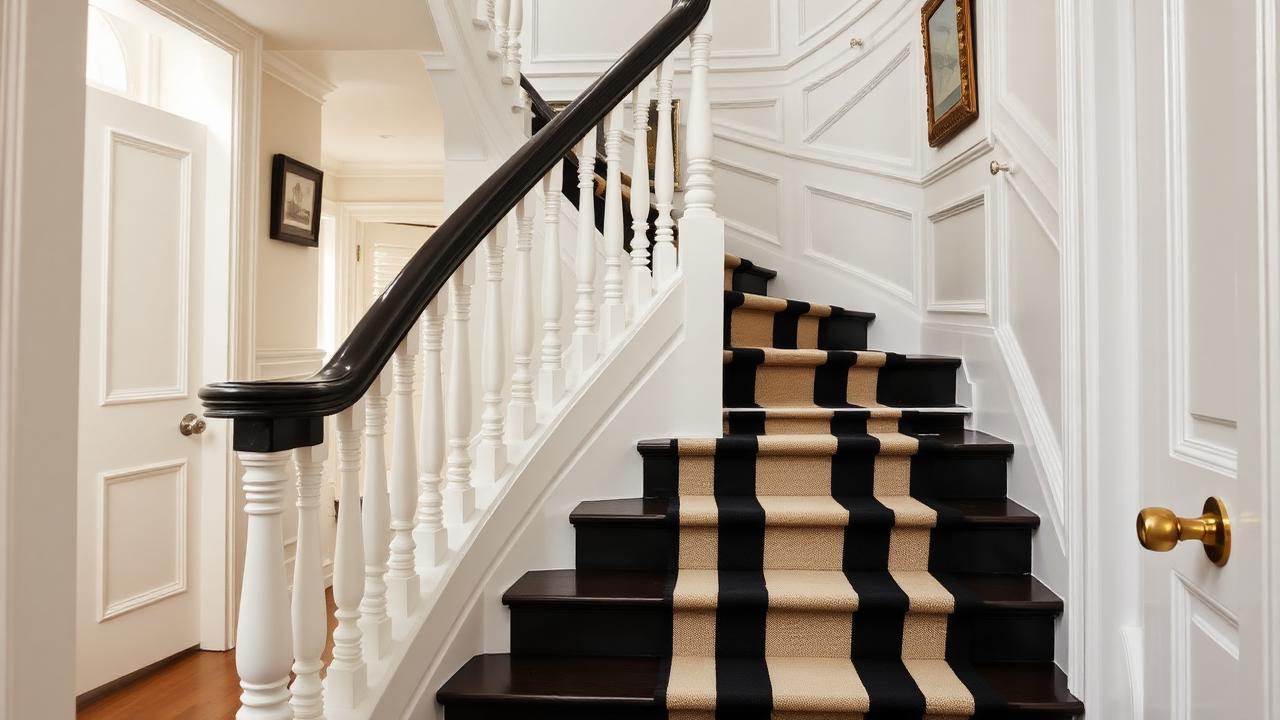
Fitting considerations at width extremes
Very narrow runners, particularly under 24 in (61 cm), can be trickier to keep centred and straight during fitting since there's less margin for error before the runner visibly drifts off-centre by the top of the flight. Very wide runners, over 32 in (81 cm), are heavier and stiffer to manoeuvre up a staircase during installation and may need two people to fit safely, especially on a turn or winder section. Neither is a reason to avoid a particular width, but worth mentioning to your fitter in advance so they bring the right tools and, if needed, a second pair of hands.
Whatever you decide, get the numbers first: the stair runner calculator doubles as a stair runner length calculator, adding nosing wrap, landings, winders, pattern repeat and waste so you order the right length the first time.
Still deciding on material, width or pattern? Our hub on stair runners compares weaves, widths, backings and fitting styles side by side, then hands the numbers straight to the calculator.
Frequently asked questions
What is the most common stair runner width?
27 in (68 cm) and 30 in (76 cm) are the two most commonly stocked widths across US and UK suppliers, suiting the typical 34-38 in (86-97 cm) wide residential staircase while leaving a reasonable margin of exposed tread on each side.
How much exposed tread should I leave on each side?
Most staircases look best with 3-4 in (7.5-10 cm) of exposed tread per side, though grander or wider staircases can carry 5-6 in (12.5-15 cm) per side comfortably without the runner looking undersized.
Can I get a custom stair runner width?
Yes, many suppliers who cut runners from broadloom carpet with edge binding offer custom widths in smaller increments than off-the-shelf woven runners, though this usually costs more per foot or metre than a standard stocked width.
Does runner width affect the length I need to order?
No, width and length are calculated independently. Length depends on tread run, riser height, step count and nosing wrap; width only affects how much total material, and therefore cost, your order comes to.
What width suits a narrow staircase?
For staircases under 32 in (81 cm) wide, a 22-24 in (56-61 cm) runner usually keeps a sensible 3-4 in (7.5-10 cm) margin per side without looking cramped or leaving too little exposed tread to read as intentional.
Should I measure stair width at the top or bottom of the flight?
Measure at the top, middle and bottom, since older staircases are often not perfectly parallel-sided, and use the narrowest of the three readings so the runner never binds against a wall, skirting or baluster anywhere along the flight.
Do wider runners cost proportionally more?
Yes, roughly proportionally, since cost is usually quoted per square foot or square metre. A 30 in (76 cm) runner costs about 11% more per running foot than a 27 in (68 cm) runner of the same quality, all else equal.
Is a wider or narrower runner harder to install?
Very wide runners over 32 in (81 cm) are heavier and stiffer, sometimes needing two installers, while very narrow runners under 24 in (61 cm) are more prone to drifting off-centre if not checked carefully at each step during fitting.
Know your numbers in 30 seconds
Enter your step count, tread depth and riser height — the stair runner calculator gives you the exact length to order, in metres and feet, with waste included.
Check the right runner width with the stair runner calculatorReady for real prices?
Get quotes from vetted stair runner suppliers and fitters near you. Free, no account, no obligation.
Every guide is written from hands-on measuring and fitting experience, checked against the calculator’s own maths, and re-reviewed whenever prices or methods change. Read our editorial standards.