
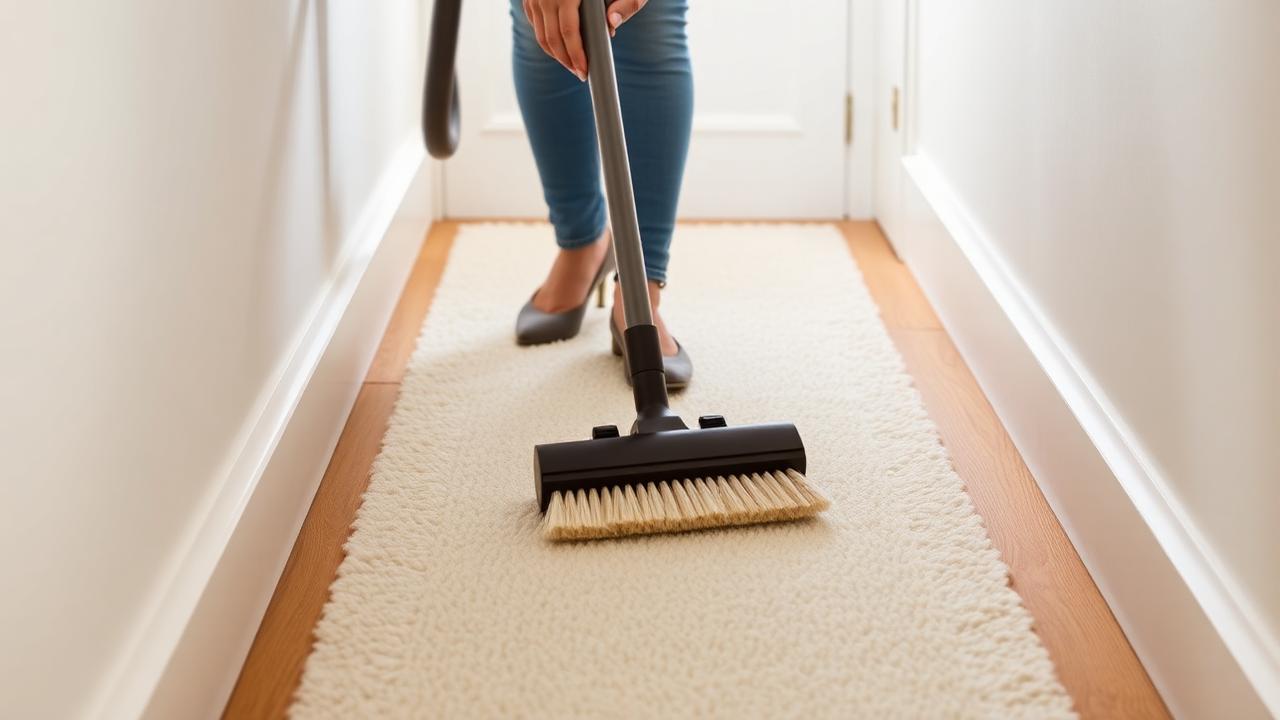
What's actually happening when pile crushes
Every carpet fibre has a natural springback ability - press it down and it should stand back up once the pressure is released, at least for a while. Pile crushing is what happens when that springback fails, either temporarily under sustained weight (like furniture left in one spot for months) or permanently through repeated compression cycles that gradually break down the fibre's internal structure. On stairs, it's almost always the second kind, because a step gets compressed by a footfall, released, then compressed again seconds or minutes later, potentially hundreds of times a day on a busy household staircase, and that repetition is what eventually defeats the fibre's ability to recover.
The physics explains why crushing on stairs is so localised compared to flat carpet. On a flat floor, foot traffic spreads across a much wider area and any given square inch gets stepped on relatively rarely. On a stair tread, nearly every footfall lands in roughly the same 4-6 in (10-15 cm) band across the centre of the tread, because that's the natural stride line most people take going up and down. That's why you'll almost always see crushing concentrated in that centre strip long before the edges of the same tread show any wear at all.
Which materials resist crushing best
Fibre resilience and pile density both matter more than fibre type alone. Wool has naturally good resilience because of its crimped fibre structure, which genuinely does spring back better than most synthetics fibre-for-fibre, but a low-density wool runner can still crush faster than a dense nylon one - density and face weight are doing real work here alongside the raw fibre choice. Solution-dyed nylon, particularly commercial-grade nylon built for hospitality and high-traffic environments, is the standout performer for crush resistance among synthetics and is a common choice for stair runners specifically because of it. Polypropylene, while cheap and often visually similar to nylon or wool at first glance, has notably poor resilience and is the material most likely to show early, visible crushing, sometimes within the first year on a busy staircase.
| Material | Crush resistance | Typical time to visible crushing (busy stairs) |
|---|---|---|
| Dense wool (60+ oz) | Very good | 3-5 years |
| Solution-dyed nylon | Excellent | 3-6 years |
| Standard wool (40-50 oz) | Good | 2-4 years |
| Polypropylene | Poor | 1-2 years |
Check face weight, not just fibre type, before buying
A high oz/sq yd face weight generally means more fibre packed into the pile, which resists crushing far better than a light face weight in the same fibre type. Ask suppliers for this figure directly when comparing runners for a busy staircase.
How much runner do I need?
If crushing has reached the point of replacement, or if you're buying a denser runner specifically to resist it better, get the length right first. Take a 13-step US flight with 10.5 in tread run, 7.5 in riser height and a 1 in nosing wrap (denser piles often need a slightly larger wrap allowance), giving 19 in per step. Across 13 steps that's 247 in (20.6 ft), plus a 24 in finishing allowance for 271 in (22.6 ft), then a 7% waste margin brings the order to roughly 24.2 ft.

In UK terms, that's 13 steps at 27 cm tread run, 19 cm riser height and 2.5 cm nosing wrap, giving 48.5 cm per step, or 630.5 cm across the flight. Add 60 cm finishing allowance for 690.5 cm, apply a 7% waste margin, and you land at roughly 7.39 m to order. Denser, higher face-weight runners are sometimes sold in slightly different roll widths to lighter products, so double-check your width figure against the specific product's available widths before finalising an order, since a mismatch there causes more reorders than length errors do.
Know your numbers in 30 seconds
Enter your step count, tread depth and riser height — the stair runner calculator gives you the exact length to order, in metres and feet, with waste included.
Open the stair runner calculatorReducing crushing before it starts
A quality pad underneath the runner is the single most effective preventative measure, because it absorbs a meaningful share of the compressive force before it reaches the fibre and backing, reducing the cumulative stress that causes crushing over time. Beyond the pad, choosing a denser, higher face-weight product for a known high-traffic flight rather than the lightest option in a given style range pays off directly in crush resistance. Some fitters also recommend having a runner professionally re-stretched and re-tacked every several years on the busiest flights, which doesn't reverse crushing directly but keeps the backing taut and evenly loaded, avoiding the uneven stress patterns that make crushing worse in specific spots.
- Fit a quality felt or rubber pad underneath, not just the bare runner on the tread.
- Choose a denser, higher face-weight product for the busiest flight in the house.
- Vacuum regularly with suction to keep grit from working deeper into the pile and weakening fibre structure.
- Avoid dragging heavy furniture or boxes down stairs directly over the runner where possible.
- Have the runner periodically re-tensioned by a fitter to keep loading even across the flight.
Can crushed pile ever be reversed?
Mild to moderate crushing often responds well to professional steam cleaning combined with pile grooming, which uses heat and moisture to relax the fibre's compressed structure and encourage it back toward its original position, followed by careful brushing to lift and separate the fibres. This genuinely works for crushing that's still relatively fresh, and I've seen tired-looking treads come back to something close to their original appearance after a proper steam treatment. Severe or long-standing crushing, where the fibre structure itself has broken down rather than just being temporarily compressed, generally doesn't respond to steaming in the same way - at that point you're managing appearance rather than reversing the underlying damage, and it's a genuine signal that replacement is approaching even if the runner isn't visibly worn through or frayed yet.
If you're weighing up whether to treat crushed pile or replace the runner, factor in how much of the flight is affected. Localised crushing on two or three of the busiest steps, with the rest of the flight still in good shape, is a reasonable candidate for steaming and grooming as a stopgap. Crushing across most of the flight usually means you're near the end of that runner's useful life regardless of how the rest of it looks, and it's worth starting to plan and measure for a replacement with a stair runner calculator rather than repeatedly steaming a runner that's structurally past its best.
Whatever you decide, get the numbers first: the stair runner calculator doubles as a stair runner length calculator, adding nosing wrap, landings, winders, pattern repeat and waste so you order the right length the first time.
Frequently asked questions
Why does the middle of my stair treads look flatter than the edges?
Because nearly every footfall going up and down the stairs lands in roughly the same central band on each tread, concentrating wear and compression there far more than at the edges, which barely get stepped on at all.
Can steam cleaning fix crushed carpet pile on stairs?
Yes, for mild to moderate crushing - heat and moisture relax the fibre structure and grooming helps lift it back into position. Severe, long-standing crushing where the fibre structure has actually broken down usually doesn't respond as well.
Which stair runner material resists crushing the longest?
Solution-dyed nylon and dense, high face-weight wool are the top performers for crush resistance, generally lasting several years longer under heavy traffic than low-density polypropylene, which flattens noticeably faster.
Does furniture placed on a stair runner cause crushing?
It can, though it's less common on stairs than on flat carpet since furniture rarely sits directly on stair treads. Anything left resting on a runner for extended periods, like a stored item on a step, can cause localised crushing.
Is pile crushing covered under a stair runner's warranty?
Rarely, since it's typically treated as expected wear from normal use rather than a manufacturing defect, unless it happens unusually fast relative to the product's stated traffic rating, which can be difficult to prove in a claim.
Does a thicker pad really reduce pile crushing?
Yes, a quality felt or rubber pad absorbs a meaningful share of the compressive force from each footstep before it reaches the runner's fibre and backing, measurably slowing the rate of crushing over the runner's life.
How can I tell if crushing means the runner needs replacing soon?
If steaming and grooming no longer restore the pile close to its original appearance, or if crushing is spread across most of the flight rather than one or two steps, that's a strong signal the runner is approaching the end of its useful life.
Does face weight matter more than fibre type for crush resistance?
Both matter, but face weight is often the more practical guide when comparing products, since a light, sparse pile in a good fibre can still crush faster than a dense, heavy pile in a more ordinary fibre.
Know your numbers in 30 seconds
Enter your step count, tread depth and riser height — the stair runner calculator gives you the exact length to order, in metres and feet, with waste included.
Plan a replacement or new runner with the stair runner calculatorReady for real prices?
Get quotes from vetted stair runner suppliers and fitters near you. Free, no account, no obligation.
Every guide is written from hands-on measuring and fitting experience, checked against the calculator’s own maths, and re-reviewed whenever prices or methods change. Read our editorial standards.