
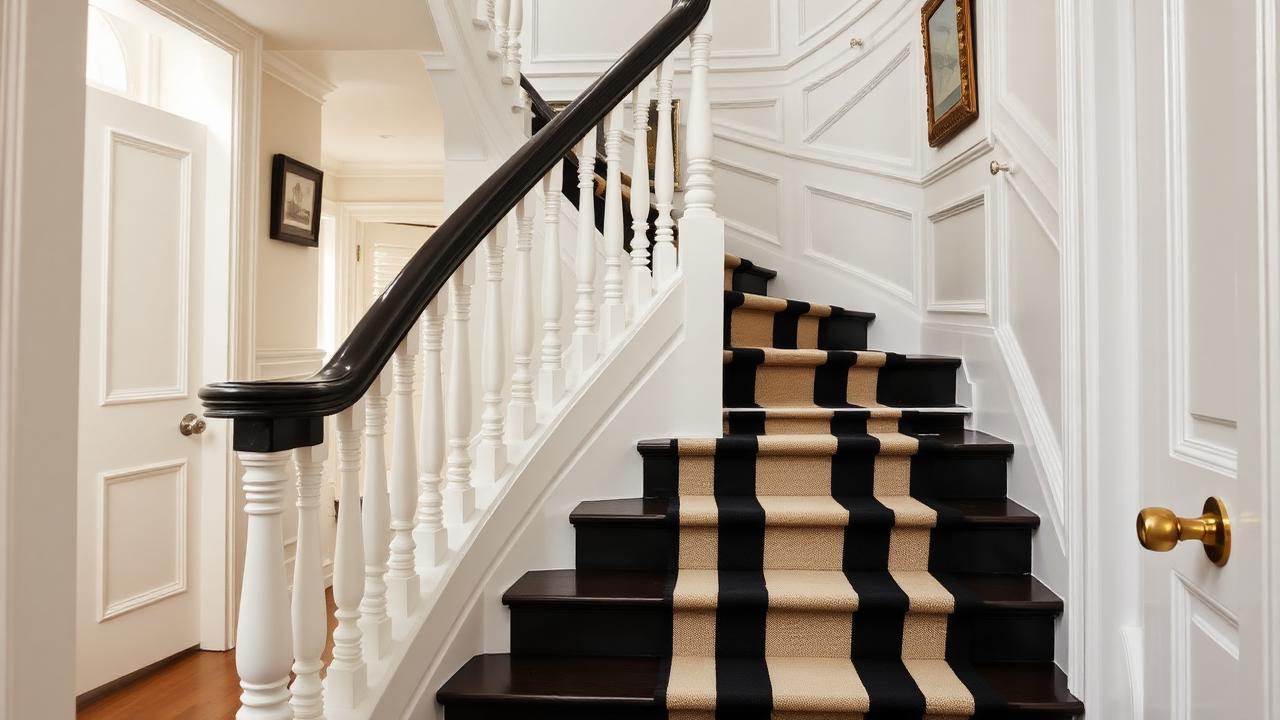
The honest case for and against white
I'll be upfront with anyone asking about a white stair runner: it's the highest-maintenance colour choice you can make on a staircase, full stop. Shoes, bags brushing the tread edge, a dropped cup of tea, a muddy paw print, all of it registers instantly and stays visible until it's cleaned properly. If that's a dealbreaker, look at cream or a very pale grey instead, both of which give a similar bright, airy feel with meaningfully less visible wear. If you've weighed that up and still want white, it's worth doing right, because nothing else creates quite the same crisp, gallery-like look against a dark wood stair or a black-painted baluster.
The households that get on best with a white stair runner tend to be adults-only, without pets, in a home where shoes come off at the door as a matter of routine. Family homes with young children, muddy dogs or a habit of walking straight in from outside will find themselves cleaning it far more often than they expected, and repeated spot cleaning on a pale synthetic can leave faint outlines over time even after the stain itself lifts. None of that means don't do it, it just means go in with realistic expectations.
Choosing a fibre that actually copes with white
Solution-dyed nylon or polypropylene handles white better than natural wool in a busy setting, because the colour is embedded through the whole fibre rather than sitting on the surface, which means it resists staining and can often tolerate a mild bleach-based cleaner if something serious happens without the colour lifting unevenly. Wool takes dye beautifully and feels wonderful underfoot, but a pale wool runner is genuinely harder to keep looking fresh long-term, since wool fibres absorb spills faster and some stain treatments aren't safe to use on wool without professional help. If you want the natural-fibre look and feel, ask specifically about a wool with a stain-resist treatment applied, rather than assuming standard wool carpet performs the same way pale synthetics do.
Ask for a spare offcut
Whatever fibre you choose, keep a spare offcut from the same dye lot. If a stain ever needs a localised patch repair rather than a full replacement, having matching material on hand saves both cost and colour mismatch.
How much runner do I need?
For a 13-step US flight with a 10 in tread run, 7.5 in riser height and a 0.75 in nosing wrap allowance, the per-step total is 18.25 in, or 237.25 in across 13 steps, converting to 19.77 ft. Add a 24 in combined finishing allowance for the top and bottom of the run and you get 261.25 in, or 21.77 ft. A 7% waste margin brings the order length to roughly 23.3 ft, so most people order 23-24 ft. White doesn't need extra waste margin for colour reasons, but if you're choosing a textured or looped white weave to help disguise footfall marks, add an extra 1-2% to allow for pattern alignment.

In UK metric terms: 25 cm tread run, 19 cm riser height and 1.9 cm nosing wrap gives 45.9 cm per step, or 596.7 cm across 13 steps. Add a 60 cm finishing allowance for 656.7 cm, then apply a 7% waste margin to reach roughly 7.03 m. A shorter 10-step flight with the same dimensions needs about 5.2 m (17 ft), while a longer 14-step flight needs closer to 7.5 m (24.7 ft).
| Measurement | US (in/ft) | UK (cm/m) |
|---|---|---|
| Tread run | 10 in | 25 cm |
| Riser height | 7.5 in | 19 cm |
| Nosing wrap per step | 0.75 in | 1.9 cm |
| Per-step total | 18.25 in | 45.9 cm |
| 13 steps subtotal | 19.77 ft | 5.97 m |
| With 7% waste margin | 23.3 ft | 7.03 m |
Know your numbers in 30 seconds
Enter your step count, tread depth and riser height — the stair runner calculator gives you the exact length to order, in metres and feet, with waste included.
Open the stair runner calculatorStyling white against different tread and wall tones
White against a dark stained or espresso stair is the classic dramatic pairing, giving the sharpest possible contrast and drawing the eye straight up the flight. Against pale or whitewashed treads, white almost disappears into the wood unless you add a border or a contrasting edge tape, so if you're set on white on a light staircase, ask your fitter about a thin contrast binding to keep the runner visually defined against the tread either side. Black or dark bronze stair rods give white the strongest hardware contrast, while brass adds warmth without competing with the brightness of the carpet.
- Decide whether you want maximum brightness (true white) or a softer, more forgiving alternative (off-white or cream).
- Choose solution-dyed synthetic for stain resistance, or a treated wool if you want a natural fibre feel.
- Add a contrast border or edge tape if your treads are also pale, so the runner doesn't visually disappear.
- Measure your actual flight and run it through a stair runner calculator rather than relying on generic figures.
- Order a spare offcut from the same dye lot for future spot repairs.
Living with a white runner day to day
Vacuum more frequently than you would with a mid-tone runner, since grit and dust show up faster and grinding underfoot is what actually damages carpet fibre over time, not the vacuuming itself. Treat spills the moment they happen rather than letting them sit, blotting rather than rubbing, and keep a fibre-appropriate spot cleaner to hand near the stairs rather than in a cupboard three rooms away, since the delay between a spill and treating it matters more on white than on any other colour. A doormat system at both the front and back door, catching grit before it ever reaches the stairs, does more to protect a white runner over its lifetime than any single cleaning product.
As with any stair runner colour, get your specific tread run, riser height and step count measured properly and run them through a stair runner length calculator before ordering, since white is expensive to under-order and reorder against an exact dye-lot match. Consider stair runners more broadly as an investment where the fibre and fitting quality matter more than usual, because the visible cost of a poor decision shows up faster on white than on almost any other shade.
Whatever you decide, get the numbers first: the stair runner calculator doubles as a stair runner length calculator, adding nosing wrap, landings, winders, pattern repeat and waste so you order the right length the first time.
Frequently asked questions
Is a white stair runner practical for a family home?
It's the least forgiving colour for a busy family home with children or pets, since scuffs and spills show almost immediately. It works best in adults-only households with a shoes-off routine, or with a stain-resistant solution-dyed fibre.
How much white stair runner do I need for 13 steps?
For a typical 13-step flight with 10 in (25 cm) treads and 7.5 in (19 cm) risers, plan for roughly 23-24 ft (7-7.2 m), the same base calculation used for any colour.
What fibre holds up best for a white stair runner?
Solution-dyed nylon or polypropylene resists staining better than wool because the colour runs through the whole fibre and often tolerates mild bleach-based cleaners. Wool feels better underfoot but needs a stain-resist treatment to cope with everyday use.
Does white stair runner carpet yellow over time?
Some synthetic whites can develop a slight yellow tinge from UV exposure or certain cleaning products over years. Choosing a UV-stable solution-dyed fibre and avoiding harsh ammonia-based cleaners reduces this risk.
Should I add a border to a white stair runner?
If your treads are also pale or whitewashed, a contrast border or edge tape keeps the runner visually defined rather than blending into the wood. On dark stained treads, a border isn't necessary since the contrast is already strong.
How often should a white stair runner be cleaned?
Vacuum it more often than a mid-tone runner, since dust and grit show faster, and treat spills the moment they happen rather than letting them sit. A doormat system at entry points reduces the grit reaching the stairs significantly.
What stair rod colour suits a white runner?
Black or dark bronze rods give the strongest contrast against white, while brass adds warmth without overpowering the brightness. Either works, so choose based on your hardware elsewhere in the hallway.
Is white a good choice for a staircase with pets?
It's a difficult choice for pet owners, since hair, mud and scratches show clearly. If you want a bright look with pets in the house, cream or a very pale grey gives a similar effect with noticeably less visible wear.
Know your numbers in 30 seconds
Enter your step count, tread depth and riser height — the stair runner calculator gives you the exact length to order, in metres and feet, with waste included.
Calculate your white runner length with the stair runner calculatorReady for real prices?
Get quotes from vetted stair runner suppliers and fitters near you. Free, no account, no obligation.
Every guide is written from hands-on measuring and fitting experience, checked against the calculator’s own maths, and re-reviewed whenever prices or methods change. Read our editorial standards.