
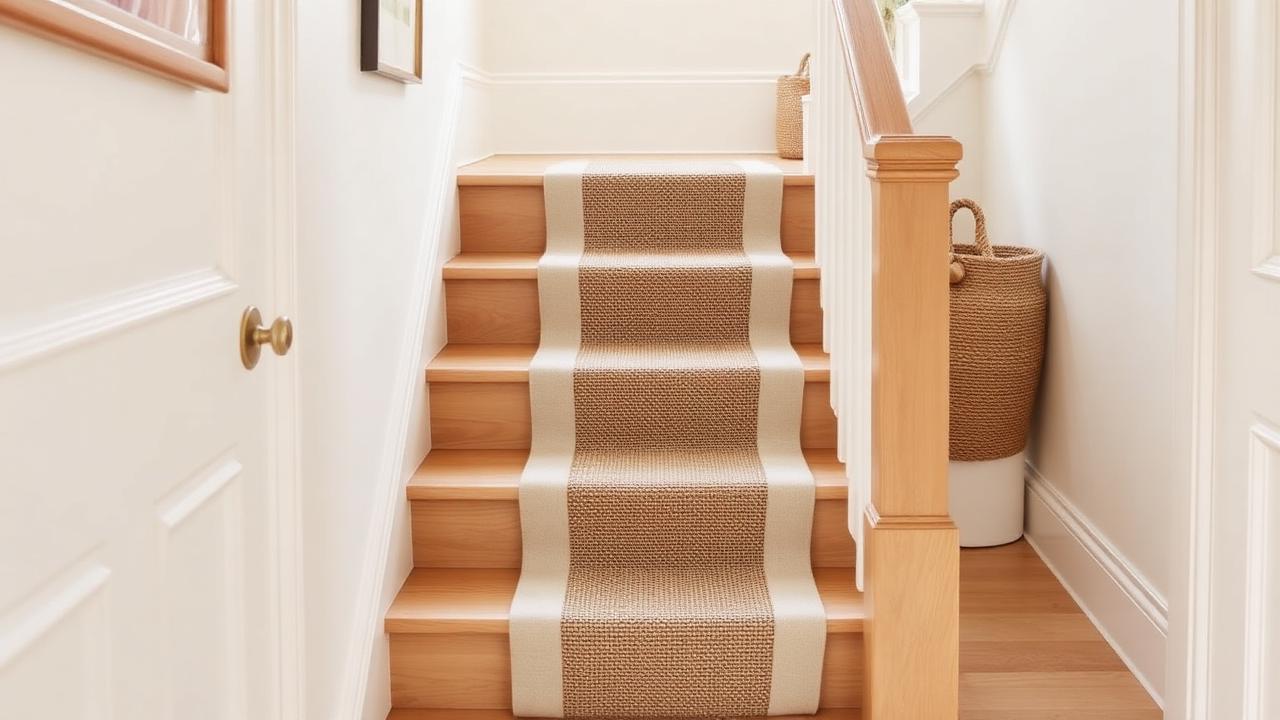
What a wool-sisal blend actually is
Pure sisal is spun from the leaves of the Agave sisalana plant and is prized for its strength and matte, ropey texture, but on its own it is hard underfoot, can feel slippery in socks, and is notoriously unforgiving of any water-based spill, which it stains almost permanently. Pure wool is soft, warm, springy, and stain-resistant relative to sisal thanks to its natural lanolin, but a plain wool runner lacks the textured, natural look many buyers want. A wool-sisal blend addresses both: the sisal content adds visible texture and rigidity, while the wool content softens the feel and improves both grip and stain tolerance.
Blend ratios vary by mill, but common splits are roughly 60/40 or 70/30 wool to sisal, sometimes described on the label as a wool-sisal or 'wilton sisal' construction. A higher wool percentage feels softer and more forgiving; a higher sisal percentage looks more rustic and holds its shape longer under heavy traffic but costs comfort and stain resistance in return.
| Blend | Feel underfoot | Stain tolerance | Best suited to |
|---|---|---|---|
| 100% sisal | Hard, coarse, can be slippery | Poor — stains from water-based spills | Low-traffic areas, dry climates, style-led choices |
| 70/30 wool/sisal | Noticeably softer, still textured | Moderate — wool content buys blotting time | Main staircases wanting a natural look |
| 50/50 wool/sisal | Balanced texture and comfort | Moderate | Households wanting visible fibre without full sisal harshness |
| 100% wool | Soft, warm, springy | Good | Main staircases prioritising comfort over natural texture |
Why the blend matters more on stairs than on a floor
On a flat floor, sisal's hardness is a minor comfort issue. On a staircase, it becomes a safety consideration: a hard, low-friction sisal surface on a tread nosing is more likely to feel slippery in socks or smooth-soled shoes, particularly when the runner is new and the fibres have not yet roughened with wear. Blending in wool raises the surface friction slightly and softens the compression underfoot, which matters most exactly where a stair fall is most likely to start — at the front edge of the tread.
Never fit pure sisal on stairs used by young children or older adults without a securely gripped backing
If safety underfoot is a real concern in your household, a wool-sisal blend with a wool percentage of 60% or higher, fitted with a grippy stair-grade underlay and firmly stapled or gripper-fixed, is a safer choice than pure sisal on a main flight. Rugs on the flat are more forgiving than stairs, where any slip has further to fall.
US and UK sizing and code notes
Runner widths are typically sold in 25 to 33 in (64 to 84 cm) increments in the US and similar metric widths in the UK, and a wool-sisal blend behaves the same as any other bound runner for width planning — leave 3 to 4.5 in (7.5 to 11 cm) of exposed timber per side on a standard staircase. Neither the IRC R311.7 stair provisions in the US nor Approved Document K (Part K) in the UK specify a carpet fibre type, but both require that any floor covering not create a trip hazard and that nosings remain a safe, consistent profile — which is one more reason to have any natural-fibre blend properly stretched and fixed rather than loose-laid.
Measuring and fitting
- Count total steps and measure a typical going and rise, checking two or three steps as older staircases are rarely perfectly consistent.
- Decide runner width, allowing slightly more margin either side than you might for a soft pile, since sisal-blend edges show wear at the very edge first.
- Choose a wool-sisal underlay pairing — a firm, dense underlay rather than a soft one, since sisal blends compress less and need less cushioning but more edge support.
- Fit with staples into the crotch of each tread-riser join for a permanent, secure hold; avoid tackless gripper alone on a higher-sisal blend as the coarser backing can be harder to grip.
- Bind or serge every cut edge before fitting; sisal blends fray faster than pure wool if the edge is left raw even briefly.
- Check pattern direction and any herringbone or twill weave is squared to the first tread before fixing upward.
What it costs
| Item | Typical US | Typical UK |
|---|---|---|
| Wool-sisal blend, broadloom | $32-58 per sq yd | GBP 28-50 per sq m |
| Ready-made bound wool-sisal runner | $28-50 per linear ft | GBP 24-42 per linear m |
| Firm stair-grade underlay | $5-9 per sq yd | GBP 6-10 per sq m |
| Edge binding | $4-9 per linear ft | GBP 4-8 per linear m |
| Fitting, straight flight | $28-55 per step | GBP 22-45 per step |
Care and maintenance
- Vacuum regularly on a low-suction setting to avoid pulling coarse sisal fibres loose from the weave.
- Blot spills immediately; sisal in the blend will stain if liquid is left to sit, even with wool present.
- Avoid steam cleaning; sisal fibre can be damaged by excess moisture and heat.
- Keep humidity moderate — sisal can shrink slightly in very dry conditions and expand in very humid ones.
- Expect a natural sheen to develop with foot traffic as the sisal fibres burnish over the first year or two.
How wool-sisal compares with other natural-look alternatives
Buyers considering a wool-sisal blend are often also weighing up sisal-look synthetics, jute, and coir. Each trades off differently between look, comfort, durability and price, and it is worth comparing them side by side rather than assuming natural fibre is automatically the better choice for every household.
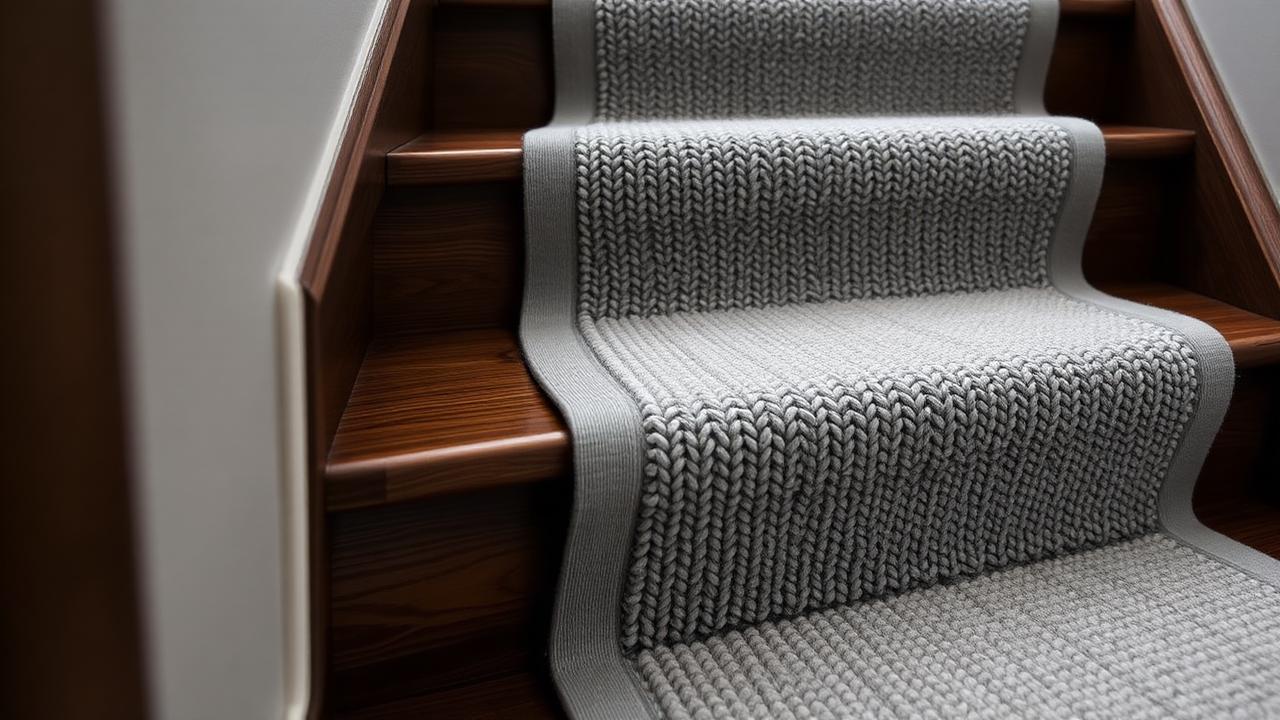
| Material | Natural texture | Comfort underfoot | Stain resistance | Relative cost |
|---|---|---|---|---|
| Wool-sisal blend | High | Moderate to good | Moderate | Mid to high |
| 100% sisal | Highest | Lower | Poor | Mid |
| Jute | High, softer look than sisal | Moderate | Poor, weaker fibre | Mid |
| Sisal-look synthetic (polypropylene) | Moderate — close visual match | Good | Good | Lower |
| 100% wool | Low — smooth, no coarse texture | Best | Good | Mid to high |
A sisal-look synthetic is worth a serious look if the household wants the visual texture of a natural fibre runner but has had bad experiences with staining or slipperiness on real sisal in the past; the trade-off is that synthetic fibres do not develop the same subtle sheen and character over time that genuine wool-sisal does.
Where a wool-sisal blend suits the rest of the home
Wool-sisal blends read as slightly more casual and textured than a plain wool runner, which makes them a natural fit for farmhouse, coastal, and transitional interiors where some visible fibre texture is part of the intended look. They pair well with painted timber, exposed brick, and mixed-metal hardware, and tend to look less at home in a very formal, symmetrical period hallway where a smooth woven wool or a fine Axminster pattern is more traditionally expected.
Know your numbers in 30 seconds
Enter your step count, tread depth and riser height — the stair runner calculator gives you the exact length to order, in metres and feet, with waste included.
Open the stair runner calculatorWhatever you decide, get the numbers first: the stair runner calculator doubles as a stair runner length calculator, adding nosing wrap, landings, winders, pattern repeat and waste so you order the right length the first time.
Still deciding on material, width or pattern? Our hub on stair runners compares weaves, widths, backings and fitting styles side by side, then hands the numbers straight to the calculator.
Frequently asked questions
Is a wool-sisal blend safer on stairs than pure sisal?
Generally yes. The wool content softens the surface and improves grip slightly compared with pure sisal, which can feel hard and slippery underfoot, especially when new. For households with young children or older adults, a blend with 60% or more wool, well fitted and stretched, is a more sensible choice than pure sisal on a main staircase.
Does a wool-sisal runner stain as easily as pure sisal?
It stains less readily than pure sisal but more readily than pure wool. The wool content buys extra time to blot a spill before it sets, but any wine, coffee or similarly pigmented liquid should still be treated immediately, since the sisal fibres in the blend absorb and hold stains more than wool alone would.
What blend ratio is best for a busy family staircase?
A 70/30 or 60/40 wool-to-sisal blend is the most common recommendation for a heavily used main staircase, since it keeps most of wool's comfort and stain resistance while still giving the textured, natural look that draws people to sisal in the first place.
Can a wool-sisal runner be cleaned professionally?
Yes, but tell the cleaner it contains sisal before they start, since standard hot-water extraction methods used for pure wool can over-wet a sisal blend and cause shrinkage or watermarking. A dry or low-moisture cleaning method is generally safer for any carpet with natural plant fibre content.
How does a wool-sisal blend compare in price to pure wool?
It typically sits close to or slightly above pure wool of a similar quality tier, since blended natural-fibre yarns can be more complex to spin and weave. The exact difference depends on the mill and blend ratio, so compare like-for-like quality tiers rather than assuming the blend is automatically cheaper.
Will a wool-sisal runner fade in a sunny stairwell?
Both fibres can fade under sustained direct sunlight, though wool generally holds dye better than sisal over time. If your stairwell has a skylight or large unshaded window, ask about UV-stable dyeing or consider a runner colour that will show fading less obviously, such as a natural undyed or heathered tone.
Is a wool-sisal blend suitable for a curved or winder staircase?
Yes, but the coarser backing can be slightly less forgiving to shape around a tight winder than a soft wool pile. Use an experienced fitter for any curved or winder section, and expect a little more wastage in the cutting than you would with a purely soft, flexible pile carpet.
Know your numbers in 30 seconds
Enter your step count, tread depth and riser height — the stair runner calculator gives you the exact length to order, in metres and feet, with waste included.
Measure my staircaseReady for real prices?
Get quotes from vetted stair runner suppliers and fitters near you. Free, no account, no obligation.
Every guide is written from hands-on measuring and fitting experience, checked against the calculator’s own maths, and re-reviewed whenever prices or methods change. Read our editorial standards.