
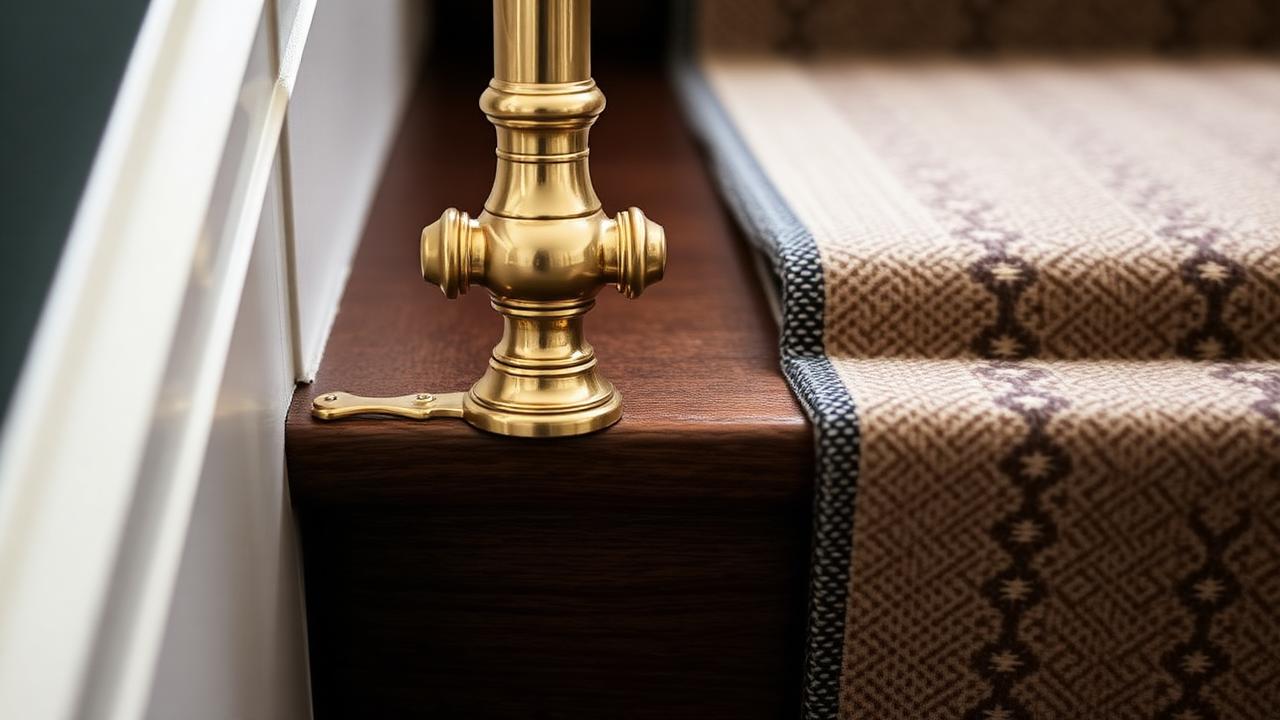
What edging actually does
Runners are cut from broadloom carpet, which means the raw edges will fray or shed fibres over time unless they're finished in some way. Edging - sometimes called binding or serging depending on the exact technique - wraps or stitches over that raw edge with a durable fabric tape, cotton twill, leather-look vinyl or wool binding, sealing the fibres and giving the runner a clean, tailored line down both sides of the stairs. Without edging, a cut runner will slowly fray from the sides inward, especially in a high-traffic hallway where feet regularly brush the edge.
Edging width is a genuine design decision, not just a technical spec. A narrower 1-1.5 in (2.5-3.8 cm) edge reads as subtle and almost disappears visually, letting the runner's own colour and pattern dominate. A wider 2-3 in (5-7.5 cm) edge becomes a visible design element in its own right, often chosen in a contrasting colour to frame the runner deliberately, similar in effect to a bordered stair runner where the border is woven in rather than added afterward.
Why 2 inch is a common middle-ground choice
At 2 in (5 cm), the edging is wide enough to show as a deliberate design detail and wide enough to give real wear resistance along the edge, but narrow enough not to eat noticeably into the runner's visible field on a standard-width stair. On a 27 in (68 cm) wide runner, a 2 in edge on each side still leaves about 23 in (58 cm) of visible runner face, which keeps the proportions comfortable. Go much wider than 2.5-3 in (6.4-7.5 cm) on a narrow runner and the edging can start to visually dominate the runner itself rather than framing it.
Order edging and runner together where possible
Colour-matching edging separately from the runner order risks a dye-lot mismatch - ordering both from the same supplier in the same batch avoids a visible seam of mismatched colour along both edges.
How much runner do I need?
Edging width doesn't change your core runner length calculation, but it's worth ordering edging material to match your total finished length exactly, including waste allowance, since edging is applied to the full cut length on both sides. For a 13-step flight with a 10 in (25 cm) tread going and 7.5 in (19 cm) riser rise, each step uses roughly the going plus the rise plus a small nosing wrap, around 18.5 in (47 cm) per step, totalling close to 20 ft (6.1 m) across 13 steps. Add 18-24 in (45-60 cm) of top and bottom finishing allowance and you're near 21.5 ft (6.6 m) before waste, roughly 6.6 m in metric. With a 5-10% waste allowance, order about 6.9-7.3 m of runner, and specify edging for the full length on both sides, which effectively doubles the linear edging material needed relative to the runner length. A stair runner calculator handles the core length arithmetic for your own tread and riser numbers, and a stair runner length calculator will also help you convert the figure into the edging quantity your binder or supplier needs to quote accurately.
| Edging width | Best suited to | Visual effect |
|---|---|---|
| 1-1.5 in (2.5-3.8 cm) | Narrow or patterned runners | Subtle, nearly invisible finish |
| 2 in (5 cm) | Standard 27-30 in (68-76 cm) runners | Balanced, clean framing line |
| 2.5-3 in (6.4-7.5 cm) | Wide runners, statement borders | Bold, deliberate contrast border |
Choosing edging material
- Cotton twill tape: affordable, wide colour range, suits most residential runners.
- Wool binding: matches wool runners closely in hand-feel and durability.
- Leather-look vinyl: strong wear resistance, popular for a tailored, higher-end look.
- Serged (overlocked) edge without added tape: cheapest option, less visually distinct as a border.
Fitting and stitching considerations
Edging is applied during the fabrication stage, before the runner is delivered for fitting, so it needs to be specified at the point of ordering rather than added afterward. Ask your supplier whether the edging is machine-stitched, hand-bound, or fused, since hand-bound edging generally lasts longest under repeated foot traffic but costs more and takes longer to produce. Once fitted on the stairs, edging along the sides doesn't affect how the runner is secured underneath, so tackless strip, adhesive, or rod fixings all work the same regardless of edging width.
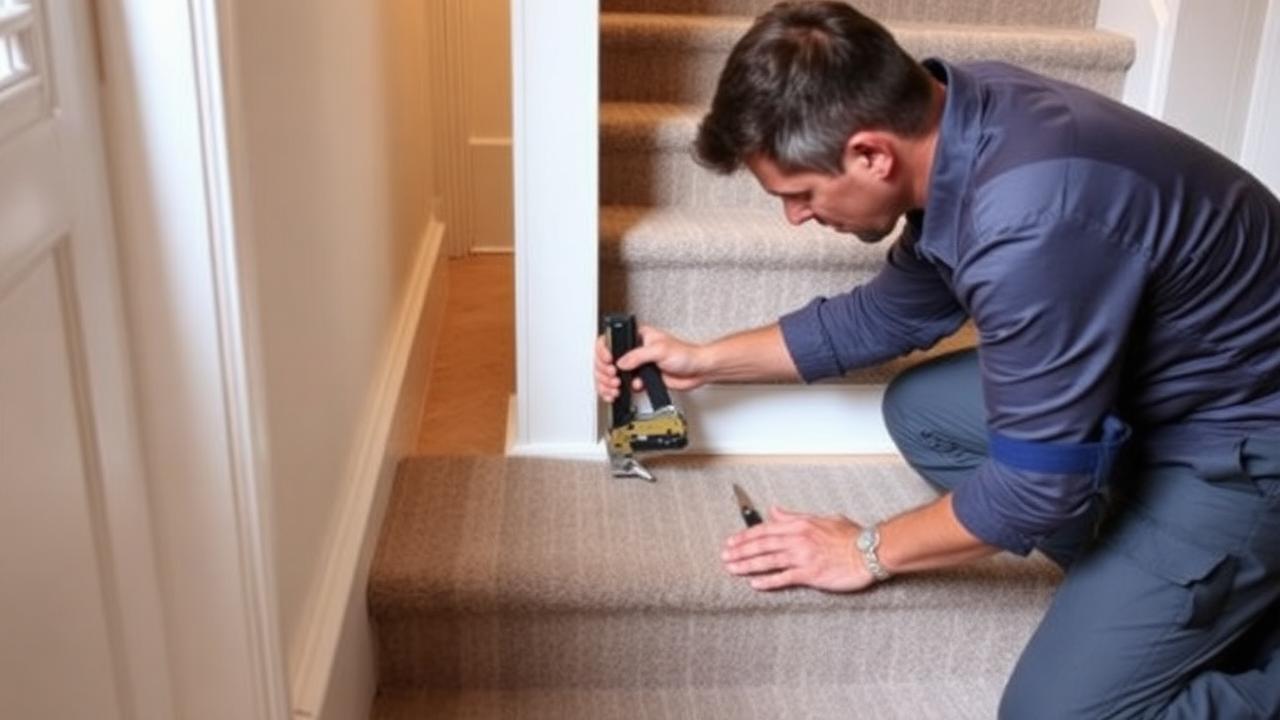
Cost of adding 2 inch edging
In the US, adding fabric edging typically costs $2-6 per linear foot of runner (both sides combined), so a 22 ft (6.7 m) runner might add $45-130 to the overall cost. In the UK, figure on roughly £4-12 per linear metre for the same combined edging, putting a 6.7 m runner's edging cost at about £27-80. These are typical ranges and vary by material choice, with leather-look vinyl and hand-bound wool sitting at the higher end.
Caring for an edged runner
Vacuum along the edge line gently rather than dragging the vacuum head directly across the binding repeatedly, since aggressive vacuuming can eventually loosen stitching at the seam. If an edge does start to lift or fray after years of wear, most binders can re-stitch or replace just the affected section rather than requiring a whole new runner, provided the base carpet itself is still in good condition.
Whatever you decide, get the numbers first: the stair runner calculator doubles as a stair runner length calculator, adding nosing wrap, landings, winders, pattern repeat and waste so you order the right length the first time.
Still deciding on material, width or pattern? Our hub on stair runners compares weaves, widths, backings and fitting styles side by side, then hands the numbers straight to the calculator.
Frequently asked questions
What is 2 inch stair runner edging used for?
It's a fabric or leather-look border stitched or bound along both long sides of a runner to stop the raw carpet edge from fraying and to give a clean, tailored finish. At 2 in (5 cm) wide, it's a common middle-ground size for standard 27-30 in (68-76 cm) runners.
Does wider edging mean better durability?
Generally yes, a wider edge has more material to resist wear along the runner's side, but very wide edging on a narrow runner can start to dominate visually. 2 in (5 cm) balances durability and proportion well on most standard-width runners.
Can I add edging to a runner after it's been cut?
It's much easier and more reliable to specify edging at the point of ordering, since it's applied during fabrication before delivery. Adding it afterward is possible with some binders but risks a slightly less durable or less colour-matched finish.
How much does 2 inch edging cost?
In the US, typical cost is $2-6 per linear foot of runner combining both sides; in the UK, roughly £4-12 per linear metre. A 22 ft (6.7 m) runner's edging might add $45-130 or £27-80 depending on material choice.
What materials are used for stair runner edging?
Common options are cotton twill tape, wool binding, and leather-look vinyl, plus a plain serged or overlocked edge without added tape as the most budget option. Wool binding suits wool runners closely, while vinyl gives the strongest wear resistance.
Does edging affect how the runner is fixed to the stairs?
No, edging along the sides doesn't interact with how the runner is secured underneath, so tackless strip, adhesive, or rod and bar fixings all work the same regardless of the edging width chosen.
How much runner length should I order if I want 2 inch edging?
Calculate your core runner length from tread going, riser rise and step count as normal, then add a 5-10% waste allowance. For a typical 13-step flight this lands around 6.9-7.3 m, with edging then specified for that full finished length on both sides.
Can edging be repaired if it wears out before the runner?
Yes, in most cases a binder can re-stitch or replace just the affected section of edging rather than requiring a whole new runner, provided the base carpet underneath is still in serviceable condition.
Know your numbers in 30 seconds
Enter your step count, tread depth and riser height — the stair runner calculator gives you the exact length to order, in metres and feet, with waste included.
Calculate total runner length before ordering edgingReady for real prices?
Get quotes from vetted stair runner suppliers and fitters near you. Free, no account, no obligation.
Every guide is written from hands-on measuring and fitting experience, checked against the calculator’s own maths, and re-reviewed whenever prices or methods change. Read our editorial standards.