
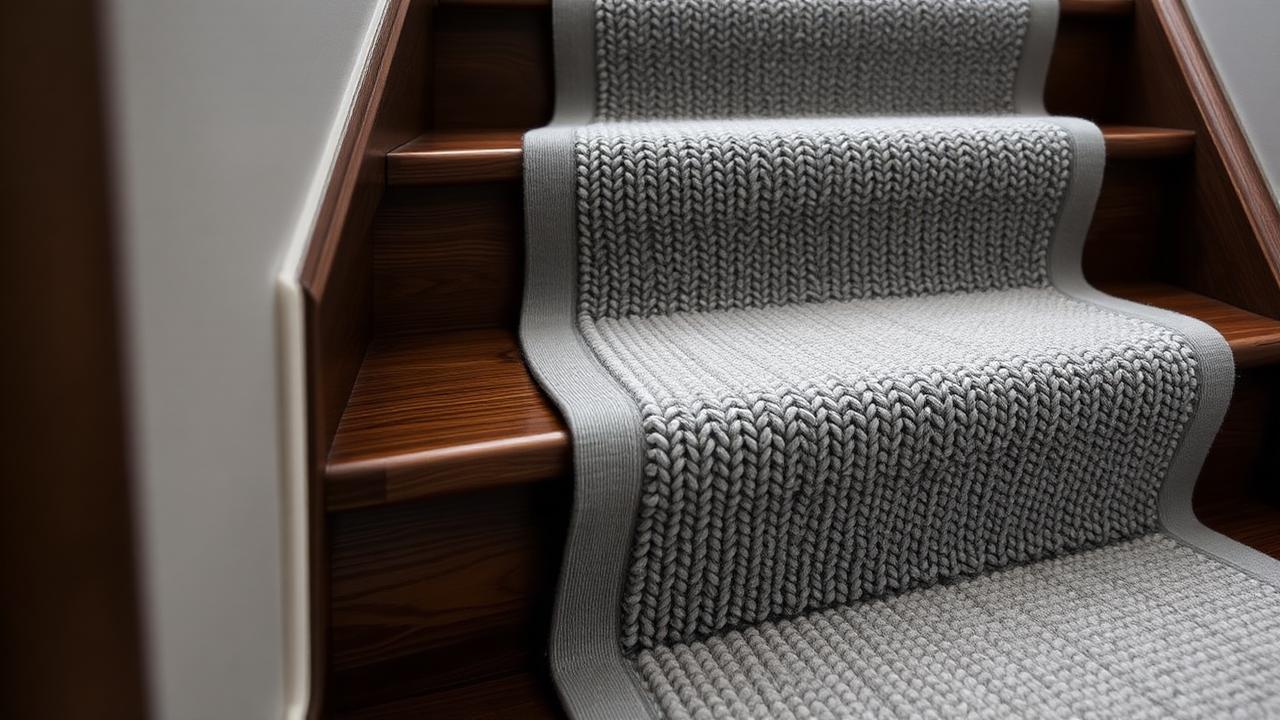
What makes coir different from other natural fibres
Coir comes from the husk of the coconut, not a stalk or grass, and that origin shows in how coarse the fibre feels compared with sisal, jute or seagrass. Where sisal has a fine, almost hair-like strand, coir strands are thicker, stiffer and noticeably more bristly to the touch, closer in feel to a stiff doormat than a piece of carpet - because in many cases that's a close relative of exactly what it's used for elsewhere in the home. On a stair, that bristle texture translates into real toughness: coir resists abrasion better than any other common natural fibre used for runners, which is why I'll still recommend it for a heavily used back-stairs or utility flight where looks matter less than lifespan.
It's rarely the first choice for a formal front staircase, though, because that coarse texture is genuinely uncomfortable underfoot for bare feet, and the fibre's natural colour range runs to browns and tans rather than the wider palette available in wool or synthetic runners. Where coir does shine visually is in a farmhouse, rustic or coastal scheme where the rough, honest texture is exactly the look being aimed for.
Abrasion resistance, moisture and rot risk
Coir's headline strength is abrasion resistance - the fibre is dense, stiff and doesn't crush or flatten the way softer natural fibres can under repeated foot traffic, so a coir runner on a busy stairs will often outlast a comparable sisal or wool one purely in terms of pile wear. Where it loses ground is moisture handling. Coir absorbs water readily and, worse, is genuinely prone to mould and mildew if it stays damp, far more so than sisal, seagrass or a synthetic fibre. I would never fit coir anywhere near a leaking roof, an unheated stairwell prone to condensation, or a household that mops nearby floors with a very wet mop, because trapped moisture under a coir runner can rot the backing within a season.
Slip resistance on coir is reasonably good thanks to that coarse, textured surface, which grips a shoe sole better than seagrass's smooth weave. That's a genuine safety plus on stairs, though the trade-off is that the same coarse texture sheds small fibre bits for the first few months after installation, so expect a bit more vacuuming than with other materials while it beds in.
Keep coir dry
Coir is the natural fibre most at risk of mould if it stays damp. Avoid it in unheated, poorly ventilated stairwells or anywhere near a recurring damp problem, and dry any spill immediately rather than letting it sit.
How much runner do I need?
Using a US worked example: 13 steps, 10 in tread run, 7.5 in riser height, and a 0.875 in nosing wrap allowance since coir's stiffer weave needs a touch more than a soft pile but less than seagrass's flatter weave. Per step: 10 + 7.5 + 0.875 = 18.375 in. Multiply by 13 steps: 238.9 in, or 19.9 ft. Add a 24 in finishing allowance (12 in top and bottom) for 262.9 in, or 21.9 ft, then apply an 8% waste margin, common for coir because it's often sold with a heavier fringed or whipped edge that needs trimming square: 21.9 x 1.08 = 23.7 ft, so order around 24 ft.
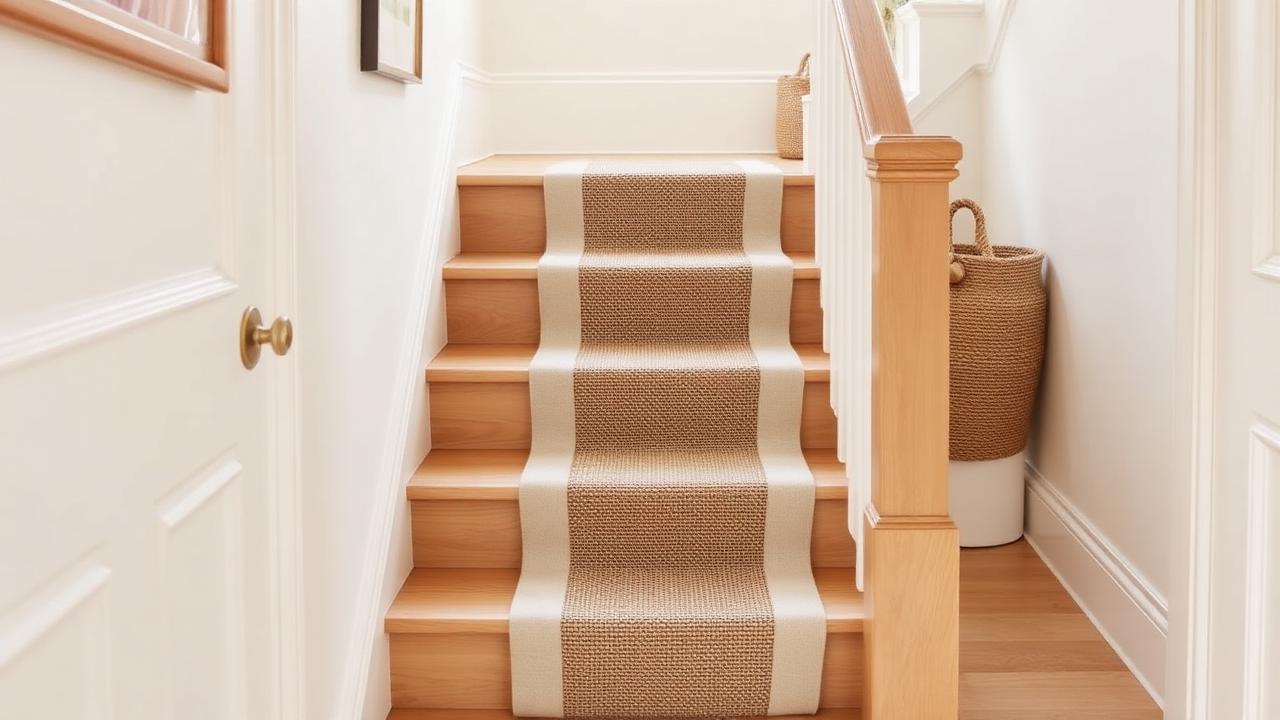
The UK metric version: 25 cm tread, 19 cm riser, 2.2 cm nosing wrap, giving 46.2 cm per step. Across 13 steps that's 600.6 cm, plus 60 cm finishing allowance for 660.6 cm, then an 8% waste margin brings the total to roughly 7.1 m. As with any natural fibre, run your own tread and riser numbers, since a stair runner calculator applies exactly this sequence and flags if your particular staircase needs a bigger allowance for turns or winders.
| Measurement | US (in/ft) | UK (cm/m) |
|---|---|---|
| Tread run | 10 in | 25 cm |
| Riser height | 7.5 in | 19 cm |
| Nosing wrap per step | 0.875 in | 2.2 cm |
| 13-step subtotal | 19.9 ft | 6.0 m |
| Plus finishing allowance | 21.9 ft | 6.6 m |
| With 8% waste margin | ~24 ft | ~7.1 m |
Know your numbers in 30 seconds
Enter your step count, tread depth and riser height — the stair runner calculator gives you the exact length to order, in metres and feet, with waste included.
Open the stair runner calculatorBest and worst uses for coir on stairs
- Good fit: back stairs, utility flights, boot rooms, rustic or coastal schemes.
- Good fit: households wanting maximum abrasion durability on a budget.
- Poor fit: bathrooms-adjacent stairwells or anywhere prone to damp.
- Poor fit: households sensitive to a coarse, bristly texture underfoot.
- Always fit with a rubber-backed or firm pad and check for adequate ventilation behind the runner.
Cost and cleaning in practice
Coir sits at the affordable end of the natural fibre range, typically the cheapest per linear foot of the common stair runner materials because coconut husk is an agricultural by-product rather than a purpose-grown crop. That price advantage is real, but weigh it against the shorter realistic lifespan in anything other than a dry, well-ventilated stairwell, and against the fact that most suppliers offer a narrower range of weaves and borders than they do for sisal or wool.
For cleaning, vacuum regularly on a setting without a beater bar, since coir's stiff strands can be pulled and frayed by a rotating brush. Spot-clean spills immediately with a dry or barely damp cloth and never let liquid sit, and consider a light annual professional clean if the runner is in a busy hallway-to-stairs run. If you're comparing coir against the wider field of stair runners, it's worth reading a broader materials guide before ordering, since the right choice usually comes down to how dry the stairwell stays and how much bare-foot comfort matters to your household.
Whatever you decide, get the numbers first: the stair runner calculator doubles as a stair runner length calculator, adding nosing wrap, landings, winders, pattern repeat and waste so you order the right length the first time.
Frequently asked questions
Is coir a durable stair runner material?
Yes, coir has the best abrasion resistance of the common natural fibres used for stair runners, thanks to its coarse, stiff strands, which is why it's often chosen for heavily used back stairs or utility flights where lifespan matters more than softness underfoot.
Is coir comfortable to walk on barefoot?
Not especially - coir is noticeably rougher and more bristly than sisal, seagrass, wool or any synthetic runner, so it suits a household that prioritises durability over softness, or a stairwell that's rarely walked barefoot.
Does coir get moldy?
It can, more readily than sisal, seagrass or synthetic fibres, because coir absorbs moisture and doesn't dry as quickly. Keep it out of damp, poorly ventilated stairwells and blot any spill immediately rather than letting it soak in.
What colours does coir come in?
Coir's natural fibre colour runs from light tan to deep brown, and it takes dye less readily than wool or synthetic fibres, so most coir runners are sold in natural tones with occasional simple border colours rather than a full colour range.
How much does a coir stair runner cost compared with sisal?
Coir is typically the cheapest of the common natural fibre options per linear foot, since coconut husk is a low-cost agricultural by-product, though sisal usually offers a softer feel and a wider range of weaves and colours for a moderate premium.
How much coir runner do I need for 13 steps?
For a 13-step flight with 10 in (25 cm) treads and 7.5 in (19 cm) risers, budget around 23-24 ft (7-7.1 m) including nosing wrap, top and bottom finishing allowance and an 8% waste margin for edge trimming.
Is coir slip resistant on stairs?
Reasonably so - its coarse, textured surface grips a shoe sole better than a smooth fibre like seagrass, though it should still be fitted over a proper stair pad and, ideally, secured with rods for extra hold at the nosing.
Can coir be used on a curved or winding staircase?
It's possible but not ideal. Coir's stiff, coarse weave doesn't mould around a winder tread as neatly as a softer natural fibre or a wool pile, so a straight flight is generally the better application for this material.
Know your numbers in 30 seconds
Enter your step count, tread depth and riser height — the stair runner calculator gives you the exact length to order, in metres and feet, with waste included.
Get your exact length with the stair runner length calculatorReady for real prices?
Get quotes from vetted stair runner suppliers and fitters near you. Free, no account, no obligation.
Every guide is written from hands-on measuring and fitting experience, checked against the calculator’s own maths, and re-reviewed whenever prices or methods change. Read our editorial standards.