

What cotton runners are
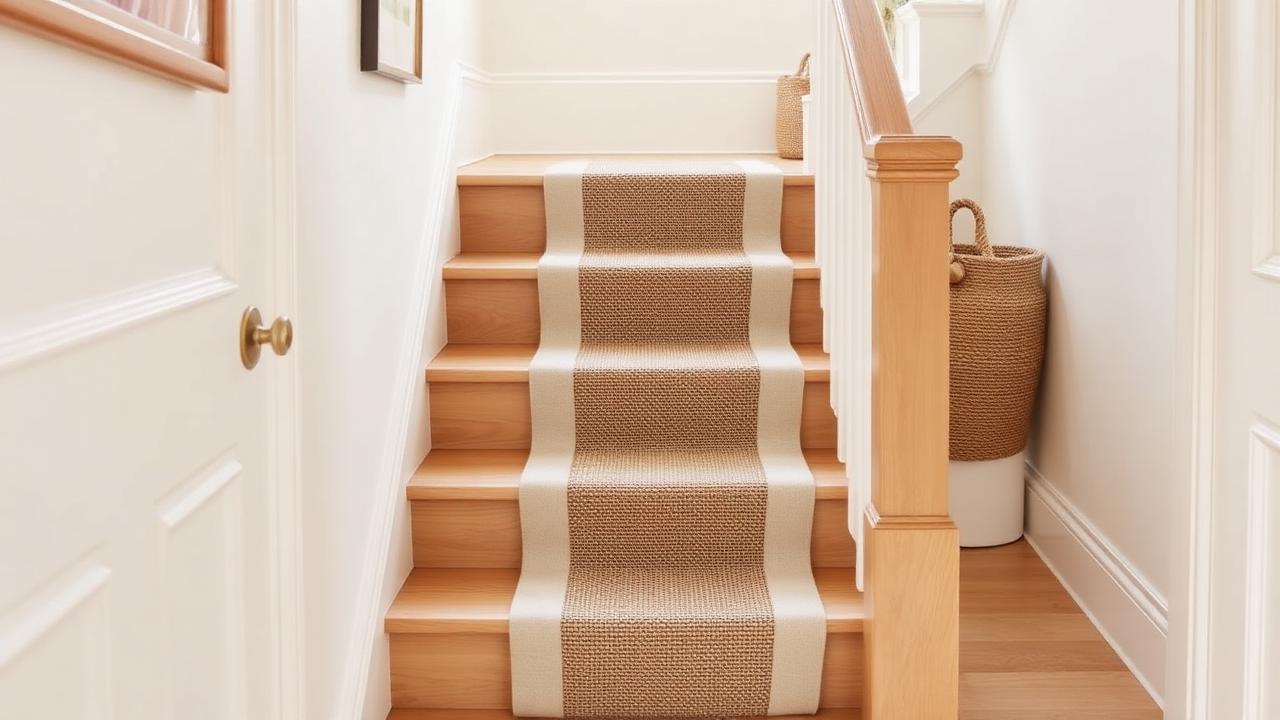
Cotton stair runners are almost always flatwoven, often in a dhurrie or rag-rug style with stripes or simple geometric patterns, rather than a piled carpet construction. This keeps them thin, lightweight, and in many cases genuinely machine washable in sections, which is unusual among stair runner materials.
Spec sheet
| Property | Typical value |
|---|---|
| Construction | Flatweave, dhurrie-style |
| Pile | None (flatweave) |
| Abrasion rating | Fair to poor for daily heavy traffic |
| Washability | Good, some machine washable |
| Roll widths | 60cm–80cm common, made-to-length runs |
| Price per linear ft (US) | $8–$25 |
Where cotton works and where it does not
- Good: guest staircases, coastal or holiday homes, nurseries and low-traffic upper floors.
- Good: anyone wanting a genuinely machine-washable runner for muddy boots or pet accidents on a lightly used flight.
- Poor: main family staircase with daily heavy foot traffic, since the flatweave has no pile to absorb impact.
- Poor: long-term investment runners, since cotton typically needs replacing sooner than wool, nylon or sisal.
Know your numbers in 30 seconds
Enter your step count, tread depth and riser height — the stair runner calculator gives you the exact length to order, in metres and feet, with waste included.
Open the stair runner calculatorCotton needs a slip-resistant backing on stairs
A lightweight flatwoven cotton runner without a rubberised or non-slip backing can shift underfoot on stairs. Always confirm backing type and consider double-sided stair tape or staples regardless.
Durability at the nosing
Because cotton flatweave has no pile height to compress, wear shows as thinning and colour loss at the fold over the nosing rather than pile crush. Expect visible wear within 2 to 4 years on a daily-use staircase, considerably faster than piled wool or nylon.
Wear rating and warranty comparison
Cotton is rarely sold with a formal wear warranty for stair use because mills consider it a decorative rather than heavy-duty fibre; where a warranty exists it is usually limited to manufacturing defects rather than wear, and most suppliers will openly recommend cotton only for low-traffic or occasional-use staircases rather than a family's main flight.
| Use case | Realistic lifespan on stairs | Suitability |
|---|---|---|
| Main family staircase, daily use | 2-4 years before visible wear | Not recommended |
| Guest or secondary staircase | 5-8 years | Good |
| Occasional-use or seasonal stairs | 8-12 years | Very good |
Care and cleaning specifics
Cotton's biggest care advantage is that many woven cotton runners can be spot-cleaned with mild detergent and water without the staining risk of sisal or jute, but the fibre is not colourfast in all dye lots, so always test an inconspicuous corner first. Cotton also crushes and dents under furniture or heavy foot traffic faster than wool or synthetics, so periodic light brushing to lift the pile helps extend its life.
- Vacuum weekly on a low-suction setting to avoid pulling loose weave threads.
- Blot spills immediately; cotton absorbs liquid quickly, which can lead to staining if left.
- Avoid steam cleaning coloured cotton runners, as heat can set or shift dye.
- Rotate runners with reversible weaves periodically to even out wear if the design allows it.
Cost ranges and typical uses
| Use case | Price per linear ft (US) | Typical lifespan |
|---|---|---|
| Basic printed cotton flatweave | $8-$14 | 2-4 years, main stair |
| Dhurrie-style woven cotton | $14-$25 | 3-6 years, main stair |
| Any cotton, guest/secondary stair | $8-$25 | 6-12 years |
Trade tips for cotton on stairs
- Always add a rubberised anti-slip backing strip beneath cotton runners, since most are sold without one.
- Fix at every step, not just top and bottom; lightweight cotton shifts more than heavier wool or synthetic runners.
- Keep a spare offcut for future spot-repair patches, since cotton dye lots vary and a later top-up order may not match exactly.
Cotton versus a printed synthetic runner
A printed synthetic runner can mimic cotton's casual striped or patterned look while offering much better stain resistance and a longer realistic life on stairs, making it worth comparing directly against cotton before committing. The main reason to still choose real cotton is the genuinely soft, natural hand and machine washability that synthetics cannot fully replicate, which matters most in nurseries or bedrooms leading to a secondary stair.
| Factor | Cotton | Printed synthetic |
|---|---|---|
| Feel underfoot | Soft, natural | Softer synthetic hand, less authentic |
| Stain resistance | Fair | Good to excellent |
| Washability | Good, some machine washable | Spot clean only, generally |
| Typical stair lifespan | 2-5 years, daily use | 5-10 years, daily use |
Layering cotton runners for easy replacement
Some households deliberately treat a cotton stair runner as a semi-disposable, easily refreshed layer, buying a slightly oversized flatweave and fixing it loosely enough to lift and replace every few years rather than committing to a fully fitted, stapled installation. This approach suits a rented property or a household that likes to change colour schemes periodically, though it sacrifices some of the security of a properly fixed runner.
Cotton in nurseries and children's bedroom stairs
Cotton's soft hand and washability make it a genuinely popular choice for a short flight of stairs leading to a nursery or child's bedroom, where traffic is lighter than a main staircase and the ability to wash off a spilled bottle or a muddy shoe print matters more than a 15-year lifespan. Pair it with a securely fixed rubberised backing regardless, since safety at this specific location matters as much as anywhere else in the home.
Whatever you decide, get the numbers first: the stair runner calculator doubles as a stair runner length calculator, adding nosing wrap, landings, winders, pattern repeat and waste so you order the right length the first time.
Frequently asked questions
Can cotton runners be layered or swapped out easily?
Yes, some households intentionally fit a cotton runner with lighter, more removable fixing so it can be lifted and replaced every few years, which suits rented properties or frequently refreshed colour schemes, though it is less secure than a fully stapled install.
Is a printed synthetic runner a better choice than real cotton?
For durability and stain resistance, generally yes, but real cotton offers a softer, more authentic natural hand and genuine washability that printed synthetics cannot fully match.
Can a cotton runner be dyed or overdyed to refresh its colour?
Some plain woven cotton runners can be overdyed by a specialist, though patterned or striped designs rarely take an even overdye. It is usually more cost-effective to replace a worn cotton runner than to attempt a re-dye given the fibre lasts only a few years anyway.
Is cotton good for a stair runner?
It works well for low-traffic or secondary staircases and offers genuine washability, but it wears faster than wool, nylon or sisal on a busy main staircase.
Can you wash a cotton stair runner?
Many flatwoven cotton runners can be spot cleaned or machine washed in sections if removable, which is a real advantage over piled materials that cannot be washed at all.
How long does a cotton stair runner last?
Around 2 to 5 years on a daily-use staircase, since the flatweave has no pile to cushion nosing impact, though it can last much longer on a lightly used flight.
Does cotton need a non-slip backing on stairs?
Yes, most cotton flatweave runners are thin and light, so a rubberised backing plus secure fixing at every step is important to prevent shifting underfoot.
Is cotton durable enough for a main staircase?
Generally no. Cotton is a soft, attractive natural fibre but wears faster than wool, sisal or nylon under daily stair traffic. It suits secondary, guest or occasional-use staircases far better than a family's main flight of stairs.
Know your numbers in 30 seconds
Enter your step count, tread depth and riser height — the stair runner calculator gives you the exact length to order, in metres and feet, with waste included.
Check if cotton suits my stairsReady for real prices?
Get quotes from vetted stair runner suppliers and fitters near you. Free, no account, no obligation.
Every guide is written from hands-on measuring and fitting experience, checked against the calculator’s own maths, and re-reviewed whenever prices or methods change. Read our editorial standards.