

The core structural difference
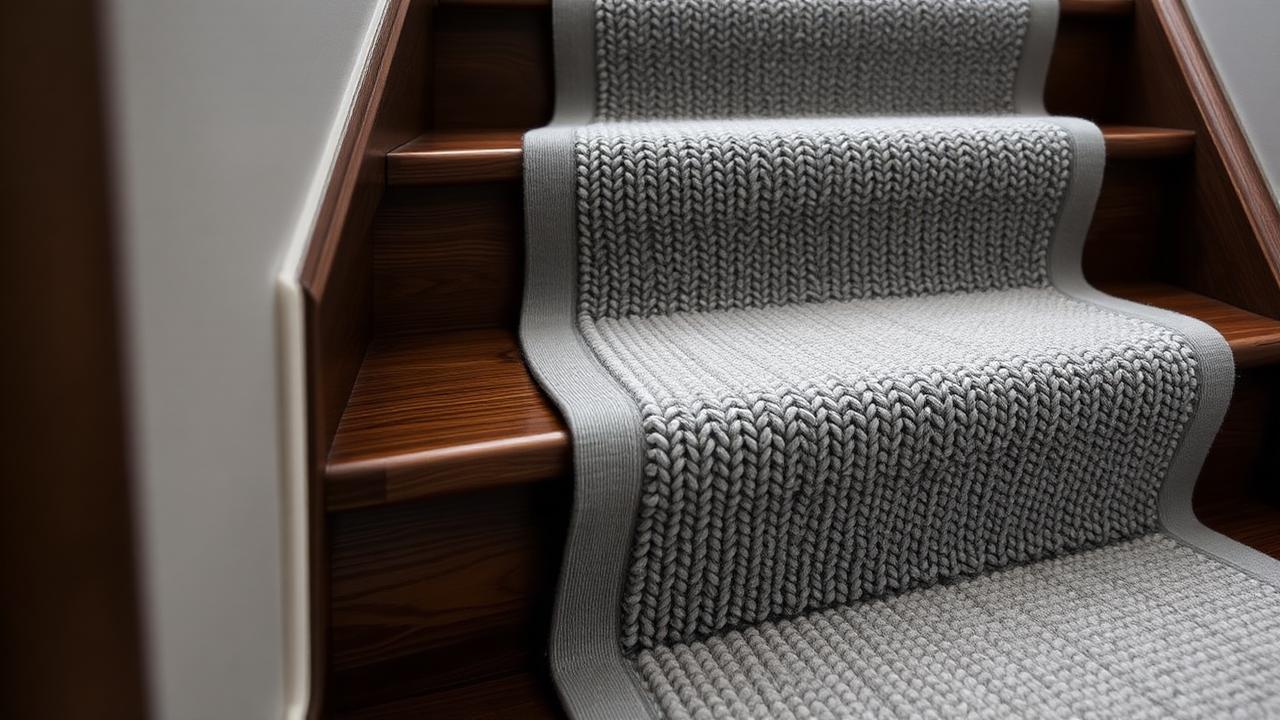
Flatweave carpet, including sisal, jute, seagrass and dhurrie cotton, is woven flat with no raised loops or cut yarn ends, so the wear surface is the weave itself. Cut pile carpet has yarn tufted through a backing and sheared at the top, creating a soft, upright surface that shows a shading effect but compresses under repeated pressure.
Side-by-side comparison
| Factor | Flatweave | Cut pile |
|---|---|---|
| Nosing wear resistance | Excellent, no pile to crush | Good to fair, depends on density |
| Feel underfoot | Firmer, textured | Soft, plush |
| Pattern and colour clarity | Crisp on straight lines | Rich depth, softer pattern edges |
| Shading and traffic marks | Minimal | Visible, especially on plain colours |
| Typical price per ft (US) | $14–$45 | $18–$60 |
| Best pile height for stairs | N/A, flat | Low, 5–8mm ideal |
Why cut pile shows traffic patterns
Cut pile yarn leans slightly in the direction it is walked, creating light and dark shading known as pile reversal or watermarking. This is a cosmetic effect, not damage, but it is more visible on plain, solid-colour cut pile than on flatweave or patterned constructions, which is why many busy stair runners use a fleck, stripe or pattern to disguise it.
Know your numbers in 30 seconds
Enter your step count, tread depth and riser height — the stair runner calculator gives you the exact length to order, in metres and feet, with waste included.
Open the stair runner calculator- Choose flatweave for maximum nosing durability and a firmer, more grounded feel.
- Choose cut pile for a plush, luxurious feel where the staircase gets moderate rather than heavy daily use.
- Loop pile (neither fully flat nor cut) is a middle ground, often the best all-round choice for stairs.
- Pattern or fleck helps both constructions hide dirt and shading between cleans.
Loop pile is the practical compromise
If choosing between pure flatweave and pure cut pile feels too binary, a tight low loop pile in wool or nylon combines much of flatweave's nosing durability with more cushioning than a true flatweave.
How each behaves at the nosing over five years
Flatweave has no pile to crush, so its five-year wear story is about fibre abrasion and fold creasing at the nosing edge, whereas cut pile's story is about pile crush and recovery. A quality wool cut pile will spring back from nosing compression for many years, while a flatweave like sisal will show a slow, steady thinning of the weave itself at the same point, with no springing back once fibres are gone.
| Construction | 5-year nosing behaviour | Recovers when uncrushed? |
|---|---|---|
| Flatweave (sisal, jute) | Gradual fibre thinning/fraying | No, wear is permanent |
| Cut pile wool/nylon | Pile crush, partial to full recovery | Yes, springs back with vacuuming |
| Loop/berber pile | Minimal crush, occasional pulled loops | Yes, very stable |
Buying checklist with price bands
Flatweaves and cut piles are priced on different scales because the raw fibre and weaving process differ substantially; use this checklist to compare fairly rather than by price per foot alone.
- Compare face weight (g/m2), not just price, since a lightweight cut pile can wear worse than a dense flatweave.
- Ask whether the flatweave has a woven or bonded backing, which affects durability at tight turns.
- For cut pile, ask for the pile height and density together; tall, sparse pile crushes faster than short, dense pile.
- Get a physical sample of both constructions under your actual stair lighting before deciding.
| Construction | Price per linear ft (US) | Price per linear m (UK) |
|---|---|---|
| Flatweave (sisal/jute) | $12-$45 | £18-£65 |
| Cut pile (wool/nylon) | $25-$70 | £35-£100 |
Cost per year across constructions
Because flatweave and cut pile draw from different fibre pools, a fair cost comparison should use cost per year of expected life rather than sticker price. A $30/ft sisal flatweave lasting 12 years costs about $2.50 per foot per year, while a $35/ft wool-nylon cut pile lasting 18 years costs closer to $1.95 per foot per year, illustrating why cut pile in a resilient fibre can beat flatweave on long-term value despite a similar upfront price.
Common mistakes when choosing between them
- Assuming flatweave is always cheaper; premium natural flatweaves can cost more than mid-range cut pile.
- Choosing cut pile purely for softness without checking pile height and density together.
- Not testing a physical sample fold for either construction before committing to a full flight order.
- Overlooking that a patterned cut pile hides shading and dirt nearly as well as flatweave, narrowing the practical gap between them.
How each construction handles a runner-width seam
Wide staircases sometimes need two lengths of narrower-loom carpet seamed together to reach the full width, and flatweave and cut pile handle this differently. Flatweave seams are more visible since there is no pile to disguise the join, while a denser cut pile can hide a well-made seam almost invisibly. If a seam is unavoidable on a wide stair, cut pile is generally the more forgiving choice.
Maintenance routine differences
| Task | Flatweave | Cut pile |
|---|---|---|
| Weekly vacuuming | Suction only, avoid beater bar on natural fibre | Beater bar generally fine on synthetic/wool blends |
| Spot cleaning | Blot only on natural fibres, avoid water on sisal/jute | Standard carpet spot cleaners usually safe |
| Professional cleaning | Dry-compound methods on natural fibre | Hot water extraction generally safe |
| Typical rotation/refresh | Rarely rotates, fixed weave pattern | Occasional light brushing lifts crushed pile |
Blending both constructions in one home
It is common to run a durable flatweave like sisal on a main staircase and a softer cut pile in adjoining bedrooms or a landing seating area, using a matching colour palette rather than the same construction throughout. This lets each area use the construction best suited to its actual traffic level rather than forcing one choice across the whole home.
Whatever you decide, get the numbers first: the stair runner calculator doubles as a stair runner length calculator, adding nosing wrap, landings, winders, pattern repeat and waste so you order the right length the first time.
Frequently asked questions
Does a seam show more on flatweave or cut pile?
A seam is generally more visible on flatweave since there is no pile to disguise the join; a dense cut pile can hide a well-made seam almost invisibly, making it the more forgiving choice on wide stairs needing seamed widths.
Can flatweave and cut pile be cleaned the same way?
No. Many natural fibre flatweaves need dry-compound or blot-only cleaning and no beater-bar vacuuming, while wool or synthetic cut pile generally tolerates standard vacuuming and hot water extraction cleaning safely.
Is flatweave or cut pile better for stairs?
Flatweave generally wears longer at the nosing since there is no pile to crush, but cut pile offers a softer, more luxurious feel. Loop pile is a practical middle ground for many stairs.
Does cut pile show footprints on stairs?
Yes, cut pile can show pile reversal or shading in traffic areas, more visible on plain solid colours than on flecked or patterned constructions.
Which lasts longer on a busy staircase, flatweave or cut pile?
Flatweave typically lasts longer under heavy daily traffic because it has no loops or fibres to permanently crush at the nosing edge.
Is loop pile the same as flatweave?
No. Loop pile has uncut yarn loops standing above the backing, while flatweave is woven flush with no raised loops at all. Loop pile sits between flatweave and cut pile in feel and durability.
Which lasts longer on stairs, flatweave or cut pile?
A dense, quality cut pile in wool or nylon usually outlasts a flatweave on a busy main staircase because it can crush and recover repeatedly, while flatweave fibre wears away permanently at the nosing fold. Flatweave can still outlast a low-quality, sparse cut pile at the same price point.
Know your numbers in 30 seconds
Enter your step count, tread depth and riser height — the stair runner calculator gives you the exact length to order, in metres and feet, with waste included.
Compare cost by constructionReady for real prices?
Get quotes from vetted stair runner suppliers and fitters near you. Free, no account, no obligation.
Every guide is written from hands-on measuring and fitting experience, checked against the calculator’s own maths, and re-reviewed whenever prices or methods change. Read our editorial standards.