
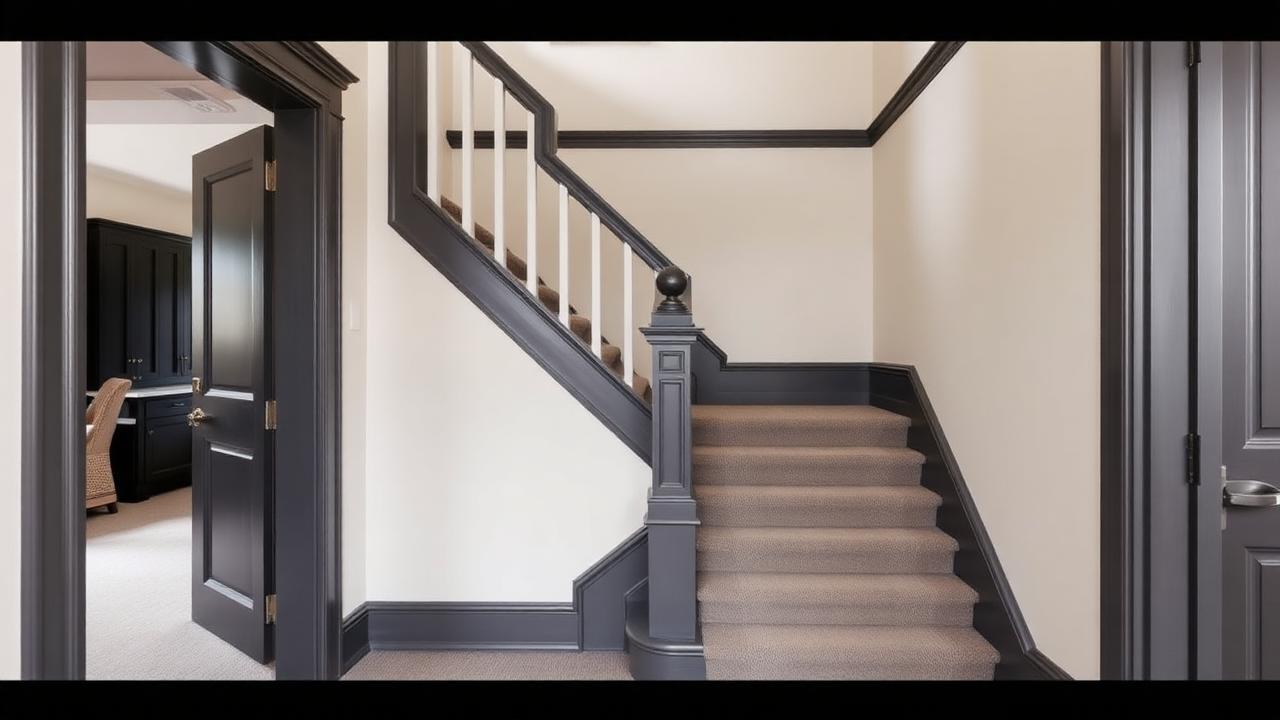
Two approaches to a landing
| Approach | Description | Best for |
|---|---|---|
| Separate landing piece | Runner and landing carpet fitted independently, joined at a seam | Different fibre or colour on the landing |
| Continuous run, mitred fold | One piece turns the corner with a folded or seamed mitre | Matching flooring, seamless look |
| Butt join at the turn | Runner ends and restarts at the landing edge, simple seam | Budget or DIY-friendly jobs |
Measuring the transition
Measure the landing depth separately from the stair flight, and take the measurement at both the inside and outside of any turn, since they are rarely equal. On a quarter or half landing, add the width of the landing itself to your total length calculation, not just the flights either side of it.
Know your numbers in 30 seconds
Enter your step count, tread depth and riser height — the stair runner calculator gives you the exact length to order, in metres and feet, with waste included.
Open the stair runner calculatorFixing across the landing
- Fit and secure the lower flight up to the landing edge first.
- Cut the landing piece to size, allowing extra for tucking under any gripper or against a wall.
- Join the landing piece to the flight, either by careful seaming or a mitred fold, keeping any pattern aligned.
- Secure the landing section with staples or gripper around its full perimeter, since it takes multi-directional foot traffic.
- Fit and secure the upper flight last, working down onto the landing join.
Pattern matching across a turn
- Striped and directional patterns rarely line up perfectly across a 90-degree turn; decide in advance whether to accept a break or rotate the landing piece to look intentional.
- Plain, textured and most natural fibre runners have no matching issue and are the easier choice for a first landing job.
- Dry-lay the landing piece before cutting to check how any pattern falls.
A landing takes more wear than a tread
People pivot, pause and sometimes drag furniture across a landing, so fix it generously around its full edge and consider a slightly firmer underlay there than on the stair treads.
Extra tools for a landing job
- A carpenter's square or large protractor to check and mark any mitred fold accurately.
- Extra seam tape or adhesive beyond what a straight flight needs, since a landing typically has more joins.
- A wider straightedge for the longer, unobstructed cuts a landing piece often requires.
- A spare offcut of the landing piece kept aside in case of a future repair, since landing sections wear differently from stair treads. Keep any offcut in a labelled bag with the purchase date and supplier, since matching a discontinued pattern or dye lot years later is often impossible without it.
When to call a professional
A simple quarter landing with a plain runner is a realistic DIY project for someone comfortable fitting a straight flight. A winding landing, a half-landing with two turns, or a strongly patterned runner needing precise matching is where most DIYers find professional fitting worth the added cost.
Timeline and cost impact
Decisions around diy stair runner installation with a landing affect both how long the job takes and its final bill. As a rule, anything that adds measuring or cutting complexity adds labour hours, and labour is usually the larger share of an installed price once the carpet itself is accounted for.

| Scenario | Typical added time | Typical added cost (US / UK) |
|---|---|---|
| Straightforward straight flight | No change | $0 |
| Extra measuring or templating step | 30-60 minutes | $40-90 / £30-70 |
| Substrate repair needed first | 1-3 hours | $75-250 / £60-200 |
| Fitter call-out for a second opinion | N/A, usually free or low cost | $0-75 / £0-60 |
Troubleshooting common problems
Even a carefully planned job related to diy stair runner installation with a landing can go wrong in a handful of predictable ways. Most issues trace back to a measurement taken at the wrong point, a substrate that was not properly checked before work began, or a step skipped to save time early on. Catching these early is far cheaper than correcting them after the runner is fixed in place.
| Symptom | Likely cause | Fix |
|---|---|---|
| Runner sits crooked after a few steps | Centre line not re-checked partway down the flight | Re-mark the centre line every 4-5 steps and adjust |
| Fabric bags or ripples at the nosing | Insufficient tension when fixing at the riser base | Pull taut before fixing and re-do that section |
| Edges fray within weeks | Binding not sealed or wrong backing for the fibre | Reseal edges or have a fitter re-bind |
| Runner shifts underfoot | Pad or gripper not anchored to solid timber | Check substrate and re-fix into sound wood |
Handling a half-landing with two turns
A half-landing, where the staircase turns 180 degrees over a single landing rather than a simple 90-degree quarter turn, roughly doubles the pattern-matching and measuring complexity of diy stair runner installation with a landing. Both flights meet the same landing piece from opposite directions, so any directional pattern needs checking against both approaches, not just one. Most experienced DIYers treat a half-landing as the point where hiring a professional starts to make clear financial sense, since a mismatched or crooked landing piece here is highly visible from both flights simultaneously and is one of the more difficult mistakes to correct after the fact without lifting a large section of carpet.
Combining methods on a single staircase
It is entirely normal for one staircase to use more than one fixing method: staples on the timber treads and risers of the main flight, adhesive on a short tiled section by an entrance, and a releasable tape at a nosing fold that would not otherwise sit flat. Planning stair runner glue vs staples per section of the staircase, rather than committing to one method for the whole job, usually gives the best combination of hold, appearance and future flexibility.
A final sanity check before committing
Before starting diy stair runner installation with a landing, walk the intended route with a tape measure in hand one more time, checking that your planned material order actually covers the landing depth, both flights, and the extra waste allowance together. It is far easier to add ten more minutes of checking at this stage than to discover a shortfall once the runner has already been cut and partially fitted.
Storing offcuts for future landing repairs
A landing piece takes more varied foot traffic than a straight tread, so it is often the first section of a runner installation to show wear. Keep any offcut generated while fitting the landing, labelled with the date and supplier, since a landing-specific repair years later is one of the more common reasons homeowners go looking for a matching remnant that no longer exists in the current product range.
Whatever you decide, get the numbers first: the stair runner calculator doubles as a stair runner length calculator, adding nosing wrap, landings, winders, pattern repeat and waste so you order the right length the first time.
Still deciding on material, width or pattern? Our hub on stair runners compares weaves, widths, backings and fitting styles side by side, then hands the numbers straight to the calculator.
Frequently asked questions
Can I fit a stair runner across a landing myself?
Yes for a simple quarter landing with a plain runner, but a winding or half landing with a patterned runner is significantly harder to match and fix, and often worth hiring a professional for.
How do I measure a stair runner for a landing?
Measure the landing depth separately from each flight, taking the measurement at both the inside and outside edge of the turn since they are rarely the same, and add this to your total length.
Should the landing use the same runner piece as the stairs?
It can, using a mitred fold for a seamless look, or a separate joined piece, which is easier for DIY fitting and allows a different colour or fibre if wanted.
Does a landing need thicker underlay than the stairs?
A firmer pad is often used on a landing since it takes pivoting foot traffic and sometimes furniture, but thickness does not usually need to increase, just density.
What is the biggest mistake people make with this?
Rushing the measuring or prep stage. Most poor outcomes with diy stair runner installation with a landing trace back to a single measurement taken at the wrong point, or a substrate check skipped to save a few minutes, both far cheaper to fix before the runner is cut than after.
Know your numbers in 30 seconds
Enter your step count, tread depth and riser height — the stair runner calculator gives you the exact length to order, in metres and feet, with waste included.
Plan my landing transitionReady for real prices?
Get quotes from vetted stair runner suppliers and fitters near you. Free, no account, no obligation.
Every guide is written from hands-on measuring and fitting experience, checked against the calculator’s own maths, and re-reviewed whenever prices or methods change. Read our editorial standards.