
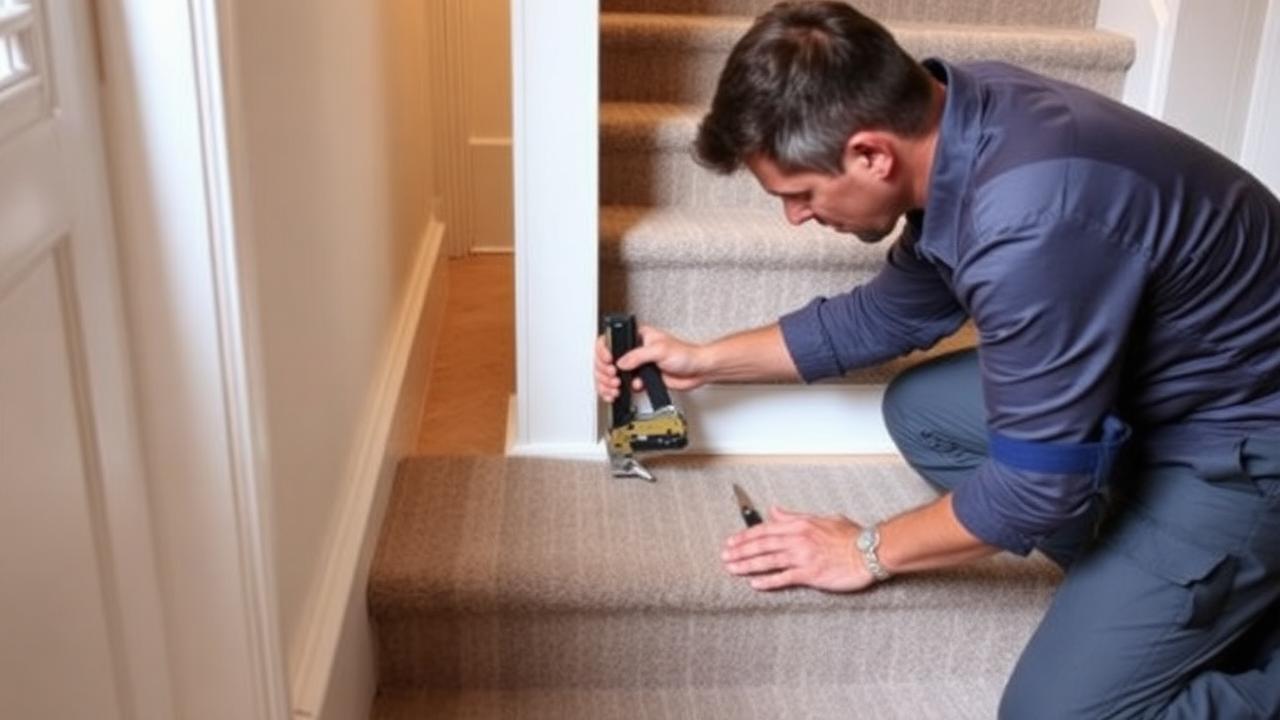
The enduring appeal of felt on stairs
Felt underlay is the oldest type of carpet cushioning still in widespread use today. In an age of high-tech foams and recycled rubber, felt remains the go-to choice for traditional fitters working with premium woven wool stair runners. Unlike foam or rubber, which rely on air or elasticity for comfort, felt relies on the sheer density of its fibres. It is typically made from a mixture of recycled wool, jute, and synthetic fibres that have been needle-punched together to form a solid, flat mat. This lack of 'spring' is exactly why it is so highly valued for stair installations.
When you are fitting a high-end Axminster or Wilton runner, you want the carpet to sit as flat and stable as possible. A 'bouncy' underlay can cause a woven carpet to stretch and move, which eventually leads to the pattern becoming distorted or the seams opening up. Felt provides a rock-solid foundation that allows the fitter to tension the carpet correctly. When you step onto a stair fitted with felt, it feels firm and secure, reminiscent of the grand staircases found in heritage homes and hotels. If you are using a stair runner calculator to plan a high-spec project, felt should be at the top of your list for underlay options.
Another unique property of felt is its ability to 'grip' the back of the carpet. The fibrous surface of the felt interlocks slightly with the jute backing of a traditional runner, creating a secondary layer of friction that helps prevent the runner from shifting. This is particularly important on stairs, where the constant upward and downward pressure can cause a runner to 'walk' or slide over time. By using felt, you are adding an extra layer of security that foam and rubber simply can't provide. It is a traditional solution that still outperforms many modern alternatives in specific applications.
How much runner do I need?
Precision is key when ordering expensive woven runners. For a standard US staircase of 13 steps, with 10 in treads and 7.5 in risers, and adding a 0.75 in nosing wrap, you have 18.25 in per step. Totaling 237.25 in for the flight. Add 12 in at the top and 12 in at the bottom for finishing (24 in total), and you arrive at 261.25 in (21.77 ft). With a standard 8% waste margin to cover cuts and alignment, you should order 23.5 ft.
For UK installations, using metric: a 25 cm tread and 19 cm riser with a 1.9 cm wrap gives 45.9 cm per step. Over 13 steps, that is 596.7 cm. Add a 60 cm finishing allowance, and the subtotal is 656.7 cm. Including an 8% waste margin, the final figure is 7.09 m. A stair runner length calculator is particularly helpful here if you are dealing with a 'bullnose' bottom step or complex winders, as these can significantly increase the required yardage.
| Measurement | US (in/ft) | UK (cm/m) |
|---|---|---|
| Tread run | 10 in | 25 cm |
| Riser height | 7.5 in | 19 cm |
| Nosing wrap | 0.75 in | 1.9 cm |
| Per-step total | 18.25 in | 45.9 cm |
| 13 steps | 19.77 ft | 5.97 m |
| Finishing | 21.77 ft | 6.57 m |
| Total (8% waste) | 23.5 ft | 7.09 m |
Know your numbers in 30 seconds
Enter your step count, tread depth and riser height — the stair runner calculator gives you the exact length to order, in metres and feet, with waste included.
Open the stair runner calculatorThe technical benefits of felt density
Felt underlay is usually sold by weight rather than thickness, with 40oz and 50oz (per square yard) being the most common grades. For stairs, I always recommend at least a 42oz or 50oz felt. The higher the weight, the denser the felt and the better it will protect your runner. Unlike foam, which can bottom out, felt remains supportive regardless of how much weight is applied. This makes it the absolute best choice for heavy-traffic commercial environments, such as hotels or offices, where the stairs are in constant use 24 hours a day.

Sound insulation is another area where felt shines. While rubber is good at impact noise, felt is excellent at absorbing airborne noise. It helps to deaden the 'echo' of a hallway, making the whole space feel more intimate and quiet. In older homes with thin walls, this can be a significant benefit. Furthermore, felt is a natural insulator. The wool and jute fibres trap air, providing a thermal barrier that keeps the stairs warm. While it doesn't have the high tog rating of PU foam, it offers a very respectable 2.0 to 2.5 tog, which is perfect for most residential applications.
One of the most important aspects of felt is its longevity. Unlike synthetic foams, which can crumble into dust after ten years, felt is incredibly stable. I have pulled up carpets that have been down for thirty years and found the felt underlay in almost perfect condition. This durability makes it a very cost-effective choice in the long run. If you are fitting stair runners that you expect to last for two decades, it makes sense to use an underlay that has the same lifespan. Felt is a 'fit and forget' product that provides consistent performance for the entire life of the carpet.
Recycled content and sustainability
Felt is inherently a sustainable product. Most of the fibres used in modern felt underlay are recycled. Offcuts from wool garment manufacturing, old carpets, and even recycled jute sacks are all shredded and repurposed into felt. This circular economy approach makes it a great choice for eco-conscious homeowners. Furthermore, because it is made from natural fibres, felt is largely biodegradable at the end of its very long life, unlike many synthetic alternatives that will sit in a landfill for centuries.
As a fitter, I also appreciate that felt doesn't 'off-gas' in the same way some synthetic products can. There are no chemical smells or volatile organic compounds (VOCs) to worry about, which is a major plus for families with young children or pets. It is a clean, natural-feeling product that fits perfectly with the aesthetic of a high-end wool runner. When you choose felt, you are choosing a product that is as good for the planet as it is for your home.
Fitter's Choice
For the ultimate luxury, I often recommend a 'combination' underlay – a layer of crumb rubber bonded to a layer of felt. This gives you the incredible durability of rubber with the traditional feel and grip of felt.
- Maximum stability for woven wool runners.
- Traditional, firm feel underfoot.
- High resistance to 'walking' or sliding.
- Excellent long-term durability (20+ years).
- Good airborne sound insulation.
- Natural thermal properties from wool and jute.
- Made from recycled fibres and biodegradable.
- Ideal for heritage and high-end residential projects.
Tips for fitting felt underlay
Fitting felt is slightly different from fitting foam. Because it is denser, you need to use longer staples (at least 10mm or 12mm) to ensure they penetrate through the felt and into the wood. I also recommend using a very sharp blade for cutting, as the tough jute and wool fibres can dull a blade very quickly. You want a clean, straight edge to ensure the runner sits perfectly flush. If your felt is slightly uneven, you can use a hammer to gently tap down any high spots before you lay the carpet.
Another tip is to make sure you don't overlap the felt layers. If you have a seam, it should be a 'butt' joint – where the two edges meet perfectly without overlapping. An overlap will create a visible hump in your runner that you will feel every time you walk on it. By taking the time to fit the underlay perfectly, you make the final carpet fitting much easier and the end result much more professional. Using a stair runner calculator ensures you have exactly the right amount of material to avoid unnecessary joins.
Finally, always check the moisture levels of your stairs before laying felt. Because it contains natural fibres like wool and jute, felt can absorb moisture if the stairs are damp (common in basement conversions). Ensure the area is completely dry and well-ventilated to prevent any issues with mould or mildew. In dry, well-ventilated hallways, felt will remain in perfect condition for decades, providing the best possible support for your beautiful stair runners.
Frequently asked questions
What is felt underlay made of?
It is usually a blend of recycled wool, jute, and synthetic fibres, needle-punched together to create a dense, firm mat.
Why is felt better for woven runners?
Woven runners like Wiltons or Axminsters need a firm, non-stretch base to maintain their shape and pattern alignment. Felt provides this stability better than foam.
Is felt underlay durable?
Extremely. It is arguably the most durable underlay type, often lasting 20-30 years without losing its shape or support.
Does felt provide good sound insulation?
Yes, it is excellent at absorbing airborne noise, helping to reduce the 'echo' in hallways and stairwells.
Is felt underlay eco-friendly?
Yes, it is made primarily from recycled fibres and is much more biodegradable than synthetic foam alternatives.
What weight of felt should I use for stairs?
I recommend at least a 42oz or 50oz weight for staircase installations to ensure adequate protection and support.
Can I use felt underlay with underfloor heating?
Yes, it is compatible, though it has a higher tog rating than rubber, so heat may take a little longer to transfer.
Is felt underlay more expensive than foam?
Generally yes, it is considered a premium product, but its longevity makes it very cost-effective over the long term.
Know your numbers in 30 seconds
Enter your step count, tread depth and riser height — the stair runner calculator gives you the exact length to order, in metres and feet, with waste included.
Size your runner with the stair runner calculatorReady for real prices?
Get quotes from vetted stair runner suppliers and fitters near you. Free, no account, no obligation.
Every guide is written from hands-on measuring and fitting experience, checked against the calculator’s own maths, and re-reviewed whenever prices or methods change. Read our editorial standards.