
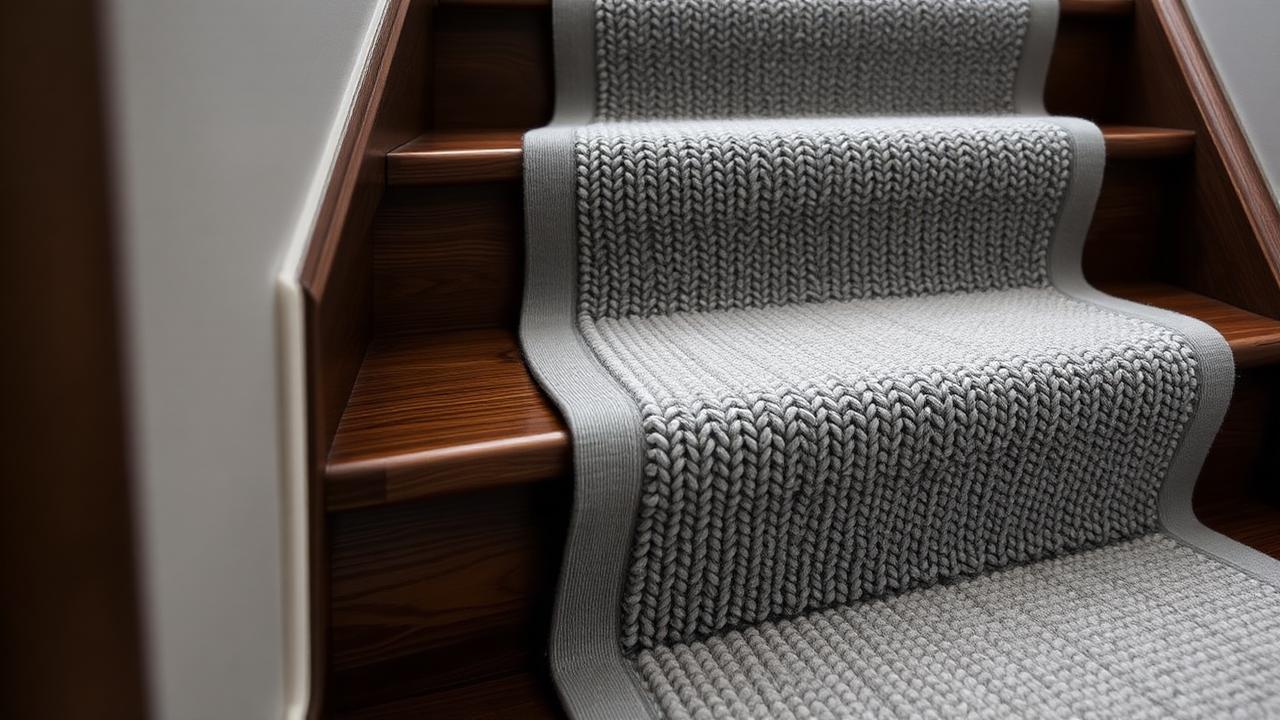
The Art of the Hand-Knotted Runner
Hand-knotted runners are created on a vertical loom, where individual yarns are tied around the warp threads to create the pile. This is a painstaking process that can take months for a single runner. The result is a 'true' rug construction, where the pattern is visible on the back just as clearly as on the front. On a staircase, this construction method offers a unique advantage: structural integrity. Unlike tufted runners that rely on glue to hold the fibres in place, a hand-knotted runner is held together by tens of thousands of individual knots. This means the runner will never delaminate or stretch out of shape, even under the most heavy-duty use.
One of the most appealing aspects of a hand-knotted piece is its 'abrash'—the subtle variations in colour that come from using hand-dyed yarns. This gives the runner a depth and soul that machine-made products lack. On a staircase, where the light changes as you move between floors, these tonal variations create a beautiful, shifting aesthetic. As a fitter, I always find that hand-knotted runners are the most rewarding to install; they have a weight and a drape that makes them sit perfectly on the stairs, conforming to the shape of the wood in a way that feels organic and high-end.
Materials: Silk, Wool, and Beyond
Most high-quality hand-knotted runners are made from wool, which is the perfect material for stairs due to its natural resilience and stain resistance. However, you will also find luxury options that incorporate silk or bamboo silk. While these add a stunning shimmer, I often caution clients about using too much silk on a main staircase. Silk is more delicate than wool and can be slippery. A 'wool and silk' blend is often the best compromise, giving you the durability of wool in the high-impact areas with the lustrous highlights of silk in the pattern. If you have pets or young children, a 100% hand-spun wool runner is almost always the better choice for long-term peace of mind.
The quality of the wool also matters. Hand-knotted runners often use 'long-staple' wool, which is harvested from sheep living in high altitudes. This wool is naturally richer in lanolin, making it incredibly soft and naturally resistant to spills. When you walk on a hand-knotted wool runner in your bare feet, the difference is immediate. It feels substantial, warm, and luxurious. It’s not just a stair covering; it’s an investment in the daily experience of your home. Choosing the right material is the first step, but ensuring you have enough of it is equally critical for a successful installation.
How much runner do I need?
Because hand-knotted runners are often one-of-a-kind, you cannot simply order more if you run short. Precise measurement is vital. Let’s look at a 13-step staircase. In the US, a standard step has a 10 in tread and a 7.5 in riser. Adding a 0.75 in nosing wrap brings the total per step to 18.25 in. For 13 steps, that’s 237.25 in (19.77 ft). You must then add a finishing allowance of at least 12 inches at the top and 12 inches at the bottom to ensure the runner can be turned under and secured, bringing you to 21.77 ft.
For hand-knotted pieces, I always recommend a 10% waste margin. These runners are not always perfectly straight—slight 'wobbles' in the width are a hallmark of hand-weaving—so you need that extra material to allow for centering and minor adjustments. This brings the final requirement to approximately 24 ft. If your stairs have winders, you might even need more, as you will likely need to cut and mitre the runner to maintain the pattern flow. Never guess these numbers; use a stair runner length calculator to get a solid baseline before you commit to a purchase.
In the UK, the calculation uses a 25 cm tread and a 19 cm riser, with a 1.9 cm wrap. This gives 45.9 cm per step. Over 13 steps, you get 596.7 cm. Add your 60 cm for finishing, and you're at 656.7 cm. With a 10% margin for the unique characteristics of hand-knotted weave, you should look for a runner at least 7.2 m long. Since these runners are often sold as fixed-length 'runners' rather than by the metre, knowing your exact needs allows you to shop with confidence.
| Step Component | US Measurement (in/ft) | UK Measurement (cm/m) |
|---|---|---|
| Individual Step Total | 18.25 in | 45.9 cm |
| 13 Step Base | 19.77 ft | 5.97 m |
| Top/Bottom Allowance | 2.0 ft | 0.6 m |
| Subtotal | 21.77 ft | 6.57 m |
| Total Needed (10% Waste) | 24.0 ft | 7.2 m |
Know your numbers in 30 seconds
Enter your step count, tread depth and riser height — the stair runner calculator gives you the exact length to order, in metres and feet, with waste included.
Open the stair runner calculatorProfessional Fitting for Hand-Knotted Runners
Fitting a hand-knotted runner requires a different set of skills than fitting a standard machine-made carpet. The backing is much softer and more flexible, which means the runner can 'creep' if not secured properly. I always use a high-quality, low-profile underlay. You don't want a thick, bouncy underlay with a hand-knotted piece; it detracts from the firm, solid feel of the rug and can cause the knots to shift. A 6mm or 8mm high-density rubber or felt underlay is perfect. It provides just enough cushion while ensuring the runner stays precisely where I put it.

Because these runners are so valuable, I take extra care with the centering. Hand-knotted runners often have a border that varies slightly in width along the length. I spend a significant amount of time 'dry-laying' the runner to find the best compromise for the borders across the whole flight. When it comes to securing it, I use a combination of traditional tack strips and hand-stitching or specialized staples that are hidden deep within the pile. The goal is an installation that looks like the runner has simply 'melted' onto the stairs, with no visible fasteners and perfectly straight lines.
A Note on Fringes
Many hand-knotted runners come with fringes at the ends. On a staircase, these can be a tripping hazard if not handled correctly. I usually recommend removing the fringes and binding the ends, or tucking the fringes neatly under the final riser for a clean, safe finish.
Valuation and Long-Term Care
A hand-knotted stair runner is one of the few home improvements that can actually appreciate in value. Antique Persian or Caucasian runners are highly sought after, and a well-cared-for modern piece can last fifty years or more. To protect this investment, regular maintenance is essential. Vacuuming should be done with a suction-only setting or a very gentle brush bar to avoid 'fuzzing' the hand-spun yarn. If a spill occurs, the high lanolin content of the wool will give you a few moments to blot it up, but you should never scrub a hand-knotted rug, as this can damage the knots and blur the pattern.
Every few years, it’s worth having the runner professionally cleaned by a specialist who understands hand-knotted constructions. They will use a 'wash' process rather than standard steam cleaning, which preserves the natural oils in the wool and keeps the colours vibrant. If the runner ever shows signs of wear on the nosings, a skilled rug restorer can actually re-knot the affected areas—something that is impossible with machine-made carpet. By choosing a hand-knotted runner, you are choosing a piece of history and craftsmanship that will make your home truly unique. Plan with a stair runner calculator, invest in a master fitter, and enjoy the luxury for decades to come.
- Hand-knotted runners offer superior structural integrity.
- Look for 100% wool for the best balance of luxury and durability.
- Avoid thick, soft underlays; choose firm 6-8mm instead.
- Expect slight variations in width and colour as a sign of authenticity.
- Always secure the ends professionally to avoid tripping on fringes.
Selecting the Right Knot Density
Knot density is measured in knots per square inch (KPSI). While a higher KPSI generally means a finer, more detailed pattern, it doesn't always mean a more durable stair runner carpet. For a staircase, a medium knot density (between 80 and 150 KPSI) is often ideal. It provides enough detail for beautiful designs while maintaining a thick, robust pile that can withstand the rigors of daily use. Very high KPSI rugs (300+) are often thinner and more like fabric, which can be too delicate for a high-traffic hallway. When shopping, feel the weight of the rug; a 'beefy' hand-knotted runner with a good pile height is exactly what you want for your stairs.
Frequently asked questions
Are hand-knotted runners good for stairs?
Yes, they are excellent. Their unique construction, where every yarn is individually knotted, makes them incredibly stable and durable. They won't stretch or delaminate like machine-made tufted runners.
How long does a hand-knotted stair runner last?
With proper care and a quality installation, a hand-knotted wool runner can last 50 years or more, often becoming a family heirloom that can be moved or even re-sold.
Is a hand-knotted runner harder to fit?
Yes. They are more flexible and can have slight variations in width, requiring a skilled fitter to ensure they are centered and secured perfectly without creeping over time.
Can I use a hand-knotted rug with silk on my stairs?
I recommend a wool-silk blend. Pure silk can be slippery and less durable, but a blend gives you the luxury shimmer while the wool provides the necessary grip and resilience.
What should I do with the fringe on a hand-knotted runner?
For safety, I recommend either removing the fringe and binding the edge or tucking it neatly under the bottom riser to prevent it from becoming a trip hazard.
How do I clean a hand-knotted stair runner?
Vacuum regularly with suction only. For spills, blot immediately with a clean cloth. Every 3-5 years, have it professionally washed by a specialist who understands hand-knotted rugs.
Why are hand-knotted runners so expensive?
They are made entirely by hand, with a single runner taking months of skilled labor. The materials (like hand-spun, high-altitude wool) are also much higher quality than those used in mass production.
Do hand-knotted runners need a special underlay?
Yes. Use a firm, low-profile high-density rubber or felt underlay. Avoid thick, bouncy foam, which can cause the knots to shift and detract from the runner's solid feel.
Know your numbers in 30 seconds
Enter your step count, tread depth and riser height — the stair runner calculator gives you the exact length to order, in metres and feet, with waste included.
Size your luxury hand-knotted runner perfectlyReady for real prices?
Get quotes from vetted stair runner suppliers and fitters near you. Free, no account, no obligation.
Every guide is written from hands-on measuring and fitting experience, checked against the calculator’s own maths, and re-reviewed whenever prices or methods change. Read our editorial standards.