
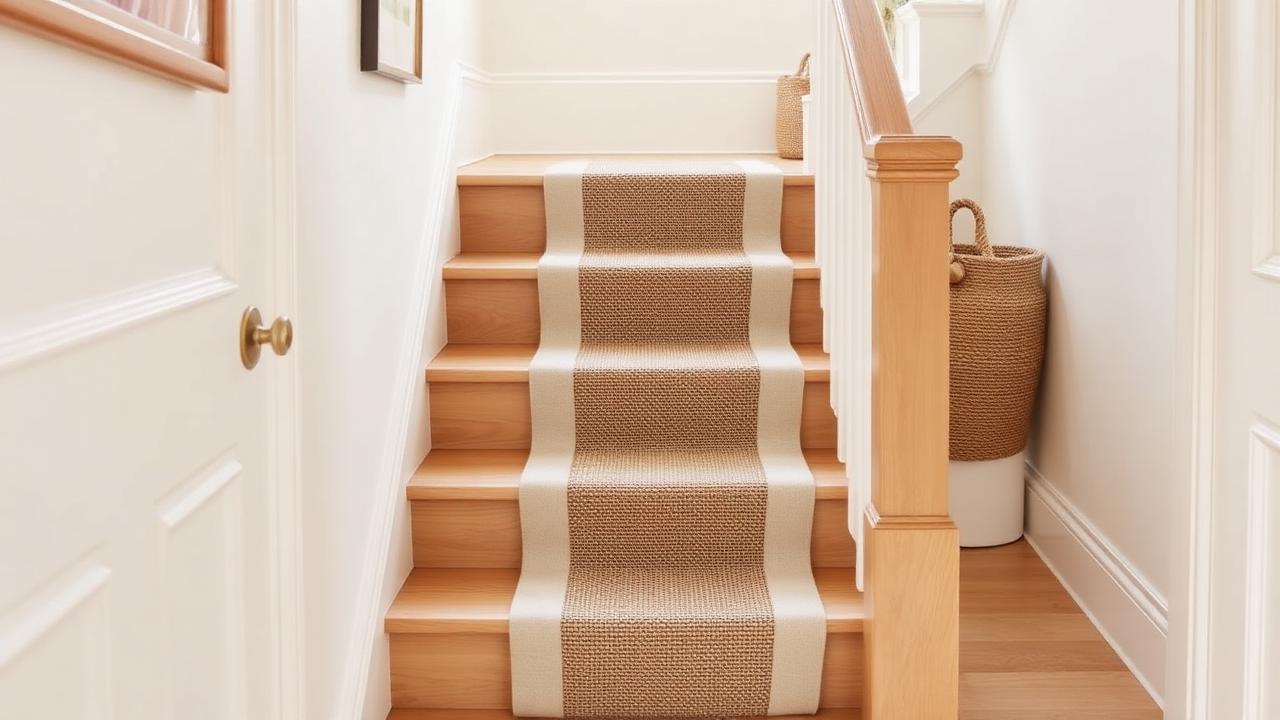
Decoding the Durability Classes
When you look at the back of a carpet sample, you’ll see various icons and numbers. In Europe, the EN 1307 standard is the most common, classifying carpets into 'Domestic' (Class 21-23) and 'Commercial' (Class 31-34). For a staircase, you should completely ignore Class 21 (Light Domestic) and Class 22 (General Domestic). Stairs are a unique environment where every step applies both a downward force and a shearing force as your foot pivots. This is why a carpet that works perfectly in a bedroom will fail within months on a flight of stairs. You need Class 23 (Heavy Domestic) at a minimum, which is designed for hallways and high-traffic living areas.
If you want something that will truly last for decades, look for Class 32 (General Contract) or Class 33 (Heavy Contract). These are designed for offices, hotels, and retail spaces. While they might feel slightly firmer underfoot than domestic-grade carpets, their resistance to crushing and abrasion is far superior. As a fitter, I often see 'Heavy Domestic' runners that have flattened on the nosings after only five years. A 'General Contract' wool-rich Axminster, on the other hand, can often look as good as new after fifteen years of family life. It’s an upfront investment that pays for itself in longevity.
The Role of Fibre Type in Durability
The durability rating isn't just about how the carpet is woven; it's also about the fibre itself. Wool is naturally resilient because of its helical structure—it acts like a tiny spring that bounces back after being stepped on. This is why wool runners often carry the highest durability ratings. Nylon is the synthetic king of durability, offering excellent abrasion resistance and a similar ability to recover its pile height. Polypropylene, while stain-resistant, has poor resilience. Even if a polypropylene runner is rated 'Heavy Domestic,' the pile will likely mat down and stay flat on the stair edges much sooner than a wool or nylon equivalent.
When choosing, I always suggest checking the 'face weight' in conjunction with the durability class. A Class 23 runner with a 50oz face weight will almost certainly outlast a Class 23 runner with a 30oz face weight. The more yarn there is packed into every square inch, the harder it is for foot traffic to reach and damage the backing. Think of it like a dense forest versus a sparse one; it’s much harder to walk through the dense one without touching the trees. On a staircase, you want that density to protect the integrity of the runner.
How much runner do I need?
Even the most durable runner won't look good if it's fitted poorly or if you run out of material. Let’s calculate the requirements for a standard 13-step staircase. In the US, we assume a 10 in tread and a 7.5 in riser. Adding a 0.75 in nosing wrap gives us 18.25 in per step. For a 13-step flight, that is 237.25 in, or 19.77 ft. We must also add a finishing allowance of 12 inches at the top and 12 inches at the bottom to secure the ends properly, bringing the total to 21.77 ft.
For durability and aesthetics, a waste margin is essential. You want the flexibility to avoid any minor factory defects or to ensure the pattern is perfectly centered. An 8% margin is standard, meaning you should order approximately 23.5 ft. If you are choosing a very high-durability contract-grade runner, keep in mind that these materials can be stiffer and harder to stretch, so having that extra length is even more important to ensure the fitter can get a perfect, tight grip on every step.
In the UK, the calculation uses a 25 cm tread and a 19 cm riser, plus a 1.9 cm wrap. This gives 45.9 cm per step. Over 13 steps, you get 596.7 cm. Add your 60 cm for the top and bottom finishes, and you land at 656.7 cm. With an 8% waste margin, the order should be at least 7.1 m. Always use a stair runner calculator to confirm these figures, as a small error in measurement can lead to a very frustrating day on site when the runner ends three inches short of the landing.
| Measurement Type | US (in/ft) | UK (cm/m) |
|---|---|---|
| Individual Step Total | 18.25 in | 45.9 cm |
| 13 Step Base Length | 19.77 ft | 5.97 m |
| Top & Bottom Allowance | 2.0 ft | 0.6 m |
| Subtotal | 21.77 ft | 6.57 m |
| Order Total (8% Waste) | 23.5 ft | 7.1 m |
Know your numbers in 30 seconds
Enter your step count, tread depth and riser height — the stair runner calculator gives you the exact length to order, in metres and feet, with waste included.
Open the stair runner calculatorTesting for Durability: The Trade Secrets
Retailers will often tell you every carpet is 'great for stairs,' but there are ways to verify this yourself. The first is the 'Grin Test.' Take a sample of the runner and bend it tightly over your finger, mimicking the curve of a stair nosing. If you can see the backing through the pile, it’s not dense enough. A truly durable stair runner carpet will maintain a solid wall of colour and texture even when bent. If the backing shows, the individual yarns will be unsupported and will wear through much faster at that point.

Another test is the 'Resilience Test.' Press your thumb into the pile as hard as you can for ten seconds. When you remove it, the pile should start to spring back immediately. If a deep indentation remains for several minutes, the runner will mat down under the weight of your family. This is particularly important for the 'waterfall' style of fitting, where the carpet flows over the nosing without being tucked in. Without high resilience, the waterfall look will quickly become a flat, shiny mess on the edges of your steps.
Look for the 'Stairs' Icon
Most reputable carpet manufacturers use a specific icon of a person walking up stairs to indicate suitability. If a sample only has icons for 'bedroom' or 'living room,' do not buy it for your staircase, regardless of how much you like the colour.
The Impact of Underlay on Runner Longevity
You can buy the most durable Class 33 Heavy Contract runner in the world, but if you put a cheap, soft underlay beneath it, it will fail. A soft underlay allows the runner to move and stretch every time it’s stepped on. This movement causes friction between the backing and the subfloor, which eventually destroys the runner from the inside out. For stairs, you need a firm, high-density underlay. I recommend a 9mm or 10mm crumb rubber or a high-density felt.
These firm underlays act as a shock absorber, protecting the pile from the hard wooden or concrete step beneath. They also provide the 'grip' that helps the runner stay in place. When I fit a runner, I make sure the underlay is secured with plenty of staples and that the gripper rods are brand new and sharp. A durable runner is only as good as the foundation it sits on. If the foundation is solid, your runner will easily exceed its official durability rating.
- Never use anything below Class 23 (Heavy Domestic) for stairs.
- Check for the official 'suitable for stairs' icon on the sample.
- Avoid polypropylene if pile matting is a major concern for you.
- Always use a high-density, firm underlay to prevent internal wear.
- Perform the 'grin test' to ensure the pile is dense enough for nosings.
Maintaining Durability over Time
Even the toughest runner needs care. The biggest enemy of carpet durability isn't actually feet; it's grit. Small particles of sand and dirt act like tiny knives, cutting through the fibres every time they are stepped on. On a staircase, this grit gets ground into the nosings, leading to premature balding. Regular vacuuming with a high-quality upright vacuum is the single best thing you can do to preserve the durability rating of your runner. You should vacuum your stairs at least twice a week, paying special attention to the corners where dust tends to settle.
Finally, consider a 'no shoes' policy for the upstairs of your home. The hard soles of shoes, especially those with grit embedded in the tread, are far more abrasive than socks or bare feet. By reducing the mechanical stress on the fibres, you can extend the life of your runner by several years. A well-chosen, high-durability runner is a centerpiece of your home's design, and with the right fitting and care, it will remain so for a generation. Plan your purchase carefully, use a stair runner length calculator, and never compromise on the quality of the material or the underlay.
Frequently asked questions
What is the best durability rating for a stair runner?
Look for 'Heavy Domestic' (Class 23) as a minimum. For maximum longevity, a 'General Contract' (Class 32) or 'Heavy Contract' (Class 33) rating is even better, as these are designed for intense foot traffic.
Why do bedroom carpets wear out so fast on stairs?
Bedroom carpets are usually 'General Domestic' (Class 22). They lack the pile density and resilience to handle the concentrated weight and pivoting motions that occur on every step of a staircase.
What is the 'grin test' for stair runners?
Bend a carpet sample tightly over your finger. If you can see the backing through the yarns, the pile is not dense enough for stairs and will wear out quickly on the nosings.
Is wool more durable than synthetic for stairs?
In terms of resilience (bouncing back), wool is superior. Nylon is excellent for abrasion resistance. Polypropylene is generally the least durable on stairs as it mats down quickly.
Do contract-rated runners feel uncomfortable?
They are firmer than plush domestic carpets, but when paired with a quality underlay, they still offer excellent comfort while providing much better long-term value and appearance.
How often should I replace a stair runner?
A high-quality, durable runner should last 10 to 15 years with proper care. A cheap, low-rated runner may need replacing in as little as 3 to 5 years in a busy household.
Does the underlay affect the durability rating?
Yes. A soft, cheap underlay allows the runner to move and stretch, leading to premature wear. A firm, high-density underlay supports the runner and extends its lifespan.
Should I choose a loop or cut pile for durability?
Dense cut piles (like Axminster) are generally more durable on stairs. Loops can be pulled by pet claws, and the 'peaks' of the loops take all the wear, which can cause them to fray over time.
Know your numbers in 30 seconds
Enter your step count, tread depth and riser height — the stair runner calculator gives you the exact length to order, in metres and feet, with waste included.
Use the stair runner length calculator to plan your projectReady for real prices?
Get quotes from vetted stair runner suppliers and fitters near you. Free, no account, no obligation.
Every guide is written from hands-on measuring and fitting experience, checked against the calculator’s own maths, and re-reviewed whenever prices or methods change. Read our editorial standards.