
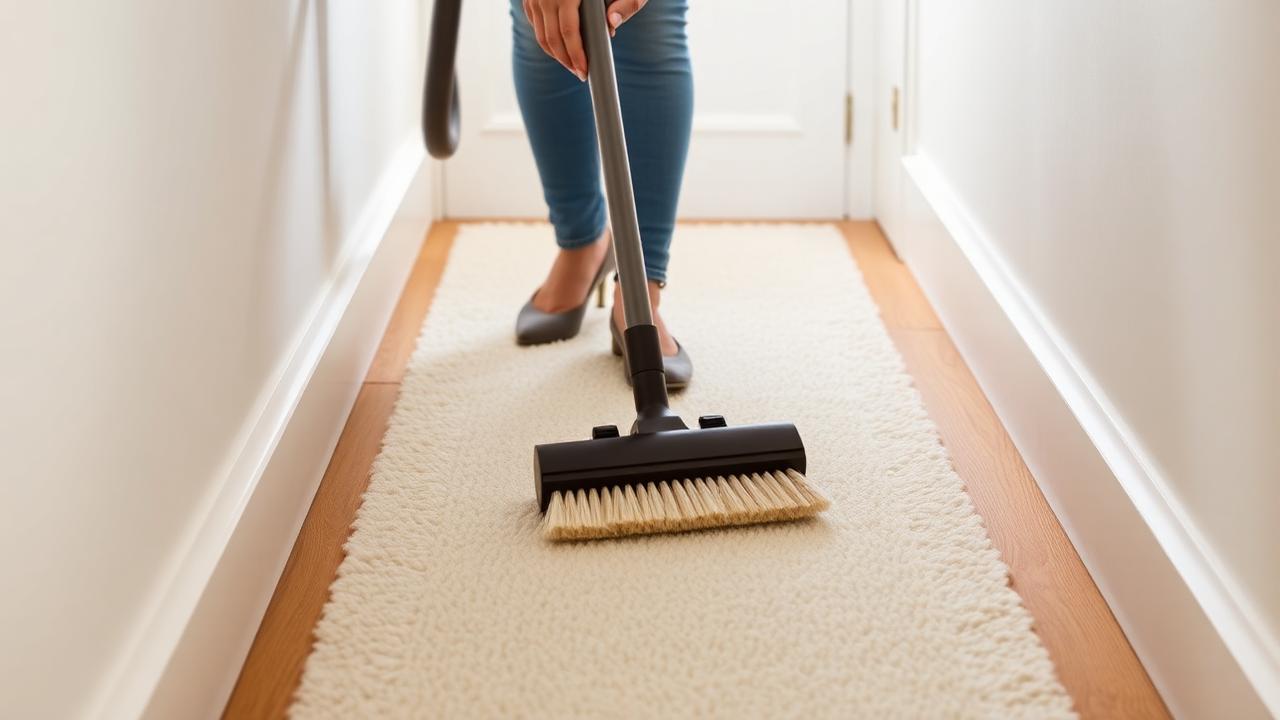
The weekly routine that does 80% of the work
Most stair runner wear is not dirt — it is grit. Fine particles of sand and soil sit at the base of the pile and cut the fibres every time someone stands on them. Removing that grit weekly is worth more than any deep clean.
- Vacuum top to bottom, one step at a time, using a handheld or hose attachment rather than dragging an upright over the nosings.
- Work across the runner (side to side), not down it — cross-grain passes lift the pile and pull grit out of the base.
- Run the crevice tool into the crease where each tread meets the riser; that crease collects the most debris and hides it.
- Finish with a quick pass over the exposed wood or stone either side so grit is not walked straight back on.
Never use a beater bar on a loop-pile or natural-fibre runner
Rotating brush bars pull loops on wool loop pile, sisal and jute, and can leave permanent fuzzing along the nosing edge. Suction-only heads are the safe default; save the brush bar for cut-pile synthetics.
Spot cleaning by fibre
The single biggest cleaning mistake is treating every runner the same. Wool and natural fibres react very differently to water and alkaline detergents than polypropylene does.
| Fibre | Safe approach | Avoid |
|---|---|---|
| Wool | Blot, then a pH-neutral wool detergent diluted in cool water. Blot dry with a white cloth. | Alkaline cleaners, bleach, hot water, hard scrubbing (felts the pile) |
| Sisal | Dry compound powder cleaner brushed in and vacuumed out. | Water of any kind — sisal stains and shrinks when wet |
| Jute / seagrass | Dry powder, or a barely damp cloth on seagrass only. | Soaking, steam cleaning, wet extraction |
| Polypropylene / triexta | Warm water with a drop of washing-up liquid; bleach-solution safe on most polypropylene. | Solvent cleaners that soften the backing adhesive |
| Wool-synthetic blend | Treat as wool — the wool content sets the rules. | Anything you would not use on 100% wool |
Whatever the fibre, work from the outside of a spill inward so you do not spread the ring, and blot rather than rub. Rubbing drives the stain deeper into the pile and distorts the yarn twist, which shows as a dull patch long after the stain has gone.
How often to deep clean
For a family staircase, a professional low-moisture clean once every 12–18 months keeps the runner in good order. Quiet households can stretch to two years; a hallway that takes pets, kids and outdoor shoes may want it annually.
- Low-moisture encapsulation is the safest method on stairs — the runner is barely damp and dries in an hour or two.
- Hot water extraction is fine on synthetics, but on stairs it risks over-wetting the underlay and the timber beneath.
- Never steam-clean sisal or jute. Ever. It is the fastest way to buy a new runner.
Dealing with the classic stair runner problems
Traffic lanes down the centre
The middle of each tread flattens first. On rod-fitted runners you can loosen the rods once a year and shift the runner 2–4cm up or down so the wear points land in a new place — the single most effective way to extend a runner's life.
Pet hair woven into wool
A rubber pet brush or a squeegee dragged across the pile lifts hair that vacuums leave behind. Do this before vacuuming, not after.
Shedding on a new wool runner
New wool runners shed loose fibre for the first two to three months. That is normal, not a fault. Vacuum gently and often; shedding drops off sharply once the short fibres have gone.
Know your numbers in 30 seconds
Enter your step count, tread depth and riser height — the stair runner calculator gives you the exact length to order, in metres and feet, with waste included.
Open the stair runner calculatorWhen cleaning is not the answer
If the pile is crushed flat along the nosings, the binding has frayed or the backing shows through, no clean will bring it back. At that point it is cheaper to price a replacement — and because the stair dimensions are already known, you can get an exact length in under a minute.
Tools worth having in the cupboard
| Tool | Use | Cost range |
|---|---|---|
| Handheld or hose vacuum attachment | Weekly grit removal without a beater bar | $20–$80 |
| Rubber pet brush or squeegee | Lifting embedded hair before vacuuming | $5–$15 |
| White cotton cloths | Blotting spills without transferring dye | $5–$10 |
| pH-neutral wool detergent | Spot cleaning wool and wool blends | $8–$18 |
| Dry compound cleaner | Sisal, jute and seagrass cleaning | $12–$25 |
Cost of professional cleaning vs replacement
A professional low-moisture clean for a standard 13-step staircase typically costs $60–$150, depending on fibre and how heavily soiled the runner is. Compare that with the cost of a full replacement, which for even a mid-range wool runner including fitting can run $650–$1,400. Two or three cleans a decade are cheap insurance against a much larger bill.

Test any product on an offcut first
If you kept a scrap from fitting, use it to test a new cleaner or stain remover before applying anything to the visible runner. Wool and natural fibres can react unpredictably to products that work perfectly well on synthetic carpet.
A simple maintenance schedule
- Weekly: vacuum with a suction-only head, working across the runner and into the crease.
- As needed: blot spills immediately, working from the outside in.
- Every 3–4 months: lift and brush pet hair with a rubber tool before vacuuming.
- Every 12–18 months: book a professional low-moisture or dry compound clean.
- Annually: loosen rods or staples and shift the runner slightly to redistribute wear.
Products worth avoiding entirely
- Oxygen-based 'brighteners' on wool — they can yellow natural fibre and strip the lanolin that keeps wool soil-resistant.
- Generic all-purpose sprays with high alkalinity, which leave a sticky residue that attracts dirt faster than before cleaning.
- Any wet product on sisal, jute or seagrass, including 'natural fibre safe' sprays unless the label explicitly names stair-grade sisal.
- Carpet powders left down for days rather than the manufacturer's stated dwell time — they compact into the pile base and are hard to fully vacuum out.
Seasonal considerations
Winter brings grit, salt and damp shoes, all of which sit at the base of the pile and abrade fibres faster than summer dust. Increase vacuuming to twice weekly during wet months and place a boot tray or mat at the bottom of the stairs so the worst of it never reaches the runner at all. Summer brings more UV exposure through stairwell windows, which fades dye unevenly; closing blinds during peak sun hours or fitting UV-filtering film protects colour far more cheaply than any cleaning product can restore it.
Whatever you decide, get the numbers first: the stair runner calculator doubles as a stair runner length calculator, adding nosing wrap, landings, winders, pattern repeat and waste so you order the right length the first time.
Still deciding on material, width or pattern? Our hub on stair runners compares weaves, widths, backings and fitting styles side by side, then hands the numbers straight to the calculator.
Frequently asked questions
How do you clean a stair runner without removing it?
Vacuum thoroughly, then spot-treat with a fibre-appropriate cleaner and blot dry. Low-moisture encapsulation cleaning is done in place too, so a fitted runner never needs lifting for routine cleaning.
Can you steam clean a stair runner?
Only on synthetics, and even then sparingly. Steam and hot-water extraction risk shrinking wool, staining sisal and jute permanently, and soaking the underlay and treads beneath.
How often should a stair runner be cleaned?
Vacuum weekly (twice weekly with pets), spot-clean spills immediately, and book a professional low-moisture clean every 12–18 months in a normal family home.
What is the best carpet cleaner for a wool stair runner?
A pH-neutral detergent labelled safe for wool. Alkaline all-purpose cleaners and oxygen bleaches strip the natural lanolin and can yellow the fibre.
How do you get rid of the worn strip down the middle of a runner?
Rotating the runner slightly is the only real fix — loosen the rods or staples and shift it a few centimetres so the wear points move. Once the pile is cut through, replacement is the only option.
Is it worth hiring a professional cleaner for a stair runner?
For wool and natural fibres, yes — a professional low-moisture clean costs a fraction of a replacement and avoids the risk of shrinking or staining a fibre you are not used to handling. For hard-wearing synthetics, a careful DIY clean with the right products is usually enough.
Know your numbers in 30 seconds
Enter your step count, tread depth and riser height — the stair runner calculator gives you the exact length to order, in metres and feet, with waste included.
Plan a replacement runnerReady for real prices?
Get quotes from vetted stair runner suppliers and fitters near you. Free, no account, no obligation.
Every guide is written from hands-on measuring and fitting experience, checked against the calculator’s own maths, and re-reviewed whenever prices or methods change. Read our editorial standards.