
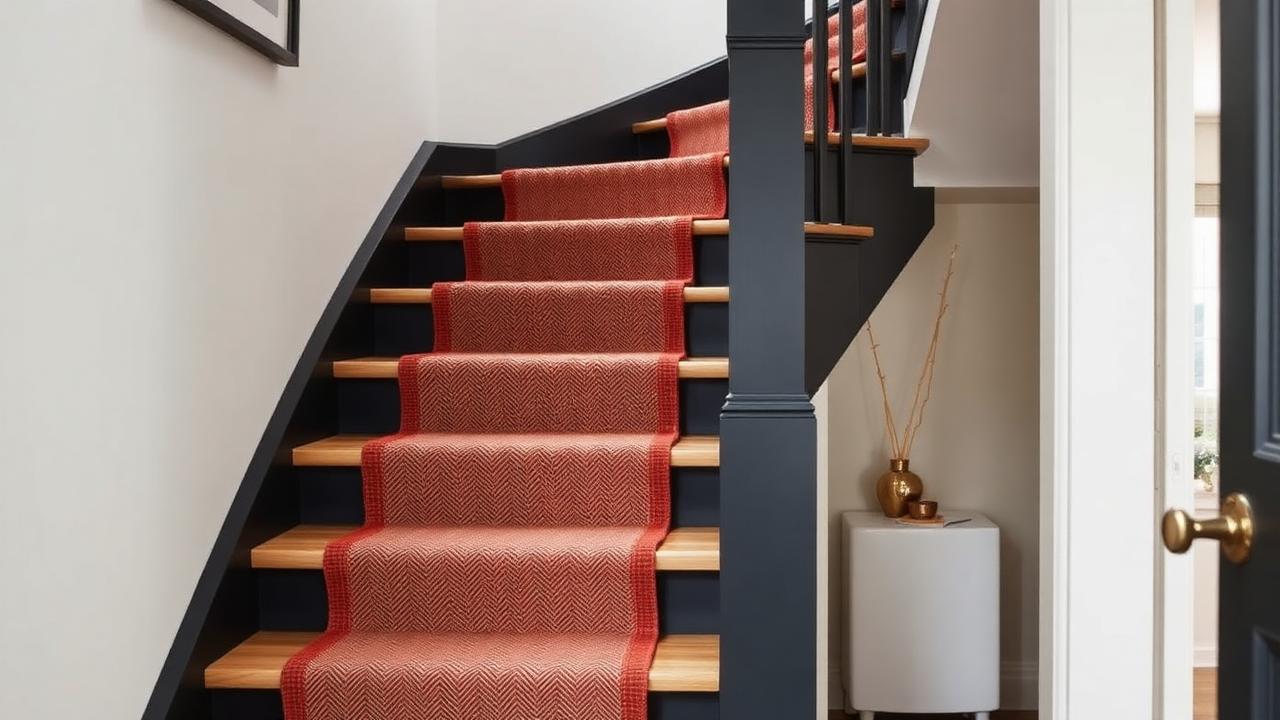
The design impact of leopard print on stairs
Leopard print has transcended its origins as a niche fashion trend to become a staple in modern maximalist and eclectic interior design. On a staircase, it acts as a 'neutral' in the sense that it combines shades of tan, brown, and black which pair effortlessly with almost any wood tone or paint colour. When I am fitting a leopard print stair runner, I often notice how it immediately masks minor footprints and pet hair, making it a surprisingly practical choice for busy households despite its glamorous appearance. The organic nature of the spots means that slight variations in the weave or minor stains are far less visible than they would be on a plain or geometric runner.
Choosing the right scale of leopard print is critical. A small, dense spot pattern can look like a textured neutral from a distance, which is perfect for narrower Victorian staircases or dark hallways where you don't want the pattern to feel too heavy. Conversely, a larger, more spaced-out leopard motif makes a grander statement and is better suited to wide, open-plan staircases or modern homes with plenty of natural light. If you are using a stair runner length calculator to plan your project, remember that larger scales might require a bit more wastage to ensure the spots are aligned symmetrically between the treads, though the organic nature of animal prints makes this less of a headache than a strict geometric pattern like a stripe.
Scale and Contrast
If your hallway is narrow, choose a leopard print with a lighter base colour and smaller spots to avoid making the space feel cramped. For grander entrances, a dark, moody base with large, high-contrast spots creates a luxury boutique hotel feel.
Material choices for leopard patterns
Leopard print stair runners are available in a variety of fibres, each offering different wear characteristics. Wool is the gold standard for stairs; a high-quality Axminster or Wilton wool runner with a leopard design will maintain its pile height for decades. The natural resilience of wool means the spots won't become 'blurred' as the pile gets crushed underfoot. For those on a tighter budget, nylon or polypropylene leopard prints are widely available. These synthetic options are excellent for stain resistance and can often achieve even more vibrant colour contrasts than wool, although they may not offer the same longevity on the nosing of the steps where foot traffic is most intense.
When considering stair runners in animal prints, the backing is just as important as the face fibre. A woven jute backing provides the stability needed to keep the pattern straight during installation. If you choose a tufted leopard runner with a flexible latex backing, it may stretch slightly over time, which can cause the pattern to look distorted on the risers. Always check the manufacturer's specifications for 'contract grade' or 'heavy domestic' ratings to ensure the runner is up to the task of daily stair use.
How much runner do I need?
Calculating the length for a leopard print runner follows the same principles as any other pattern, with a slight extra allowance for pattern centering if the design is particularly large. Let's look at a standard US measurement example: a 13-step staircase where each step has a 10 inch tread and a 7.5 inch riser. Adding a 1 inch nosing wrap gives us 18.5 inches per step. Multiply 18.5 by 13 to get 240.5 inches (20.04 ft). We then add 12 inches at the top and 12 inches at the bottom for secure fixing and clean finishes, totaling 264.5 inches (22.04 ft). With a 10% waste margin for leopard print, you should order 24.25 feet.
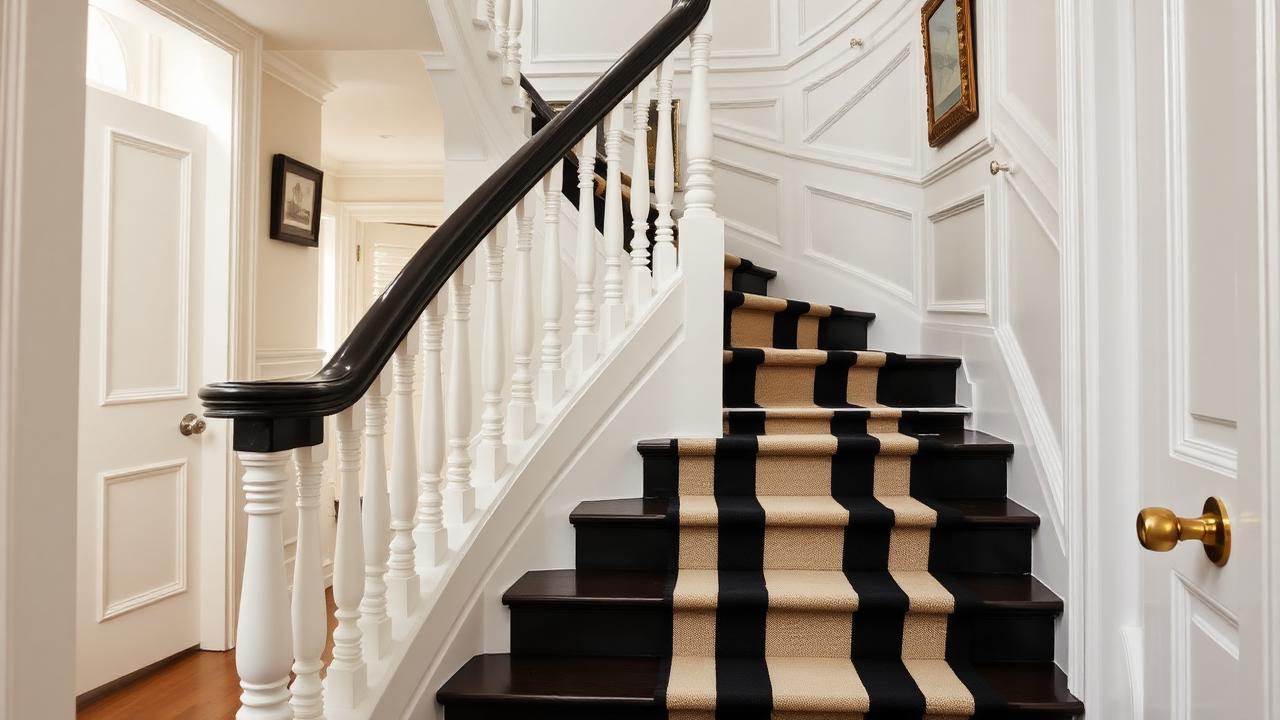
For a UK home with metric measurements, the same 13-step flight usually has a 25 cm tread and a 19 cm riser. With a 2.5 cm nosing wrap, the total per step is 46.5 cm. Multiply by 13 for a subtotal of 604.5 cm (6.05 m). Adding a 30 cm allowance at each end (60 cm total) brings us to 664.5 cm (6.65 m). A 10% waste margin for leopard patterns results in a final order of 7.32 metres. Using an accurate stair runner calculator is vital here to avoid being left with a spotty pattern that finishes three steps too early.
| Step Component | US (inches/feet) | UK (cm/metres) |
|---|---|---|
| Tread & Riser (per step) | 17.5 in | 44 cm |
| Nosing Wrap (per step) | 1 in | 2.5 cm |
| Total per step | 18.5 in | 46.5 cm |
| 13 Steps Subtotal | 20.04 ft | 6.05 m |
| Fixing Allowances | 2 ft | 0.6 m |
| Total (Before Waste) | 22.04 ft | 6.65 m |
| Final Order (10% Waste) | 24.25 ft | 7.32 m |
Know your numbers in 30 seconds
Enter your step count, tread depth and riser height — the stair runner calculator gives you the exact length to order, in metres and feet, with waste included.
Open the stair runner calculatorInstallation tips for animal prints
Installing leopard print requires a keen eye for symmetry. Ideally, the center of a 'rosette' or a major spot should be aligned with the center of the tread. When I am working on a leopard installation, I start by snapping a chalk line down the center of the staircase to ensure the runner stays perfectly centered from top to bottom. If the pattern drifts even half an inch, it becomes surprisingly noticeable because the organic spots create a visual rhythm that the eye tracks easily. Because leopard print is often a busy pattern, you can use the 'Hollywood' method (wrapping the carpet around the nosing and stapling it under the lip) to create a very tailored, modern look that highlights the pattern's texture.
Another consideration is the use of stair rods. Leopard print looks magnificent when paired with brass or black stair rods, which add a touch of classic elegance to the wild pattern. If you choose to use rods, ensure they are ordered in a width that leaves about 2 inches of the runner showing on either side of the rod bracket. This framing effect draws the eye inward and makes the leopard pattern the star of the show. If you're doing a DIY fit, take extra care when cutting the runner at the bottom step; leopard patterns can be tricky to bind or finish if the cut isn't perfectly perpendicular to the pattern's flow.
- Vacuum regularly with a high-suction vacuum to keep the 'spots' looking sharp and free of dust.
- Consider a dark binding (black or deep brown) to frame the leopard pattern and give it a finished look.
- Use a high-density underlay (9mm or 11mm) to provide comfort and prevent the pattern from wearing prematurely on the nosing.
- If your leopard runner is a flatweave, use a non-slip rug pad specifically designed for stairs to prevent shifting.
- Avoid using leopard print on very winding stairs if the pattern scale is large, as the 'pie-shaped' cuts will distort the spots significantly.
Leopard print and home value
A common question I get is whether such a bold pattern like leopard print will hurt the resale value of a home. In my experience fitting hundreds of stair runners, the opposite is often true. A well-executed leopard print runner suggests a designer touch and a level of investment in the home's aesthetics. It creates a 'wow' factor that sticks in the minds of potential buyers. However, if you are planning to sell in the very near future, stick to a leopard print with a more neutral, muted palette (creams and soft greys) rather than high-contrast blacks and oranges to ensure it appeals to the widest possible audience.
Ultimately, a leopard print stair runner is about personal expression. It brings energy and character to a part of the home that is often overlooked. Whether you're going for a 'Jungle Chic' look or just want something that hides the evidence of a busy family life, leopard print offers a unique blend of style and practicality. Just be sure to use a stair runner length calculator before you buy, as leopard print is rarely something you can just 'patch' if you run short.
Frequently asked questions
Is leopard print still in style for stair runners?
Yes, leopard print is considered a 'new neutral' in interior design. It has remained popular for decades because it pairs well with various styles, from traditional to modern maximalist, and it is excellent at hiding wear and tear in high-traffic areas.
Does leopard print make a small staircase look smaller?
Not necessarily. If you choose a small-scale leopard print with a lighter base colour, it can actually add depth and interest without overwhelming the space. Avoid large-scale, high-contrast patterns in very narrow hallways.
What colour walls go best with a leopard stair runner?
Neutral tones like warm whites, creams, and sands work beautifully to let the runner pop. For a bolder look, deep greens, navy blues, or even a soft terracotta can complement the earthy tones of the leopard spots.
Is wool or synthetic better for a leopard print runner?
Wool is superior for longevity and pile resilience, but high-quality synthetics like nylon are excellent for stain resistance. For a main staircase, wool is the best investment to keep the pattern looking crisp over time.
Can I install a leopard print runner myself?
Yes, if you have the right tools and a straight staircase. However, centering the pattern correctly is vital, and animal prints can be less forgiving of crooked installation than plain carpets. A professional fitter is recommended for winding stairs.
How do I clean a leopard print stair runner?
Regular vacuuming is key. For stains, use a dedicated carpet cleaner appropriate for the fibre (wool-safe for wool). The busy pattern is very forgiving, but you should still blot spills immediately to prevent deep staining.
Do leopard print runners come in different colours?
Absolutely. While the classic tan and black is most common, you can find leopard prints in greyscale (silver/charcoal), 'snow leopard' (white/grey), and even fashion-forward colours like blue or pink.
What width should a leopard print stair runner be?
A standard width is 60cm to 70cm (24 to 27 inches), which leaves a nice border of the stair tread showing on either side. This 'framing' effect is particularly important for busy patterns like leopard print.
Know your numbers in 30 seconds
Enter your step count, tread depth and riser height — the stair runner calculator gives you the exact length to order, in metres and feet, with waste included.
Calculate leopard print runner lengthReady for real prices?
Get quotes from vetted stair runner suppliers and fitters near you. Free, no account, no obligation.
Every guide is written from hands-on measuring and fitting experience, checked against the calculator’s own maths, and re-reviewed whenever prices or methods change. Read our editorial standards.