

What a stair lift cost calculator actually needs to know
Every stair lift quote, whether it comes from a national supplier or a local mobility shop, is built from the same handful of inputs: the total rise of the staircase (floor to floor height), whether the flight is straight or has one or more turns, the total run length along the string, and any obstructions such as a door swinging across the bottom of the stairs or a narrow winder section. A calculator - or a fitter doing the sums by hand - takes those measurements and matches them to a rail length and a chair mechanism, then adds labour, any structural bracket work, and VAT or sales tax. Straight stairs need the least rail and the simplest install; curved, split-level, or outdoor stairs need custom-measured rail sections that cost far more to manufacture and fit.
Before you get quotes, it helps to have your own numbers rather than relying on a salesperson's tape measure alone. Measuring total rise, individual riser height and tread depth with a stair runner calculator or similar rise-and-run tool gives you a sanity check on any quote - if a company's quoted rail length looks wildly different from your own total run measurement, ask why. Getting this right also matters for a second, unrelated reason: many households fitting a stair lift also plan to keep or refit a stair runner alongside the rail, and the runner's finished thickness needs to be accounted for when the fitter sets the lift's rail height off the nosing, so measure both jobs together rather than as two separate projects.
Typical price ranges by stair type
| Stair type | Typical US cost (installed) | Typical UK cost (installed) |
|---|---|---|
| Straight single flight | $2,500 - $4,500 | £1,800 - £3,500 |
| Straight flight with a small landing at top/bottom | $3,200 - $5,000 | £2,200 - £3,900 |
| Curved (one 90-degree turn) | $8,000 - $12,000 | £5,500 - £9,500 |
| Curved (multiple turns or a full spiral) | $10,000 - $16,000 | £7,500 - £13,000 |
| Outdoor straight stair lift | $3,500 - $6,000 | £2,800 - £4,800 |
| Reconditioned/used straight lift | $1,500 - $2,800 | £1,000 - £2,200 |
Typical ranges, not quotes
These figures are general market ranges to help you sense-check a quote, not prices from any specific brand. Always get at least two written, site-measured quotes before committing, since rail bends, track brackets and any joinery work vary the total significantly.
What pushes the price up
Curves are the main driver, as noted above, but several smaller factors compound the total. A stairway narrower than about 27-28 in (69-71 cm) of clear tread width may need a narrower-track model, which is sometimes a premium option rather than the standard product line. A weight capacity above the standard 250-300 lb (115-135 kg) usually steps you into a heavy-duty chair at extra cost. Outdoor lifts need a weatherproof cover and a more corrosion-resistant rail and motor housing, adding to both the unit price and the maintenance cost over its life. And any structural work needed to fix wall brackets into a wall that isn't solid masonry - stud walls, or a staircase that's open on one side with only a handrail baluster to bolt into - can add a joinery day to the install.
Battery-powered lifts, which run off a rechargeable pack charged at each end of the rail rather than a mains-powered motor, cost slightly more up front but are the standard choice for most homes now, since they keep working through a power cut and don't need a hard-wired supply run alongside the stairs.
How rise and run affect rail length and price
The rail itself is priced mostly by length, so getting an accurate total run - the horizontal distance the rail has to travel, not just the vertical rise - materially changes the quote. Stair maths here follows the same rules used for stringer and stair-building work generally: total rise divided by riser height gives you the number of risers, and (risers minus one) multiplied by tread run gives you the total horizontal run the rail has to span, plus a run-out extension of roughly 12-20 in (30-50 cm) at the bottom for the chair to park clear of the lowest step and roughly 6-12 in (15-30 cm) at the top for a similar reason. A 13-riser flight with a 7.5 in (19 cm) rise and 10 in (25 cm) run works out to a total run of 12 treads x 10 in = 120 in (3.05 m), plus the run-outs, so expect a rail length quote in the region of 145-155 in (3.7-3.9 m) for that flight.
Checking your stairs are even suitable first
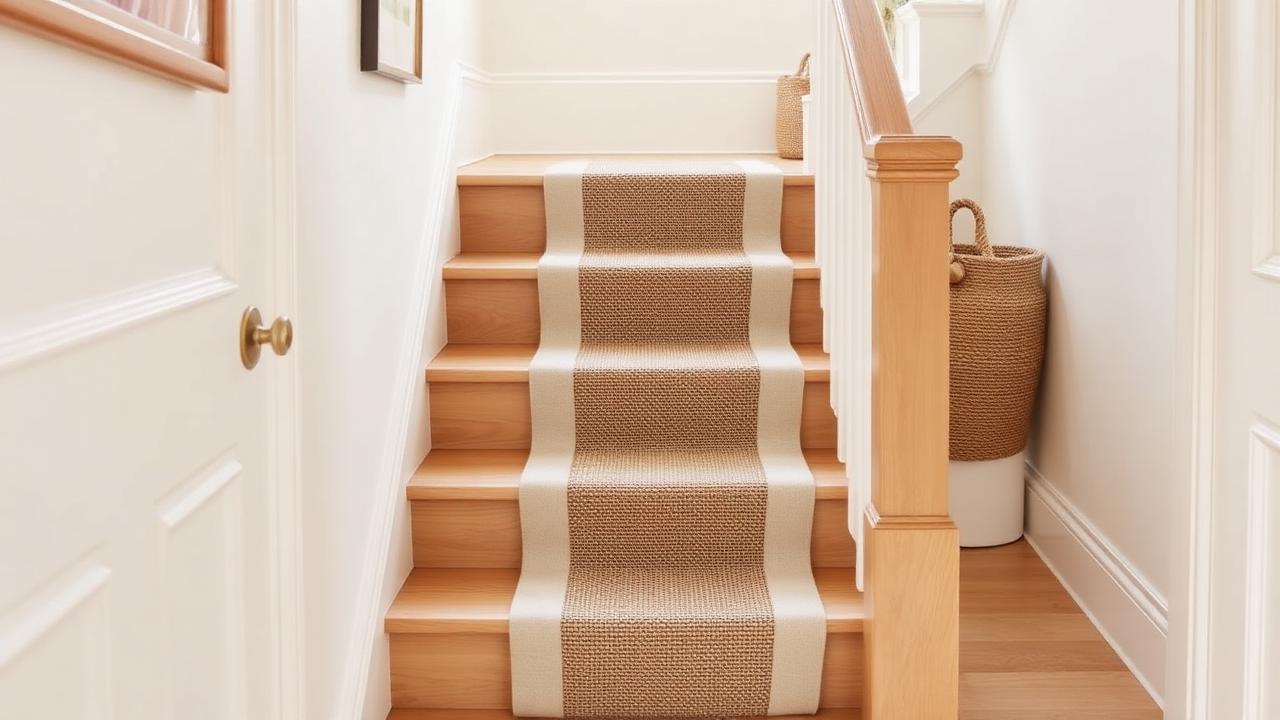
Not every staircase can take a stair lift without modification. The clear width needed depends on the model, but most straight lifts need at least 27-28 in (69-71 cm) of clear tread width once the rail and folded chair are accounted for - measure your narrowest point, which is often at a newel post or a door swing rather than mid-flight. Stairs that are unusually steep, with a rise-to-run ratio well outside the normal 7-11 comfort range used for standard residential stairs, may need a specialist assessment, since very steep pitches change the geometry the chair has to travel through safely. If your stairs currently carry a fitted runner, the fitter will also need to know its pile height, since the rail brackets are set relative to the finished tread surface, not the bare timber underneath.
Steps to a reliable quote
- Measure total rise (floor to floor) and count every riser on the flight.
- Measure clear tread width at the narrowest point, including any door swing or newel post.
- Note whether the flight is fully straight or has any turn, landing or winder section.
- Check the finished runner or carpet pile height if one is already fitted or planned.
- Get at least two site-measured, written quotes rather than a phone estimate alone.
- Ask specifically whether the quote includes VAT/tax, disposal of the old unit if any, and a service plan.
How much runner do I need?
If you're planning a new stair runner alongside a stair lift install, the runner length calculation is unaffected by the lift itself - it's still driven by tread and riser count. For a 13-step straight flight with a 10 in (25 cm) going and 7.5 in (19 cm) rise, each step consumes roughly 17.5 in (44.5 cm) of runner to wrap tread, riser and nosing, so 13 steps needs around 19 ft (5.8 m) before allowances. In metric, that's a 25 cm going and 19 cm rise per step, using about 44.5 cm of runner per step, or roughly 5.8 m for 13 steps. Add a 5-10% waste allowance for pattern matching, trimming and any adjustment around the newly fitted rail brackets, which brings the US figure to about 20-21 ft and the UK figure to about 6.1-6.4 m. Run these numbers through a stair runner calculator using your own measured tread and riser figures rather than these averages, since actual dimensions vary flight to flight.
Know your numbers in 30 seconds
Enter your step count, tread depth and riser height — the stair runner calculator gives you the exact length to order, in metres and feet, with waste included.
Open the stair runner calculatorFinancing and ongoing costs
Most suppliers offer either a straight purchase, a rental, or a lease-to-own arrangement, and rental is worth considering for a short-term recovery need rather than a permanent installation, since it avoids the full capital outlay and usually includes removal at the end of the term. Ongoing costs are modest for a well-maintained unit - an annual service is typically recommended, and battery packs generally need replacing every 3-5 years. Ask whether the warranty covers parts only or parts and labour, and for how long, since call-out labour charges after a warranty lapses can be a meaningful part of the long-term cost.
If cost is the main barrier, it's worth checking local authority grants or occupational therapist referral schemes before paying full price, since means-tested funding or VAT relief for disability aids is available in many areas and can meaningfully reduce the total.
Whatever you decide, get the numbers first: the stair runner calculator doubles as a stair runner length calculator, adding nosing wrap, landings, winders, pattern repeat and waste so you order the right length the first time.
Still deciding on material, width or pattern? Our hub on stair runners compares weaves, widths, backings and fitting styles side by side, then hands the numbers straight to the calculator.
Frequently asked questions
How much does a straight stair lift cost installed?
A straight stair lift for a single flight typically costs $2,500-4,500 in the US or £1,800-3,500 in the UK, fully installed. This is the cheapest configuration because the rail runs in one straight line and needs no custom bending, unlike curved or split-level staircases.
Why are curved stair lifts so much more expensive?
Curved lifts need a rail custom-measured and bent to match the exact geometry of your turn or landing, which is manufactured to order rather than cut from stock straight sections. This pushes typical installed cost to $8,000-16,000 (£5,500-13,000) depending on how many turns the flight has.
Can I get a used or reconditioned stair lift cheaper?
Yes, reconditioned straight lifts typically cost $1,500-2,800 (£1,000-2,200) installed, roughly 40-50% less than new. Curved units are rarely reconditioned since the rail is cut to a specific staircase's geometry and usually can't be reused elsewhere.
What stair width do I need for a stair lift?
Most straight models need at least 27-28 in (69-71 cm) of clear tread width once the rail and folded chair are allowed for. Measure the narrowest point on the flight, which is often at a newel post or door swing rather than the middle of the stairs, since that narrowest point governs fit.
Does an existing stair runner affect the stair lift install?
Yes, the fitter needs to know the finished pile height of any runner or carpet, since rail brackets are set relative to the tread surface you actually walk on, not the bare board beneath. Mention any planned new runner before the lift survey so both jobs are measured together.
How is stair lift rail length calculated?
Rail length follows the same rise-and-run maths as stair building generally: total horizontal run equals (number of risers minus one) multiplied by tread depth, plus run-out allowances of roughly 12-20 in (30-50 cm) at the bottom and 6-12 in (15-30 cm) at the top for the chair to park clear.
Are stair lifts covered by insurance or grants?
Some local authorities and occupational therapy referral schemes offer means-tested grants or VAT relief for disability aids including stair lifts, which can meaningfully reduce cost. Coverage varies significantly by region, so check with your local authority or a disability equipment charity before paying full price.
Is renting a stair lift cheaper than buying?
Renting avoids the full capital outlay and usually includes removal at the end of the term, making it a sensible option for short-term recovery needs such as post-surgery mobility. For permanent, long-term use, outright purchase is usually more cost-effective over several years.
Know your numbers in 30 seconds
Enter your step count, tread depth and riser height — the stair runner calculator gives you the exact length to order, in metres and feet, with waste included.
Check your stair rise and run before quoting a liftReady for real prices?
Get quotes from vetted stair runner suppliers and fitters near you. Free, no account, no obligation.
Every guide is written from hands-on measuring and fitting experience, checked against the calculator’s own maths, and re-reviewed whenever prices or methods change. Read our editorial standards.