
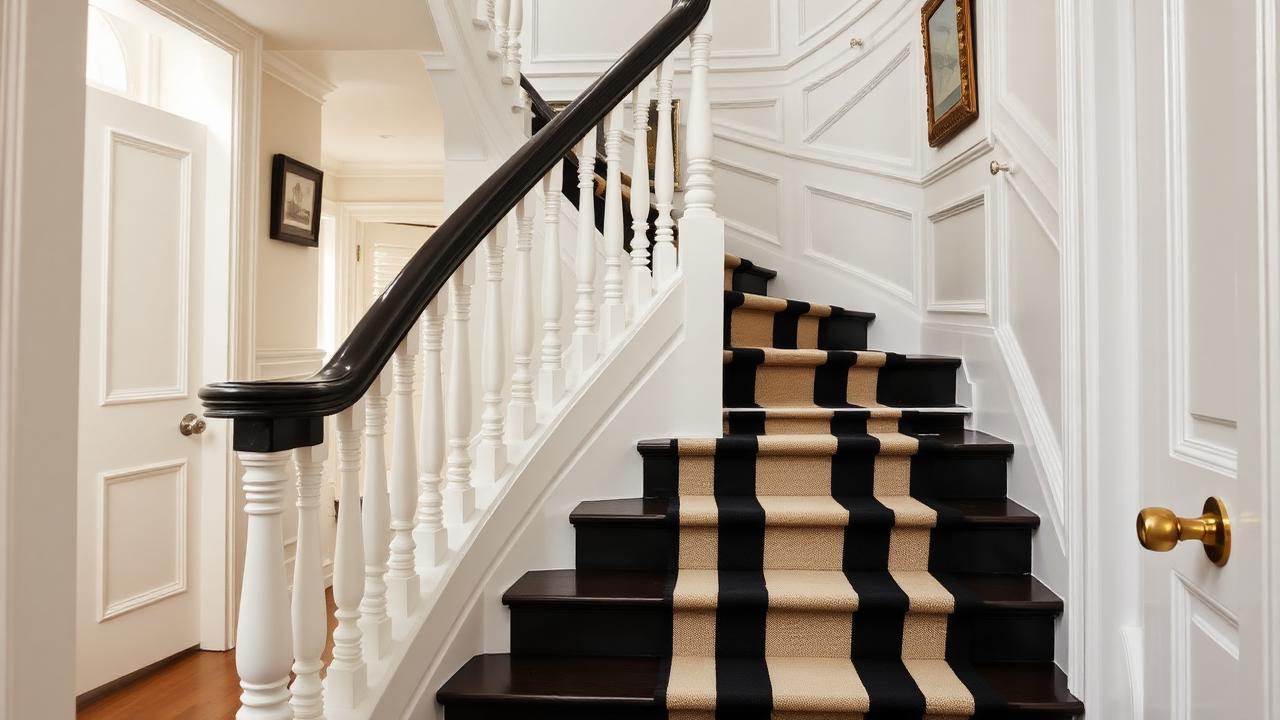
Why Look for Alternatives?
Stair runners are beautiful, but they aren't for everyone. Some homeowners find them difficult to clean, others dislike the way they hide beautiful hardwood, and some are put off by the cost of custom binding and professional installation. Depending on your home's architecture and your family's lifestyle, one of the following alternatives might be a more practical or aesthetic choice.
Regardless of which route you choose, understanding the dimensions of your stairs is crucial. A stair runner length calculator is useful even if you're not getting a runner, as it helps you calculate the surface area for paint, stain, or individual treads. Let's dive into the most popular options available in both the UK and US markets.
1. Painted Stairs: The Minimalist Choice
Painting your stairs is perhaps the most cost-effective way to transform them. A common designer look is to paint the treads a dark, durable color (like charcoal or navy) and the risers a crisp white. This provides a clean, modern aesthetic that is very easy to sweep and mop.
- Pros: Inexpensive, infinite color choices, easy to change later.
- Cons: Can be slippery, shows every speck of dust, offers no noise reduction.
- Safety Tip: Always use a 'non-slip' additive (like sand or specialized grit) in the final coat of paint on the treads.
2. Individual Stair Treads (Step Mats)
If you want the protection and grip of a runner but don't want to cover the entire center of the staircase, individual stair treads are a great middle ground. These are small rectangular pieces of carpet or rubber that are adhered to each individual tread. They are particularly popular in the US for basement stairs or for homes with elderly pets who struggle with slippery wood.
3. Full-Width Carpet (Wall-to-Wall)
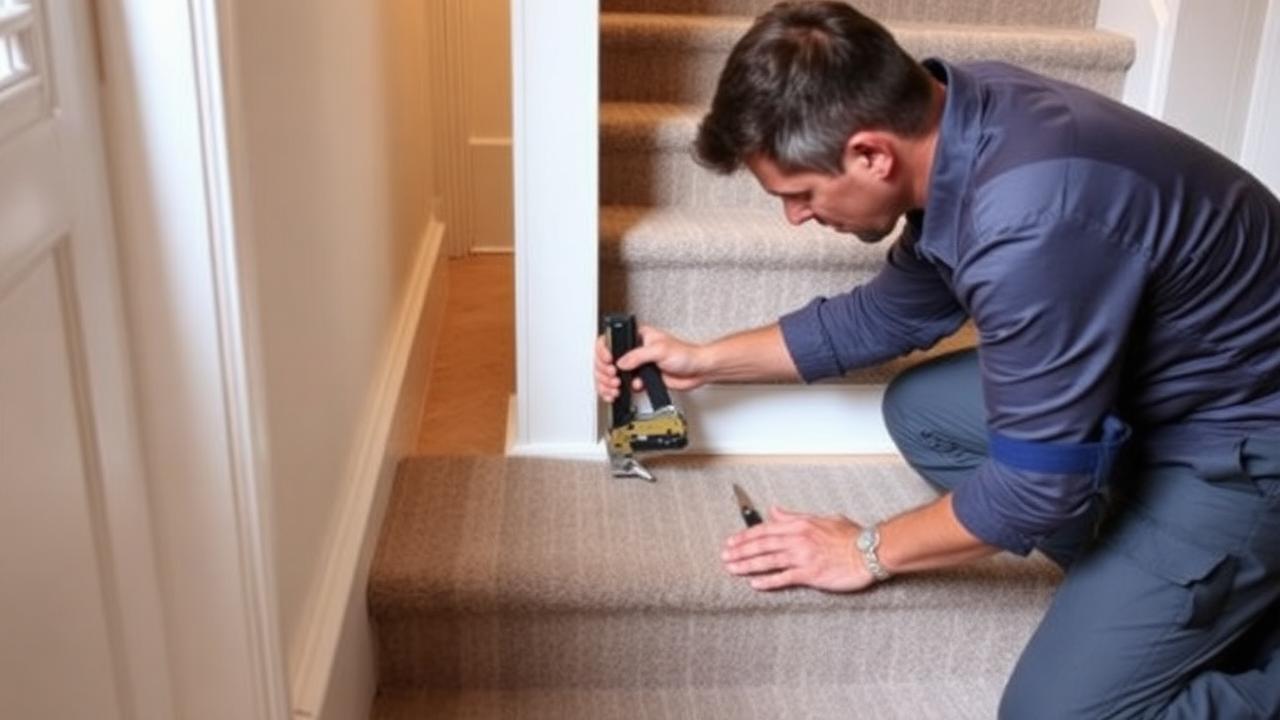
This is the traditional 'fitted' look where the carpet covers the entire width of the stair, from stringer to stringer. This is often the best choice for noise reduction and warmth. In the UK, this is the standard for most modern builds. In the US, it's frequently found in suburban homes where the stairs lead to carpeted bedrooms.
| Option | Estimated Cost (UK £) | Estimated Cost (US $) | Noise Reduction |
|---|---|---|---|
| Painted Stairs | £50 - £150 (DIY) | $70 - $200 (DIY) | None |
| Stair Treads (Set of 13) | £80 - £250 | $100 - $300 | Moderate |
| Full Carpet (13 steps) | £300 - £700 | $400 - $900 | Excellent |
| Natural Sisal Boards | £400 - £900 | $500 - $1200 | Moderate |
4. Stair Rods Without a Runner
Believe it or not, you can use stair rods as a purely decorative element on bare wood stairs. While they are usually meant to hold a runner in place, installing high-quality brass or black rods directly against the wood creates a unique, industrial-luxe look that highlights the joinery of the staircase.
5. Cork or Vinyl Planks
For a modern, durable alternative, many people are now using LVP (Luxury Vinyl Plank) or cork to cover their stairs. This is especially popular if the rest of the floor is the same material. It offers better water resistance than wood and is much more durable than carpet.
Cost Comparison
While a custom runner might cost £1,000/$1,200, painting your stairs and adding a few non-slip clear strips can cost as little as £100/$130. Always weigh the 'aesthetic value' against the 'practical daily use' before making a final decision.
Measuring for Alternatives
Even if you aren't buying a runner, you need to know your numbers. UK building regulations (Part K) and US IRC (R311.7) specify that all steps in a flight must have the same rise and run. If you add a thick material (like LVP or thick carpet) to just the treads, you might inadvertently create a trip hazard by changing the height of the first and last step. Use a professional calculator to ensure your modifications stay within legal and safe limits.
Pros and Cons of Each Alternative
| Alternative | Best For... | Main Drawback |
|---|---|---|
| Paint | Budget & DIY | Maintenance (scuffing) |
| Stair Treads | Safety for Pets | Visual Clutter |
| Full Carpet | Noise & Comfort | Hides Wood Work |
| LVP/Vinyl | Durability | Complex Installation |
| Bare Wood | Showing Off Joinery | Slippery/Loud |
Working out if a runner is actually worth the material cost
Before ruling stair runners out in favour of one of these alternatives, it is worth running the actual numbers rather than guessing at the cost gap. Take a 13-step US flight with a 10 in tread run and 7.5 in riser height: each step needs roughly 17.5 in of runner including the nosing wrap, for a base length of about 227.5 in, or just under 19 ft, plus a 5-10% waste margin, landing you around 20 ft of finished runner to order. In UK metric terms, a 25 cm going and 19 cm riser gives roughly 44.5 cm per step, or about 5.8 m for 13 steps before waste, and around 6.1-6.4 m once a 5-10% allowance is applied. A stair runner calculator gives you this figure in seconds, and comparing it against painted treads or individual stair treads on a like-for-like basis, rather than a vague sense that 'carpet is expensive', is the only fair way to decide.
Once you have that real length, the cost comparison becomes far more concrete: a mid-range synthetic runner at a typical per-yard or per-metre price, plus underlay and fitting, against the DIY-friendly cost of paint and non-slip additive, or a set of individual stair treads. Many households find that a runner sits in the middle of the alternatives in both cost and effort, more expensive than paint but far less disruptive and permanent-feeling than ripping out and replacing a full staircase covering.
Combining alternatives with a runner rather than choosing just one
It is worth remembering these options are not always either/or. Many staircases successfully combine a runner down the centre of the tread with painted risers and exposed, sealed stringers either side, which is really just the standard 'runner plus reveal' look most people already picture when they think of a stair runner. Individual stair treads can also work as a stopgap on the way to a full runner, useful if budget or timing means the full project has to wait, since a treads-first approach gets slip protection in place immediately without committing to a final material choice yet.
- Runner plus painted or stained exposed reveal: the most common combination, and the one most stair runner ideas assume as a baseline.
- Individual treads as a temporary measure before a full runner or full carpet installation.
- LVP or vinyl on a landing paired with a runner on the sloped flight, useful where the landing sees heavier, wetter traffic than the stairs themselves.
- Full carpet on a lower servant or basement staircase paired with a runner on the main show staircase, common in larger or older houses.
Know your numbers in 30 seconds
Enter your step count, tread depth and riser height — the stair runner calculator gives you the exact length to order, in metres and feet, with waste included.
Open the stair runner calculatorFrequently asked questions
Are painted stairs more slippery than carpet?
Yes, significantly. Bare wood or painted stairs have almost no 'grab' for socks or bare feet. To make them safe, you should always add an anti-slip additive to the paint or apply clear adhesive anti-slip strips to the edge of each tread.
Do stair treads damage wood stairs?
Many modern stair treads use a 'repositionable' adhesive that doesn't leave a residue. However, older rubber-backed treads can sometimes react with the wood finish and cause discoloration. Always check the manufacturer's recommendation for finished hardwood.
What is the cheapest way to cover stairs?
Painting them is generally the cheapest option, costing only the price of a few cans of high-quality porch and floor paint. If you need a soft covering, individual 'peel and stick' carpet treads are the most budget-friendly alternative to a full runner.
Can I put LVT on stairs?
Yes, but it requires specific 'stair nosing' pieces that match your LVT planks. These pieces wrap around the edge of the step to provide a finished look and to protect the edge of the plank from chipping. It's a popular choice for matching stairs to the rest of a home's flooring.
Is full carpet better for noise than a runner?
Yes. Because full carpet covers the entire surface area of the stairs and is usually installed with a thick underlay from wall to wall, it absorbs much more sound than a runner, which leaves the sides of the treads exposed to echo.
Can you install a runner over painted stairs?
Absolutely! In fact, painting the 'reveals' (the visible parts of the stairs on either side of the runner) is a very common design choice. It allows you to use a contrasting color to make the runner pop even more.
Know your numbers in 30 seconds
Enter your step count, tread depth and riser height — the stair runner calculator gives you the exact length to order, in metres and feet, with waste included.
Stair Runner CalculatorReady for real prices?
Get quotes from vetted stair runner suppliers and fitters near you. Free, no account, no obligation.
Every guide is written from hands-on measuring and fitting experience, checked against the calculator’s own maths, and re-reviewed whenever prices or methods change. Read our editorial standards.