

The core difference
A stair runner is a single continuous piece of carpet, usually 24-32in (60-81cm) wide, that is fitted down the centre of an entire flight in one operation, leaving a margin of exposed timber or stone on either side. Individual stair treads (sometimes called stair tread mats or stair tread rugs) are separate, pre-bound pads, one per step, laid loose or lightly fixed to each tread without running continuously down the risers or the full flight. Both leave the same margins of bare stair exposed at the sides; the difference is entirely in whether the covering is one piece or many.
This distinction matters more than it first appears, because it changes almost every other property of the product: how it is fixed, how it wears, how safe it is to walk on, how it is cleaned, and how it is replaced when damaged. The two are genuinely different product categories rather than two price points of the same thing, even though they can look superficially similar in a photograph.
Cost comparison
Individual stair treads are sold per unit, typically £8-£25 each in the UK or $10-$30 each in the US for a mid-range tread, meaning a 13-step flight costs roughly £104-£325 or $130-$390 for the treads alone, plus minimal fixing (usually just double-sided tape or small tacks, often under £20/$25 total). A comparable full stair runner for the same flight, including gripper, underlay and professional fitting, typically runs £350-£700 in the UK or $450-$900 in the US, though a confident DIYer can cut the labour portion significantly by fitting it themselves.
| Item | Individual treads (13 steps) | Full runner (13 steps) |
|---|---|---|
| Material cost (UK) | £104-£325 | £200-£450 (runner + gripper/underlay) |
| Material cost (US) | $130-$390 | $260-$580 |
| Fixing cost | Minimal (tape/tacks) | £100-£250 / $130-$320 labour if professionally fitted |
| DIY difficulty | Very easy, no skill needed | Moderate, benefits from the method in a full fitting guide |
On raw material cost alone, treads are often cheaper for a short flight but the gap narrows or reverses on longer flights, because a runner's per-metre price drops with length while tread cost scales linearly per step with no economy of scale.
Safety comparison
A continuous runner is generally the safer option because there is no seam, edge or gap between one step's covering and the next; the whole flight reads as one predictable surface underfoot. Individual treads, by contrast, introduce a join at every riser — even a well-fitted tread can curl slightly at a corner over time, and a loose or worn tread edge is a more immediate trip hazard than a worn patch in the middle of a continuous runner, because it sits exactly where a foot lands.
Both UK Building Regulations Approved Document K and the US IRC R311.7 require any stair covering to be securely fixed and to provide adequate slip resistance; a runner properly fixed with gripper strip along its full length generally meets this more robustly than a set of individually taped or tacked treads, particularly once the adhesive on cheaper treads ages and starts to release at the corners after 12-24 months of use.
Tread edges are the highest-risk point
If you choose individual treads, check and re-secure the corners every few months. A curling tread corner on the leading edge of a step is one of the most common causes of a stair fall in homes that use loose treads rather than a fitted runner.
Cleaning and maintenance
Individual treads have a clear practical advantage here: because each one is a separate small pad, it can be lifted off, shaken out, spot-cleaned or machine-washed (if the product allows) without disturbing any other step, and a single damaged or stained tread can be replaced for a few pounds or dollars without touching the rest of the flight. A full runner has to be cleaned in place, usually by vacuuming and periodic professional steam or dry cleaning, and localised damage — a burn, a permanent stain, a pet accident — typically means either living with a visible mark or replacing the entire runner.
| Task | Individual treads | Full runner |
|---|---|---|
| Routine vacuuming | Lift and vacuum both sides easily | Vacuum in place, harder to reach under edges |
| Spot staining | Replace the single affected tread cheaply | Spot clean in place; may need professional treatment |
| Deep cleaning | Machine wash or professional clean off-site | In-situ steam or dry clean only |
| Fixing wear over time | Rotate treads to even out wear | Cannot rotate; wear is fixed by tread position |
Which suits renters best
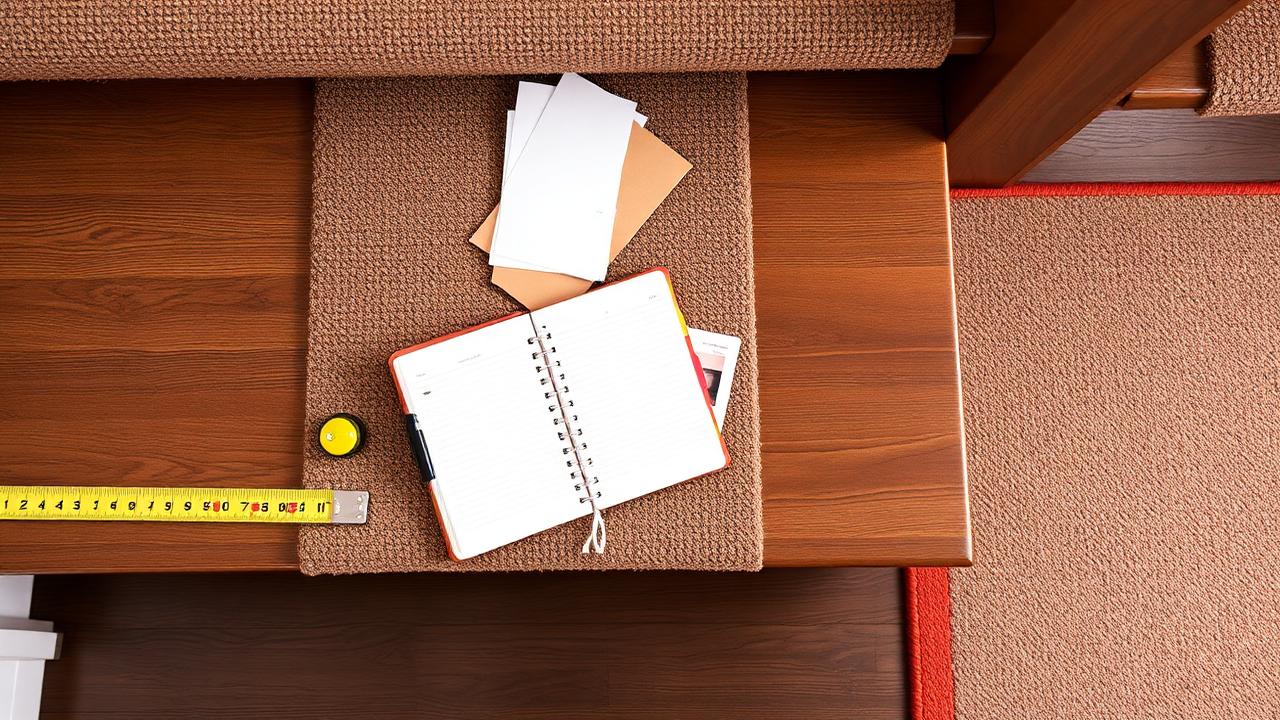
Individual stair treads are usually the better choice for renters and anyone who cannot make permanent fixings, because they can be laid with removable double-sided tape or small unobtrusive tacks that leave minimal marks, and taken with you or replaced entirely at the end of a tenancy. A full stair runner, especially one fitted with gripper strip and underlay, is a more permanent installation that most tenancy agreements would need explicit permission for, and removing it cleanly without damaging the treads underneath takes real care and time.
- Renters: individual treads with removable adhesive strips, or a temporary clear stair protector, are the lowest-risk options.
- Owner-occupiers wanting a design statement: a full runner gives a far more cohesive, higher-end look down the whole flight.
- Households with pets or heavy footfall: a full runner with quality underlay generally outperforms treads for long-term durability.
- Anyone on a tight initial budget for a short flight: individual treads can be the cheaper starting point, with the option to upgrade to a runner later.
Which lasts longer
A well-fitted wool or wool-blend stair runner with proper underlay typically lasts 10-15 years in an average family home before the pile shows heavy wear, because the load is spread slightly by the underlay and gripper system and the continuous fixing prevents movement. Individual treads, especially budget synthetic ones fixed only with adhesive, more commonly need replacing or rotating within 3-6 years, though because they are cheap and modular this is a lower-stakes and lower-cost cycle of replacement rather than a single large expense.
If you are leaning towards a full runner, measure the flight properly with a stair runner calculator so your budget reflects the real length and any pattern or waste allowance, since underestimating the runner length is the most common reason a full-runner project ends up costing more than the tread alternative that was being compared against it.
Whatever you decide, get the numbers first: the stair runner calculator doubles as a stair runner length calculator, adding nosing wrap, landings, winders, pattern repeat and waste so you order the right length the first time.
Still deciding on material, width or pattern? Our hub on stair runners compares weaves, widths, backings and fitting styles side by side, then hands the numbers straight to the calculator.
Frequently asked questions
Are individual stair treads cheaper than a full runner?
Usually yes for a short flight, with material costs often £100-£325 / $130-$390 for a 13-step flight versus £200-£450 / $260-$580 for a comparable runner, but the gap narrows on longer flights because runner pricing improves per metre while tread cost scales linearly per step.
Which is safer, stair treads or a runner?
A continuous runner is generally safer because it has no seams or edges between steps and, once fitted with gripper along its full length, is less prone to lifting than individually taped or tacked treads, whose corners can curl and create a trip hazard as adhesive ages.
Can you replace one damaged stair tread without replacing the whole set?
Yes, that is one of the main advantages of individual treads: a stained, worn or damaged tread can be swapped out on its own for a few pounds or dollars, whereas equivalent localised damage on a full runner usually means living with the mark or replacing the entire runner.
Are stair treads or a runner better for renters?
Individual stair treads are generally better for renters because they can be fixed with removable adhesive strips or small tacks and taken with you or replaced at the end of a tenancy, unlike a full runner fitted with gripper strip and underlay, which is a more permanent installation.
How long do stair treads last compared with a runner?
Budget stair treads fixed with adhesive commonly need replacing or rotating every 3-6 years, while a well-fitted wool or wool-blend runner on proper underlay typically lasts 10-15 years before showing heavy wear, thanks to the more even load distribution and continuous fixing.
Is it easier to clean stair treads or a full runner?
Individual treads are easier to deep-clean because each one can be lifted off and washed or professionally cleaned separately without disturbing the rest of the flight. A full runner must be cleaned in place, usually by vacuuming plus periodic in-situ steam or dry cleaning.
Know your numbers in 30 seconds
Enter your step count, tread depth and riser height — the stair runner calculator gives you the exact length to order, in metres and feet, with waste included.
Compare against a full runnerReady for real prices?
Get quotes from vetted stair runner suppliers and fitters near you. Free, no account, no obligation.
Every guide is written from hands-on measuring and fitting experience, checked against the calculator’s own maths, and re-reviewed whenever prices or methods change. Read our editorial standards.