
How much runner do I need for this job?
Before you tackle any care task, it helps to know how much material you are actually working with. For a standard 13-step flight with 10 in (25 cm) treads, 7.5 in (19 cm) risers, and a 0.75 in (1.9 cm) nosing wrap, each step consumes 18.25 in (45.9 cm) of runner. Multiplied across 13 steps that is 19.77 ft (5.97 m), and once you add the 24 in (60 cm) finishing allowance at top and bottom you reach 21.77 ft (6.57 m). A 10% waste margin for cutting and pattern matching brings the total order to roughly 24 ft (7.3 m).
These numbers matter for maintenance too: knowing the exact yardage helps you order matching offcuts for repairs, budget for cleaning by the linear foot or metre, and plan any partial replacement without guesswork. The stair runner length calculator handles all of this automatically once you enter your own tread, riser, and step count, so you are never left estimating on a ladder with a tape measure.
| Measurement | US (in/ft) | UK (cm/m) |
|---|---|---|
| Tread depth | 10 in | 25 cm |
| Riser height | 7.5 in | 19 cm |
| Nosing wrap | 0.75 in | 1.9 cm |
| Total per step | 18.25 in | 45.9 cm |
| 13 steps subtotal | 19.77 ft | 5.97 m |
| Plus allowances | 21.77 ft | 6.57 m |
| With 10% waste | 24 ft | 7.22 m |
Know your numbers in 30 seconds
Enter your step count, tread depth and riser height — the stair runner calculator gives you the exact length to order, in metres and feet, with waste included.
Open the stair runner calculatorWhy a schedule beats reactive care
Most stair runner damage does not happen suddenly; it accumulates quietly over months through embedded grit, undisturbed dust under stair rods, gradual pile flattening, and unnoticed spills that set into permanent stains. A simple annual schedule turns these invisible, slow-building problems into a series of small, manageable tasks rather than one large, expensive crisis. Homeowners who follow a consistent routine typically report their stair runners looking presentable for several years longer than those who only address problems once they become visually obvious.
Weekly and monthly tasks
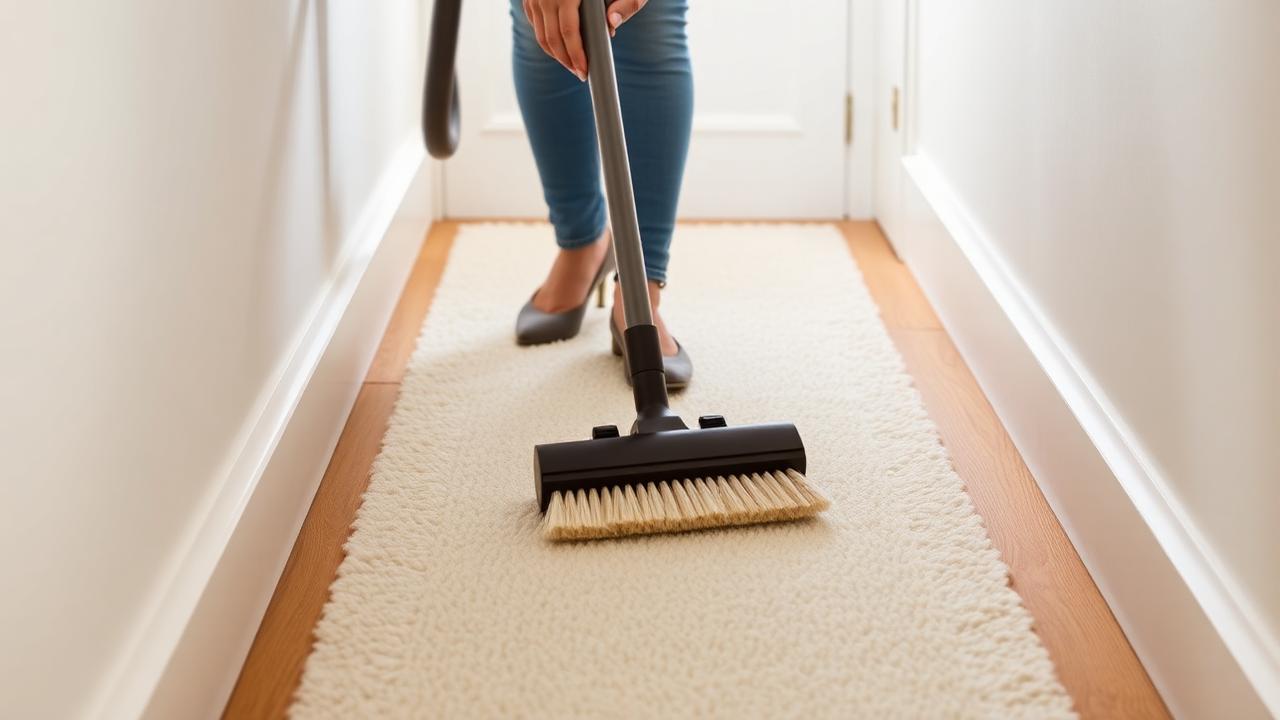
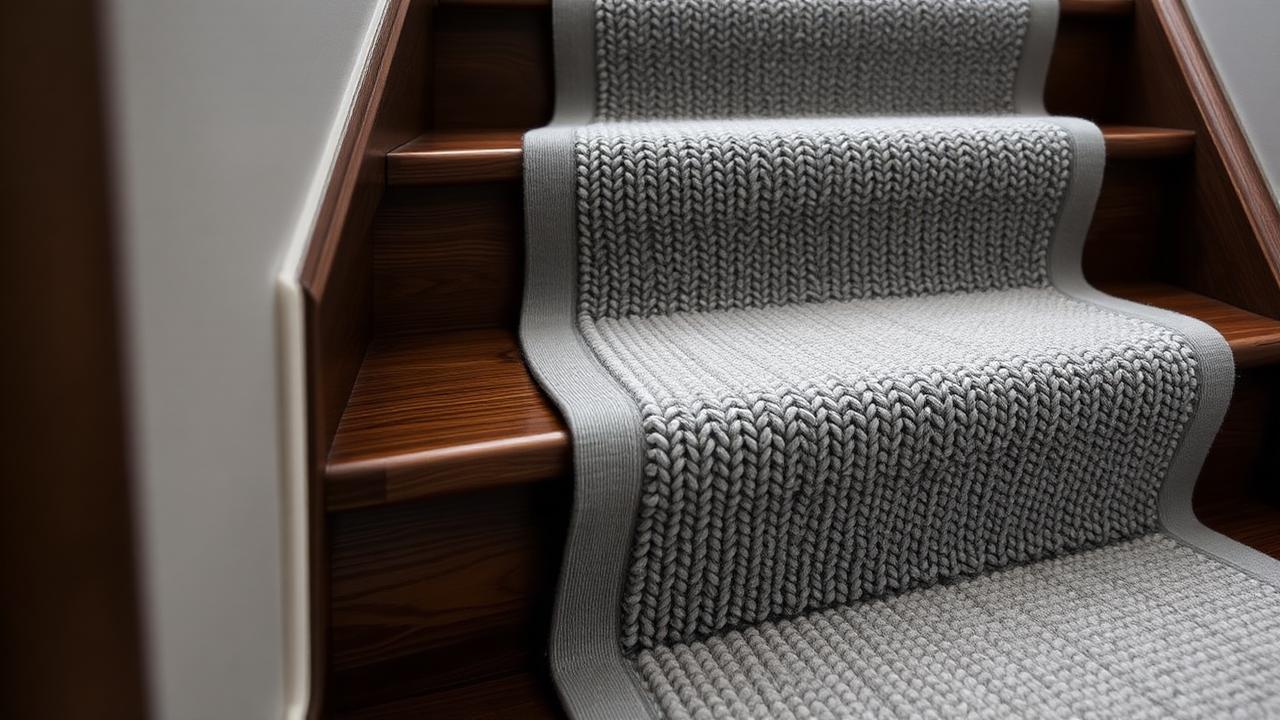
Every week, a thorough vacuum of the full flight, including the risers and the tight edges where the runner meets the skirting board, removes the surface dirt and grit that would otherwise work its way down into the pile and abrade the fibres from within. Once a month, spend a few extra minutes brushing the nosing of the most heavily used steps, usually the bottom three or four, with a stiff carpet brush to lift any early pile flattening before it sets in permanently.
Quarterly deep-attention tasks
Every three months, lift the stair rods (or the edge of a loose-laid runner) and vacuum both the exposed carpet and the bare tread beneath, which is your best defence against carpet moth larvae and also lets you inspect the underlay for compression or damage. This is also the ideal time to check for any loose bindings, fraying edges, or exposed backing that could trip someone or worsen quickly if left unattended.
Annual and biennial tasks
Once a year, schedule a professional deep clean using hot water extraction or a low-moisture method appropriate to your fibre type, as detailed in our guide to professional cleaning cost. This is also the ideal moment to consider rotating or reversing the runner if it is rod-fastened and the pattern allows it, redistributing wear before it becomes visually obvious. Every two to three years, reassess whether the underlay still offers adequate cushioning, since a compressed underlay accelerates pile crush regardless of how well you care for the carpet surface.
| Frequency | Task | Purpose |
|---|---|---|
| Weekly | Full vacuum, edges and risers | Remove abrasive grit |
| Monthly | Brush nosings on high-traffic steps | Prevent pile flattening |
| Quarterly | Lift rods, vacuum beneath, inspect bindings | Moth prevention, trip-hazard check |
| Annually | Professional deep clean; consider rotation | Deep soil removal, even wear |
| Every 2-3 years | Assess and replace underlay if compressed | Maintain cushioning, prevent crush |
Know your numbers in 30 seconds
Enter your step count, tread depth and riser height — the stair runner calculator gives you the exact length to order, in metres and feet, with waste included.
Open the stair runner calculatorKeep a simple log
A one-line note in your phone or a household calendar each time you vacuum edges, rotate the runner, or book a professional clean makes it far easier to stay consistent and to spot patterns in how quickly your particular staircase accumulates wear.
- Vacuum the full flight weekly, including risers and edges.
- Brush high-traffic nosings monthly to prevent flattening.
- Lift rods and inspect underneath quarterly for moths and debris.
- Book a professional clean annually using a fibre-appropriate method.
- Rotate or reverse the runner if the pattern and fastening allow it.
- Reassess underlay condition every two to three years.
Whatever you decide, get the numbers first: the stair runner calculator doubles as a stair runner length calculator, adding nosing wrap, landings, winders, pattern repeat and waste so you order the right length the first time.
Frequently asked questions
Is a weekly vacuum really necessary?
Yes, embedded grit is the single biggest cause of premature fibre wear, and a weekly vacuum is the cheapest and most effective prevention available.
What is the most commonly skipped maintenance task?
Lifting stair rods to clean and inspect underneath is the task most homeowners forget, yet it is critical for both moth prevention and safety checks.
Do synthetic runners need the same schedule as wool?
Largely yes, though synthetics are less prone to moth damage, so that specific quarterly check matters more for wool and other natural fibres.
How do I know if my underlay needs replacing?
If the stair nosing feels sharp and hard through the carpet rather than slightly cushioned, the underlay beneath has likely compressed and lost its protective function.
Can I follow this checklist with a vacuum that has a beater bar?
Use a gentler suction-only or low-agitation setting on stairs, since an aggressive beater bar can pull at bindings and accelerate fraying over time.
Does this checklist apply to runners on winders too?
Yes, though winder sections often need extra attention since dust and debris collect more readily in the tighter angles and pivot points.
Will following this checklist prevent the need for eventual replacement?
No maintenance routine prevents an eventual replacement, but a consistent schedule can meaningfully delay it and improve appearance in the meantime.
What is the ideal time of year to schedule the annual professional clean?
Many households choose autumn, before the heavier indoor traffic of winter, or spring as part of a broader seasonal deep clean.
Know your numbers in 30 seconds
Enter your step count, tread depth and riser height — the stair runner calculator gives you the exact length to order, in metres and feet, with waste included.
Plan your runner with the stair runner calculatorReady for real prices?
Get quotes from vetted stair runner suppliers and fitters near you. Free, no account, no obligation.
Every guide is written from hands-on measuring and fitting experience, checked against the calculator’s own maths, and re-reviewed whenever prices or methods change. Read our editorial standards.