

How much runner do I need for this job?
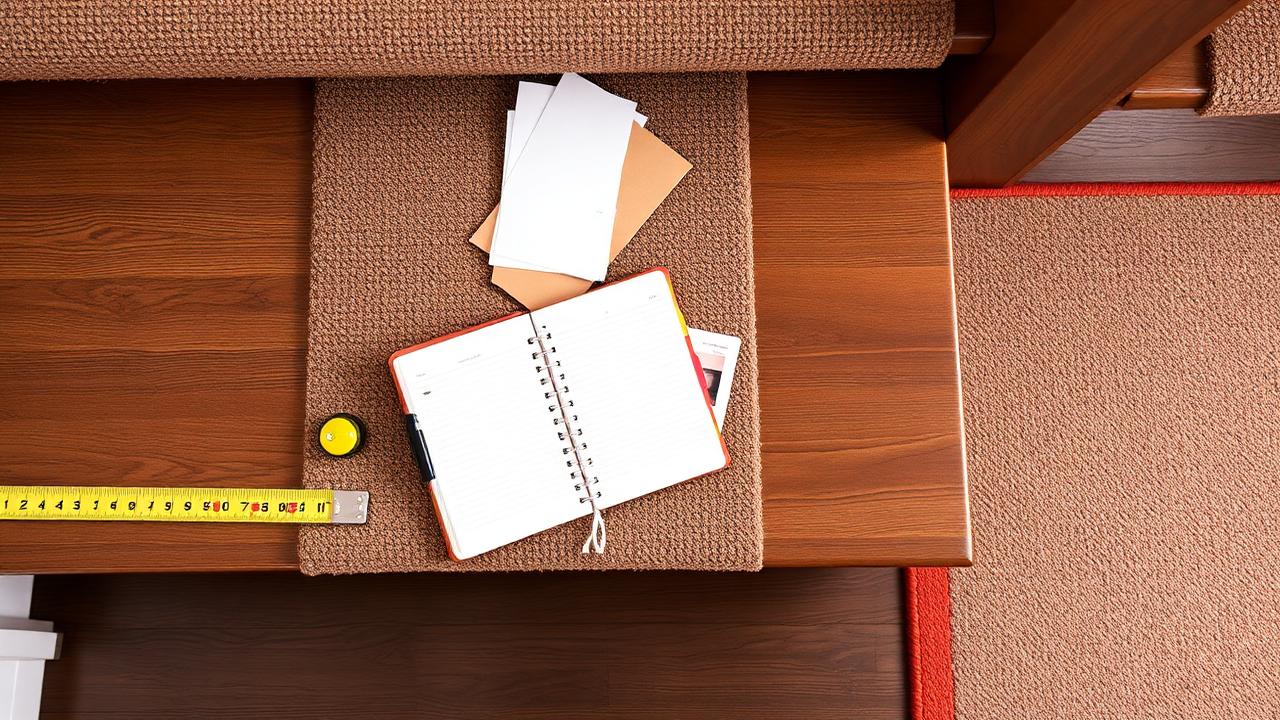
Before you tackle any care task, it helps to know how much material you are actually working with. For a standard 13-step flight with 10 in (25 cm) treads, 7.5 in (19 cm) risers, and a 0.75 in (1.9 cm) nosing wrap, each step consumes 18.25 in (45.9 cm) of runner. Multiplied across 13 steps that is 19.77 ft (5.97 m), and once you add the 24 in (60 cm) finishing allowance at top and bottom you reach 21.77 ft (6.57 m). A 10% waste margin for cutting and pattern matching brings the total order to roughly 24 ft (7.3 m).
These numbers matter for maintenance too: knowing the exact yardage helps you order matching offcuts for repairs, budget for cleaning by the linear foot or metre, and plan any partial replacement without guesswork. The stair runner length calculator handles all of this automatically once you enter your own tread, riser, and step count, so you are never left estimating on a ladder with a tape measure.
| Measurement | US (in/ft) | UK (cm/m) |
|---|---|---|
| Tread depth | 10 in | 25 cm |
| Riser height | 7.5 in | 19 cm |
| Nosing wrap | 0.75 in | 1.9 cm |
| Total per step | 18.25 in | 45.9 cm |
| 13 steps subtotal | 19.77 ft | 5.97 m |
| Plus allowances | 21.77 ft | 6.57 m |
| With 10% waste | 24 ft | 7.22 m |
Know your numbers in 30 seconds
Enter your step count, tread depth and riser height — the stair runner calculator gives you the exact length to order, in metres and feet, with waste included.
Open the stair runner calculatorWhy sunlight fades carpet fibres
Ultraviolet radiation breaks down the chemical bonds in dye molecules, gradually shifting colour and reducing vibrancy. This process, known as photodegradation, happens to every fibre type to some degree, but the rate and pattern of fading varies enormously depending on the material, the dye method used, and the intensity and duration of light exposure. Staircases are particularly susceptible when they sit beneath a skylight, run alongside a large window, or receive direct afternoon sun through a glazed front door, since the light often hits a small, concentrated area of the runner for several hours a day.
Which fibres and dyes resist fading best
Solution-dyed fibres, where colour pigment is added to the fibre while it is still in liquid form before extrusion, are far more fade-resistant than fibres that are dyed after weaving. Solution-dyed nylon and polyester runners can withstand years of direct sun with minimal visible change, making them a smart choice for a stairwell with a skylight. Wool, while prized for its natural beauty and resilience underfoot, is more vulnerable to UV fading than solution-dyed synthetics, particularly in darker or more saturated colours like deep reds and navy blues, which show fading more visibly than muted neutrals.
Natural fibres like sisal, seagrass, and jute also fade, often shifting to a warmer, more golden tone rather than simply losing colour, which some homeowners actually find appealing as a form of natural patina. If you know your staircase gets strong sun, ask your supplier specifically about the UV or lightfastness rating of any wool or natural fibre runner before you buy, since this varies significantly between mills and collections.
Preventing and reducing UV damage
The most effective prevention is reducing direct UV exposure at the source. UV-filtering window film applied to nearby glass can block up to 99% of harmful UV rays while still allowing visible light through, and it is a one-time investment that protects not just your stair runner but also nearby artwork, furniture, and flooring. Blinds or sheer curtains on a landing window that get closed during the most intense midday hours are a simpler, lower-cost option, though obviously less convenient for a skylight.
Rotating the runner periodically, as discussed in our guide to rotating and turning stair runners, also helps even out sun exposure over the life of the carpet, moving the most sun-struck section away from the direct beam. If fading has already occurred and is significant, a professional carpet dyeing service can sometimes restore or blend the colour, though this works best on wool and other natural fibres that accept dye well; solution-dyed synthetics generally cannot be re-dyed successfully because the colour is embedded within the fibre itself.
| Fibre/dye type | Fade resistance | Best use near sunlight |
|---|---|---|
| Solution-dyed nylon | Excellent | Skylights, south-facing stairs |
| Solution-dyed polyester | Excellent | Skylights, budget-conscious sunny stairs |
| Piece-dyed wool | Moderate | Shaded or low-light staircases |
| Sisal/jute natural fibre | Fair (ambers with age) | Casual, rustic settings tolerant of tone shift |
Test before you commit
If you are unsure how a wool colourway will hold up, ask for a sample and leave a swatch on a sunny windowsill for a month alongside an unexposed piece. The visible difference will tell you far more than any lightfastness rating on a spec sheet.
Whatever you decide, get the numbers first: the stair runner calculator doubles as a stair runner length calculator, adding nosing wrap, landings, winders, pattern repeat and waste so you order the right length the first time.
Frequently asked questions
Can faded carpet colour be restored?
Wool and other natural fibres can sometimes be professionally re-dyed to blend the fade, but solution-dyed synthetics generally cannot be re-coloured successfully.
Does carpet fading affect durability, not just looks?
Prolonged UV exposure can also weaken fibre structure over time, making faded sections slightly more prone to wear alongside the colour change.
Is fading covered under warranty?
Most manufacturer warranties specifically exclude UV fading, since it results from environmental exposure rather than a manufacturing defect.
Do darker colours fade faster than light ones?
Darker, more saturated colours often show visible fading sooner because the contrast against the original shade is more noticeable, even if the chemical degradation rate is similar.
Will curtains fully stop fading?
Closing curtains or blinds during peak sun hours significantly reduces exposure but will not eliminate it entirely if some ambient UV still reaches the stairs.
How long does UV window film last?
Quality UV window film typically lasts 10-15 years and can block the vast majority of the UV rays responsible for fading.
Does artificial light cause fading too?
Standard LED and incandescent bulbs emit negligible UV, but some older halogen and fluorescent fittings can contribute slightly over many years.
Should I choose a lighter colour to hide fading?
Lighter, more muted tones do tend to show less visible contrast as they fade, making them a pragmatic choice for a sun-exposed staircase.
Know your numbers in 30 seconds
Enter your step count, tread depth and riser height — the stair runner calculator gives you the exact length to order, in metres and feet, with waste included.
Plan your runner with the stair runner calculatorReady for real prices?
Get quotes from vetted stair runner suppliers and fitters near you. Free, no account, no obligation.
Every guide is written from hands-on measuring and fitting experience, checked against the calculator’s own maths, and re-reviewed whenever prices or methods change. Read our editorial standards.