
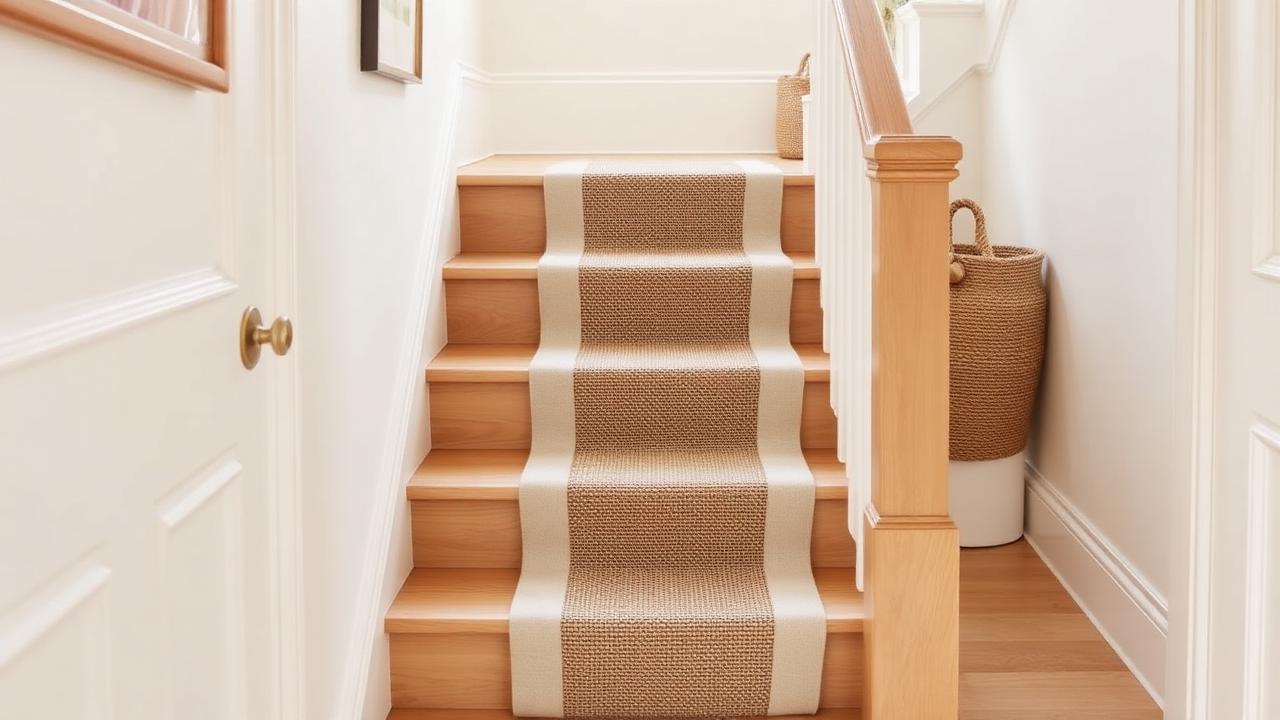
Why basement stairs need different thinking
Basement stairs get treated as a utility route far more than the main flight in most houses. They carry laundry baskets, storage bins, tool boxes and, in a lot of homes, they sit directly on or near a concrete slab that can hold a bit of ambient damp even with a dry basement. I've refitted plenty of basement flights where the original carpet, bought as an offcut from the main stairs job, had matted flat and started smelling faintly musty within two years, simply because nobody thought about the different environment down there. A basement flight also tends to be steeper and narrower than the main stairs in older houses, since it was often an afterthought in the original build, so both the material choice and the measuring need a slightly different approach to a hallway or landing runner.
The first decision is fibre. Wool looks lovely on a main staircase but it isn't the natural choice for a basement, since wool can hold moisture and is more prone to mildew in a below-grade environment with variable humidity. Polypropylene and nylon runners handle damp and heavy traffic far better, resist staining from anything dripped or dragged down the stairs, and cost noticeably less per running foot, which matters on a flight that's rarely seen by guests. If you want a natural look, a synthetic sisal-effect weave gives you the texture without sisal's genuine vulnerability to moisture swelling and staining.
Padding and grip on a utility flight
A basement stair runner benefits from a firmer, lower-profile pad than you'd choose upstairs, partly because basement steps are often shallower and steeper, and a thick plush pad reduces the usable tread depth further, and partly because a denser pad resists compressing under repeated heavy loads like moved boxes and appliances dragged down on a hand truck. I generally spec a 7-8 mm rubber or felt-rubber combination pad on basement work rather than the 9-10 mm memory foam blends that suit a soft main staircase, because it holds its shape better under point loads and won't spring back unevenly after a heavy box has sat on one step for a week during a move.
Check the humidity before you buy
If your basement has ever had a damp reading above normal, or you've seen any efflorescence on the concrete walls, sort that out before fitting any runner - trapping moisture under carpet on a below-grade stair is the fastest way to grow mould nobody can see until the smell arrives.
How much runner do I need?
Take a US example: a 12-step basement flight, steeper than the main stairs, with a 10 in tread run and an 8 in riser height, plus a 0.75 in nosing wrap allowance per step. Per step that's 10 + 8 + 0.75 = 18.75 in. Across 12 steps that's 225 in, or 18.75 ft. Add a 20 in combined top and bottom finishing allowance (basement flights often finish flush against a concrete floor at the bottom rather than a landing, so 8 in is enough there, with 12 in at the top), giving 245 in, or 20.4 ft. Apply a 7% waste margin for cutting and any minor pattern trim, and you land at roughly 21.8 ft, so order 22 ft to be safe.
In UK metric terms: 12 steps at 25 cm tread run and 20 cm riser height, plus 1.9 cm nosing wrap, gives 46.9 cm per step. Across 12 steps that's 562.8 cm. Add a 51 cm combined finishing allowance (20 cm bottom, 31 cm top) for 613.8 cm, then apply the 7% waste margin to reach roughly 656.8 cm, so order about 6.6-6.7 m. Either way, the structure is identical to any other flight - per-step total, multiply by steps, add finishing, add waste - and a stair runner calculator will do this arithmetic instantly if you'd rather not work through it by hand every time you change a measurement.
| Measurement | US (in/ft) | UK (cm/m) |
|---|---|---|
| Tread run | 10 in | 25 cm |
| Riser height | 8 in | 20 cm |
| Nosing wrap per step | 0.75 in | 1.9 cm |
| Per-step total | 18.75 in | 46.9 cm |
| 12 steps subtotal | 18.75 ft | 5.63 m |
| Plus finishing allowance | 20.4 ft | 6.14 m |
| With 7% waste margin | ~22 ft | ~6.7 m |
Know your numbers in 30 seconds
Enter your step count, tread depth and riser height — the stair runner calculator gives you the exact length to order, in metres and feet, with waste included.
Open the stair runner calculatorColour and width choices that work in a basement
Basement stairwells are usually darker and narrower than the main flight, often lit by a single overhead bulb rather than a window, so a very dark runner can make the whole stairwell feel like a shaft. I tend to steer clients toward a mid grey, charcoal fleck or warm taupe rather than jet black on a basement flight, because it hides scuffs and dust from stored boxes just as well but doesn't swallow what little light there is. Width-wise, basement stairs are frequently narrower than code minimum for a main stair, so measure carefully; leaving only 2-2.5 in (5-6 cm) of exposed tread per side rather than the usual 3-4 in is common and perfectly fine on a utility flight where a slightly fuller-width runner actually helps grip when hands are full.
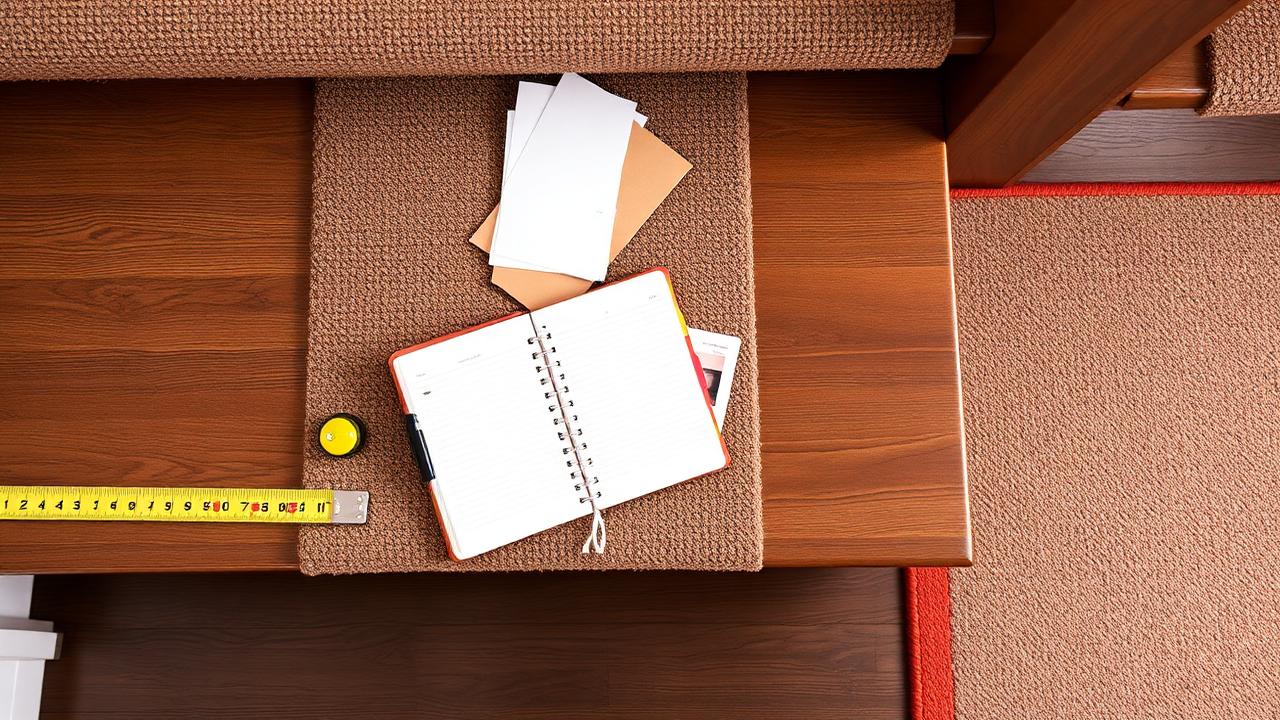
- Choose polypropylene, nylon or a synthetic sisal-look weave over wool or genuine sisal.
- Fit a firm 7-8 mm rubber or felt-rubber pad rather than a soft plush pad.
- Pick mid-tone greys, taupes or flecked patterns to hide scuffs and dust.
- Check basement humidity and resolve any damp issues before fitting.
- Measure width carefully on narrower basement flights, as exposed tread margins can be smaller.
Fitting against a concrete bottom step
Many basement flights end directly on a concrete slab rather than a timber landing, which changes how you finish the bottom of the runner. Staples and standard tack strips won't grip concrete, so the bottom edge is usually secured with a concrete-rated adhesive or a screwed-down metal binder bar rather than the tack strip method used higher up the flight. If the bottom step transitions straight onto bare concrete or a future flooring installation, leave that transition to a flooring fitter rather than trying to bind the runner edge yourself, since a badly finished trailing edge on a basement stair is a genuine trip hazard in a space that's often poorly lit.
Stair runners on a basement flight are also one of the few places I'd actively recommend runners with rods over a fully fitted, hollywood-style install, purely because rods make it far easier to lift the runner for periodic checks behind it for damp or pests, something you'd rarely need to do on a dry main staircase but is genuinely worth being able to do below grade.
Budgeting for a basement runner
Because basement runners lean toward synthetic fibres rather than wool, the material cost per foot is usually lower than a comparable main-staircase runner, typically in the range of $8-18 per running foot for a decent polypropylene or nylon option in the US, or roughly £15-30 per metre in the UK, both figures given as typical ranges rather than fixed prices since they vary by width, pile and retailer. Fitting cost is broadly similar to any other straight flight, though a fitter may charge a small premium for working in a confined, lower-ceilinged basement stairwell where movement is more restricted than on an open main staircase.
Whatever you decide, get the numbers first: the stair runner calculator doubles as a stair runner length calculator, adding nosing wrap, landings, winders, pattern repeat and waste so you order the right length the first time.
Frequently asked questions
Is wool a bad choice for a basement stair runner?
Wool isn't ideal for below-grade stairs because it holds moisture more readily than synthetic fibres and can be slower to dry out if the basement has variable humidity. Polypropylene, nylon or a synthetic sisal-look weave are generally a safer, more moisture-tolerant choice.
Do basement stairs need a different pad than upstairs?
Yes, a firmer 7-8 mm rubber or felt-rubber pad generally suits basement stairs better than a soft plush pad, since basement steps see more point-loading from boxes and equipment and a denser pad resists compressing unevenly under that kind of use.
How do I finish a runner at a concrete bottom step?
Standard tack strips and staples don't grip concrete, so the bottom edge is usually secured with a concrete-rated adhesive or a screwed metal binder bar instead. If the bottom transitions to a future flooring installation, it's worth coordinating with a flooring fitter.
Should I use a darker or lighter colour on basement stairs?
A mid grey, charcoal fleck or warm taupe generally works better than jet black in a basement stairwell, since darker lighting down there can make an already dark runner feel like a shaft, while a mid tone still hides scuffs and stored-box dust well.
How much does a basement stair runner typically cost?
Material typically runs $8-18 per foot in the US or roughly £15-30 per metre in the UK for a decent synthetic option, given as typical ranges rather than fixed prices, with fitting cost broadly similar to a comparable main-staircase flight.
Can I fit the same runner I used upstairs on my basement stairs?
You can if it's a synthetic, moisture-tolerant material, but a leftover wool or natural-fibre offcut from the main stairs isn't the best reuse for a basement flight, since it won't handle the damper, heavier-use environment as well.
Are rods a good idea on basement stairs?
Rods can be a genuinely practical choice on a basement flight because they let you lift the runner periodically to check behind it for damp or pests, something worth doing occasionally below grade even in a generally dry basement.
Do I need to check for damp before fitting a runner?
Yes, resolve any signs of damp, efflorescence on concrete walls, or unusually high humidity readings before fitting a runner, since trapping moisture under carpet on a below-grade stair is one of the fastest ways to develop hidden mould.
Know your numbers in 30 seconds
Enter your step count, tread depth and riser height — the stair runner calculator gives you the exact length to order, in metres and feet, with waste included.
Work out your own basement flight with the stair runner calculatorReady for real prices?
Get quotes from vetted stair runner suppliers and fitters near you. Free, no account, no obligation.
Every guide is written from hands-on measuring and fitting experience, checked against the calculator’s own maths, and re-reviewed whenever prices or methods change. Read our editorial standards.