
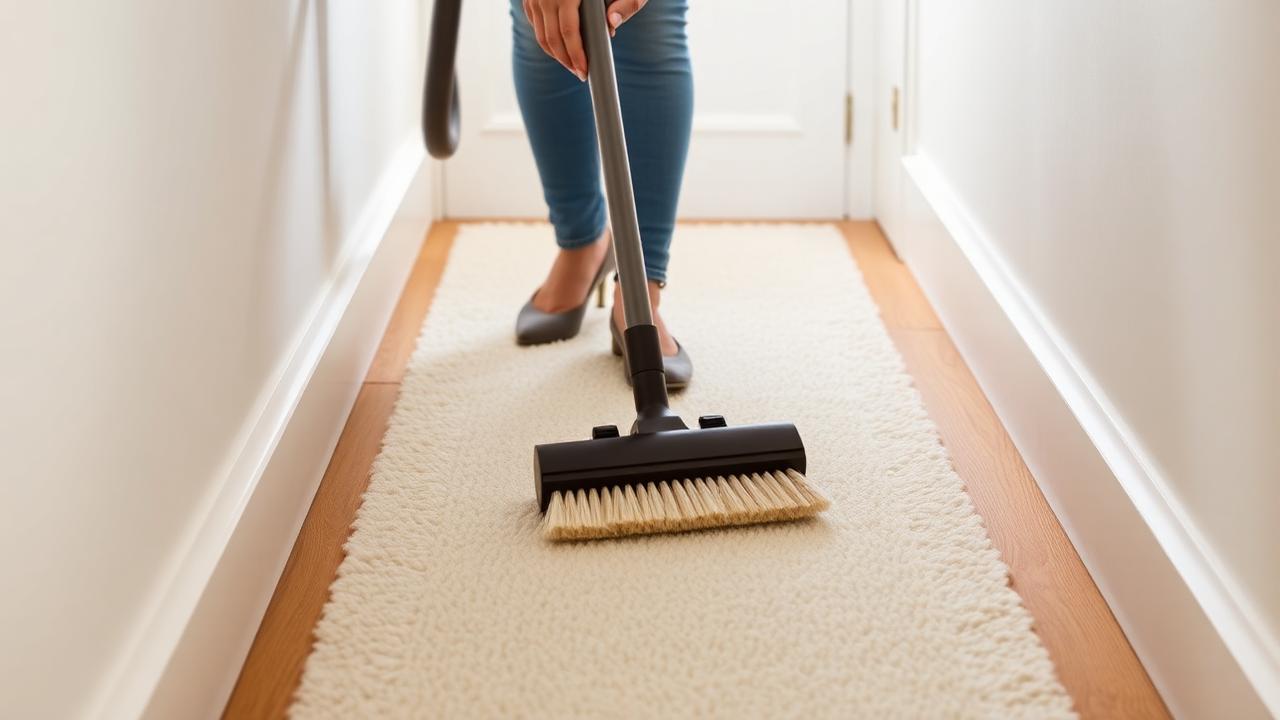
Prioritising resident safety and wellbeing
The choice of stair runner in a care home environment is critical. It is not just about aesthetics; it's a fundamental part of the home's safety and comfort infrastructure. I recommend a high-density, low-profile loop pile synthetic. This construction type offers a stable surface that reduces trip hazards and resists the crushing forces of heavy use. Using the stair runner calculator ensures you order the exact amount needed for a precise fit, which is essential to avoid any loose areas that could compromise safety.
How much runner do I need?
For a 13-step flight: 10 in tread run + 7.5 in riser height + 0.75 in nosing wrap = 18.25 in per step. Total 237.25 in. Plus 24 in finishing allowance = 261.25 in (21.77 ft). With an 8% waste margin, the order should be roughly 23.5 ft (7.16 m).
| Measurement | US (in/ft) | UK (cm/m) |
|---|---|---|
| Tread run | 10 in | 25 cm |
| Riser height | 7.5 in | 19 cm |
| Nosing wrap per step | 0.75 in | 1.9 cm |
| Per-step total | 18.25 in | 45.9 cm |
| 13 steps subtotal | 19.77 ft | 5.97 m |
| Plus finishing allowance | 21.77 ft | 6.57 m |
| With 8% waste margin | 23.5 ft | 7.1 m |
Know your numbers in 30 seconds
Enter your step count, tread depth and riser height — the stair runner calculator gives you the exact length to order, in metres and feet, with waste included.
Open the stair runner calculatorHygiene and maintenance
Choose a runner with an antimicrobial treatment and a waterproof backing to facilitate easier cleaning and maintain high hygiene standards in a care setting.
- Ensure non-slip performance.
- Opt for antimicrobial synthetic fibres.
- Use moisture-proof backing.
- Choose a low-pile for stability.
- Regularly inspect for wear and fixing security.
Acoustics and comfort
Beyond safety, the acoustic benefits of a well-fitted runner cannot be overstated. By dampening the sound of footfall, it creates a much calmer environment for residents, which is particularly important in larger homes. A high-quality underlay is essential to maximise this sound-dampening effect.
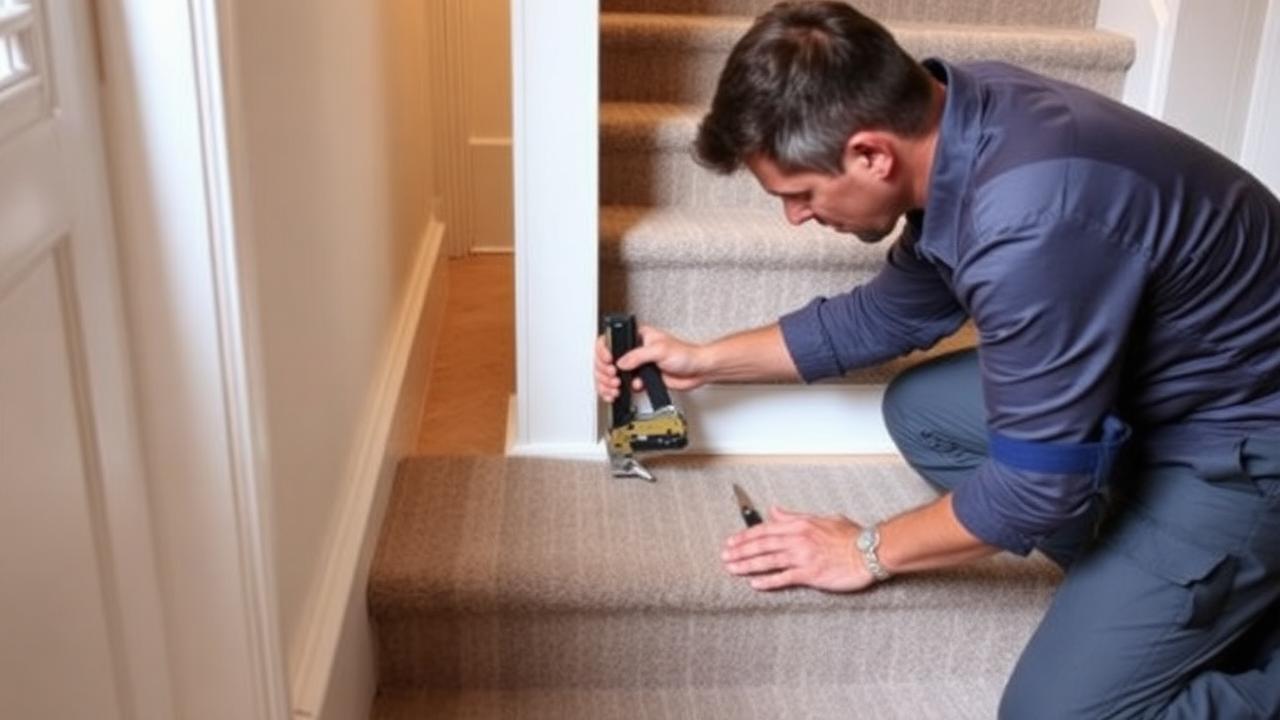
Whatever you decide, get the numbers first: the stair runner calculator doubles as a stair runner length calculator, adding nosing wrap, landings, winders, pattern repeat and waste so you order the right length the first time.
Still deciding on material, width or pattern? Our hub on stair runners compares weaves, widths, backings and fitting styles side by side, then hands the numbers straight to the calculator.
Frequently asked questions
What is the safest material for a care home stair runner?
A low-profile, high-density synthetic loop-pile is generally the safest option, providing a stable, non-slip surface that is also very durable.
How does a stair runner help with acoustics in a care home?
The runner, combined with a dense felt underlay, absorbs the sound of footfall and voices, significantly reducing noise levels in communal stairwells and hallways.
Are there moisture-resistant options available?
Yes, many commercial-grade synthetic runners come with moisture-resistant or waterproof backings, which are ideal for maintaining hygiene in a care home.
How often should care home runners be cleaned?
Daily vacuuming is essential, with a professional deep clean every 3 to 6 months to maintain hygiene and prolong the life of the carpet.
What should I look for in a care home underlay?
Choose a high-density, fire-rated felt or rubber underlay that provides both comfort and excellent sound absorption.
Can we use bright colours for visibility?
Yes, using a contrasting colour for the stair runner can actually improve safety by making the stair edges more visible to residents with impaired vision.
Is a loop pile better than a twist pile for care homes?
A tight loop pile is often preferred because it's more resistant to crushing and doesn't trap debris as easily as a deeper twist pile.
Do the runners need a fire rating?
Yes, all floor coverings in a care home must meet strict commercial fire safety standards. Always verify this before purchase.
Know your numbers in 30 seconds
Enter your step count, tread depth and riser height — the stair runner calculator gives you the exact length to order, in metres and feet, with waste included.
Calculate care home stair runner lengthReady for real prices?
Get quotes from vetted stair runner suppliers and fitters near you. Free, no account, no obligation.
Every guide is written from hands-on measuring and fitting experience, checked against the calculator’s own maths, and re-reviewed whenever prices or methods change. Read our editorial standards.